



Why Yana Lewis chose India to realise her ballet dreams
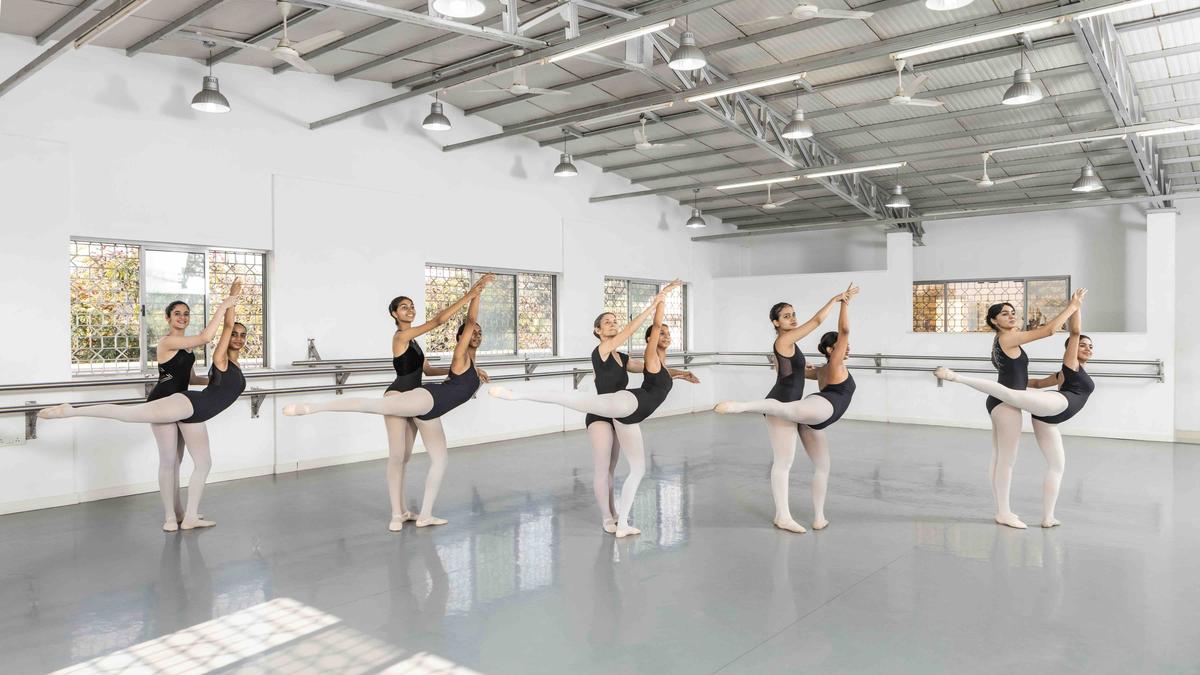
It’s a warm afternoon, and Shoonya on Lalbagh Road in Bengaluru is teeming with dancers prepping for an intense rehearsal session. They belong to the Lewis Foundation of Classical Ballet, which is gearing up to stage its new production, ‘A Tale of Dreams and Destinies’. The dancers quickly change into ballet tights and leotards. When they launch into movements what you see are sculpted frames, graceful lines and gentle leaps.
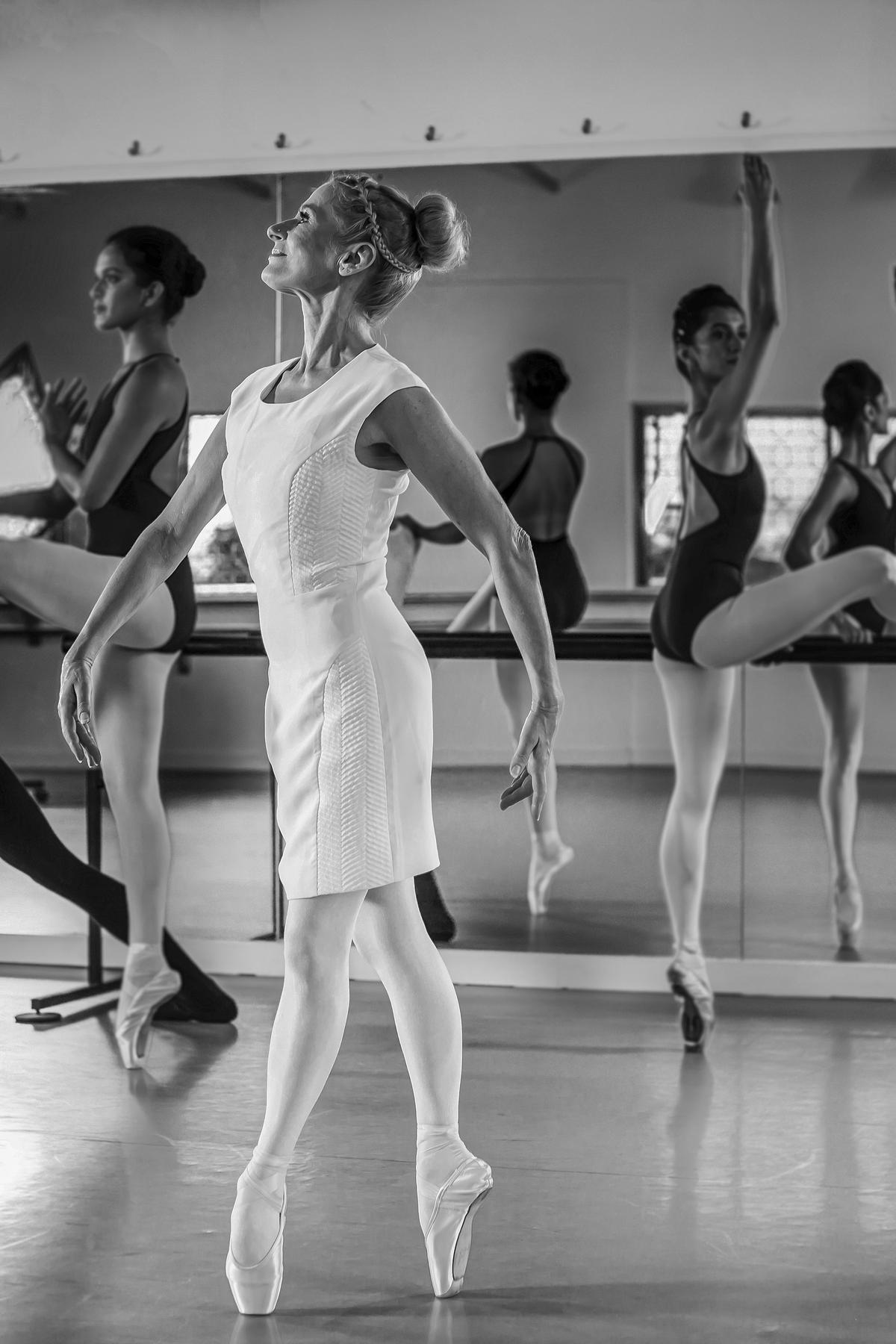
Yana Lewis with senior students of the foundation
| Photo Credit:
Courtesy: The Lewis Foundation of Classical Ballet
Petite, yet commanding, the U.K.-born Yana Lewis orchestrates the 200‑odd dancers with a voice that cuts through the chatter. “This is our seventh in‑house production, based on a classic tale from One Thousand and One Nights,” she says, leading us into the main dance hall. Yana calls out a few last‑minute instructions; latecomers scamper into place, the music begins and the ballet unfolds.
Yana wants to open the show with a port de bras set to Vande Mataram as a homage to the country that has been her home for the past 28 years.
Avyaan and Princess Ziva’s Wedding Pas De Deux
At the wedding celebration of Princess Ziva and Avyaan (the main characters of A Tale of Dreams and Destinies, portrayed by Maya Haridas and Krita Yernool respectively), the dancers engage in a pas de deux (French for “a dance of two”). This dance, which typically signifies an intimate moment between a couple commemorates their marriage here.
A Tale of Dreams and Destinies is about a thief who discovers a magical lamp and a princess yearning to see the world beyond her palace walls. Their paths converge, and together they face obstacles that test their resolve and leads them toward a shared destiny. “At its core, the story celebrates the power of dreams and the courage to make them real — whether you are a thief, a princess, a vizier, maharaja, djinn, or simply a passerby in the wondrous city of Khazaanagarh,” explains Yana.
Dancers glide through arabesques (one of ballet’s most iconic positions) and jetés (a leap where the dancer throws one leg into the air and jumps from one foot to the other). Their port de bras remains fluid, yet precise. Ballet formations create sweeping patterns, while solos soar in a grand allegro. Each leap and plié carries a narrative weight, tracing the character’s journey with elegance, leaving you awestruck that India can shape ballet of extraordinary grace, as more people embrace this Western art with conviction.
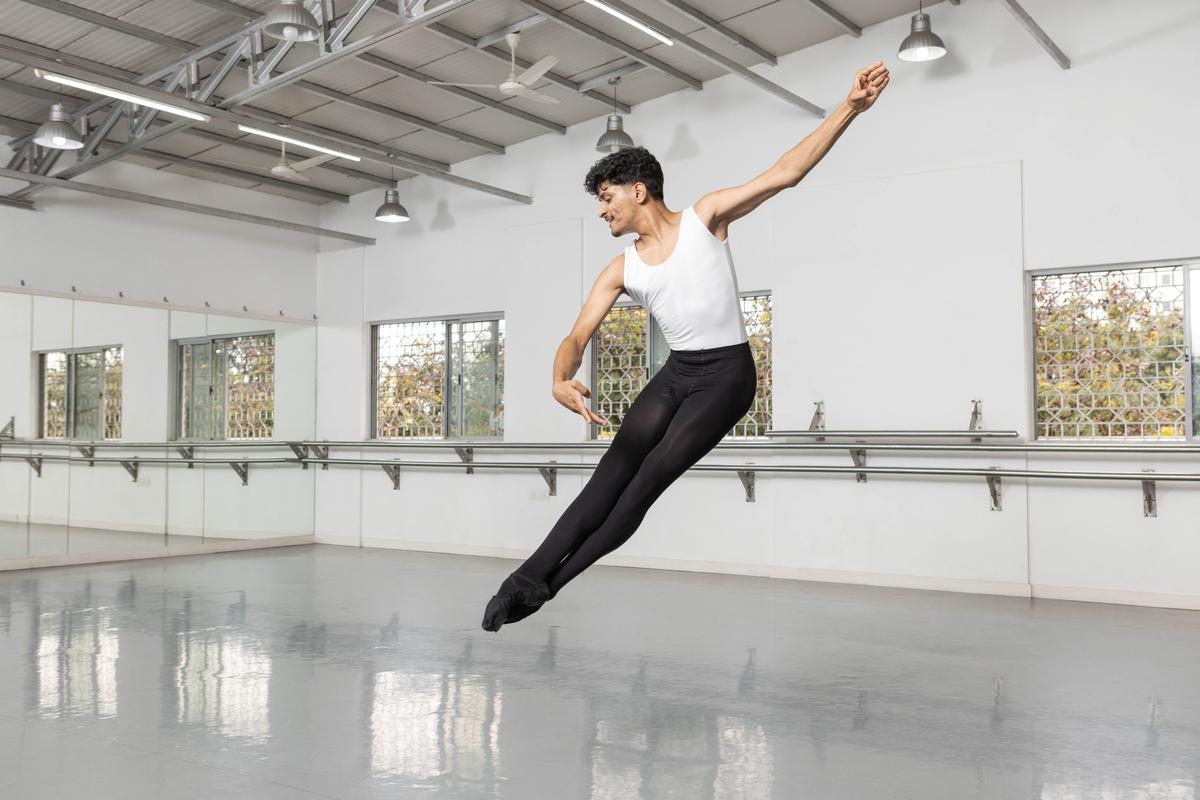
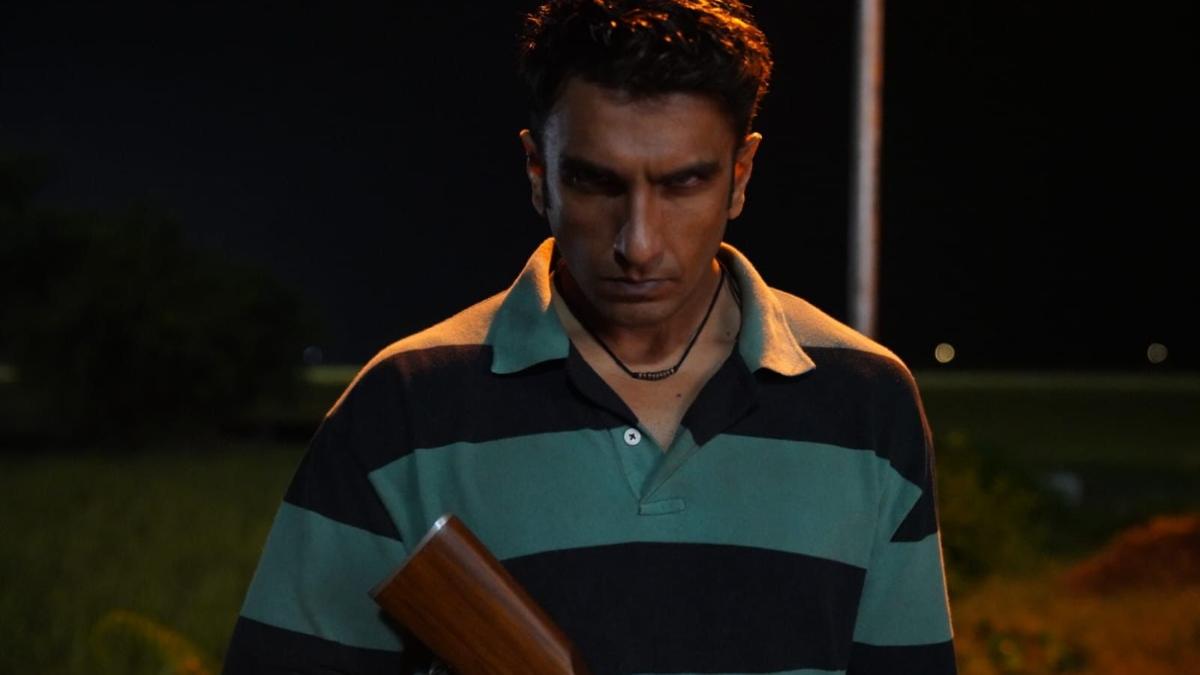
Tejas Parmesh during the show’s rehearsal
| Photo Credit:
Courtesy: The Lewis Foundation of Classical Ballet
In India, where dance is often grounded, ballet arrives as something otherworldly. Its language is one of elevation, where the form defies gravity. A western dance form, ballet is now becoming a bridge — a dialogue between cultures.
After an hour, Yana announces a break to talk about why she chose to pursue this dance style, that too in India. The challenges she faced in setting up her school, her training methodology and choreographic works.
Managing dancers in India means “navigating the endless cycle of exams,” Yana states. “Students juggle academics and art, often stepping away from rehearsals. Yet there are a few in higher grades that manage both, finding dance to sharpen their focus.” Passion, she insists, must coexist with education. “Wake up at 3 a.m., study, then dance — it’s possible,” she says, embodying her own philosophy of discipline, waking at 4 a.m. daily.
Djinn and Princess Ziva’s confidante – Pas De Deux
In this scene, the Djinn and Princess Ziva’s confidante (portrayed by Tejas Parmesh and Khushi Naresh respectively) share a romantic tryst as the Djinn invites her to dance with him in the palace gardens.
About her early days as a teacher, Yana shares: “In India, young girls would watch Barbie or the Nutcracker and come to me to learn ballet. Parents too would bring them without really understanding the dance themselves, so we had open classes to educate them. Today, children understand our storytelling easily. I also performed at NCPA, Mumbai, followed by a workshop for Indian classical dancers, showing them the similarities between the two forms. The external rotation of the legs, the use of the foot, the lifting versus grounding and so on. If you train both sets of muscles, they complement each other. Later, I taught ballet to Indian classical dancer Rukmini Vijayakumar, who went on to study at Boston Conservatoire. She said ballet took her Bharatanatyam to another level. Ballet opens a whole new world. It changes the aesthetic but not the style, making jumps and lifts easier.”
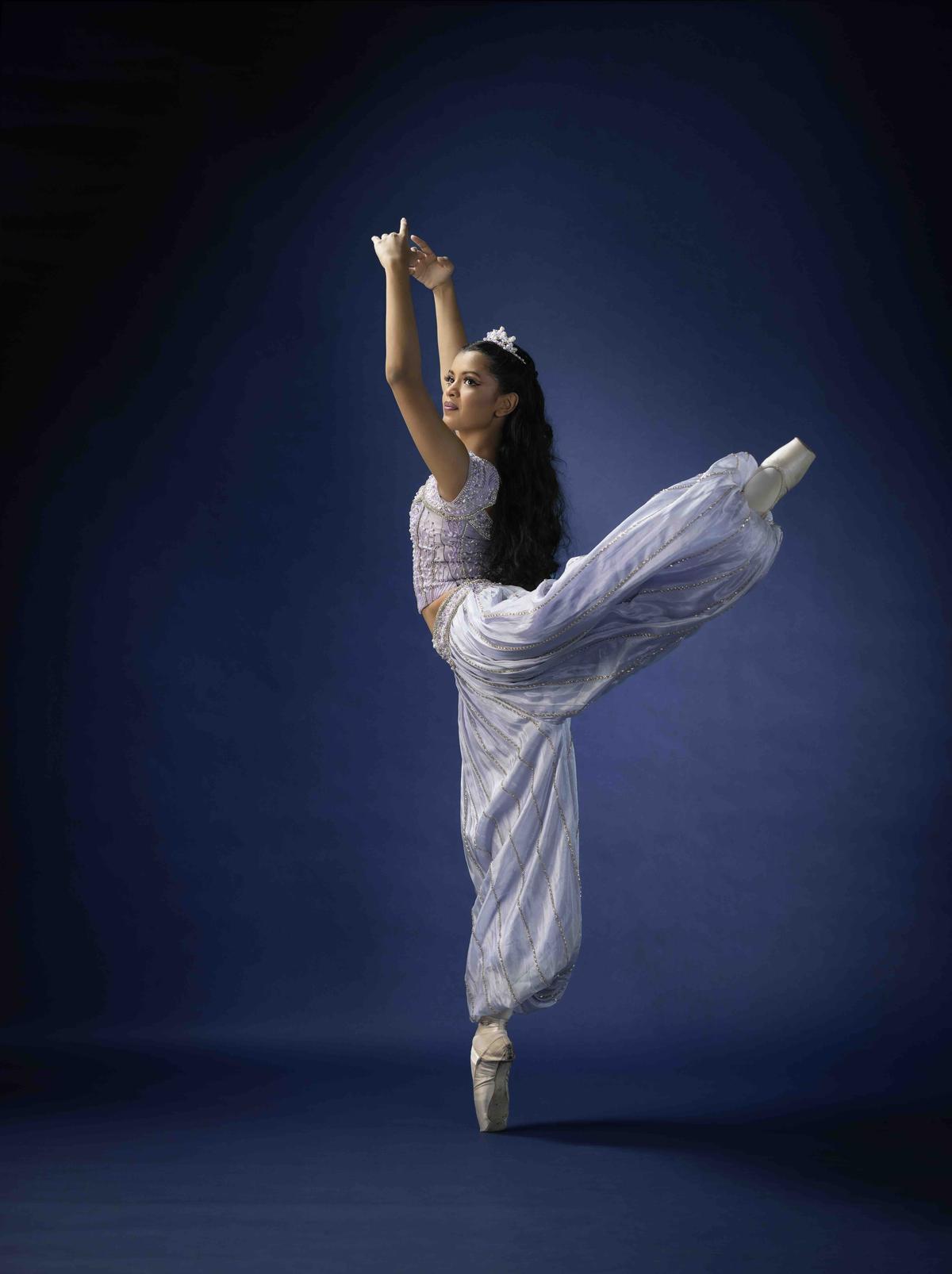
Krita Yernool as princess Ziva in A Tale of Dreams and Destinies
| Photo Credit:
Courtesy: The Lewis Foundation of Classical Ballet
Yana does not ”perform anymore. I’m 64. Now I teach and have collaborated with Indian classical dancers too. I enjoy working with gurus who work without prejudice. I find it enriching. There’s always learning — you never stop if you’re a real artiste.”
Yana also speaks candidly about the diet of ballet dancers: “food must be fuel for the body. Fruits, nuts and light food sustains energy, while heavy meals hinder performance. “You can’t dance on rice and dal — it just sits in your tummy,” she says, encouraging healthier choices in classes for rigorous rehearsals.
Yana started learning ballet at the age of two. “I told my mother I wanted to be a butterfly. She interpreted that as my desire to fly and took me to ballet class — and that’s where it all began,” says Yana, who is inspired by Sylvie Guillem “because she brought an avant‑garde style to ballet that was beyond that era, and diverse movement‑based nuances to classical ballet,” reveals Yana, who believes a “career in dance is possible. You have to be adventurous and take that leap and see where the journey takes you.” Her daughter now trains abroad, having attended the Royal Ballet School and Australian Ballet Company programs. Yana shares that her students too have gone overseas — Boston Conservatoire, London schools, University of North Carolina. And now, she hopes to open a full‑time vocational ballet school in India.
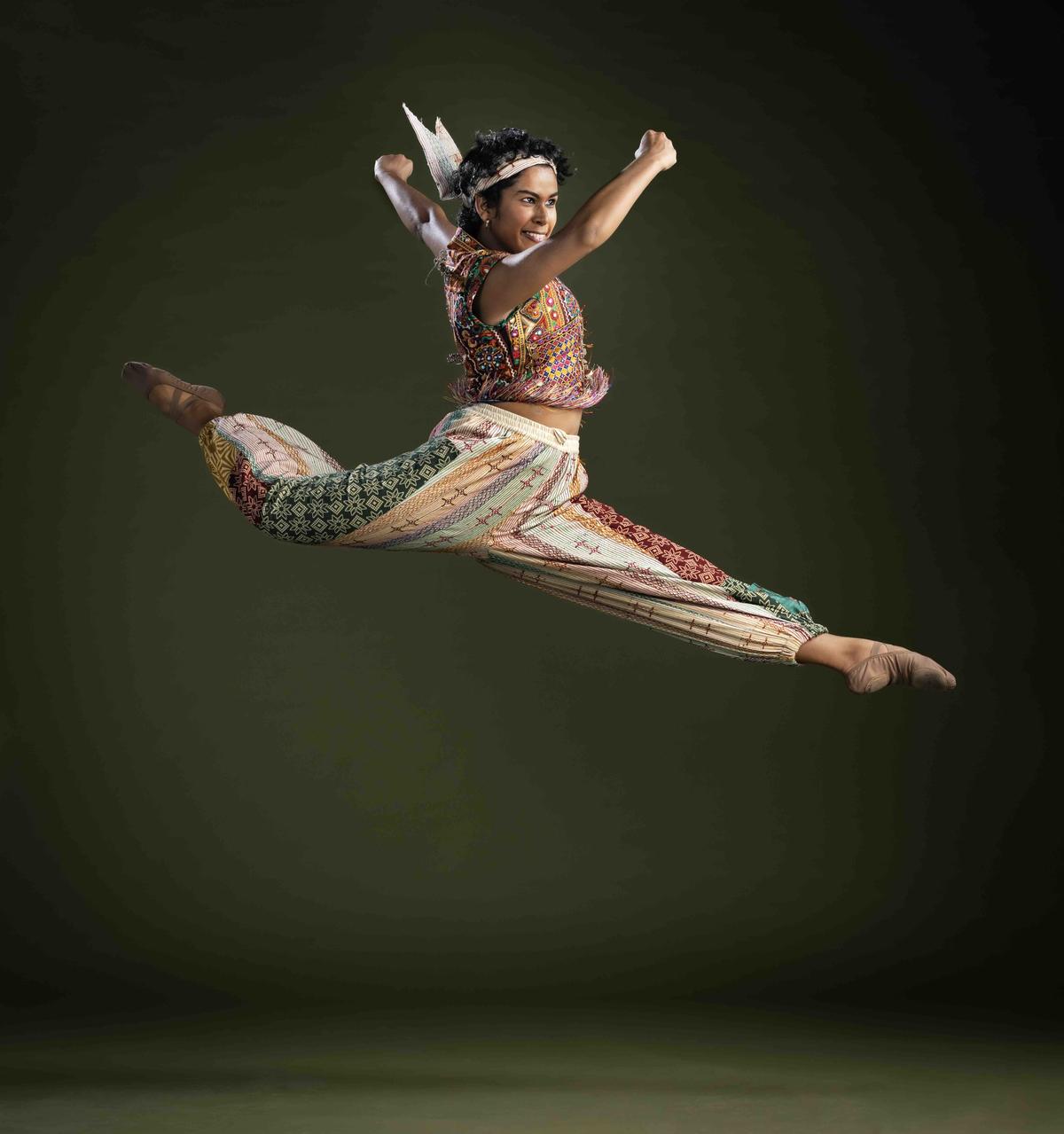
Maya Haridas as Avyaan in Yana’s seventh choreographic production
| Photo Credit:
Courtesy: The Lewis Foundation of Classical Ballet
Her journey has also crossed borders. Through collaborations with a Swiss dance company, where Yana “blended European precision with expressive style”. She has danced on television in the UK and toured with companies before yoga brought her to India in 1998. After living in Mumbai, she settled in Bengaluru to start a ballet school, “keeping my promise to dancers I had met along the way that I would return to teach”.
Yana launched the Lewis Foundation of Classical Ballet in 2006. Her main studio is in Ulsoor, with centres in Koramangala, Kalyan Nagar, J.P. Nagar and Whitefield. “Younger graders train at centres, while higher graders train at Ulsoor. I visit the centres, ensuring everyone gets my attention.”
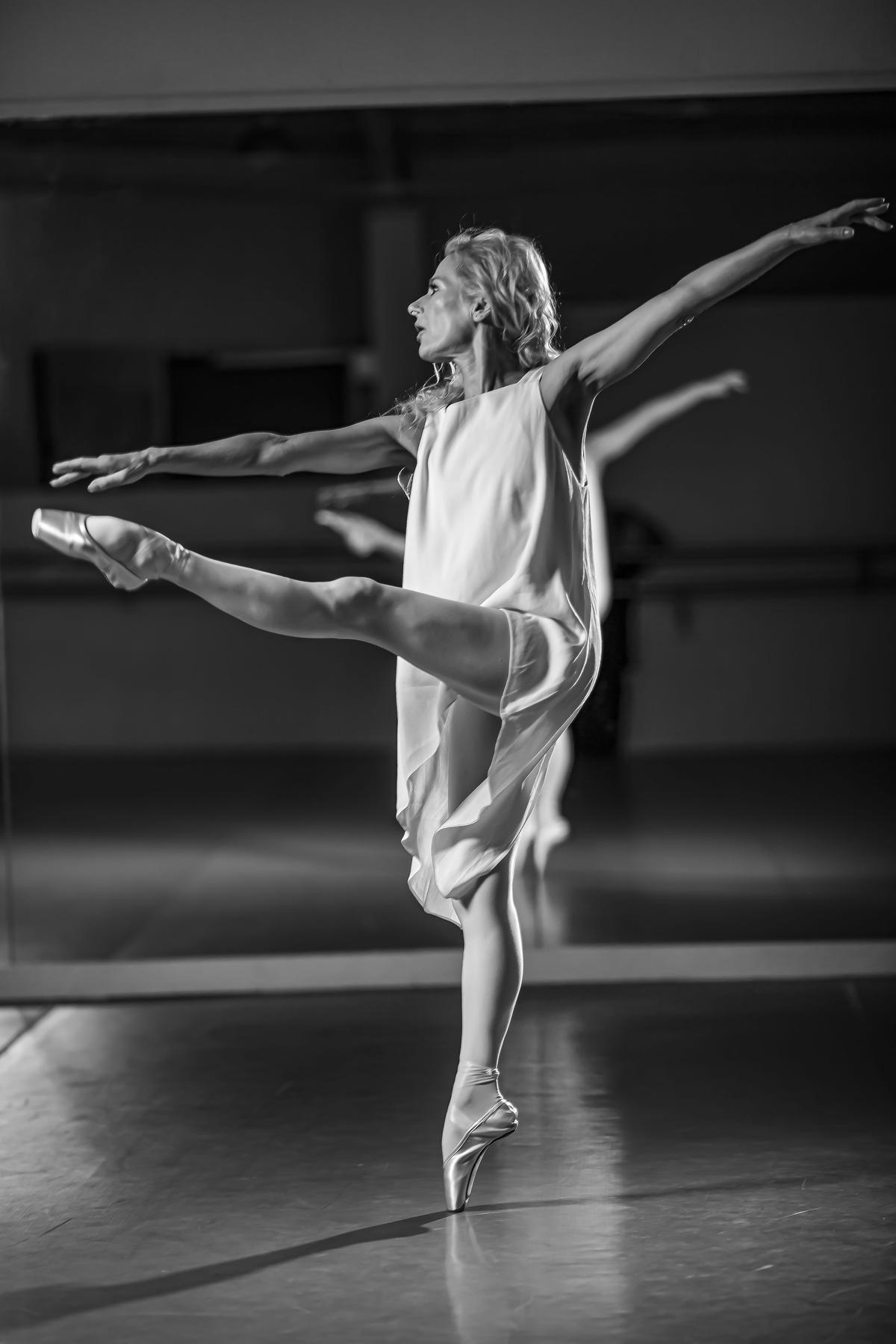
At 64, Yana Lewis focuses on teaching and choreography.
| Photo Credit:
Courtesy: The Lewis Foundation of Classical Ballet
According to Yana, it has been a wonderful journey, but a challenging one. “Carving out a space for yourself in a country with a thriving classical arts scene calls for commitment and perseverance. Initially, the school did not attract many students, but over the years it has grown to become one of India’s distinct ballet companies. Despite the hesitancy around the rigour of training, I do not compromise on ballet values. This approach has helped me build a well-trained set of dancers, with whom I have gone on to create choreographic works such as Alice, Sleeping Beauty, Cinderella and moderns pieces such as Oz and Alice.”
For her, A Tale of Dreams and Destinies is deeply tied to the present. “The world feels uncertain, full of instability. Its scary. I think this show is about dreams and following through with your belief system. Passion is something that can’t be changed, not even by AI. Someone asked me if AI could do my job, and I said absolutely not. It can produce a show, but it won’t be an imagined or creative piece.”
A Tale of Dreams and Destinies will be staged on April 11 as part of the foundation’s outreach programme, with a complimentary show for children from NGOs across Bengaluru. On April 12, two shows — at 12:30 p.m. and 5:30 p.m. — will be open to the public. Tickets are available on BookMyShow. Venue: Prestige Centre for Performing Arts, Konanakunte Cross, Bengaluru.