




Why grid discipline and useable power must exist together
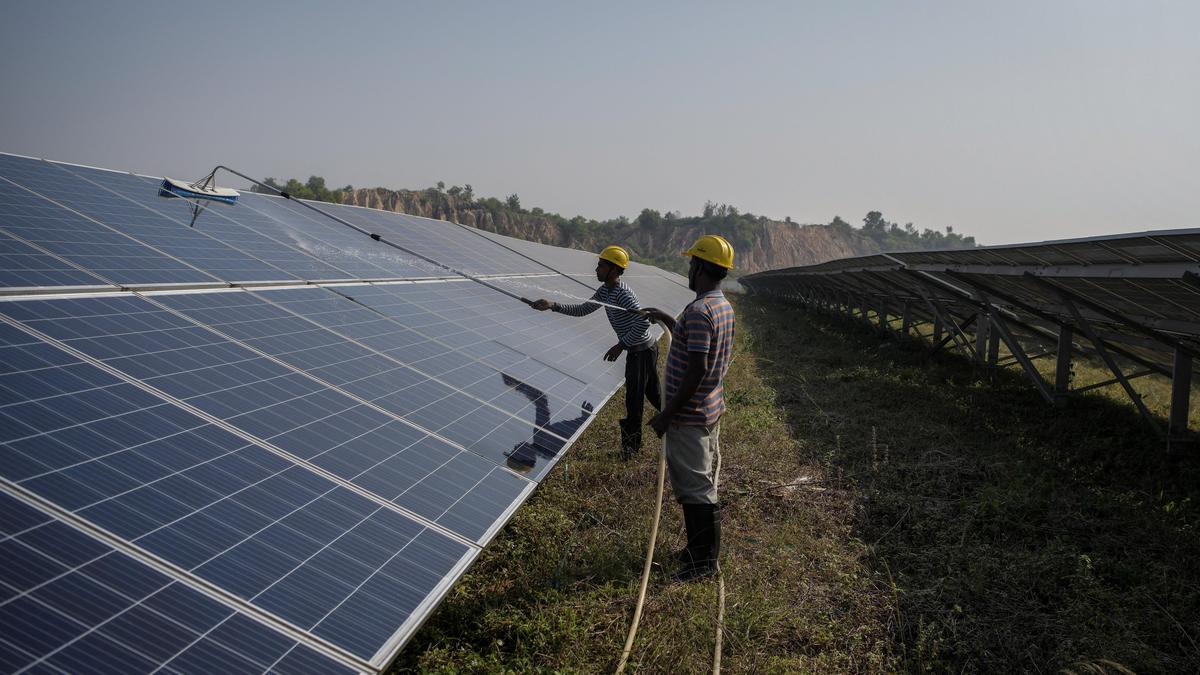
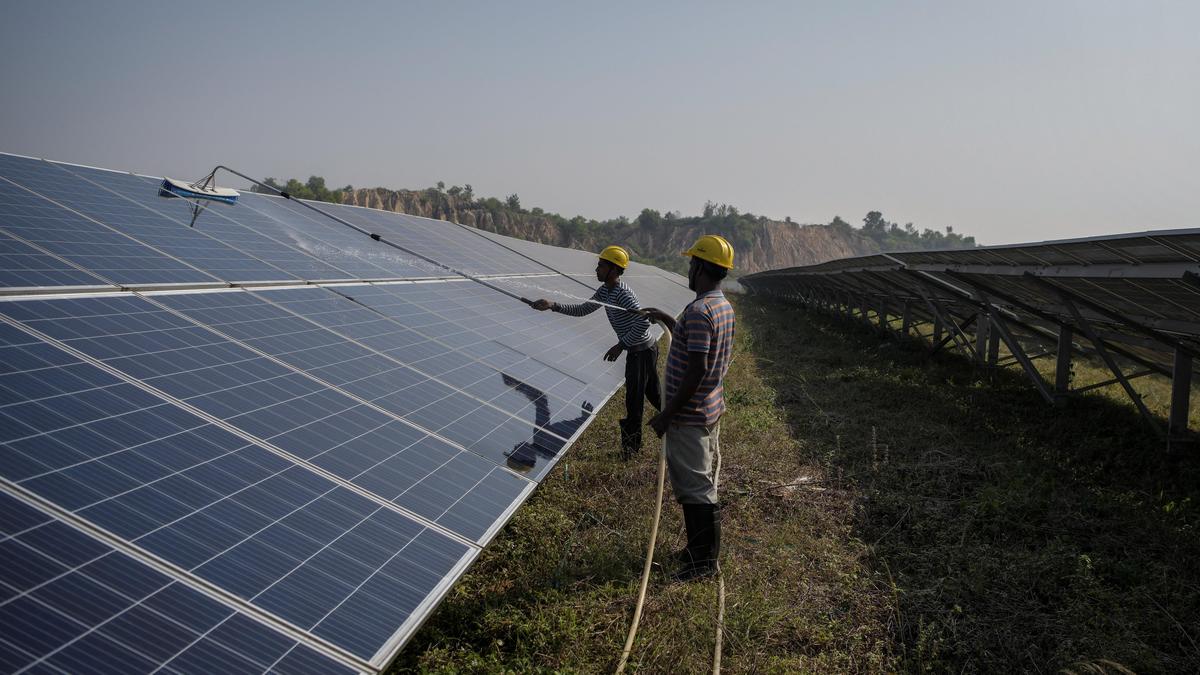
An environmentally sustainable future also demands harnessing of the abundant solar energy potential in well-endowed States like Rajasthan, UP, MP, and Gujarat.
Anil Razdan
India’s renewable energy journey has taken off at a commendable pace and dream solar power tariffs have become a reality. This encouraging development has to attain permanence. Project developers, investors, financing institutions, and consumers have good reason for making accelerated and ambitious investment plans in the future. An environmentally sustainable future also demands harnessing of the abundant solar energy potential in well-endowed States like Rajasthan, UP, MP, and Gujarat. A project developer sets up a power project on the strength of confidence in evacuation and sale of the electrons that are produced. The financial institutions lend on this presumption.
The abundance of land and sunlight is particularly fortuitous in Rajasthan. Investors and financing institutions made investments trusting that electricity produced would find its way to consumers riding on the promised transmission system.
A situation has developed where significant low cost solar power is lying un-evacuated — a bad signal for investors and lenders. Over 4,000 MW of fully commissioned renewable projects in Rajasthan face near-total curtailment during peak solar hours. The State has 23 GW of renewable capacity, but effective evacuation stands closer to 19 GW. The regulatory distinction between Temporary General Network Access and Permanent General Network Access projects has created a binary outcome: one category curtailed almost completely, the other largely unaffected. Projects financed in good faith now struggle for viability, eroding investor confidence.
The national grid is a national asset and the country’s electricity lifeline, whose first obligation, by statute and operational design, is system security. Grid stability is a binding duty under the Electricity Act and Grid Code. Grid security and efficient utilisation are twin imperatives. The challenge lies in maintaining reliability while ensuring public investment in transmission yields commensurate value. A way has to be found to evacuate and monetise this power at the earliest.
The curtailment in Rajasthan is a planning and synchronisation gap, not an operational lapse. When generation outpaces transmission commissioning, mismatch appears as curtailment.
Historically, India planned generation and transmission together, but that discipline weakened as renewable capacity grew at unprecedented speed. When generation ramps up rapidly, system stress surfaces in operation, even if evacuation capacity exists on paper.
Transmission lines are not commercial pipelines that can be filled to design capacity on demand. Their usable capability varies with voltage stability and contingency margins. Operating below nameplate rating can be the correct choice to preserve system integrity. However, if 765-kilovolt corridors designed to evacuate several thousand megawatts do not deliver promised capacity, it raises legitimate concerns. Such instances should trigger institutional review. Transparency will reinforce public confidence in grid governance.
Technical remedies are well understood. Advanced grid-support devices, Static Synchronous Compensators, and adaptive voltage-control systems have proven effective. A joint committee of national and state load despatch centres, PGCIL, CTUIL, and Siemens is said to have identified such measures in July 2025, yet implementation has reportedly not been prompt. Time-bound execution of remedial measures is needed. Grid strengthening is a continuous commitment to keep pace with the evolving generation mix.
Curtailment, when unavoidable, must be proportionate and transparent. The binary treatment between GNA and T-GNA projects has resulted in painful outcomes. Where capacity exists within safe margins, partial or rotational curtailment could replace total shutdowns. Dynamic reallocation of unused capacity can distribute risk more fairly while maintaining security. Predictability of curtailment will restore investor confidence.
As India’s renewable penetration deepens, the economic compact between generators and the grid must evolve. Renewable producers have benefited from socialised transmission investments and limited exposure to system-support costs. They must now share responsibility for storage, ancillary services, and grid-support infrastructure. The path forward lies in shared accountability: developers investing in grid-friendly technology, operators ensuring transparency, and regulators enforcing synchronisation of generation and transmission milestones. India’s energy institutions have shown extraordinary capability in building infrastructure at scale. The Rajasthan episode is a reminder that ambition must be matched by alignment. Transmission projects need to be commissioned in step with generation. The requirement is disciplined implementation, continuous review, and faster institutional reflexes. Every megawatt of stranded clean power represents lost carbon savings, investor confidence, and consumer benefit.
India’s clean-energy future depends as much on how effectively we use the power we generate, as on how fast we add capacity. Stability will always remain the foundation, but stability without utilisation imposes unaffordable costs. The next stage must focus on usable reliability – where every rupee delivers measurable value. Grid operators deserve respect, but progress will be measured by how seamlessly they keep the grid open, fair, and responsive. Generation and transmission must move in tandem. Stability is the foundation; usability is its purpose. Both must rise together for India’s clean-energy transition to rest on credible ground.
(Anil Razdan is a former IAS officer, and served as the Secretary, Ministry of Power, Government of India (2007–2008). Views expressed are personal.)
Published – March 31, 2026 07:00 am IST