




Why do the oceans have currents?
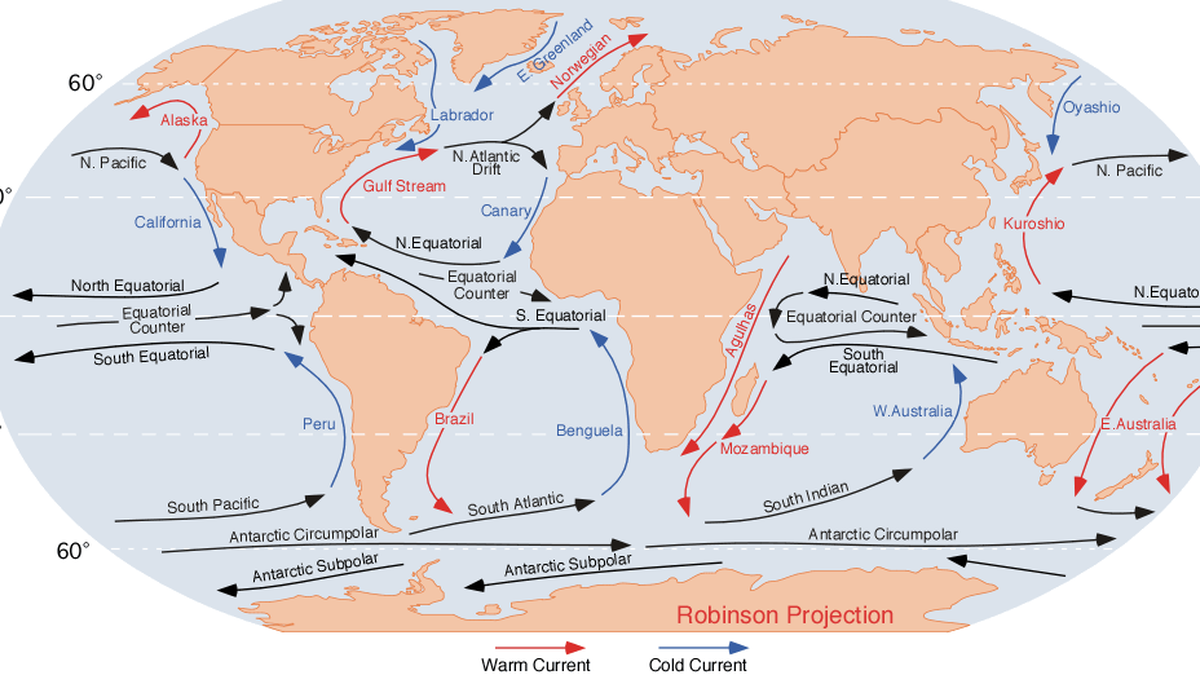
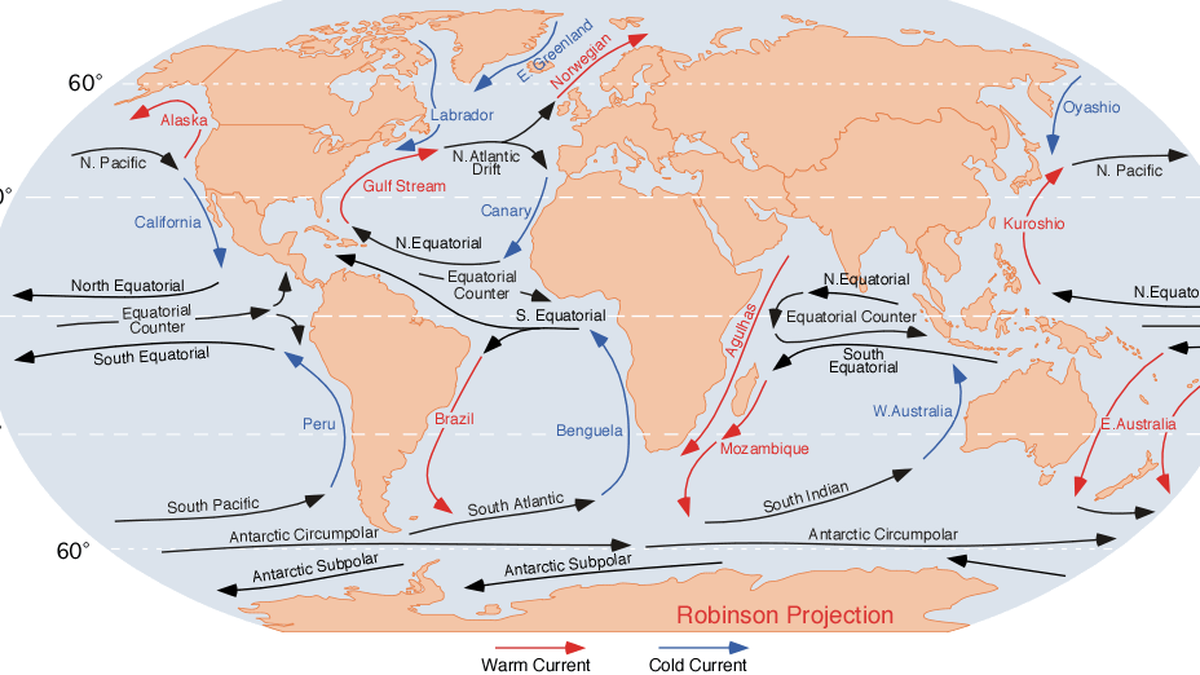
A map showing the various ocean currents on the earth.
| Photo Credit: Public domain
A: The earth formed as a molten world. Around 4 billion years ago, its surface cooled enough for water vapour to condense. Torrential rains then fell for centuries, filling basins to create the first oceans around 3.8 billion years ago.
Once liquid water covered large parts of the surface, three forces set it in motion.
The sun heated the atmosphere unevenly, creating winds. These winds pushed the ocean’s surface, dragging the top layer of water along. The sun also heated water near the equator directly, making it less dense, so it rose and spread towards the poles.
Meanwhile, cold water sank at the poles while warmer water rose near the equator, establishing a ‘conveyor belt’ of circulation called thermohaline circulation.
Finally, the earth’s rotation deflected these moving water masses sideways, bending currents into large swirling circles called gyres. As tectonic plates shifted and continents formed, landmasses blocked the water’s path and forced it into specific routes.
On April 6, scientists reported that the Antarctic Circumpolar Current — the strongest current — formed when narrow passages in landmasses opened up and westerly winds aligned with them, less than 33 million years ago.
Have a question you’d like answered? Send it to science@thehindu.co.in with the subject ‘Question Corner’.
Published – April 08, 2026 08:45 am IST