



Why did Anthropic’s Claude Cowork plugins spook markets? | The Hindu Explains
1. What is it about Claude’s latest release that has spooked markets and hurt Indian IT stocks?
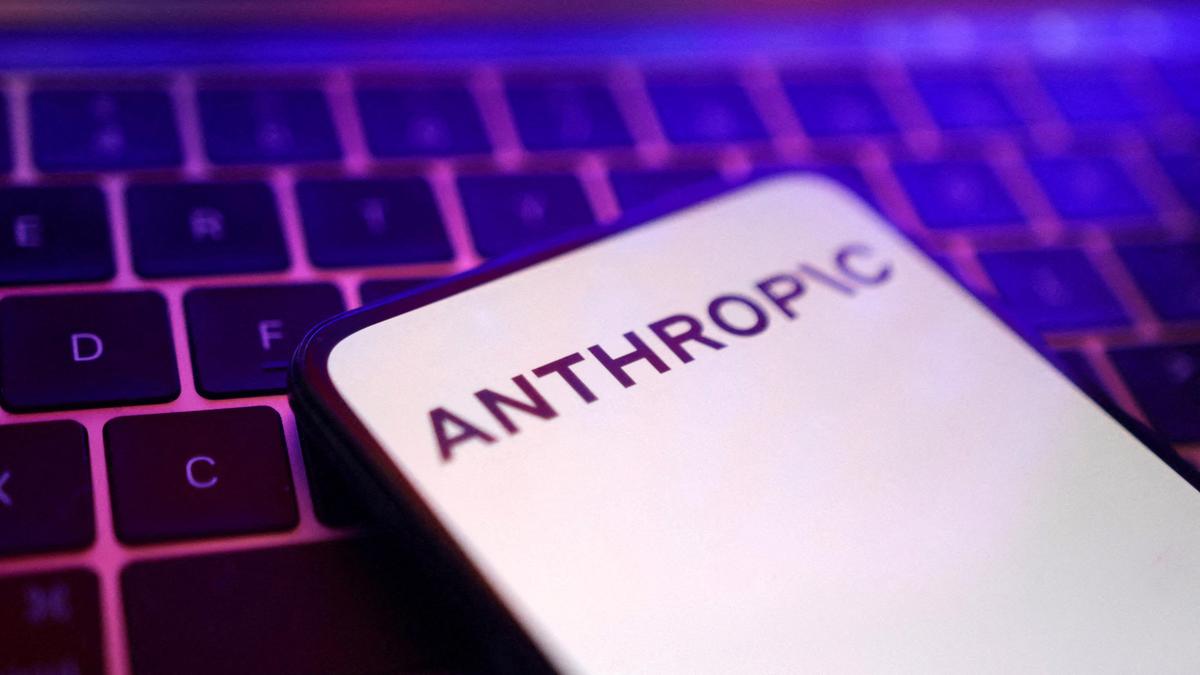
On January 30, Anthropic released 11 open-source plugins for Claude Cowork, its AI workplace suite. Unlike conventional chatbots, Cowork functions as an autonomous digital colleague: it reads files, drafts documents, reviews contracts, and executes multi-step workflows across legal, finance, sales, and marketing—with minimal human instruction. Days later, Anthropic followed with Claude Opus 4.6, a model capable of coordinating teams of AI agents for financial research and due diligence.
The market reaction was swift and brutal. A Goldman Sachs basket of US software stocks fell 6% on Tuesday, February 3. Thomson Reuters plunged 15.8% (a record), LegalZoom sank 19.7%, and RELX dropped 14%. Nearly $285 billion in market capitalisation was erased globally. In India, the Nifty IT index fell 5.87%—its steepest fall since March 2020—wiping out nearly ₹2 lakh crore. TCS and Infosys each fell over 7% on the day; Tech Mahindra lost over 5%. For the week, the index declined 6.4%, with Infosys down 8.2% and Tech Mahindra 7.1%. The core fear: if one AI agent can do the work of teams, India’s headcount-based outsourcing model faces existential repricing.

2. What is the ‘SaaSpocalypse’ and why are SaaS companies threatened?
The term—coined by Jefferies—captures the fear that AI is replacing software, not just enhancing it. Traditional SaaS charges per user seat; when AI agents execute workflows autonomously, fewer humans need the software. As CNN reported, “Why do I need to pay for software if internal development now takes developers less time with AI?” asked Thomas Shipp of LPL Financial. Salesforce is down 26% year-to-date; the S&P 500 Software & Services Index has fallen roughly 20%.
Also Read | How SaaS platforms can help career counsellors guide students
Bank of America called this an “indiscriminate selloff” resembling the DeepSeek moment of January 2025, when China’s DeepSeek shook the assumption that AI required massive capital and Nvidia lost $589 billion in a day. That panic proved overblown. BofA argues this selloff rests on contradictory premises: AI capex collapsing while AI adoption becomes so pervasive it makes software obsolete. Yet the structural shift is real. The question is whether markets are pricing a decade of disruption into a single week.
3. What are real-world examples of AI disruption in legal, financial, and health services?
None of this should have been a surprise. The trajectory was clearly visible. In March 2023, Bloomberg released BloombergGPT, a 50-billion parameter LLM trained on 363 billion tokens of proprietary financial data—the largest domain-specific financial dataset ever assembled. Bloomberg’s CTO Shawn Edwards said it would “enable us to tackle many new types of applications” with “much higher performance out-of-the-box.” BloombergGPT proved that domain-specific AI could outperform general models on financial tasks by significant margins: sentiment analysis, entity recognition, news classification, and query automation. It was the proof of concept. Claude Cowork’s finance and legal plugins are the logical extension—taking what BloombergGPT demonstrated within one platform and making it available as an autonomous agent across any enterprise.
Also Read | Is there an AI bubble? Financial institutions sound a warning
Legal: Claude’s legal plugin—automating NDA triage, contract review, and compliance tracking—triggered the sharpest market reaction. Thomson Reuters recorded its largest single-day drop ever. LegalZoom fell nearly 20%. RELX (LexisNexis’s parent) and Wolters Kluwer each lost over 13%.
Financial: If BloombergGPT was the industry building AI for itself, Goldman Sachs embedding Anthropic is the industry letting AI run itself. Goldman disclosed a six-month partnership with Anthropic to build autonomous agents for trade accounting, compliance, and client onboarding. CIO Marco Argenti said the bank was “surprised” at Claude’s capability beyond coding—particularly in parsing regulatory documents and applying rule-based judgment. The shift from BloombergGPT (a domain model assisting analysts) to Goldman-Anthropic (autonomous agents replacing back-office processes) is the leap that spooked investors. FactSet fell 10%; S&P Global and Moody’s declined sharply.
Healthcare: Cognizant’s partnership with Palantir embeds agentic AI within its TriZetto healthcare platform—which processes over half of US medical claims—handling patient routing, claims adjudication, and supply chain tasks, with human oversight for exceptions.
Anthropic CEO Dario Amodei has warned AI could displace half of entry-level white-collar jobs within 1–5 years. Salesforce’s Marc Benioff has said the company will not hire additional engineers or lawyers because of AI.
4. How are Indian companies addressing this disruption, and how should they?
Indian IT firms are investing, but incrementally. TCS-TPG has committed $2 Billion to Hypervault AI data centres; Wipro earmarked $1 Billion for AI360; Infosys has partnerships with NVIDIA and Intel. Cognizant’s Palantir-TriZetto integration is the most forward-looking—combining domain expertise with a leading agentic platform.
The challenge is pace. As Rest of World noted, Cowork’s plugins automate precisely the high-volume, repetitive work that is Indian IT’s bread and butter. The “slower enterprise adoption” defence rings hollow when Goldman Sachs is embedding Anthropic engineers in its back office to co-design autonomous agents, and the Pentagon has consolidated 75 data/AI systems under Palantir’s $10 billion Army contract. The required pivot is from labour arbitrage to AI deployment partnerships. Indian firms possess unmatched domain expertise in banking, insurance, and healthcare—the Cognizant-Palantir model, where domain knowledge meets platform capability, is the template.
5. Does this hurt Indian IT employment or create a new kind of opportunity?
The immediate signal is concerning. TCS has reduced headcount by approximately 11,000 recently; multiple CTOs have stopped hiring freshers entirely. Entry-level testing, maintenance, and compliance roles are most at risk. One fintech firm told The Ken fresher hiring on certain teams has gone from 80% to zero.

Yet new demand is emerging. Every AI agent that performs autonomous work in a regulated environment — healthcare claims, financial audits, defence logistics — requires what the industry calls HITL (Human-in-the-Loop) processes: oversight, validation, exception handling, governance, and ethical review. These roles demand domain knowledge and judgment, not just coding ability. Palantir itself, despite its autonomous capabilities, emphasises that its ontology-driven approach requires humans to define the business logic and maintain governance frameworks.
Goldman’s Argenti stressed agents will be “digital co-workers,” not replacements, because compliance requires human judgment for edge cases. Three opportunities exist: deployment partnerships that embed and govern agentic platforms inside enterprises; HITL operations centres for regulated industries; and massive reskilling to train engineers to architect and supervise AI systems rather than write boilerplate code.
6. Is this another DeepSeek moment—or something more permanent?
The comparison is instructive. In January 2025, DeepSeek shook the assumption that AI required massive capital; Nvidia lost $589 billion in a day, then rose 58% over the following year. BofA’s Brad Sills explicitly called this week’s selloff “overblown.” Gartner wrote that Cowork plugins are “potential disrupters for task-level knowledge work but not a replacement for SaaS applications managing critical business operations.” Wedbush added that enterprises “won’t completely overhaul tens of billions of dollars of prior software infrastructure.”
Also Read | What is DeepSeek, and why is it disrupting the AI sector?
The pattern will likely rhyme with DeepSeek: sharp selloff, partial recovery, then slow realisation that the underlying shift is real. DeepSeek challenged cost assumptions about building AI. Claude Cowork challenges revenue assumptions about the work AI can replace. One threatened input; the other threatens outputs. But both follow the same arc—panic, recovery, gradual structural repricing. The BloombergGPT-to-Cowork evolution shows this is not a bolt from the blue; it is a trajectory visible for three years. For Indian IT, the window to pivot from labour arbitrage to AI deployment is shorter than the market assumes.
Published – February 08, 2026 11:19 am IST