




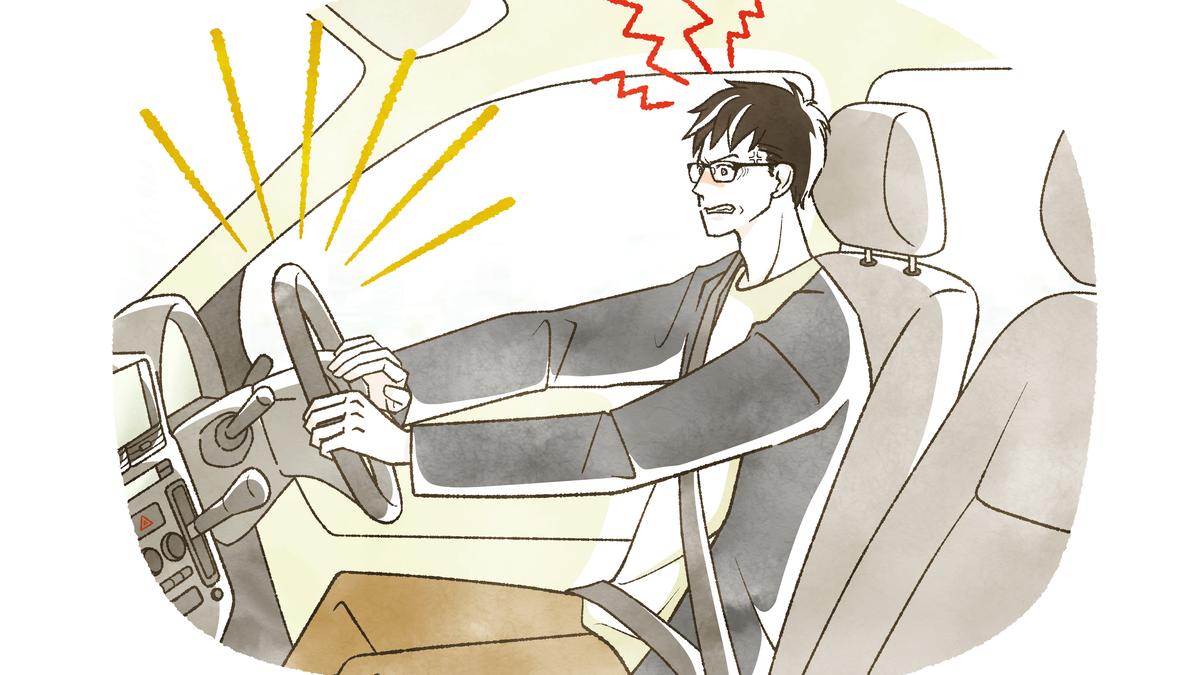
Whose road is it anyway?
Earlier this week, my mother and I went to a North Indian snacks place in Bengali Market, Delhi. As we were crossing the road, my mother ever so lightly nudged her shoulder into mine telling me to wait for the car to go first.
I wasn’t new to this. This is normal. And yet for some reason, I felt a visceral sense of discomfort.
Perhaps my year abroad in Singapore had something to do with it. After a year in a city where pedestrian movement is comparatively regulated through driver accountability, what might otherwise have passed unnoticed began to feel unusually charged and brought into focus an obscure but deeply internalised hierarchy of road use.
In stepping back for the car then, I became piercingly aware of what I was agreeing to, and I began to wonder how authority is rendered, distributed and negotiated on urban roads. It’s usually a mundane, instinctive retort: “Is this your father’s road?” “This is not your father’s road.” “Has your father built this road?”
This negotiation is what Erving Goffman calls “face-work”. In any public encounter, we try to maintain a “face”, a desirable social image of competence and agency. On the road, this face is projected as being capable and assertive, but most important, it is tied to the refusal to be submissive. When a driver barrels through a pedestrian crossing or swerves ahead of another vehicle, they are effectively defacing everyone else in the vicinity. To “save face” then is to snap back with a question about the driver’s lineage as a performative reclamation of one’s right to exist.
While Goffman helps make sense of the jab itself, when you hear the phrase so often, across cities, streets, and situations, it starts to scaffold into something more structural and patterned.
In South Asia, father is a custodian of lineage, property, and caste. Historically, public roads in India were rarely truly public. They were sites of spatial policing, where dominant castes regulated mobility and access, and the right to walk certain paths was a sanctioned privilege. When someone today performs an exaggerated sense of entitlement on the road, they are often leaning into the habitus, a set of embodied social habits, that reflects this history of spatial domination. Asking whether someone’s father “owns” the road then mocks the inheritance-based claims to power through which surnames and wealth are assumed to confer proprietary rights over shared space.
These performances of capital are also heavily gendered. Interactions are governed by honour and theatrical displays of masculinity, making the bravado and confrontation neatly packaged as both a challenge to authority and a contestation of masculinities in public space. What emerges, then, is the phrase as a direct interrogation of what Pierre Bourdieu calls “symbolic capital”.
It is telling that a similar reprimand surfaces even in Singlish. “Siam eh, you think this one your grandfather road ah?” The infrastructural context is different, but the impulse is familiar. Wherever the street becomes a site of push-and-pull, language is repurposed to call out presumptive ownership of shared space, even when formal regulation is robust.
Returning to South Asian societies, then, where resources are chronically scarce, and public infrastructure is poorly regulated, there is an acute, almost debilitating sensitivity around the boundary between shared and private space. To top it all off, this tension is also baked into the very design of the street. Indian roads are often flawed imitations of Western models with wide stretches designed for high-speed cars that ignore the “chaotic traffic mix” of rickshaws, animals, and pedestrians that actually inhabit the space (Biswas, 2025), while the rules meant to protect non-motorised users remain absent, intermittently enforced, or both.
It is a design that inherently favours the rich, and in that vacuum, acts like double-parking or queue-cutting exists in a state of constant duality. On one hand, they are the physical expressions of economic and symbolic capital. On the other hand, they are subversive ways of clawing back space. Shouting with biting sarcasm then, becomes a grassroots enforcement mechanism (however weak and inconsistent) and a demand to democratise public space.
Indian street language is laden with irony, ridicule, and mockery because it lets frustration, humour, and moral correction sit in the same breath. When congestion, administrative apathy, and inequality pile up, the road becomes a place where those pressures leak out, and such abuse becomes a way of saying that something here is not right.
aayushidas2000@gmail.com
Published – February 15, 2026 04:32 am IST