



Union Budget 2026-27: Pushing welfare towards the States
Budget 2026-27 for the social sector is unusual, as it does not contain any new flagship schemes, which had become par for the course.
Low allocations and spending
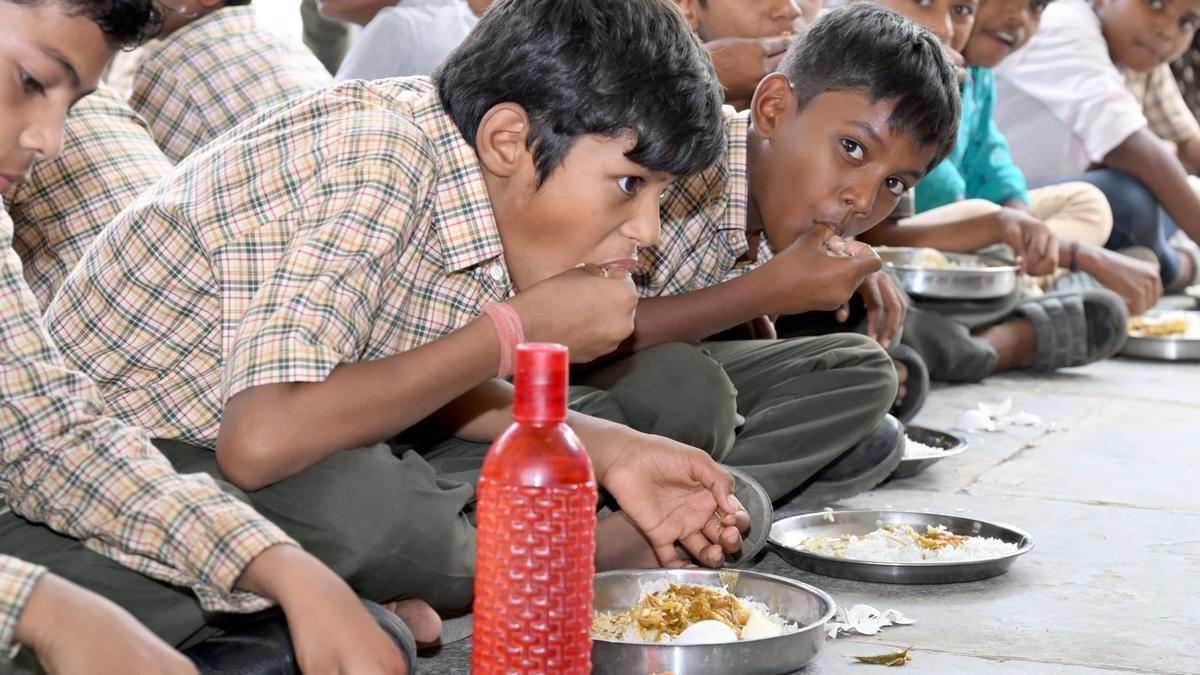
However, the neglect of the sector in actual allocations continues. Schemes targeted at the most vulnerable sections of the population — children, pregnant women, the aged, single women and the disabled — such as the National Social Assistance Programme (NSAP) providing social security pensions; SAMARTHYA, which includes maternity entitlements; PALNA for creches; PM POSHAN, which provides mid-day meals in schools; and Saksham Anganwadi, for young children have for long received low allocations, often declining in real terms. This year too, the trend continues, with allocations increasing between 0.2% (NSAP) to 5.2% (Saksham Anganwadi) in nominal terms. Further, for all these schemes, revised estimates (RE) for 2025-26 are lower than budget estimates (BE), indicating that even what is budgeted is not spent.
The story remains the same for bigger sectors such as health and education, where 2026–27 BE allocations increase by only 6.4% and 8.3% over 2025–26 BE. Even these minimal increases need to be taken with a pinch of salt as 2025–26 RE for both sectors fall below BE (by 3.7% and 5.2%).
The RE for 2025-26 are lower than what was initially allocated across the board for most social sector heads. The largest declines are in Urban Development (41%), Rural Development (20%), Development of the North-East (24%), and Social Welfare (17%). Schemes which were hyped in previous budget announcements see poor spending. For instance, allocation for the Jal Jeevan Mission has fallen from ₹67,000 crore in the 2025–26 BE to just ₹17,000 crore in the RE. The 2025-26 BE for PMAY-Grameen was ₹54,832 crore and PMAY-Urban was ₹19,794 crore. The RE for these schemes is much lower at ₹32,500 crore and ₹7,500 crore, respectively; yet, the allocations in Budget 2026-27 are once again around the same amounts as the previous year.
As a share of total expenditure, allocations to these sectors and schemes remain around the same. Overall, centrally sponsored schemes (CSS) show significant underspending, with total allocations falling from ₹5,41,850 crore in the 2025–26 BE to ₹4,20,078 crore in the RE (the 2026–27 BE stands at ₹5,48,798 crore).
Misplaced focus
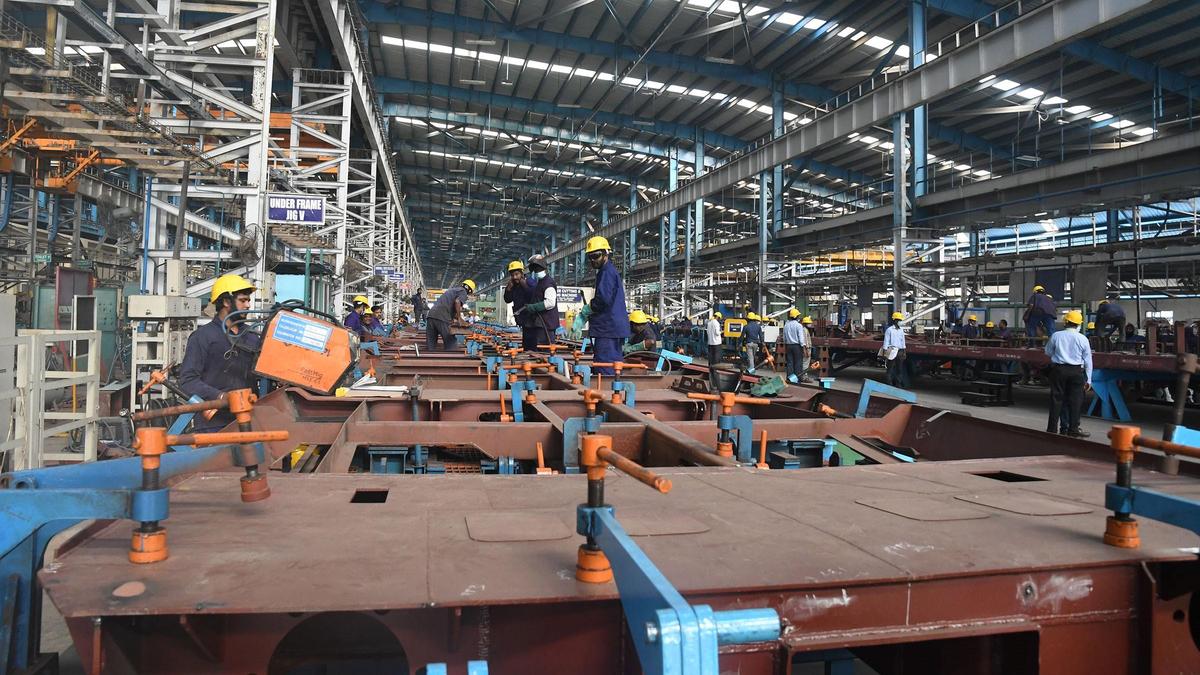
The emphasis on capex to reduce slackness in the economy continues, with over ₹12 lakh crore being allocated this time. A thorough assessment of its efficacy in creating employment or crowding in private investment is still missing. The challenges facing the Indian economy remain the same — lack of gainful employment opportunities (especially for the educated youth), a stunted structural transformation, low productivity and hence low wages and incomes, resulting in poor purchasing power. Addressing these requires more sustained policy interventions and the Budget alone cannot do much.
Yet, the priorities signalled by the Budget remain unchanged, focusing entirely on supply-side measures in the hope of a market response. While this has not happened so far, the relevance of education, nutrition, health and social security for economic policy, and hence budgets, remains unacknowledged.
Shifting the burden
A trend in the social sector that Budget 2026-27 consolidates is that spending on welfare is increasingly in the domain of State governments. Following the 2015 reforms, cost-sharing norms were changed for most CSS, with greater spending shifted to States. While some major schemes continued to be entirely centrally sponsored, with the repealing of the MGNREGA and the introduction of the VB-G RAM G, that too has now changed drastically. The allocation of over ₹96,000 crore for VB-G RAM G in this Budget, for instance, would only fructify if the States put in around ₹56,000 crore (with the new cost-sharing ratio of 60:40). Therefore, to get a true understanding of welfare spending in the country, a granular analysis of State budgets is required.
Do the States have the wherewithal to spend? While the burden of spending is increasing, the Centre’s support to the States is declining. The States’ share in total tax revenue receipts is only around 34%, much less than the Finance Commission–recommended 41%, because of the increasing prevalence of cesses and surcharges in the Centre’s revenue receipts. The Finance Commission’s grants to States have also declined slightly from ₹1,32,767 crore in the 2025-26 BE to ₹1,29,397 crore in the 2026-27 BE.
The arena of welfare spending has now shifted to the States, while the Centre continues to drive the agenda by legislating and setting norms. How are States balancing their own priorities with the requirements of spending on central schemes? And what are the implications for people’s access to social services? These are the questions we should be asking.
Dipa Sinha, Associate Professor at Azim Premji University. Views expressed are personal
Published – February 02, 2026 12:58 am IST