




Uber Wants To Win The Autonomous Vehicle Race. It’s Betting On All Of The Horses
The global transportation sector is in the middle of a generational shakeup, all thanks to electrification and autonomy. While automakers like Tesla and General Motors are promising higher levels of autonomy in privately owned cars in the future, the technology could leave a bigger and more immediate impact on the ride-hailing business.
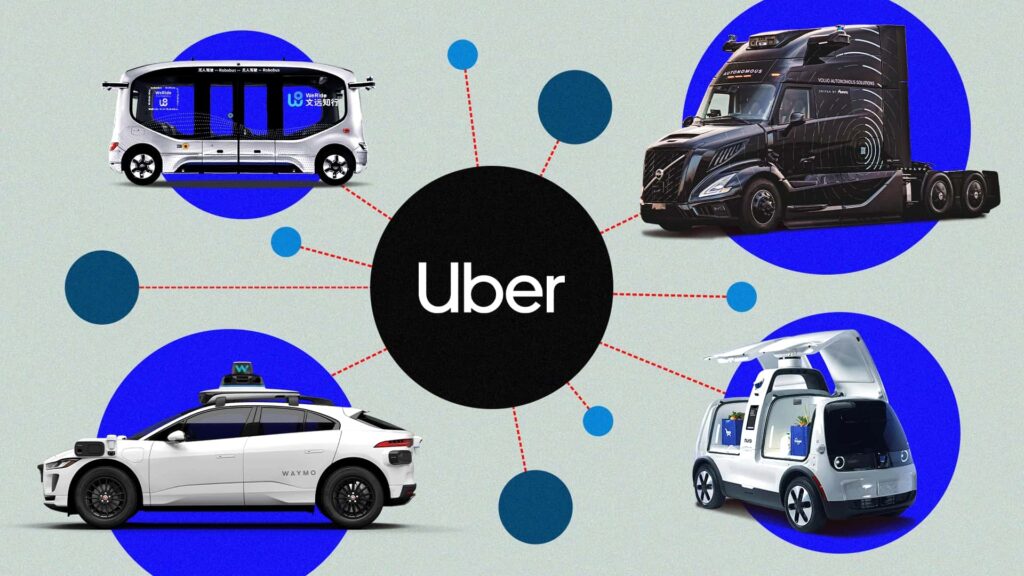
Uber wants to be at the center of that shift. The ride-hailing giant has inked over 20 partnerships with automakers and self-driving technology startups in just the last few years. If autonomous vehicles (AVs) are going to scale anywhere, Uber wants to be the platform that connects them to riders. Instead of relying on a single hardware and software supplier, Uber believes it can work with almost all of them.
All of this raises some obvious questions: Will Uber’s many bets pay off? What will it mean for riders over the next few years? And what happens to the human drivers who rely on the Uber platform to make ends meet? InsideEVs interviewed independent experts, talked to one of Uber’s partners and reviewed company statements to paint a detailed picture of its aggressive AV expansion plans.

Photo by: Lucid Motors
Mapping Uber’s Many AV Partnerships
Uber aims to offer autonomous rides in 15 cities by the end of 2026, and be the world’s “largest facilitator of AV trips” by 2029. It’s doing that by striking a dizzying number of deals around self-driving software, fleet maintenance, charging and more.
Uber’s autonomous technology tie-ups include Waymo and Nuro in the U.S., Baidu and WeRide in the Middle East and Momenta and Wayve in Europe. It has enlisted manufacturers like Stellantis, Foxconn and Lucid to produce robotaxi vehicles.
The expansion extends beyond passenger rides, spanning Avride’s Uber Eats delivery robots and autonomous cargo hauling with Aurora on the Uber Freight network. But scaling these businesses requires more than just back-to-back strategic deals.
The company is also investing $100 million to build out fast-charging stations for its AV fleet, teaming up with networks like EVgo in the U.S. and Ionity in Europe. And most recently, Uber announced a new Autonomous Solutions initiative to help its partners commercialize their technology. It will provide them tools like AV training data, customer service, fleet operations support, a remote-assistance platform and even an in-vehicle user interface—the critical details that can, in theory, help AVs scale.
| Uber’s Partners | Category | Vehicle/Platform | Geography |
| Waymo | Robotaxi (Ride-hail) | Waymo AV fleet | Austin & Atlanta |
| Lucid + Nuro | Robotaxi (Ride-hail) | 20,000 Lucid Gravity w/ Nuro stack | U.S. |
| May Mobility | Robotaxi (Ride-hail) | Toyota Sienna w/ May AV tech | Arlington, Texas |
| Volkswagen | Robotaxi (Ride-hail) | ID. Buzz autonomous vans | U.S. |
| Waabi | Autonomous Trucking / Robotaxi | 25,000+ robotaxis (planned) | TBD (U.S.) |
| Wayve | Robotaxi (Ride-hail) | Wayve AV tech | U.K. |
| WeRide | Robotaxi (Ride-hail) | 1,200 robotaxis | Abu Dhabi, Dubai, Riyadh |
| Pony.ai | Robotaxi (Ride-hail) | Pony.ai AV fleet | Middle East |
| Momenta | Robotaxi (Ride-hail) | Momenta AV platform | Europe |
| Baidu (Apollo Go) | Robotaxi (Ride-hail) | – | Dubai |
| Aurora | Autonomous Trucking (Freight) | Class 8 semi trucks | Dallas-Houston |
| Nvidia + Stellantis | Robotaxi (Ride-hail) | 5,000 Stellantis vehicles w/ Drive Hyperion | U.S. & overseas |
| Nvidia + Mercedes-Benz | Robotaxi (Ride-hail) | Mercedes-Benz S-Class w/ Drive Hyperion | Abu Dhabi, global cities |
| Avride | Robotaxi + Delivery | Hyundai Ioniq 5 robotaxis + sidewalk robots | Dallas, Austin, Jersey City |
| Tawasul | Fleet Management | – | Middle East |
| New Horizon | Fleet Management | – | Middle East |
| Serve Robotics | Autonomous Delivery (Sidewalk) | Serve delivery robots | U.S. |
| Cartken + Mitsubishi Electric | Autonomous Delivery (Sidewalk) | Cartken delivery robots | Japan |
| Coco Robotics | Autonomous Delivery (Sidewalk) | Coco delivery robots | U.S. & Finland |
| Flytrex | Drone Delivery Pilot | Flytrex drones | U.S. |
| Starship | Autonomous Delivery (Sidewalk) | Starship delivery robots | Europe |
| Torc Robotixs | Autonomous Trucking (Freight) | Class 8 semi trucks | U.S. |
| EVGo & Revel | AV Charging | – | U.S. |
| Hubber | AV Charging | – | London |
| Ionity | AV Charging | – | London |
| Electra | AV Charging | – | Paris, Madrid |
These partnerships are crucial. Uber faces intense pressure from investors who increasingly view AV players like Waymo and Tesla as a threat to its core business, and its stock is down nearly 15% year to date. The company now needs to prove that it can help its AV partners scale up. Its massive network should help on that front.
Uber’s Ridership Is Unmatched
Uber claims to have over 200 million monthly users globally, with over 40 million paid rides by the end of last year. That sort of customer base would be the envy of any new business, according to William Riggs, the director of the Autonomous Vehicles and the City Initiative at the University of San Francisco.
“When you have a captive audience, you tap into that captive audience,” Riggs told InsideEVs in an interview. It’s not cost-effective for AV companies to acquire new customers all by themselves, Riggs said. Uber already has millions of riders who have the app installed and payment details saved. Its 20-plus AV partners can plug into its existing user base without spending heavily on marketing or rider incentives.
Not all robotaxi players are all-in on partnerships. Waymo is logging more than 400,000 paid driverless rides per week across multiple U.S. cities. Some of those rides come through the Uber app in Austin and Atlanta, while others are handled by Waymo’s own platform. Tesla has deployed roughly 45 Model Y robotaxis in Austin, according to Robotaxi Tracker as of writing, though the company still employs human safety monitors on board. Musk’s company wants to go solo, controlling the vehicles, technology and user experience top to bottom.
Photo by: Avride
But most AV startups don’t have a trillion-dollar parent. Waymo is backed by Alphabet, which is valued at $3.7 trillion as of writing. It has the resources to keep absorbing years of losses in the pursuit of scale. Tesla, for its part, has effectively staked its entire future on autonomy and robotics. For smaller AV companies, partnering may be the way to go.
Developing Robotaxis Is Hard
Uber once bet big on building its own self-driving technology. It spent more than $1 billion on its Advanced Technologies Group in-house AV unit. The company scrapped that effort in 2020 in the wake of a high-profile crash during testing, selling the division to Aurora while retaining a sizable ownership stake.
Now the company has recast itself as a broker of robotaxi tech, rather than a developer. Even though Waymo and Tesla are threatening to upend Uber and Lyft’s duopoly in the rideshare market, the company believes its partnerships will help its business grow exponentially in the coming years.
“We are convinced that AVs will unlock a multi-trillion dollar opportunity for Uber,” CEO Dara Khosrowshahi said during the company’s Q4 and full-year 2025 earnings call earlier this month. “AVs will change how trips are supplied, but not how demand is aggregated. The platform that can bring the highest utilization and superior reliability will capture a large share of value,” he added.
Photo by: Stellantis
Some of Uber’s early data points are promising. The company claims its autonomous trips in Austin and Atlanta—through Waymo, available on the Uber app—had 30% higher utilization rates. These trips also had a 25% faster estimated time of arrival (ETA) compared to AVs deployed by first-party operators in Los Angeles and Phoenix.
That’s also why Uber’s partners are on board with horizontal integration. “We made this bet that an ecosystem was going to form around AVs where we won’t have to own the entire value chain,” Andrew Chapin, COO of self-driving technology firm Nuro, told InsideEVs. “There’s a wide swath of companies that need autonomous solutions, but don’t have the capital or technical know-how to build that in-house.”
One of Uber’s biggest deals last year was a three-way partnership with Lucid and Nuro. Uber plans to purchase 20,000 Lucid Gravity SUVs, equipping them with Nuro’s proprietary autonomous hardware and software directly on Lucid’s production line in Casa Grande, Arizona.
Photo by: Lucid Motors
The first of these Gravity robotaxis will enter service this year in San Francisco. There are a few advantages the service may have over Waymo’s taxi business.
The Gravity could deliver superior operational efficiency compared to Waymo. The base Touring trim has a strong EPA range of 337 miles, while the Grand Touring stretches to 450 miles. It’s also among the fastest-charging EVs in the U.S., capable of adding 200 miles of range in roughly 11 to 15 minutes, depending on the trim.
In theory, that means more time spent ferrying passengers and less downtime for things like charging and maintenance compared to Waymo’s Jaguars. Still, that would largely vary depending on the city and how quickly Uber smooths out its logistics and operations.
Additionally, Nuro’s hardware costs an “order of magnitude less” than what Waymo uses on its Jaguars, Chapin said. That may help bring costs down. Then again, Gravity SUVs don’t come cheap, at $80,000 to start.
Consolidation Is Inevitable
There’s no guarantee that all of these deals will survive in the long term, experts said. It may be the case that a few technology providers emerge as winners, while others die out.
“It’s difficult to see a future where AV technology is commoditized across a large number of players,” Nuro’s Chapin said.
Photo by: May Mobility
But there are a few reasons to believe Uber will continue to be at the center of this revolution, Harry Campbell, founder of The Driverless Digest newsletter and The Rideshare Guy website, said. Most riders already have Uber and Lyft apps installed and payment methods saved on their smartphones. Tech-forward users may download Waymo or Tesla’s Robotaxi app. But will they install separate apps for every new entrant? That’s far less certain.
“I’m skeptical that there will be more than a few ways to call a ride with your phone, whether it’s human-driven or robotaxi,” he said.
Uber also enjoys flexibility that pure-play AV companies don’t. It can serve a baseline demand with robotaxis, then respond to spikes during weekends, holidays and major events with a mix of human drivers and AVs, Campbell said.
“Human drivers can go home in low demand,” he said. They take care of their own vehicles, including paying for gas, maintenance and insurance. AVs, on the other hand, need to have extremely high utilization rates for a return on the investment. The AV operator pays for the charging and maintenance, which may require multi-million dollar fleet depots in big cities, while remaining liable for any system malfunctions or crashes.
Photo by: Uber
Human jobs won’t vanish suddenly, but may see an impact, Campbell said. They could earn less in the future during lower demand periods, and may have to rely more on weekends and holidays when demand spikes and prices are higher.
Despite this new era of optimism around self-driving cars, robotaxis won’t change the game immediately. Goldman Sachs researchers predict that the U.S. will have 35,000 robotaxis by 2030, and that they will account for 8% of the country’s ride-hailing market. Uber also believes growth will be gradual. It said in its latest shareholder letter that robotaxis (both on and off its platform) currently account for just 0.1% of all ride-hail trips globally. That share will grow, but will still remain a very small portion of overall rideshare trips for many years to come, it said.
And there are many questions and hurdles standing in the way of an autonomous future.
Robotaxis aren’t 100% safe or reliable. We haven’t seen them operate flawlessly in inclement weather, and their vulnerability to sudden power outages like the one that happened in San Francisco during the Christmas week was eye-opening. The services don’t make money yet and require enormous upfront investments in technology—hence Waymo’s recent $16 billion funding round. Operators need to navigate a patchwork of inconsistent regulations in the U.S. while they scale up.
“We’re at an exciting inflection point as multiple companies have shown that self-driving technology can work,” Campbell said. ”Now it’s all a matter of scaling, commercialization, and figuring out the business model.”
Contact the author: suvrat.kothari@insideevs.com