





The new Canada-India economic alignment emerges
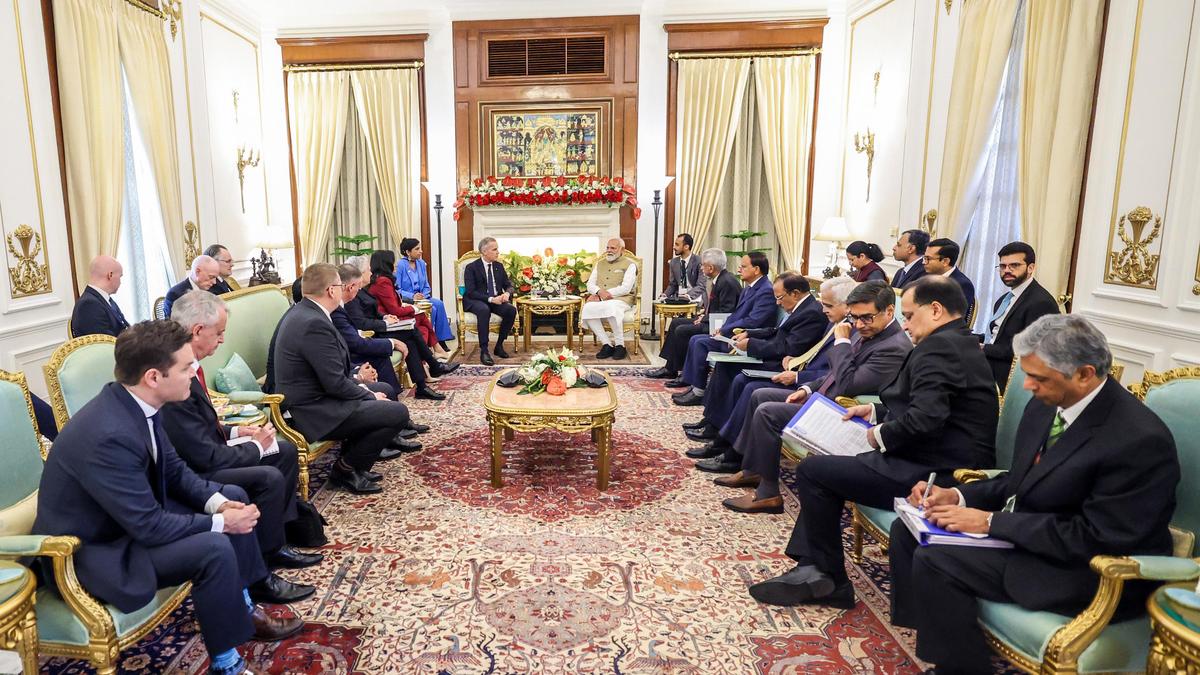
Canada’s Prime Minister Mark Carney concluded a landmark visit to India a week ago (February 27 to March 2, 2026), one that began with direct dialogue with India’s business leaders in the financial capital of Mumbai and then shifted to the policy corridors of New Delhi with Prime Minister Narendra Modi. The visit was not symbolic. It was commercial. It was forward-looking. It was anchored in the recognition that India’s growth story is one of the defining economic realities of our time.
For too long, the Canada-India relationship was defined by episodic tensions and reactive diplomacy. With this visit, political will has been re-established at the highest levels and commercial doors have been opened. But opportunities, however promising, do not convert themselves into jobs, exports, or investment. That will require sustained engagement on both sides.
Big two-way opportunities exist for Canadian and Indian firms. One of the most consequential moments of this visit was the formal signing of the Terms of Reference, which officially relaunched Comprehensive Economic Partnership Agreement (CEPA) negotiations. Both governments have committed to finalising this ambitious agreement by the end of the year and subsequently doubling bilateral trade to $70 billion by 2030.
This matters for Indian business: a CEPA would reduce barriers for Indian exporters, create clearer rules for Indian investors in Canada, and expand access in sectors that range from technology to pharmaceuticals. It would also give Indian firms a stronger platform into North America through a predictable, rules-based economy. Nevertheless, signing the Terms of Reference is only the starting point, not the finish line. Trade agreements create frameworks but do not automatically generate market share. This new political alignment has established ideal conditions for companies on both sides to form partnerships, invest capital and build joint ventures. Already, it is clear what is possible.
Energy, minerals synergy, other areas
The historic, Canadian $2.6-billion, nine-year uranium supply agreement between the Government of India and Cameco demonstrates the level of trust that underpins strategic cooperation. Nuclear energy requires regulatory confidence and long-term commitment, demonstrating that when political leadership aligns with commercial readiness, transformative agreements follow.
Energy and critical minerals remain clear areas of complementarity. Canada is a ready supplier of responsibly produced oil and gas, uranium for clean baseload power, and critical minerals essential for electric vehicles and advanced manufacturing. India’s scale and demand provide long-term market certainty.
At the same time, there is a significant opportunity for Indian companies to expand their footprint in Canada.
India’s technology sector is globally competitive, with firms such as HCL Technologies recently announcing investments in Canada’s innovation ecosystem. Canada offers North American market access, deep Artificial Intelligence (AI) research clusters, stable regulations, and clean energy, making it a natural partner.
In financial services, long-standing joint ventures, such as Sun Life-Aditya Birla, show that cross-border collaboration succeeds when both sides commit long-term. Agriculture presents another opening. Canada’s agri-food exporters can help complement India’s food security and sustainability needs.
There is also an enormous opportunity for Canadian institutional investors and pension funds — which have now invested over Canadian $100 billion in India’s infrastructure and real estate development — to further explore venture and public equity offerings. Already, Fairfax India has committed to India’s long-term development through significant investment in Bengaluru airport, and Brookfield from telecom towers to renewable energy projects. India’s urbanisation, logistics corridors, renewable energy build-out, and industrial parks require consistent capital. Canada can provide it. Conversely, Indian infrastructure and technology firms will find opportunities in Canada’s digital infrastructure sectors, clean energy, and advanced manufacturing.
The next phase
Mr. Carney has also extended an invitation to Mr. Modi to visit Canada, an important signal that this renewed partnership is intended to be sustained and reciprocal. A new window of opportunity has opened. India has trade deals with trusted allies such as Australia, the United Kingdom, New Zealand, the European Union, and the United States. Canada continues to diversify its economic partnerships amid geopolitical uncertainty. Closer alignment with India is complementary and strategic in today’s geopolitical environment.
This is a defining moment for Canada and India’s joint economic futures. It is an opening shaped by a changing world and renewed political resolve. Companies have an opportunity to seize the momentum with action, ambition, and conviction.
Victor Thomas is President and CEO of the Canada-India Business Council
Published – March 09, 2026 12:08 am IST