





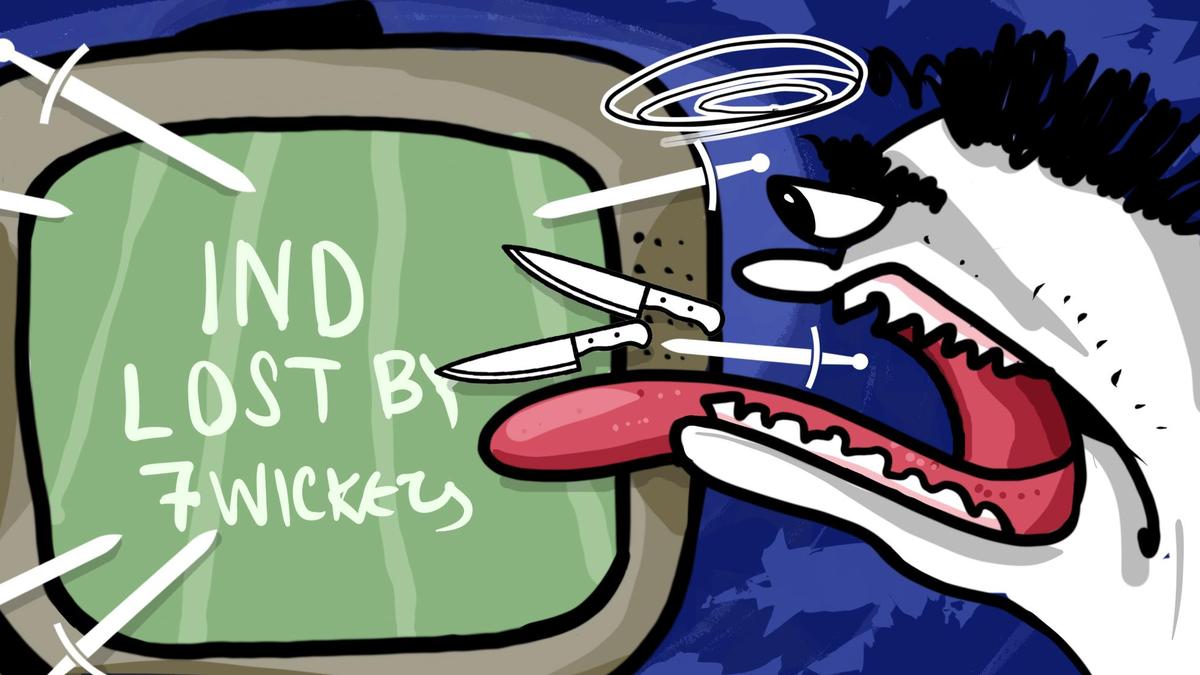
The national sport after a sporting loss
The moment a team loses, the real game begins.
The scoreboard may indicate defeat by seven wickets, but that is merely the trailer. The best part is the explanation phase, a carefully choreographed national ritual involving team managers, expert commentators, former players, psychologists, astrologers, and that one uncle who last played cricket in 1978 but has very strong views.
In theory, sports is simple. One team wins, the other loses. In practice — especially in India — defeat is unacceptable unless accompanied by several prime-time debates, and sage pronouncements that deliver technicalities-filled sound bites while explaining nothing.
The team manager defends the rout by selecting from his standard phrase book. Blinking in slow motion, he says, “We gave it our 100%.” That is comforting, because the alternative would be alarming. He may also mention “conditions”, a mysterious force that appears only after defeats and never during victories.
Next come the expert commentators who had earlier confidently predicted victory as though they had access to some privileged information. Undeterred by this minor detail, they now explain that the loss was inevitable due to “poor shot selection”, “lack of temperament”, and “failure to handle pressure” — all of which become visible only with hindsight, much like potholes after your suspension breaks.
Then arrive the sports authorities who form committees, without which no loss can be complete. The committee will “review the performance”, “identify gaps”, and “submit a report”, which will be forgotten entirely by the next tournament.
Meanwhile, two full pages are devoted to post-match interviews, photographs of dejected players staring meaningfully into the middle distance, and charts explaining where it all went wrong. There will be arrows, circles, and maps, all proving conclusively that if only Player X had stood three inches to the left, history would have changed.
Patriotic fervour
In India, cricket is indistinguishable from hardcore patriotism. Supporting the team and defending national pride are so close that even the third umpire can’t spot the difference.”When the team wins, we say, “We did it.” When the team loses, we say, “They betrayed us.” Flags are waved, players are trolled, and metaphors involving war are deployed. Netizens, who were distributing virtual garlands just a season ago, now unsheathe their keyboards. The coach, previously hailed as a visionary, becomes clueless overnight. The captain, once compared to ancient kings and modern CEOs, is now unfit to lead a neighbourhood carrom tournament. Memes are generated at industrial scale. Resignations are demanded. Childhood photos of players are scrutinised for early signs of incompetence.
It is a remarkable transformation — heroes to persona non grata in under 24 hours. If only our bureaucracy moved at this speed.
What is most fascinating is the emotional investment. Blood pressure rises and falls in sync with run rates. Dinner tastes worse after a collapse. Sleep is disturbed by that one dropped catch. All this for sportsmen who, it must be noted gently, are doing quite well financially and will recover from the trauma in air-conditioned comfort. Win or lose, the star players with advertisement contracts will eventually be laughing all the way to the bank, endorsing products they have no clue about.
So how should the average, tax-paying, BP-monitoring citizen handle defeat with equanimity? One option is to avoid the sports page entirely after a loss. Treat it like bad weather: acknowledge it exists, but don’t step outside unnecessarily. Another is to resist the urge to break the TV screen, remembering that the TV did not miss the easy chance at slip.
A more sustainable approach is deep breathing. Inhale during the analysis, exhale during the justification. Repeat until the phrase “We’ll come back stronger” no longer triggers rage.
Best of all, one can go philosophical. Sports, after all, is uncertainty made entertaining. If outcomes were guaranteed, we would not watch. Victory teaches us celebration; defeat teaches us restraint, humour, and occasionally the wisdom to log off.
And no, we should definitely not contemplate drastic measures over a game. If a loss feels life-altering, it may be time to switch channels, step outside, and remember that tomorrow the sun will rise, the newspapers will move on, and the same players will once again be heroes — just one win away. Until then, let the explanations flow. They are our most consistent post-match performance.
sagitex@gmail.com
Published – February 01, 2026 04:43 am IST