




Tesla Snatches Back World’s Top EV Spot After BYD Sales Plummet 25%
- Tesla is back on top as the world’s biggest electric car maker.
- The American company’s global deliveries went up 6.5% in the first quarter.
- China’s BYD, which was the world’s top EV maker last year, slips to second place after its EV sales dropped 25.5% in Q1.
Tesla is the world’s biggest electric car manufacturer once again, after its delivery numbers went up in the first quarter and its main competitor, China’s BYD, recorded a double-digit dip.
The American company led by Elon Musk delivered 358,023 EVs in the first three months of 2026, a 6.5% increase over the same period last year. Meanwhile, BYD, which last year took home the crown and made headlines the world over, had a rough first quarter, with 310,389 pure EVs reaching new customers, a 25% decrease year over year.

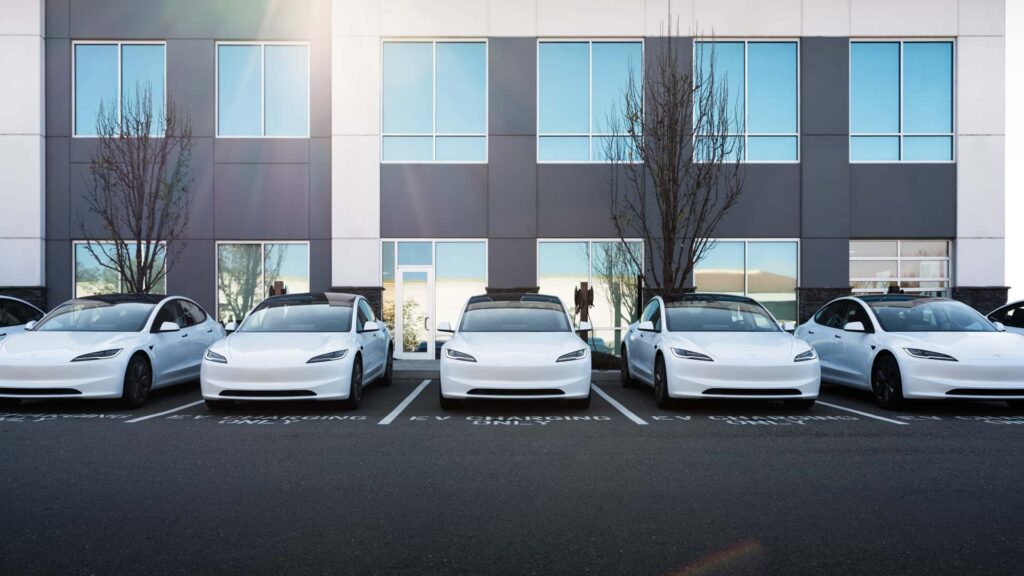
The Model Y is Tesla’s best-selling model.
Photo by: Mack Hogan/InsideEVs
That said, BYD makes plug-in hybrids (PHEVs) too, not just all-electric cars. Overall, the Chinese company sold nearly double the number of cars compared to Tesla, with 695,772 so-called new-energy (NEVs) passenger vehicles sold in the first quarter globally, down 30% from last year.
The two companies have locked horns for the number one spot in global EV sales since 2023, when BYD first outnumbered Tesla in EV deliveries in the fourth quarter. The Chinese giant finished 2025 as the biggest EV manufacturer on the planet, but now its grip is slipping. Its cars are nowhere to be found on American roads, and the company has slowly been ramping up deliveries in Europe, where the EV market is growing stronger month after month.
In its home market, though, things are not as rosy as they used to be. The Chinese government has slashed subsidies for new EV buyers, capping a sought-after bonus at 20,000 yuan (roughly $2,905) for new car purchases. Last year, the trade-in subsidy scheme offered 12% of a new car’s price as an incentive, regardless of the car’s MSRP. What’s more, EV buyers now have to pay a 5% tax on their vehicles, whereas the previous rule exempted EVs. In other words, buyers get fewer incentives and have to pay more taxes.
It’s more of the same for Tesla. Stateside, the $7,500 federal tax credit for new EVs was canceled last year, forcing all automakers, not just Tesla, to rethink their strategies. What’s more, the American company is charging forward with just two main cars in its portfolio, the Model 3 and Model Y, whereas BYD has a much more diversified lineup.