



Taking back the walls at Lodhi Colony
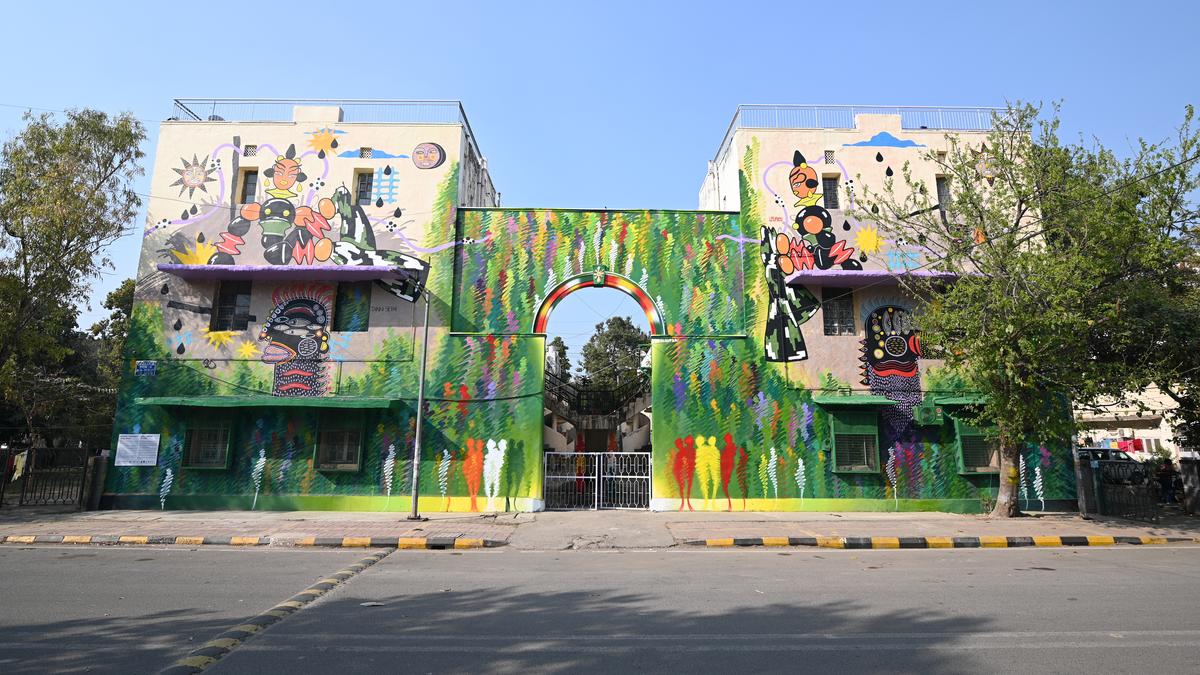
Large letters crawl over a blue wall, spelling out questions on water and access. Another wall has portraits of women teaching their children. Elsewhere, there are abstractions in black and white, and colourful spray-painted silhouettes, as though viewed through a rain-splattered window.
In February, the murals in Delhi’s Lodhi Colony went up to 66. As the public ‘art district’, which began as an experiment in 2015 by the St+art India Foundation, turned 10, six new works took up residence. This included a collaborative one by U.K.-based Raissa Pardini and the late artist and St+art co-founder Hanif Kureshi. The mural, which centred on issues of water scarcity, drew on the artists’ long-term exchanges with sign painters in Old Delhi.
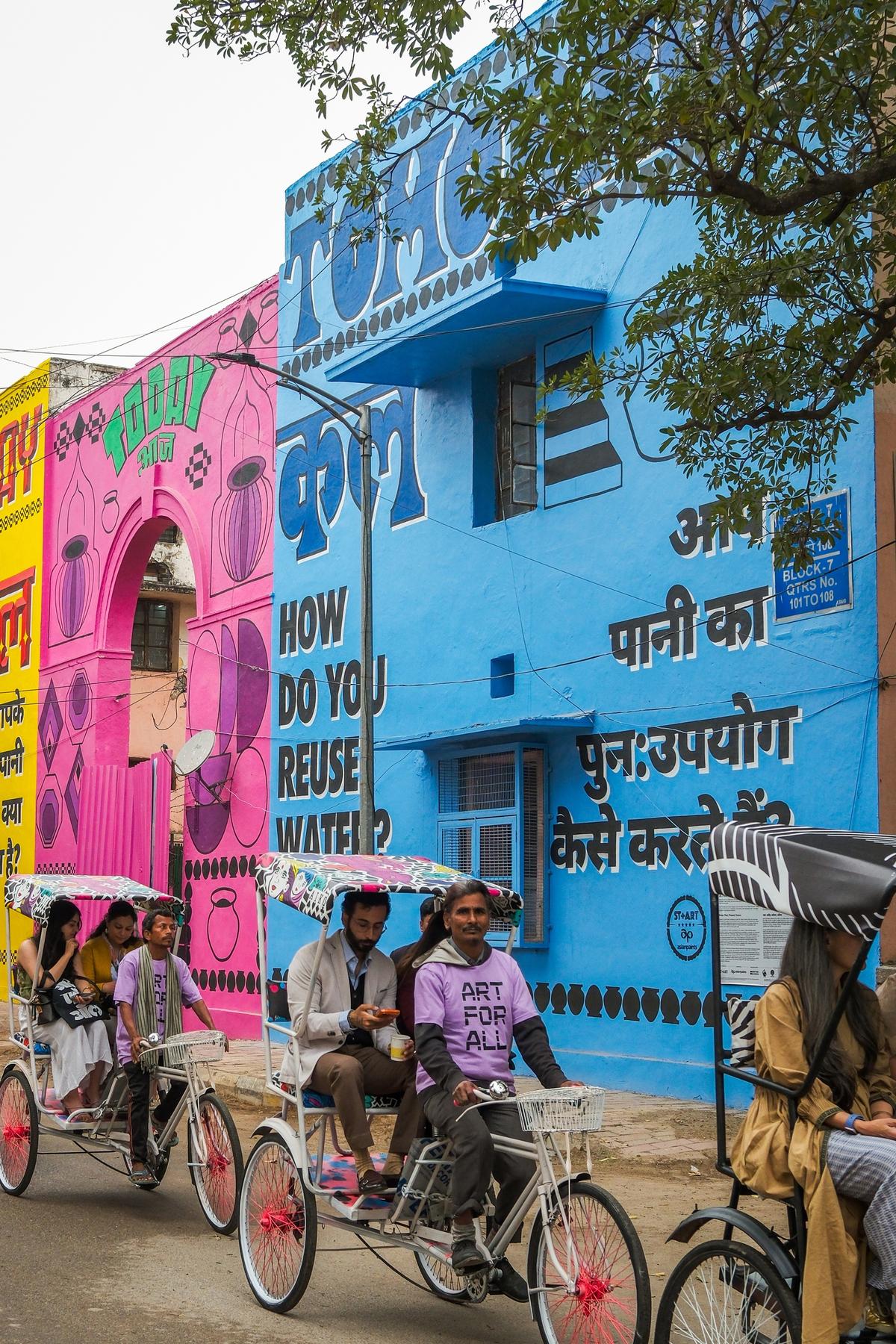
A cycle rickshaw tour of Lodhi Art District’s murals
| Photo Credit:
Courtesy Asian Paints
“We wanted to leave a cultural legacy in our cities, which were being overrun with commercial advertisements,” says co-founder Arjun Bahl, speaking to the scale and ambition of the district, developed around the same time as India’s Smart Cities Mission. Despite being founded through organic meetings among friends, much of its early (and continued) momentum was gained through partnerships with local government bodies, embassies and private companies. If public art was to be rethought as urban infrastructure, a bridge had to be made between street art’s counter-cultural instincts and the institutions that could grant it scale and longevity.
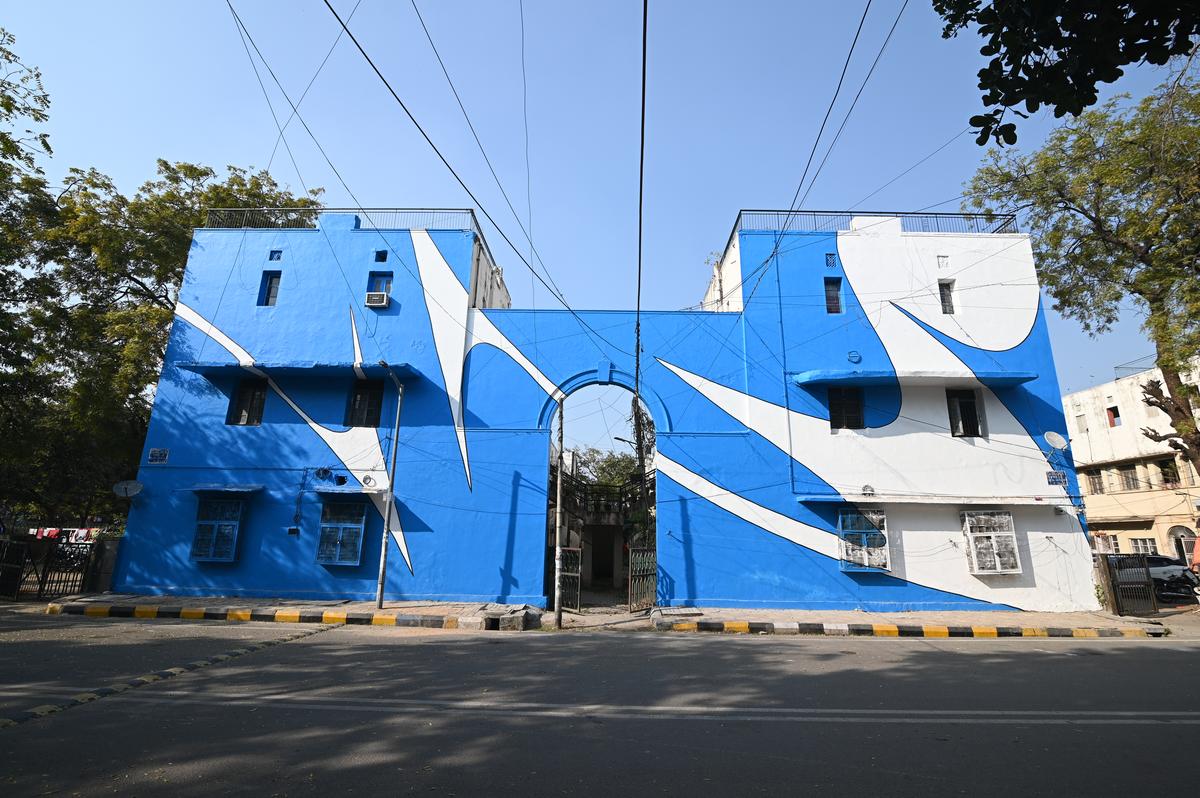
An untitled mural by Elian Chali
| Photo Credit:
Courtesy St+art
He recalls entering a police station for the first time in 2014, to get permissions for a 150-foot-tall mural. The group pitched a portrait of Mahatma Gandhi to be painted on the side facade of the Delhi police headquarters. The interaction opened a relationship with the Delhi police, which has been developing ever since. For Bahl, conversations with such “stakeholders” are necessary, emphasising that “our only agenda is to put art out there”.
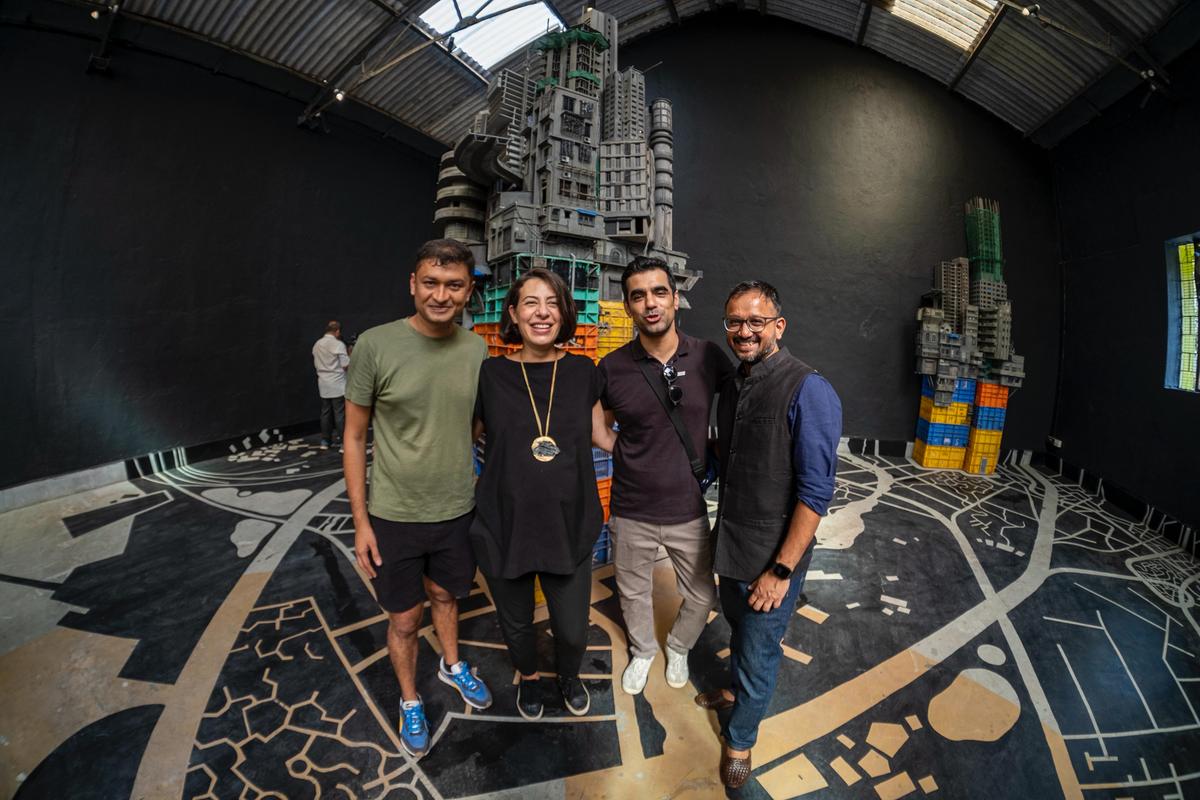
(L-R) St+art co-founders Hanif Kureshi, Giulia Ambrogi, Arjun Bahl, and Thanish Thomas
| Photo Credit:
Courtesy St+art
Sites of cultural diplomacy
Still, producing culture in public spaces is a continuous process of re-negotiation. Speaking of recent challenges with event permissions, a production manager at St+art talks about the “complicated task of managing the building society, government, police, and artists”, the long list of people who can stake claim over a community space. “People in government change, so we have to start conversations afresh,” Bahl explains. “Fortunately, we have a well-documented body of work as precedent, which makes it easier.”
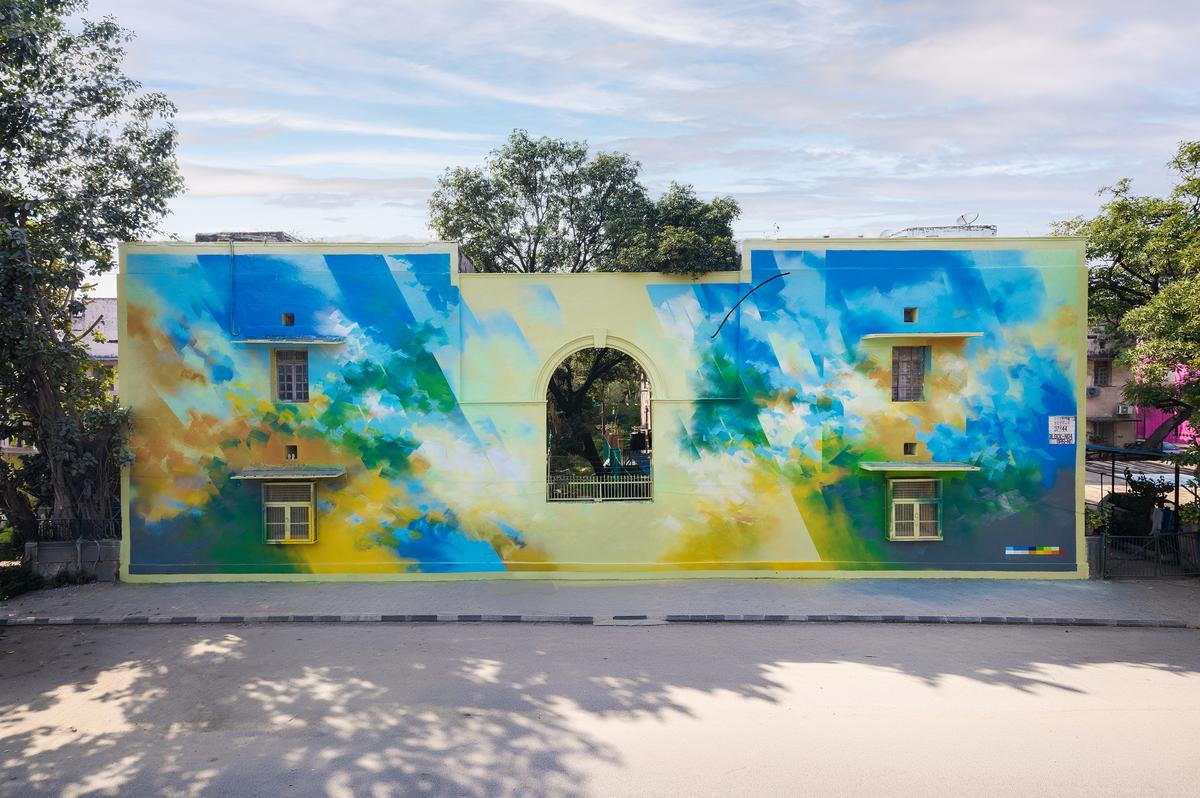
A mural inspired by Asian Paints’ ‘Moonlit Silk’ at Lodhi by artist Pener
| Photo Credit:
Courtesy Asian Paints
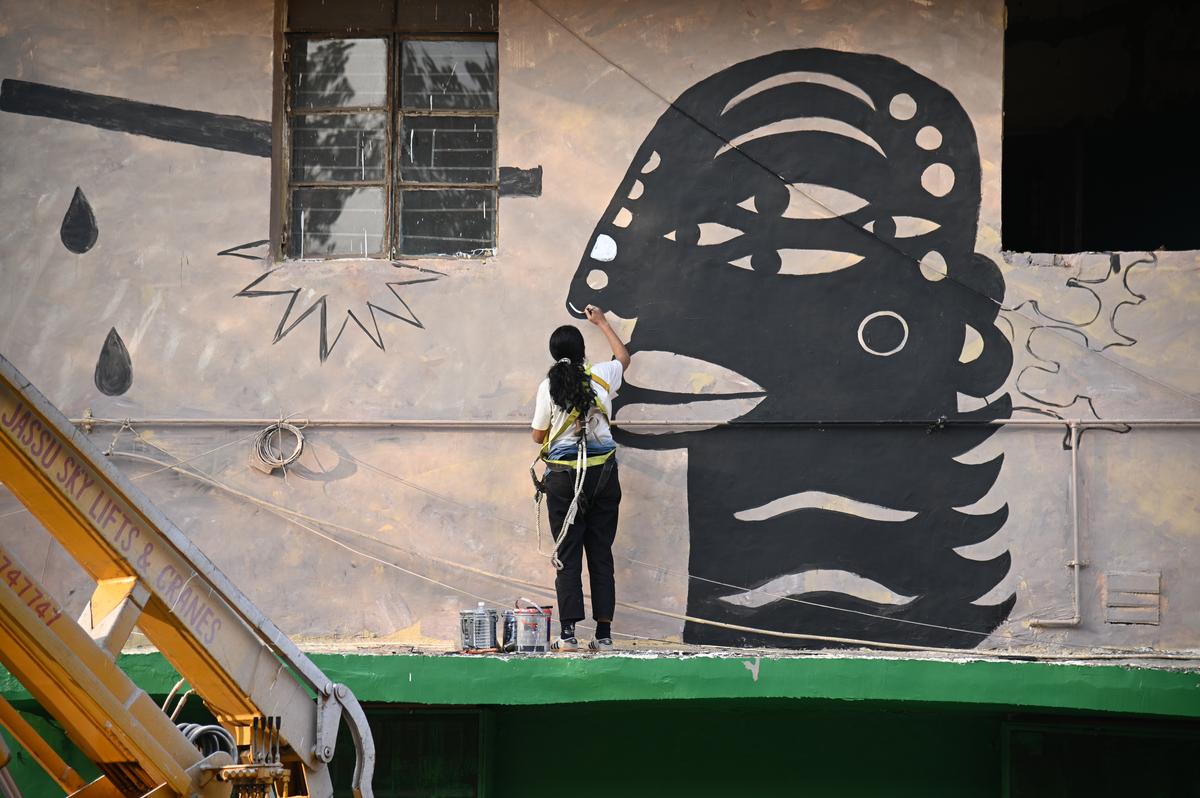
An artist at work
| Photo Credit:
Courtesy St+art
The morning of our conversation, Bahl had been with the Spanish president, Indian culture minister and British deputy prime minister, touring the Lodhi Art District during their visit to Delhi for the India AI Impact Summit. These gestures of “cultural diplomacy” speak to the funding structures that have supported St+art since its inception. Suso33, one of the artists invited to contribute in 2026, “the Banksy of Spain” as his partner describes him, was flown in by Spain as part of the ‘India-Spain Dual Year of Culture, Tourism and Artificial Intelligence’. Meanwhile, the Goethe Institut is one of St+art’s first financial supporters. The other, Asian Paints, has become Lodhi Art District’s headline partner. “You need organisations to back you,” Bahl says.
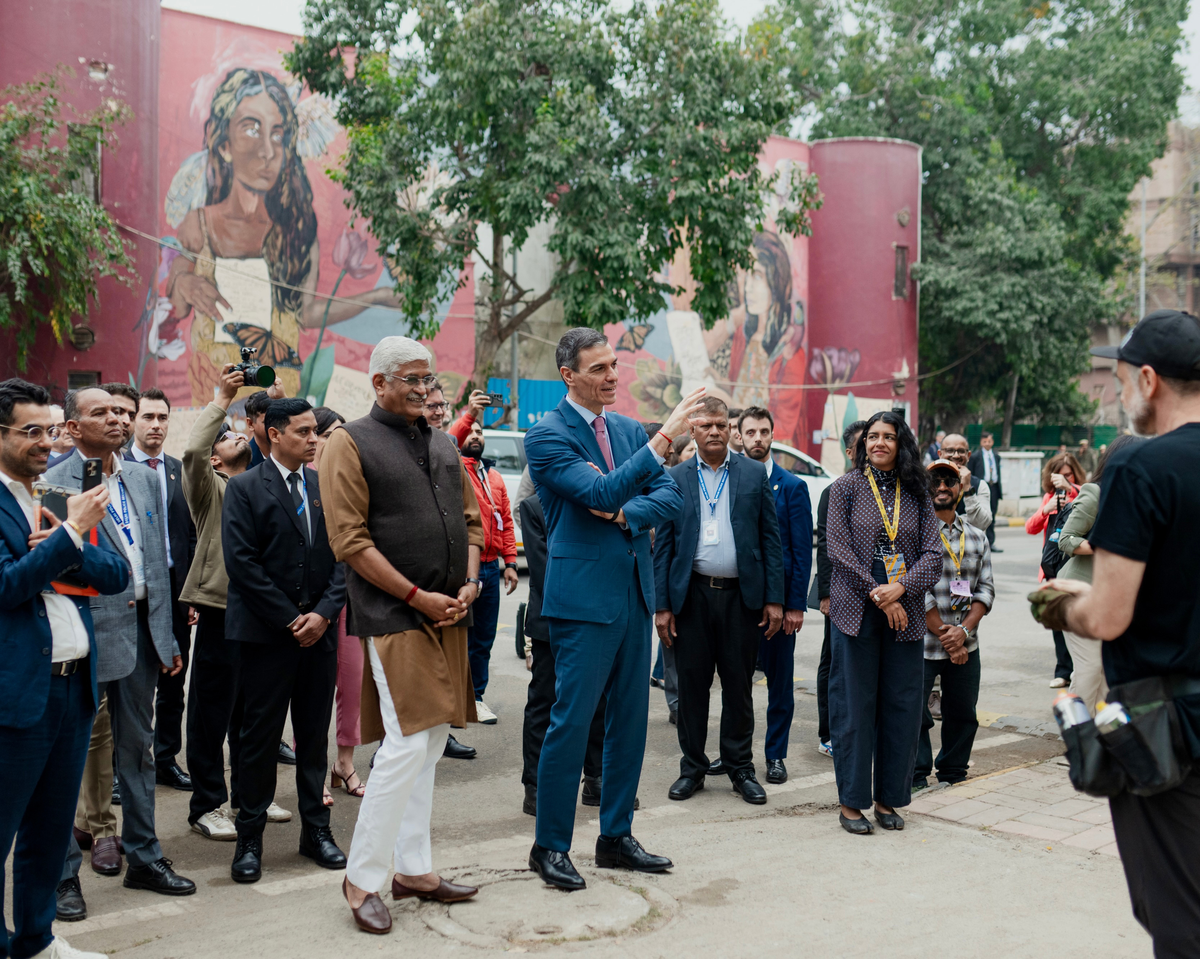
Spanish president Pedro Sánchez Castejón and Indian Culture Minister Gajendra Singh Shekhawat
| Photo Credit:
Courtesy St+art
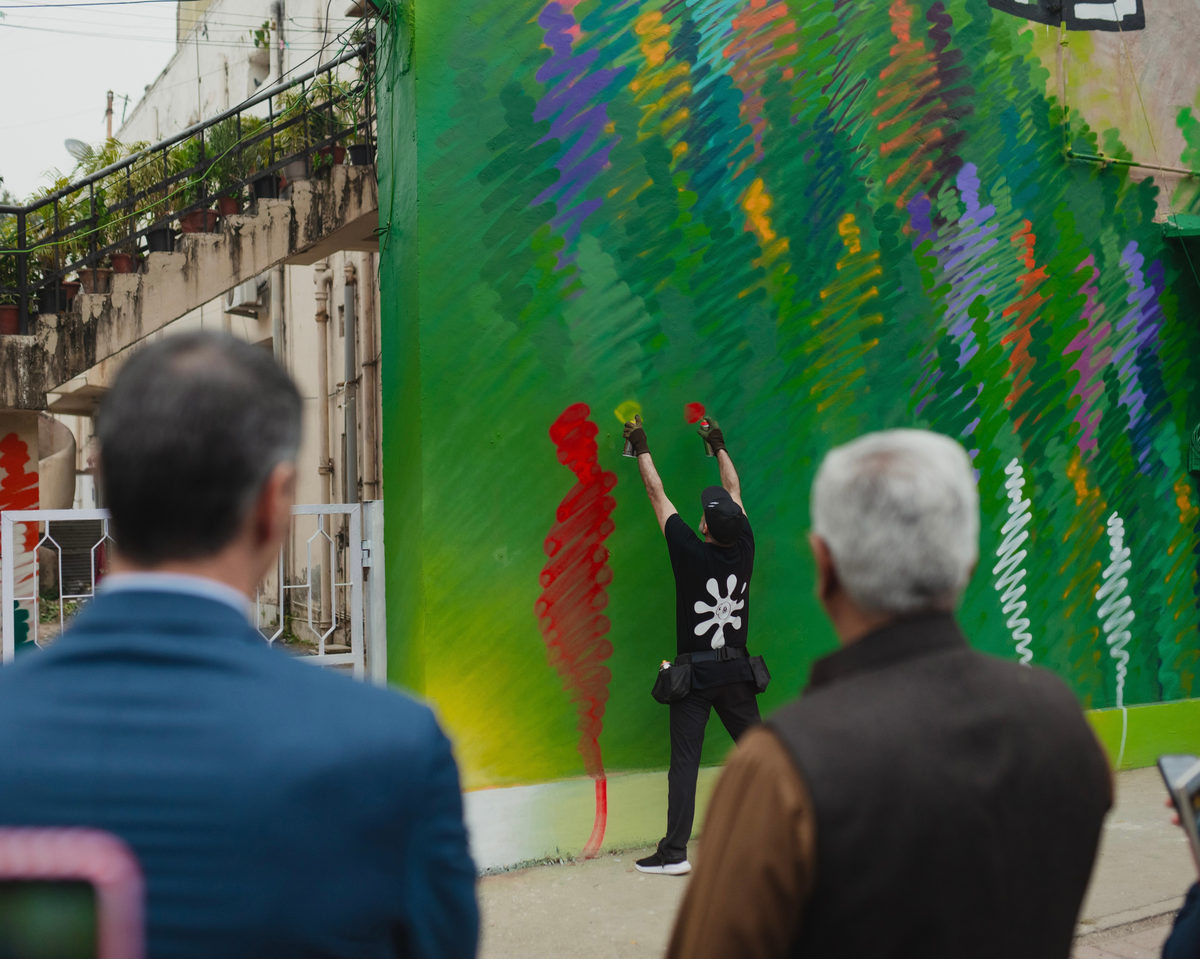
Suso33 starts his collaborative mural, Garden of Encounters, as Castejón and Shekhawat look on
| Photo Credit:
Courtesy St+art
Currently, the foundation is running three large public projects in India supported by governments and private corporations. “Public-private partnerships are growing. Even the Prime Minister is talking about ‘cultural economy’,” he states.
National impact
Since St+art’s inception, public art initiatives have exploded in India. Many are helmed by the Foundation, including at hubs such as Mumbai’s Dharavi and Sassoon Docks, Hyderabad’s MS Maqta, and Goa’s Panjim areas.
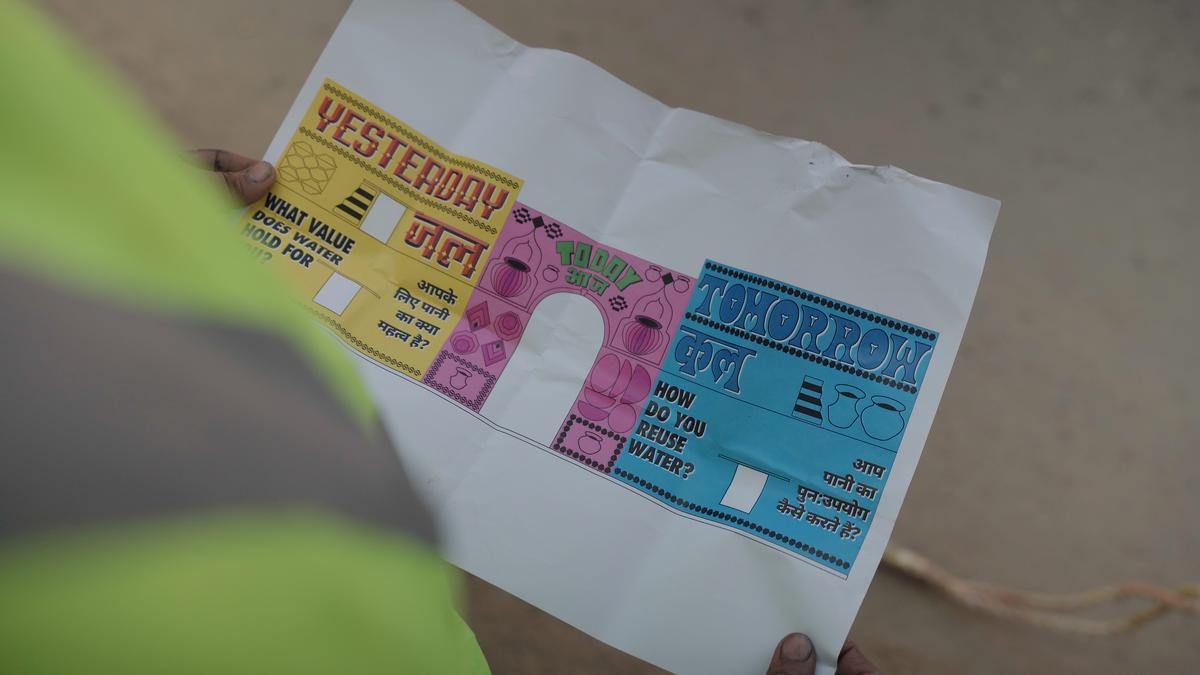
A sketch of the collaborative mural by Raissa Pardini and the late Hanif Kureshi
| Photo Credit:
Courtesy St+art
Kochi has been a particular hotspot, especially during the Kochi-Muziris Biennale (KMB). This year, it debuted ‘The Island Mural Project’ to bring dedicated focus on “the history and communities of Fort Kochi as active collaborators in the Biennale”, as KMB programmes manager Rebecca Martin says. The gradually unfolding series of murals is spread throughout Fort Kochi and Mattancherry, and will live beyond the Biennale.
Among them is a 200-metre mural by the Fearless Collective, which stretches along the Indian Coast Guard office. Ten artists turned the wall into a narrative of coastal life: with stories of fishermen, mangrove guardians and coastguards. Situating the street as the “middle ground” between polarised opinions, the Collective’s founder artist Shilo Shiv Suleman emphasised the potential of public muraling “not necessarily as an act of adornment but as an act of public reclamation and transformation”.
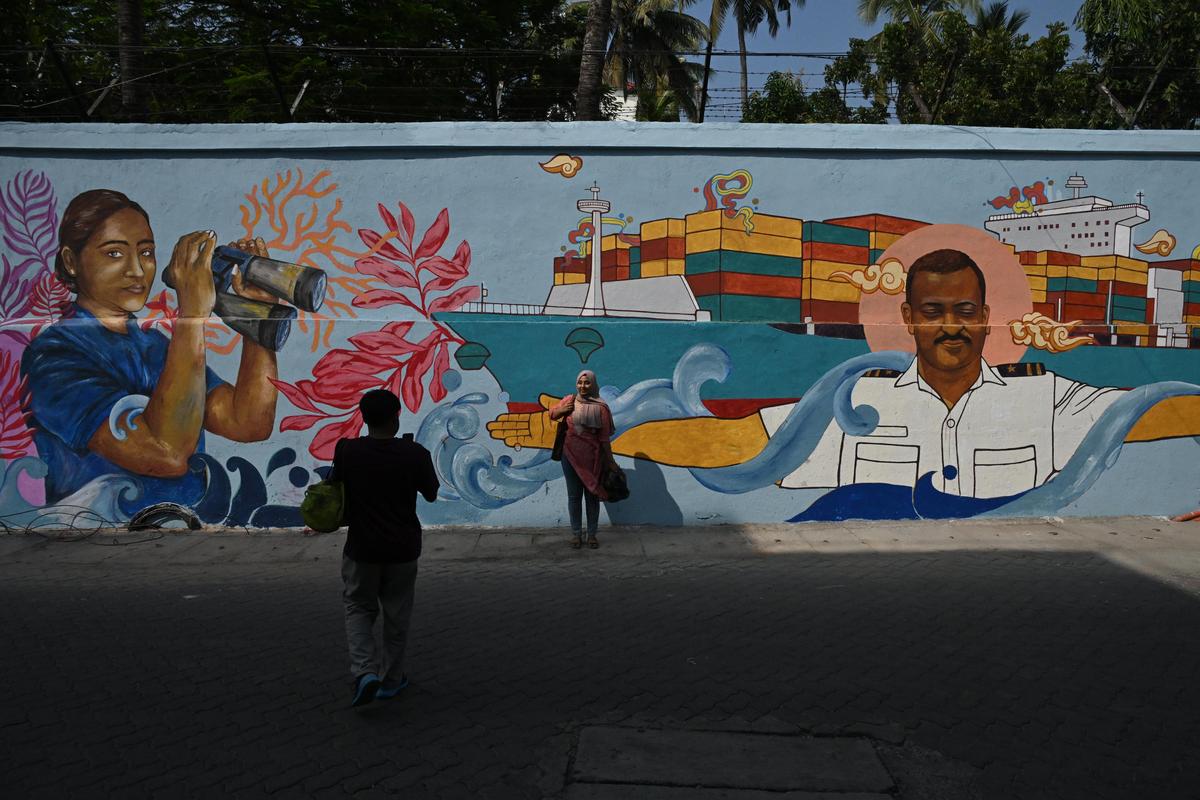
Mural by the Fearless Collective
| Photo Credit:
Thulasi Kakkat
Taking ownership
Suleman’s words also loop into St+art’s strategy across its many projects: banking on shared interests. For instance, they engage with local residents of the sites they work at. “We always conduct a recce to understand the people who live there,” says the production manager. “We ask how we can engage with the community, if it has any local artists, what their stories are.”
At Lodhi, this community work is most apparent in murals such as Saath Saath, created and painted by around 100 colony residents. Other works reflect the neighbourhood’s people too, such as Mexico-based artist Paola Delfin’s mural showcasing the women of the colony, and Gond artist Bajju Shyam’s Dilliwalle (People of Delhi) with a dense crowd of foxes, “the cleverest creatures” in the jungle.
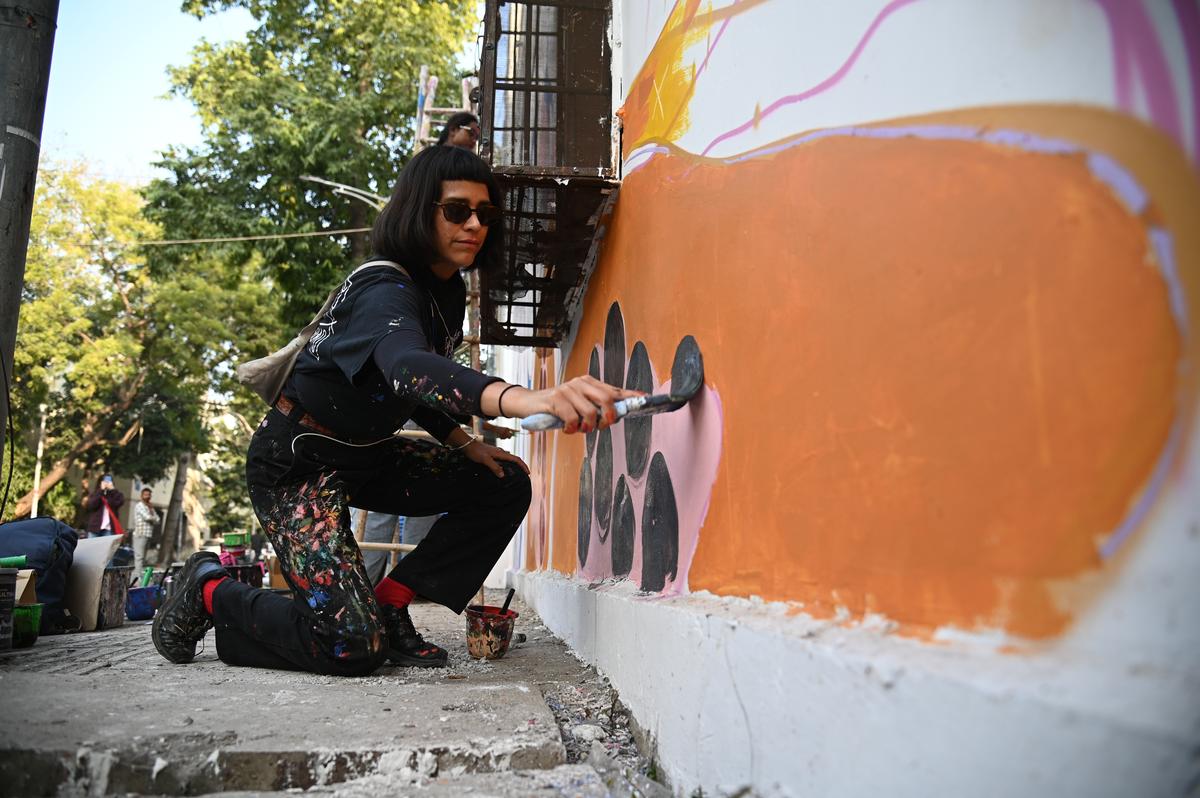
Berlin-based artist Jumu works on her mural, Magical
| Photo Credit:
Courtesy St+art
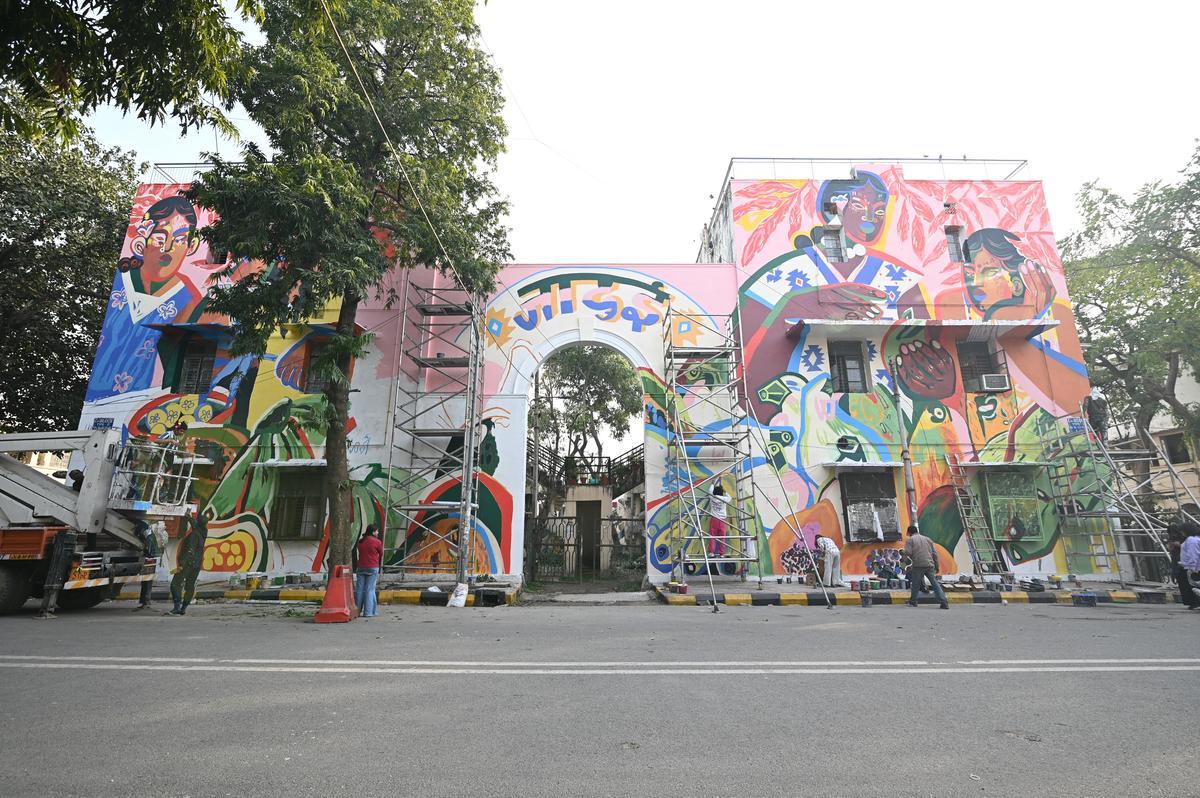
Magical is an exploration of folklore, migration, and memory
| Photo Credit:
Courtesy St+art
Some works seek to intervene into public discourse more directly. Aravani Art Project, the Bengaluru-based trans- and cis-women-led collective, was heartened by the positive response from mothers to their 2019 mural Trans Lives Matter painted in front of Lodhi Colony’s Senior Secondary School. “As we painted here for seven days, it was heartwarming to see so many mothers come up to us with positive responses as they waited for their children,” a note says. The same mothers were the subject of Sajid Wajid Shaikh’s neighbouring mural, Shakti, “an ode to womanhood”, also painted in 2019.
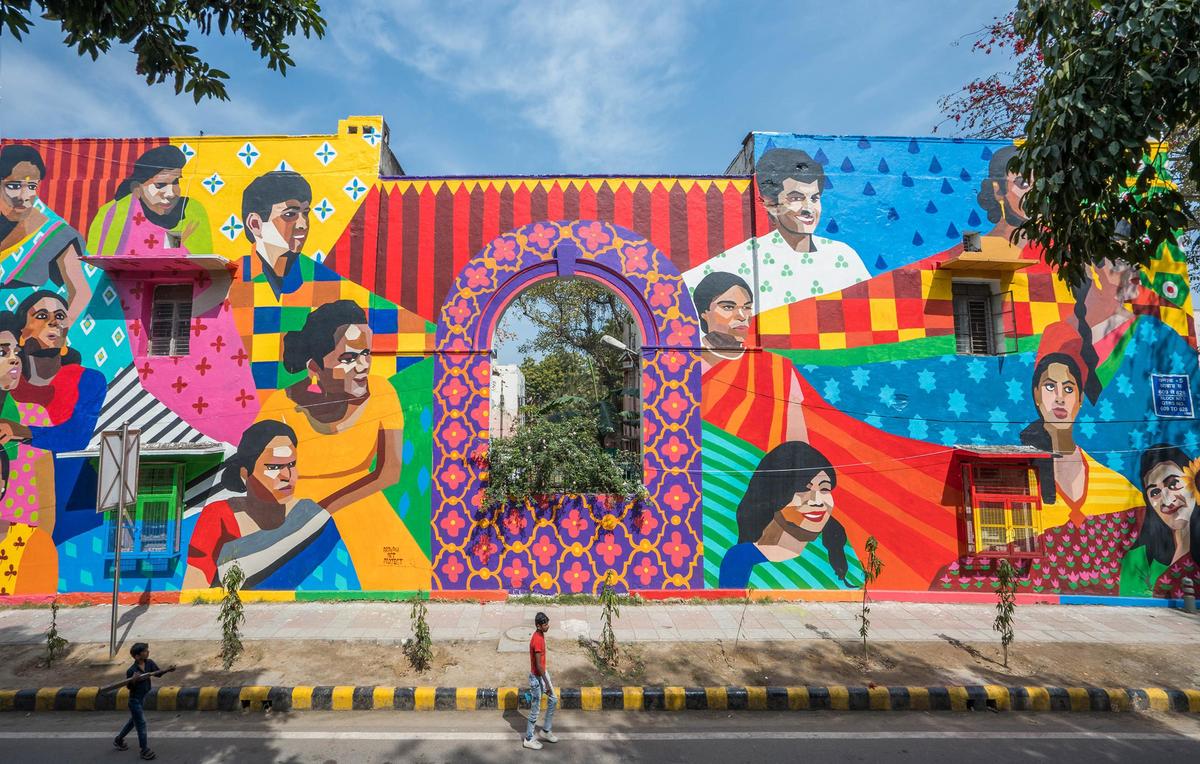
Aravani Art Project’s Trans Lives Matter
| Photo Credit:
Courtesy St+art
“Lodhi will continue to function as both origin point and testing ground,” says chief curator and co-founder Giulia Ambrogi. Bahl adds: “We believe in getting things done. Getting out there and trying something, good or bad, and taking ownership of space that is for everyone.”
The writer is an arts professional, offering an insider’s view on the scene.