



Renault Bets On Next-Gen EVs And EREVs For Its Future
- French automaker Renault wants to become “the reference European carmaker” by 2030.
- EVs will play a huge role in this new strategy, with more than half of the new models slated for launch in Europe being battery-powered.
- A new 800V platform for both EVs and EREVs is the main driver for the company’s plans.
Renault has had success with its new wave of funky, retro electric cars in Europe. The Renault 5 and Renault 4 were some of the best-selling EVs in Europe last year, and the upcoming Renault Twingo–a lovable city EV with a lot of personality–is sure to step on its bigger brothers’ footsteps.
But Renault, along with Dacia and Alpine brands, wants more. A lot more. As part of its new “futuREady” plan unveiled today, the French car company has its sights set on becoming “the reference European automaker” at a global level by 2030, and electric cars will play a huge role in this new game plan.
In total, Renault Group wants to launch no fewer than 22 new models in Europe by the decade’s end, and 16 of these will be electric. On the EV side, three new models will wear the Dacia badge, and one will be the next-generation Alpine A110 EV. Globally, Renault Group aims to launch 36 new models, including EVs, EREVs, hybrids, and gas-powered cars.

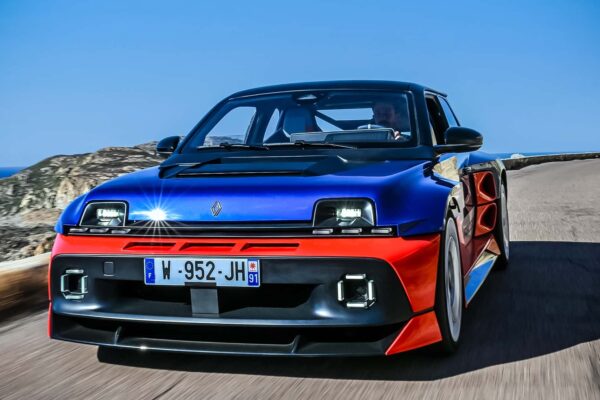
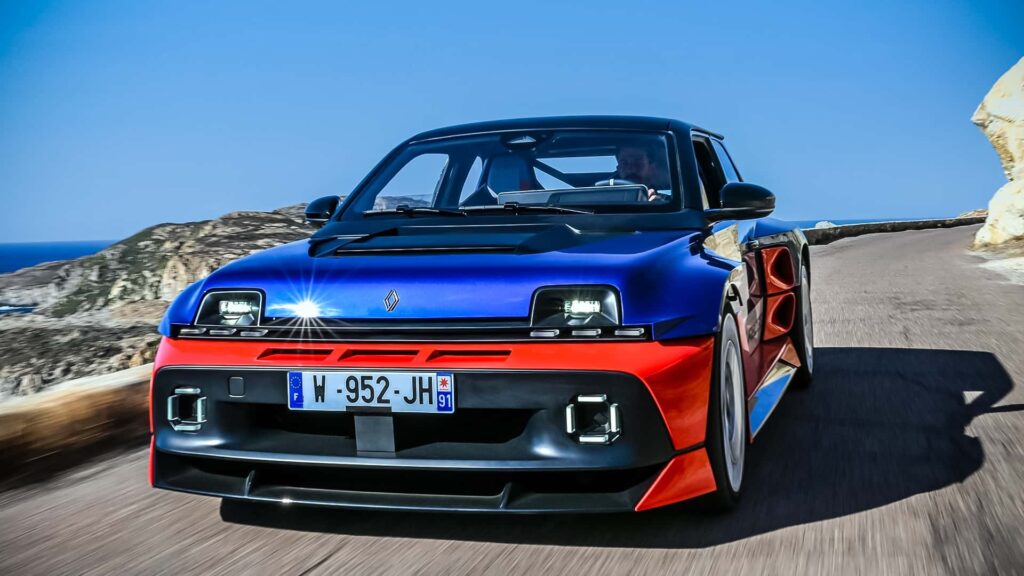
The mad Renault 5 Turbo 3E is based on a bespoke 800-volt platform.
Photo by: Renault
A brand-new, 800-volt architecture named RGEV medium 2.0 will underpin several new EVs, ranging from the B+ to D segments, enabling a maximum WLTP range of up to 466 miles (750 kilometers) on the biggest models. Ultra-fast charging is also in the cards, with 10-minute top-ups a reality by 2030. All this being said, the focus will initially be on a new compact EV based on the new underpinnings.
The same platform will also accommodate extended-range (EREV) powertrains that, according to Renault, will offer range figures upward of 870 miles (1,400 km) while maintaining the same ultra-fast charging speeds.
Meanwhile, smaller cars from the A and B segments will continue to use 400V battery packs that can be recharged by a meaningful amount in 20 minutes, according to the French company. Two battery chemistries are also part of the plan, with the 800V cars getting a “high energy density” chemistry, while lower-priced models will make use of an “affordable chemistry.”
The latest version of the Dacia Spring is Renault Group’s first mass-made EV with an LFP battery.
Photo by: Dacia
Renault didn’t provide details about the new batteries, but logic dictates that top-spec models will be powered by lithium-ion nickel manganese oxide (NMC) cells, like the extreme Renault 5 Turbo 3E. Meanwhile, entry-level EVs could get lithium iron phosphate (LFP) packs, like the recently facelifted Dacia Spring.
A new electric drive motor is also in the works. The third-generation unit (EESM) is billed as having no rare earths, a 93% efficiency at highway speeds, 25% more power than the current version, and a 20% lower cost. Developed and built in-house by Renault, the new motor is rated at 275 horsepower and will be available in both front- and rear-wheel drive configurations.
The company said it wants to compete with Chinese automakers in terms of innovation, cost, and speed, which is a tall order for a traditional car maker. To make it happen, Renault wants to speed up product development, going from the usual four-year product cycle to a much more intense two-year cycle, and all of the Group’s new projects are now being developed on this new timeline.