


Punjab and all things red-hot
Pakistani filmmaker Sarmad Sultan Khoosat knows a thing or two about courting controversies. His directorial Zindagi Tamasha (Circus of Life, 2020, which won Busan festival’s Kim Jiseok Award) and co-production Joyland (2022, Cannes Un Certain Regard Jury winner) were banned at home for choosing topics deemed “controversial” by religious conservatives and political parties. The former explored a scandal in the life of a devout man, and the latter a love story of a transwoman and cis-het man. The din at home forced them to drop out of the Oscars after being named Pakistan’s official entries.
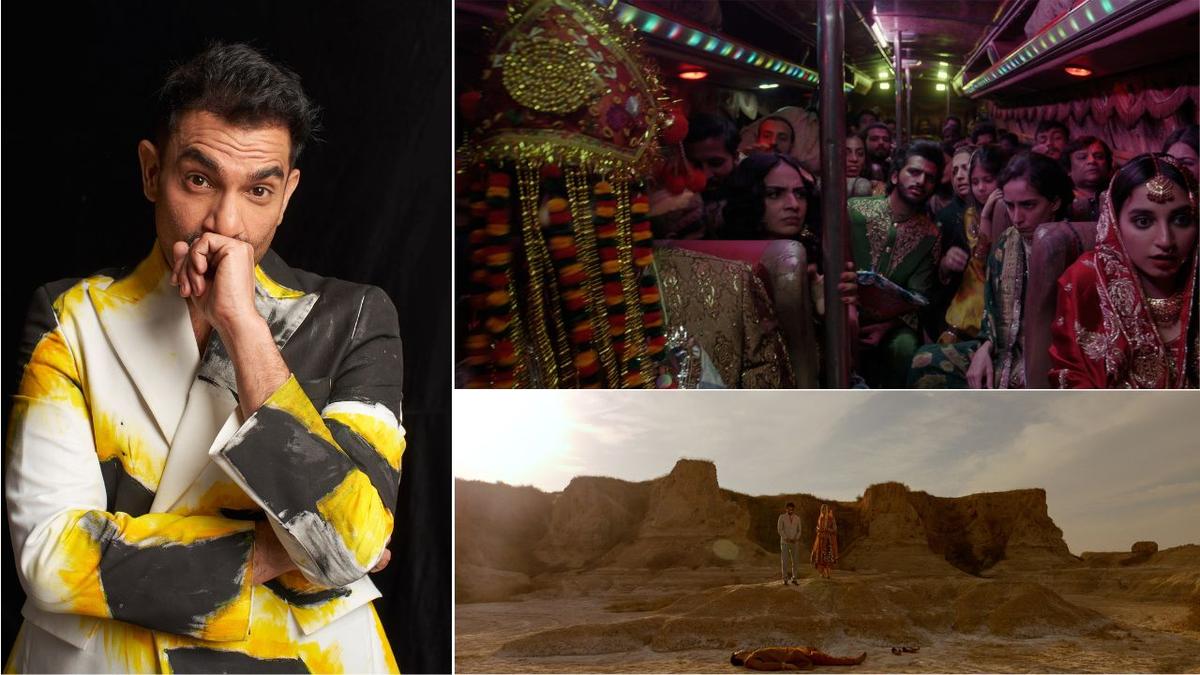
Khoosat’s latest film, Lali, is a deliciously dark comic tale about marriage — with a feminist twist. Its unconventional storytelling and genre leap made it one of the most-talked about among the South Asian films at Berlinale this year.
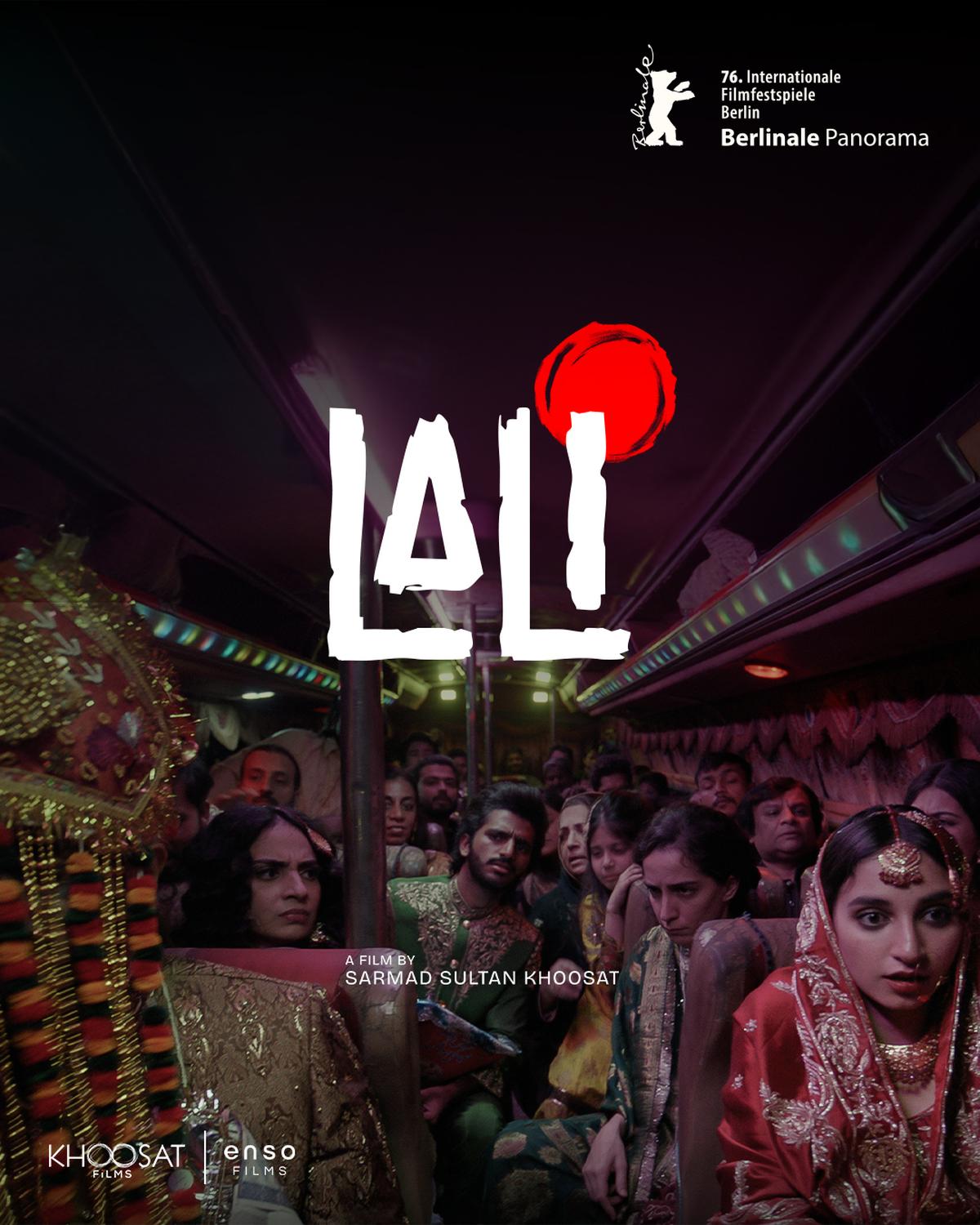
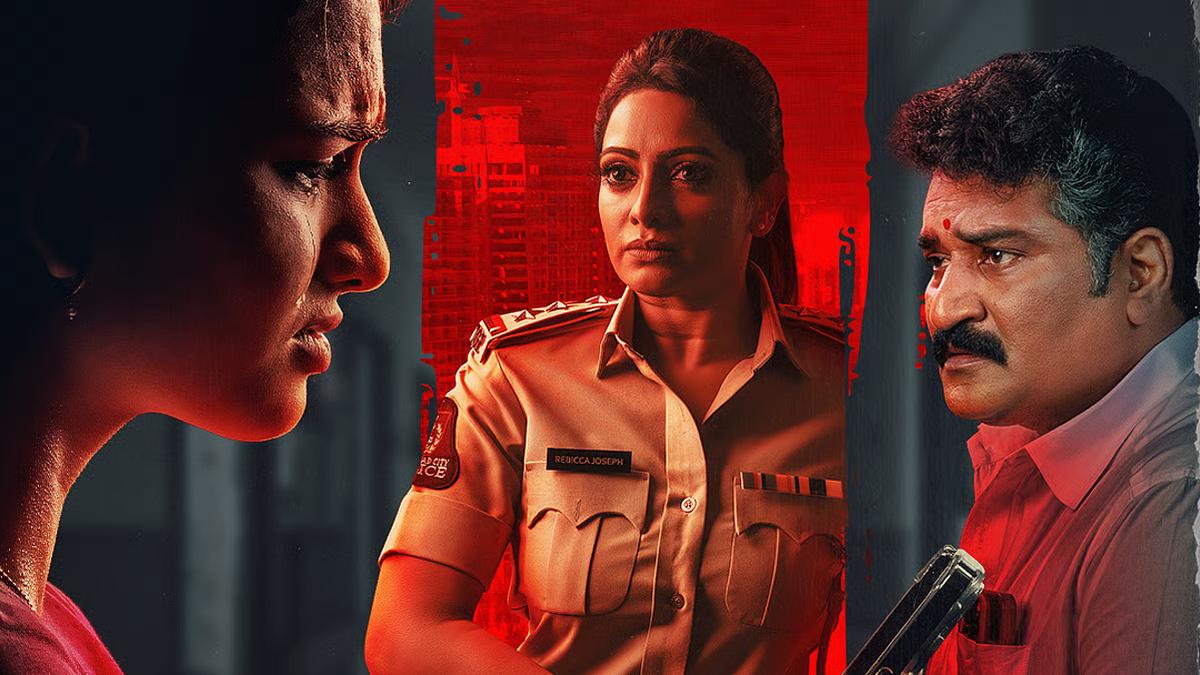
Poster of the film ‘Lali’.
Perhaps, it was predestined that the year the first all-Pakistani film came to Berlinale, the most political of A-lister global film festivals, the festival itself would be gripped by the storms of a politicised controversy, which stemmed from jury president Wim Wenders’ “cinema as a counterweight to politics” comment when asked about the Gaza conflict. And so, Khoosat, like many others, took a stand.
At Lali’s world premiere, he said: “This moment carries gratitude and responsibility. Lali means red. Red is the colour of celebration in our part of the world — bridal clothes, music, of love and longing — but red is also the colour of warning, anger, of blood. It is a colour that refuses to be ignored. Cinema does not exist outside the world; it absorbs its beauty and its brutality. It carries joy and it carries loss. With my film, I carry my conscience with me, to those suffering back home, around the world and especially Gaza… Art and humanity are inseparable. To stand for one is to stand for the other. And in these times of unprecedented crimes against humanity, we must stand on the right side of history.”
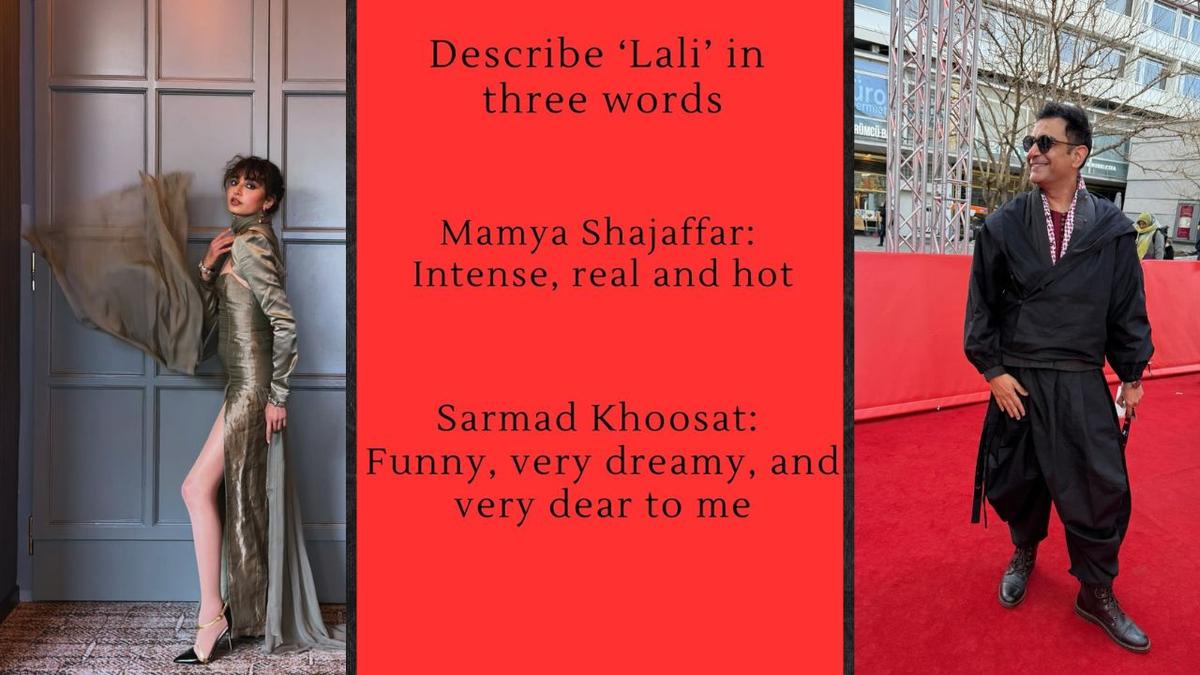
Lali opens with the wedding of the scar-faced introvert Sajawal (Channan Hanif) and Zeba (Mamya Shajaffar) in a small town in Punjab, Pakistan. As celebrations begin with pistols shot in the air, a bullet accidentally hits Sajawal’s mother Sohni Ammi (Farazeh Syed), but she survives. The ‘cursed’ bride’s previous three suitors died before the wedding, and Sajawal asserts he’ll survive her curse. When I mention how the film shows an intriguing link between grief and sex, Shajaffar says, “Do you know there’s a study that says, people are most likely to consummate when they’re the saddest?”
This cocktail of dread and desire, co-written with his former assistant director Sundus Hashmi, features escalating insecurities, a decaying house wrapped in a shroud of eeriness, secrets hiding in closets, violence suspended in thick air, and, perhaps, a djinn. This thematic djinn linked the two Pakistani films at Berlinale, Lali (Panorama segment) and British-Pakistani filmmaker Seemab Gul’s Ghost School (Generation KPlus). Edited excerpts from an interview with Khoosat:
 Q: Let’s begin with the title. It was supposed to be titled Shikra, inspired from Indian Punjabi poet Shiv Kumar Batalvi’s eponymous poem. When did the shift to Lali happen?
 A: Who told you? (Laughs.) Films are strange creatures, they keep growing, breathing on their own and with names. For a long time, on paper, Shiv Kumar Batalvi’s poem Shikra was there: “Maye ni maye, main ik shikra yaar banaya (O my mother, I made a hawk my beloved)”. But then it started feeling like it’s a bit on the nose, because the bird is in the film. And then Lali started speaking to me more. For practical purposes, too, it wouldn’t need a translated international English title. And storytelling-wise, without giving a spoiler, Lali works like an Easter egg — as a rosebud.
Q: It is also inspired from a short story Kaala Kambal (black blanket).
A: In contemporary Urdu literature, in particular, there are very few short story writers. And the short story has been a favourite genre or format with most of the pre-partition writers like Ismat Chughtai, [Sadat Hasan] Manto and [Rajinder Singh] Bedi. Kaala Kambal is a small semi-published collection of short stories by this actor-aunt of mine that I first read in my 20s. Bizarre and abstract, they read like super delicious, sensory, real stuff with a very close, empathetic eye on the nuance of the Punjabi setting. When I made my small film company, and I didn’t have enough money to make films, the rights to her short stories collection was the first buy of Khoosat Films. Of course, we’ve extrapolated a lot, with newer and different characters, but the core is borrowed from it. The third act of the film is the short story to some degree. The heart of the film comes from literature, which is always a great resource, it makes things easier to navigate.
Q: Your first film was Manto (2015). You’re also very inspired by Charulata and Rabindranath Tagore’s works. You’ve adapted Chokher Bali into a TV series. What do you make of India and Pakistan’s connected artistic roots?
A: I’d say the subcontinent, between Bengal and Punjab [two regions most affected by Partition], and then from north to south, the diversity of this land, of us brown people, has so much to offer. Up until Partition, it was all common ground in terms of the languages, stories, seasons, festivities. But for me, somehow, Punjab and Bengal more so, when it comes to art and all things lovely: music, colour, sari, dhoti and food.
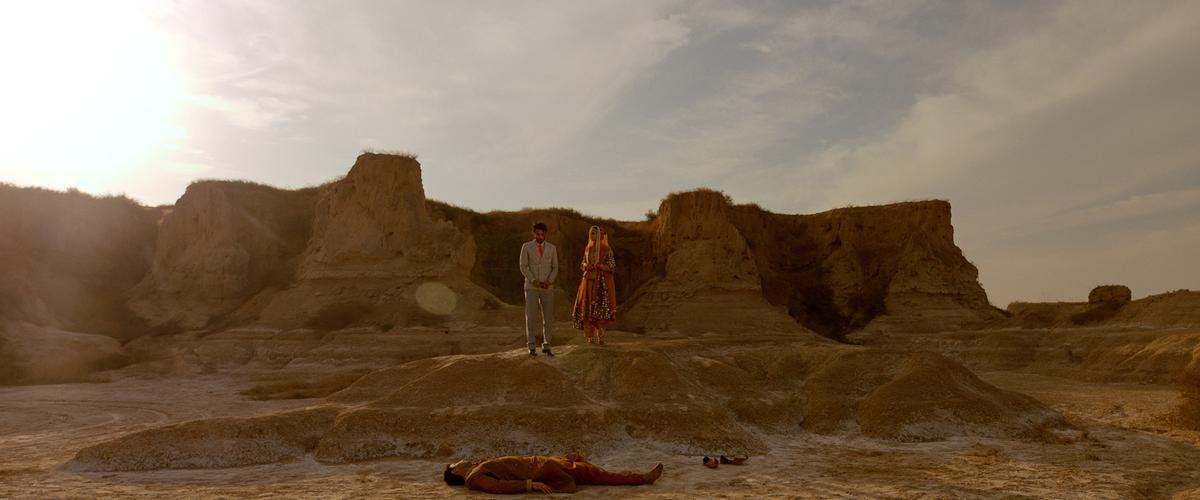
A still from Lali.
Q: Your films are imbued with symbolism. Lali is theatrical, too. Talk to us about the overpowering colour red and the Greek theatre and Shakespearean chorus-like singing by the four men.
A: I’ve always been scared to use red on screen. It’s a tricky colour. It bleeds too quickly. Symbols, colours, elements come to me in disjointed fragments, and they come with the fear of overpowering everything with meaning. The idea of the four men standing — yes, somewhere it is very Shakespearean. But did I think about it consciously? No. I wanted live singing in the film, not pre-recorded or playback music, and as much original compositions [as possible]. Their casting was the toughest because we needed actors who could sing, or singers who could act, beginning with Sohni Ammi, the four boys, Mamya and Rasti [Farooq]. It was a long process of finding those pieces of poetry.
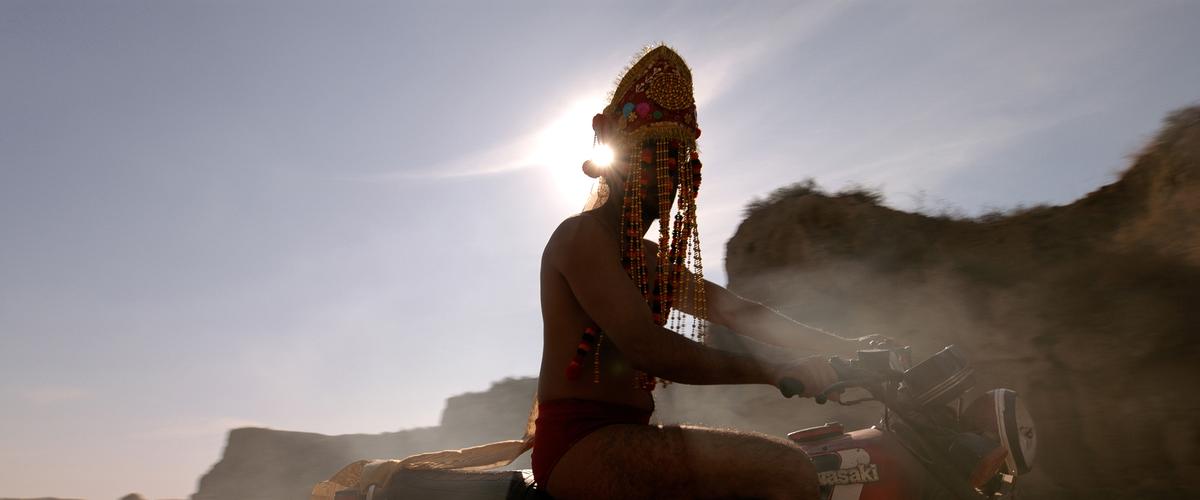
Q: Is the flamboyant mother character partly based on your aunt Pyaari Ammi and an alternative version of your mum?
A: That story [Kaala Kambal] has a character called Maiyya, which means mother, an important but 2D character, very unlike Sohni Ammi. I think at the core of most of my films, there’s always a strong mother character. Sometimes, it is reflections of my own mother, and my maternal and paternal aunts. But then it was not essentially that these women were, or are, like that. Sohni Ammi and Zeba are alter-egos I wish for many women in my life.
Q: Coming to Zeba, Mamya, this is your first film. You come from television. How did you get into the emotional space of this strong, intense character who shoulders the film?
Shajaffar: Yes, this is my first film and an experience of a lifetime. Sarmad’s direction, finding new sides to me and operating in a way that I didn’t know I had was new to me. It was the homework and we started talking about what kind of a girl she was before any of this started to happen, what is her journey, how does she think, so internalising all of that, and thinking from her perspective. I don’t think I ever got out of her, honestly, it came to me a few months later that I would get very angry at topics that I personally hadn’t really been through. And I would speak up about it. I realised that it’s her experiences that I’m speaking through. She’s stayed with me.
Q: Channan Hanif, the red scar-faced lead Sajawal, is an introvert, he’s mysterious, hidden from the world. What notion of masculinity, patriarchy and the institution of marriage were you trying to comment on?
A: A lot of lived experience has gone into it, not essentially just my own marriage. Everybody has a lot to say about marriage, from over-glamourised, airbrushed, Yash Chopra-like ideas and all things red, flowers, festivities and suhaag raat, to dreary, dark, everyday events and incidents that you see around the union of two people. To oversimplify it, I’d say I’ve seen so many bad marriages around me. I’m not taking away from the idea that we’re social animals, and this institution has existed for centuries, but in our culture, I think there’s so much insistence on the need for it to be a big marker in your life. I’ve seen very few people who are prepared for that kind of big, life-changing twist. [Through my characters] I wish for an alter ego or altered version of life for many women around me. I also wish there was another version of the idea of marriage, where it was not so messy. Marriage, festivity, grief and violence seem to co-exist.
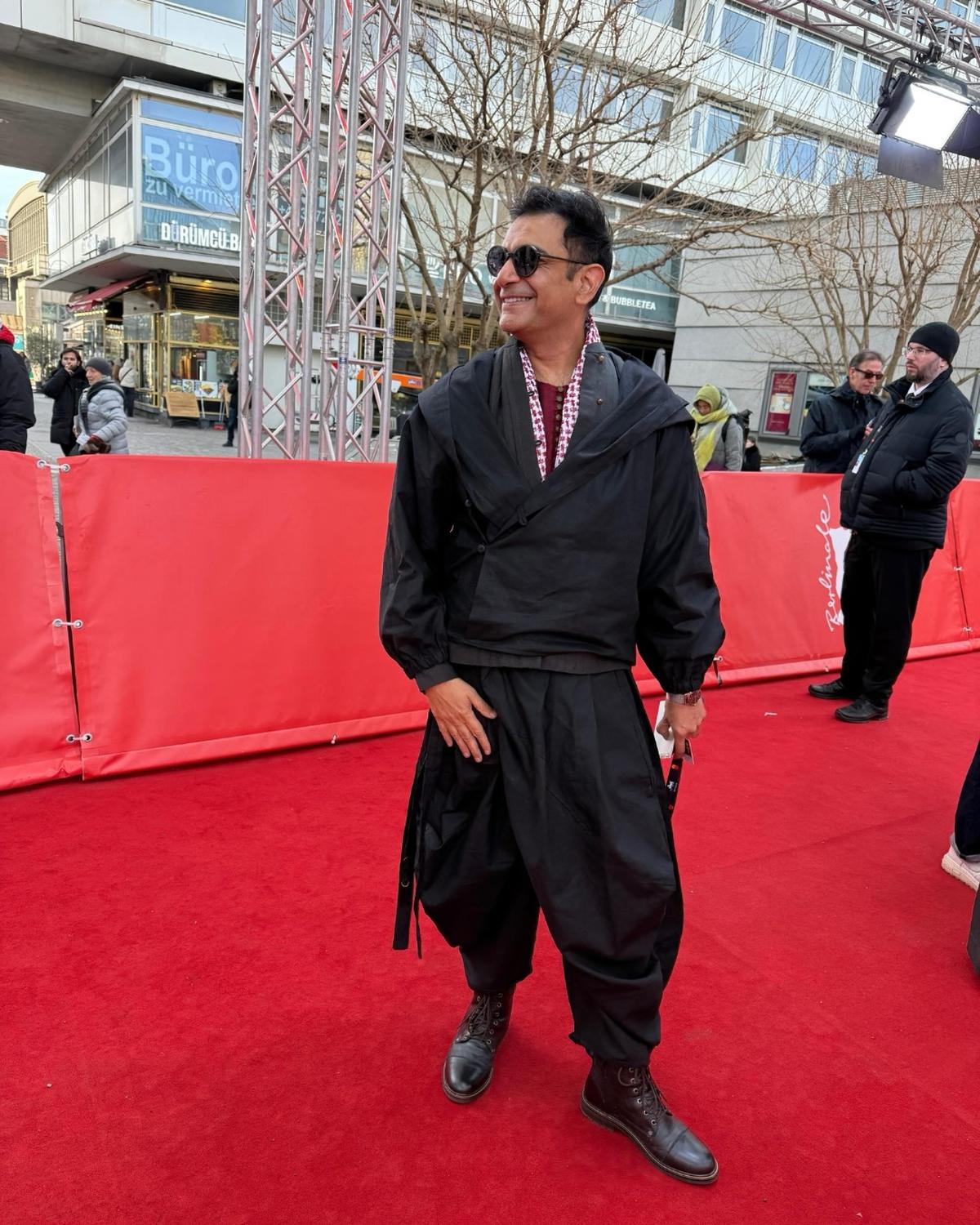
Sarmad Khoosat on the red carpet at the world premiere of Lali at 76th Berlinale.
| Photo Credit:
Via Instagram

““Films in Pakistan come with not just the challenge of making them, but also releasing them. When releasing most of my films, the stories around them became bigger — from controversies to real threats. For me, Zindagi Tamasha is not controversial. It is not an alien topic, it is not fantasy.””Sarmad KhoosatPakistani filmmaker
Did Saim Sadiq’s Joyland, which you co-produced, come at a time when you were scarred by the censorship around Zindagi Tamasha?
Joyland had that joy, since I did not have the creative burden. I was in the producer’s seat where my role was more administrative, which I enjoyed a lot, just watching Saim [who’s edited and done the casting for Lali] and his actors do their thing…that was a luxurious situation. But yeah, I also think it is weird that films in Pakistan come with not just the challenge of making them but releasing them. And in releasing most of my films…the stories around them became bigger, from controversies to real threats. For me, Zindagi Tamasha [the private-life scandal of a devout man] is not controversial, maybe, sure, it isn’t a topic that one is not super happy talking about all the time. But it is not alien, it is not a fantasy. Sometimes, even in mainstream, I feel, there’s such a departure from reality, that I think it’s tough to sell that. But just because we have accepted that as a formula of screen storytelling, people buy it. But anytime something comes which makes you a little uncomfortable, which makes you engage with it a little, it’s very unfair to label it bold or controversial. I think, Lali is very real, it’s also very mundane, talking about really basic stuff. Who doesn’t have trauma, experiences, scars, good memories and bad memories? Who hasn’t dealt with dear ones dying or people marrying? Lali is sweet and hot. (Laughs.)