




Philips OneChef Review: Can One Electric Cooker Replace Your Gas Stove?
The air fryer was originally seen as a guilty pleasure. A countertop device for those wanting crisper French fries and a cleaner conscience. It was never regarded as essential infrastructure. However, when LPG supply became unreliable, perceptions changed.
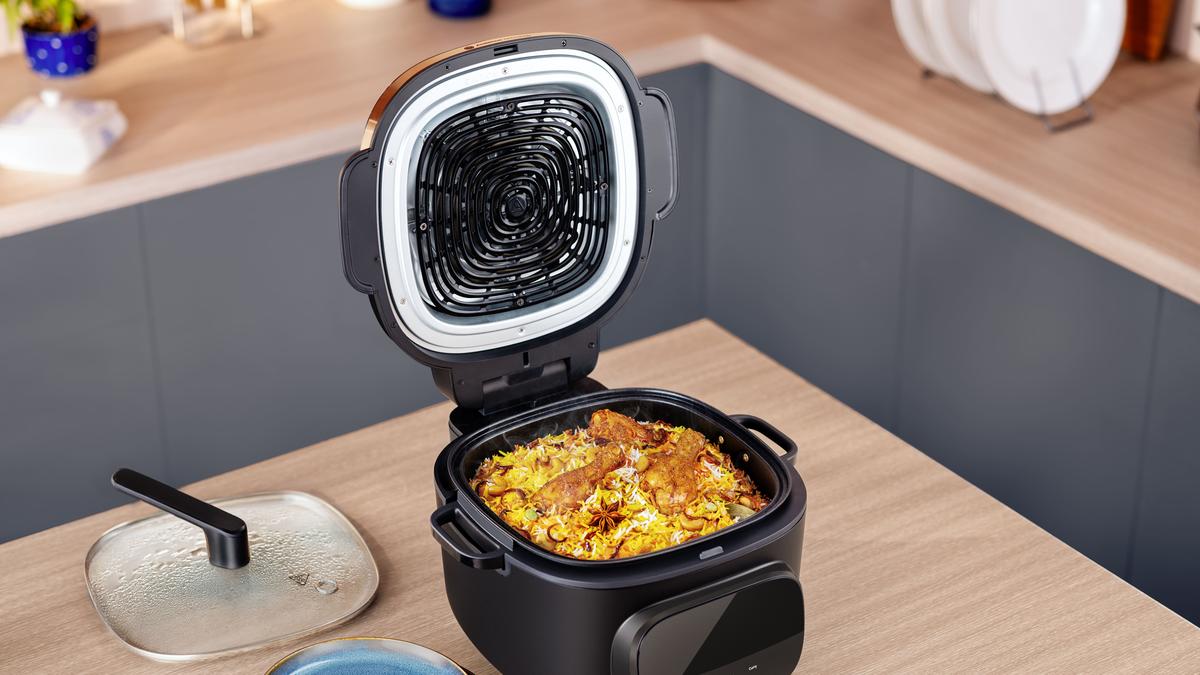
The Philips OneChef arrives at this moment, a ₹19,995 appliance launched in Mumbai last week that offers 33 cooking functions in a single pot. Air fry, stir fry, steam, boil, curry, bake, roast. One device, one plug, one thing to clean. It is a compelling pitch anytime. In a year when LPG shortages have made households reconsider their dependence on gas burners, it arrives with a new sense of urgency.
But the OneChef does not arrive on its own. It lands in a vibrant market filled with steam air fryer ovens, electric multicookers, glass-bowl air fryers, and full-fledged kitchen robots, each addressing a slightly different aspect of the same kitchen challenge. For consumers investing ₹12,000 to ₹50,000 in a countertop appliance, the real question is not whether to choose electric, but which electric version best suits their unique cooking style.
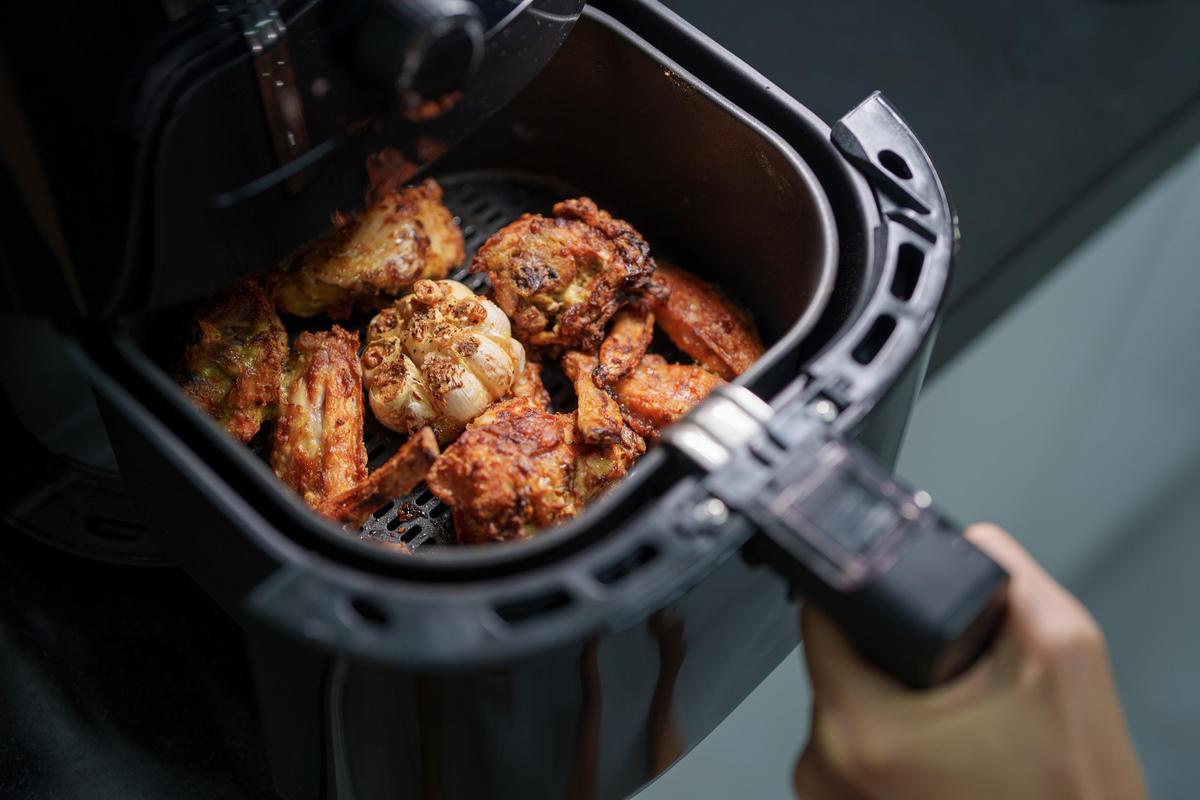
A woman is using an air fryer to prepare grilled chicken in her kitchen, focusing on a healthier cooking method with minimal oil.
| Photo Credit:
Getty Images
What the OneChef does, and what it quietly does not
The OneChef is, at its core, an evolved air fryer in a pot-shaped body. Powered by Philips’ AmbiHeat technology (which, in plain terms, means heat circulating from all sides simultaneously rather than from a single element below, reading and adjusting temperature as it goes), it uses intelligent temperature sensors and 360-degree heating to adapt across cooking modes. The six-litre capacity feeds a family of four to six. It ships with a cooking pot, a glass lid, an air-frying rack, an idli plate, and a steaming basket. The idli plate is a smart local touch; Chef Ranveer Brar, who curated the launch event, reportedly spent a year-and-a-half working with Versuni on calibrating it for Indian recipes.
The spec sheet reveals some constraints worth sitting with. For starters the OneChef draws 2,280 watts, which means it needs a dedicated 15A socket. Running it off a thin extension strip is inadvisable. The cord is 1.8 meters long, decent but not generous if your only 15A outlet sits behind the fridge. The timer caps at 60 minutes, which rules out anything that requires a long, slow cook: no overnight nihari, no six-hour pulled pork, no dal makhani simmering to depth. The unit weighs 6.2 kilograms. This is not something you pull out of a cabinet and put away. It lives on the counter, occupying a roughly 36 x 39-centimetre footprint (think of a large pressure cooker that has decided it lives on your counter now).
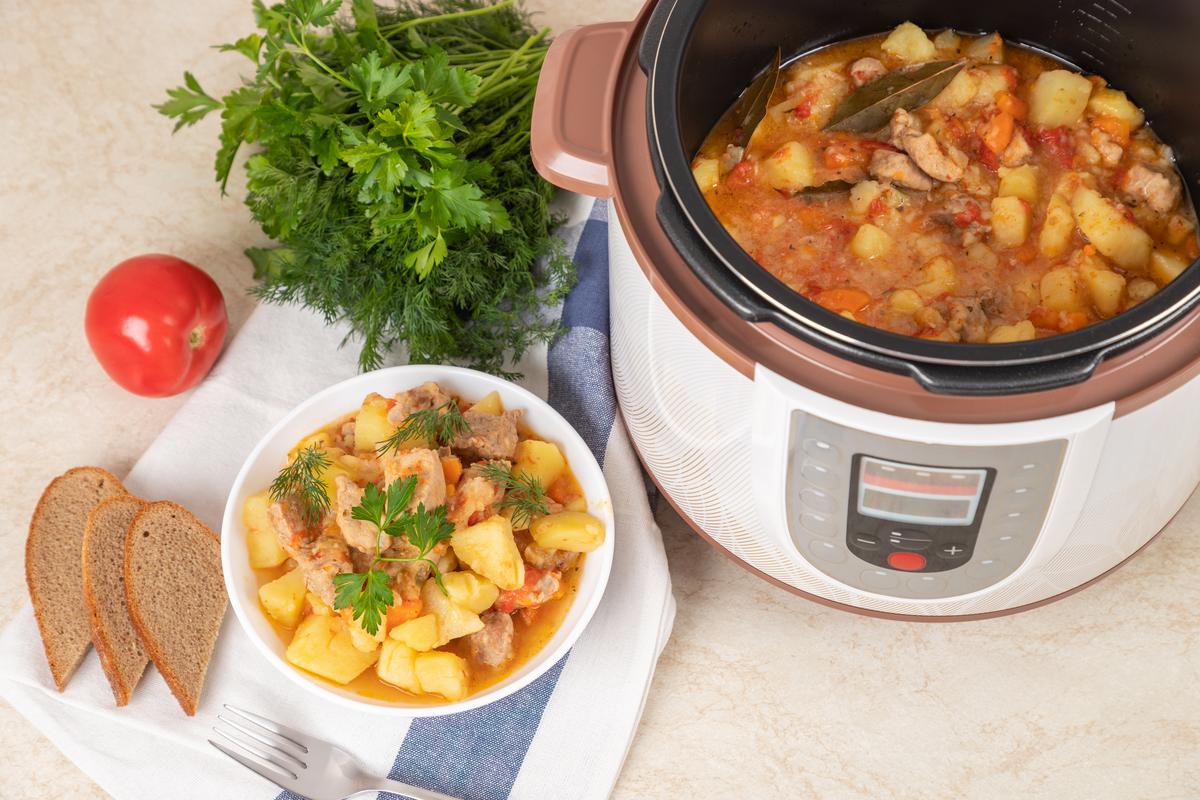
Meat stewed with potatoes, carrots, tomatoes and spices in modern multi cooker on kitchen table.
| Photo Credit:
Getty Images
On that note, most critically, the OneChef does not pressure cook. There is no slow-cooker mode, no yogurt function, and no sous-vide feature. There is no Wi-Fi connectivity, despite mentions of the Philips HomeID app in some retail listings. For a household where daily routines involve pressure-cooked dal and rice, this does not replace what you already have; it simply sits alongside.
The actual competitive landscape
In air fry mode, the OneChef performs well with 360-degree heating providing even results, suitable for reheating, crisping, or vegetables. However, it lags behind steam air fryer ovens like Nutricook Steami X and Nester Full Stack, which have larger cavities, multi-rack capacity, and can run steam and air fry together. The OneChef uses one rack at a time, requiring sequential cooking, which is less efficient for a full meal. Its performance is adequate but limited compared to similar-priced competitors that can handle larger or more complex tasks in a single vessel.
It’s tempting to compare the OneChef with other multicookers, but that can be misleading since these products address different issues. Additionally, the Indian market has quietly divided into four unique categories.
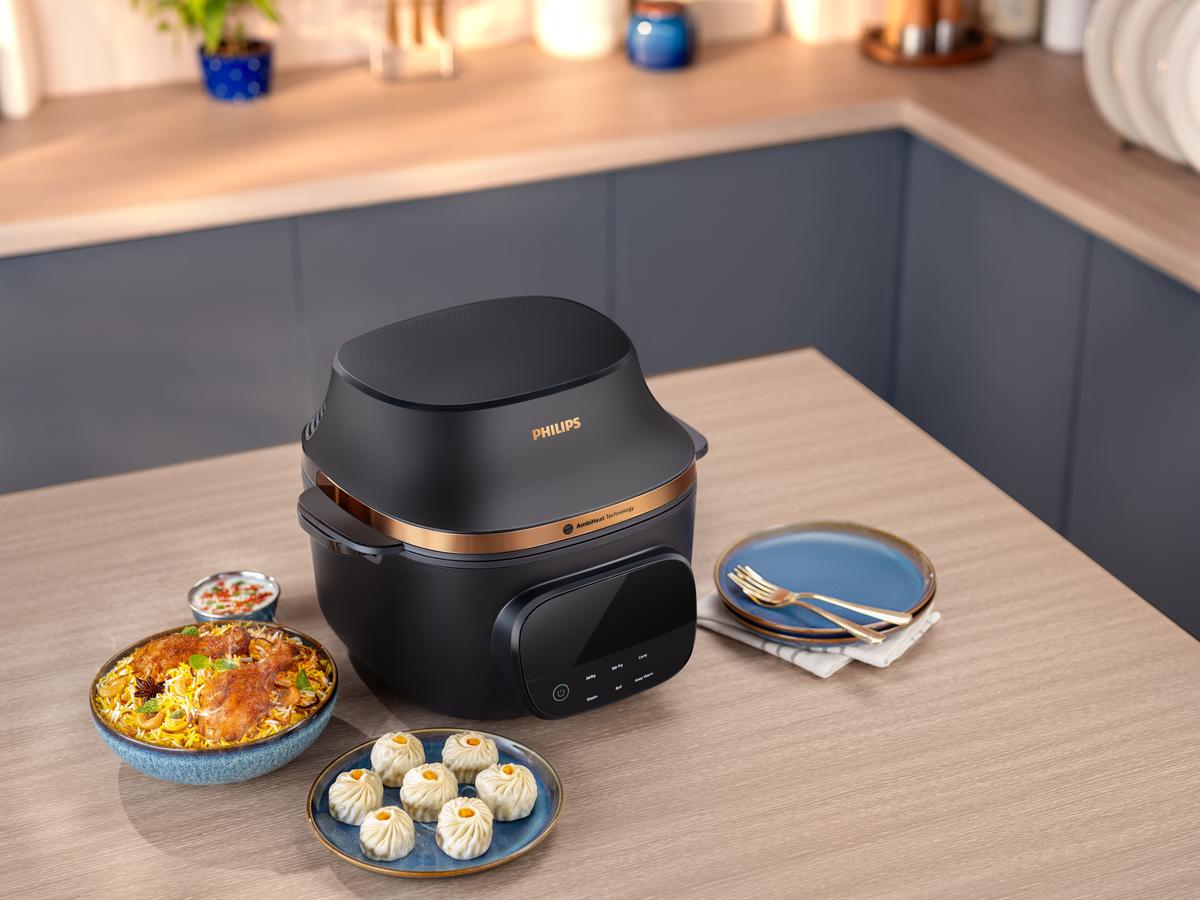
Philips OneChef
| Photo Credit:
Special Arrangement
Pressure-first multicookers like the Instant Pot Duo (around ₹11,990 for the six-litre), Nutricook Smart Pot 2 (₹9,999), and the Geek Robocook Zeta (approximately ₹7,500) are built for fast one-pot Indian cooking. They pressure cook, slow cook, make yogurt, and sauté. The Geek Robocook even features 13 Indian presets for dal, channa, biryani, and sambar. However, none of them can air fry.
Steam air fryer ovens are the closest competitors in the same price range as the OneChef. The Nutricook Steami X (₹19,999) offers 10-in-1 features with a 24-litre stainless steel interior, real steam technology, and multi-rack cooking at 2,200 watts. The Nester Full Stack (around ₹18,999) includes SteamLock technology and four cooking layers in a 16-litre oven-style design. The Usha iChef Steam Oven (about ₹25,990) comes with 39 preset menus and 11 functions, including dedicated steam, fryer, and combo modes. All three can bake a pizza, roast a chicken, and steam vegetables in large quantities. The OneChef cannot do any of those, but it can make a curry from scratch in its pot, which none of these oven-based devices can do.
Glass air fryers are the newest entrant, and perhaps the most interesting for health-conscious consumers. The EDT Luma (₹11,999) is India’s first fully transparent borosilicate glass air fryer: 7-in-1 functionality, dual bowls (2.5L and 4.5L), 1,500 watts, and a 16A Indian plug. It carries zero coatings of any kind. Kilig offers a similar glass-basket approach. These are simpler devices with fewer functions, but they pose a question none of the others is willing to confront head-on.
The coating question nobody is asking loudly enough
Every countertop appliance that contacts food has a cooking surface, and the material of that surface is becoming one of the most important consumer choices in this category. Globally, discussions around PFAS (per- and polyfluoroalkyl substances, sometimes called “forever chemicals”) and PTFE (the compound used in Teflon-style non-stick coatings) are speeding up. The Ninja Crispi, one of the most talked-about air fryers worldwide, has completely abandoned non-stick coatings in favor of borosilicate glass containers.
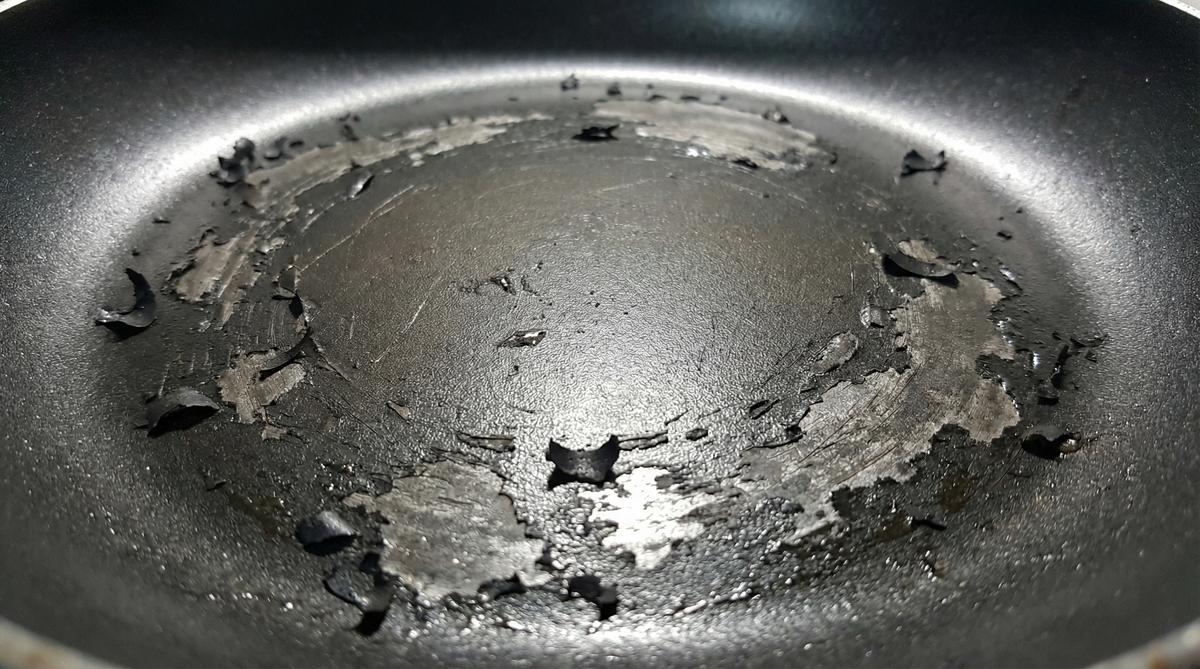
Coating going bad
| Photo Credit:
Special Arrangement
The Philips OneChef’s product listing offers minimal information about the material of its inner pot. We asked Philips directly, and they confirmed the inner pot has a non-stick coating. In 2026, that choice demands a defense, yet none has been provided. The global standard for this category, the Instant Pot, transitioned to stainless steel cooking pots years ago. Priced at ₹19,995, the OneChef is on the same level as appliances that consider material transparency a basic expectation. The ambiguity from Philips is not accidental; it is a silence that, once noticed, is hard to interpret generously.
What to actually budget for
No all-in-one cooker is fully equipped the moment you unbox it. The OneChef comes with the basics, but to fully utilise its baking and roasting features, you’ll need additional accessories like silicone baking molds, silicone-tipped tongs that won’t scratch the pot, and possibly stackable steaming racks for layered cooking.
Also, consider the electrical setup. If your kitchen has 5A sockets, you might need an electrician to install a 15A outlet near the counter, especially for devices over 2,000 watts. A high-wattage extension cord rated for 15A is considerably more expensive than the ₹200 strip available at the local hardware store, and using an incorrect one can pose a safety hazard.
So who is this for?
The Philips OneChef makes the most sense for a household that currently switches between a kadhai, a steamer, and an air fryer for a single dinner, and wants to consolidate that workflow into one vessel. Its pot-based design offers a real advantage in wet Indian cooking: curries, stir-fries, dal-style preparations, steamed idlis. It is the only device in this price range that can brown onions, make a gravy, and air fry papads in the same vessel without moving between appliances.
It does not make sense for someone whose primary cooking method is pressure-cooked dal and rice. It does not replace an oven or OTG for those who bake regularly. And for health-conscious consumers following the global shift away from non-stick coatings, the lack of material disclosure is a gap that competitors at the same price point have already addressed.
Here is the honest truth about this entire category in 2026: no single countertop device has fully covered the diverse spectrum of Indian cooking. The best choice truly depends on honestly evaluating which 60-70% of your daily cooking you would like to manage with one appliance. Keep in mind, the remaining 30% will likely still call for the good old gas stove, pressure cooker, or tawa.
After all, your kitchen counter can only hold so many promises.