



Paintings of birds, animals, and insects come alive on the walls of Coimbatore’s Central Academy for State Forest Service
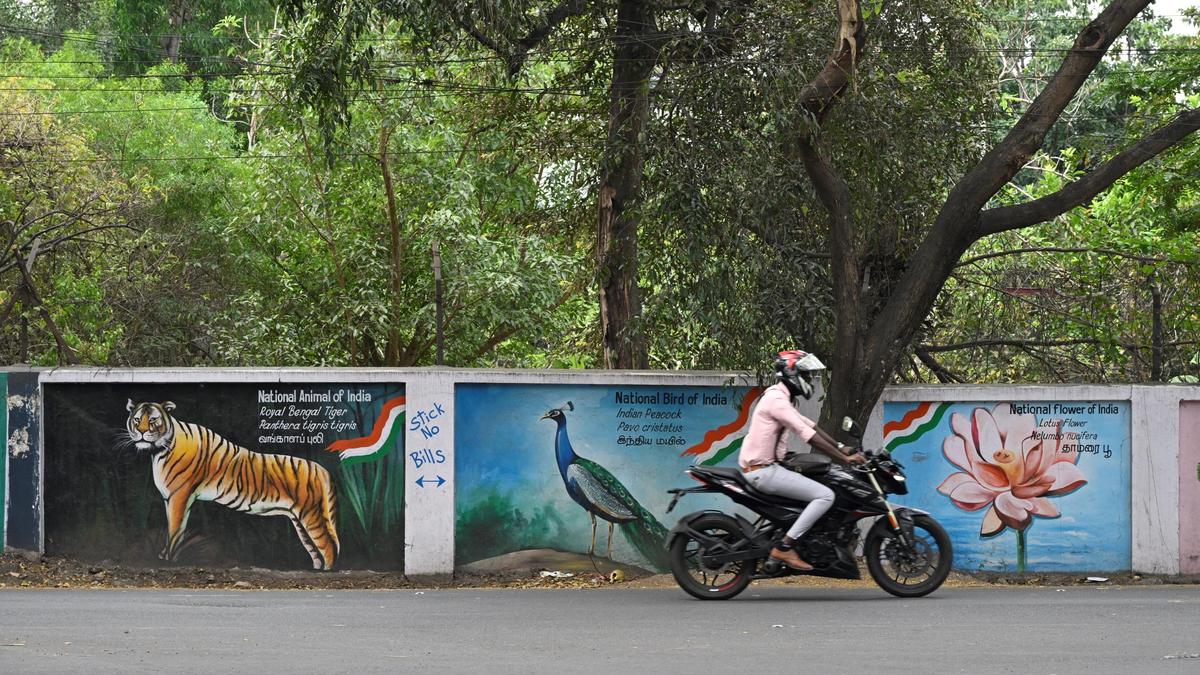
As traffic roars on Thadagam Road, a low compound wall makes us slow down for a closer look. The wall, that is part of the Central Academy for State Forest Service (CASFOS) inside the Forest Campus, bears hand-painted images of birds, animals, sea creatures, flowers and more, done to impeccable detail. Each species is labelled with its botanical name, common name, and Tamil name. On wall that stretches from the Government College of Technology corner to Lawley Road junction, there are 217 paintings in all, with another 285 on the wall opposite Bharathi Park. Started in 2024, the project, funded by the Government of India, is the brainchild of V Thirunavukarasu IFS, Principal, CASFOS.
“The idea came up in 2024 when we renovated the compound wall of the institute,” says Thirunavukarasu. Once the damaged structures were fixed and they were left with sparkling white walls, he looked for sponsors to get them painted with India’s flora and fauna. When nothing worked, he finally got the Indian Government to sanction funds for the small but necessary project.
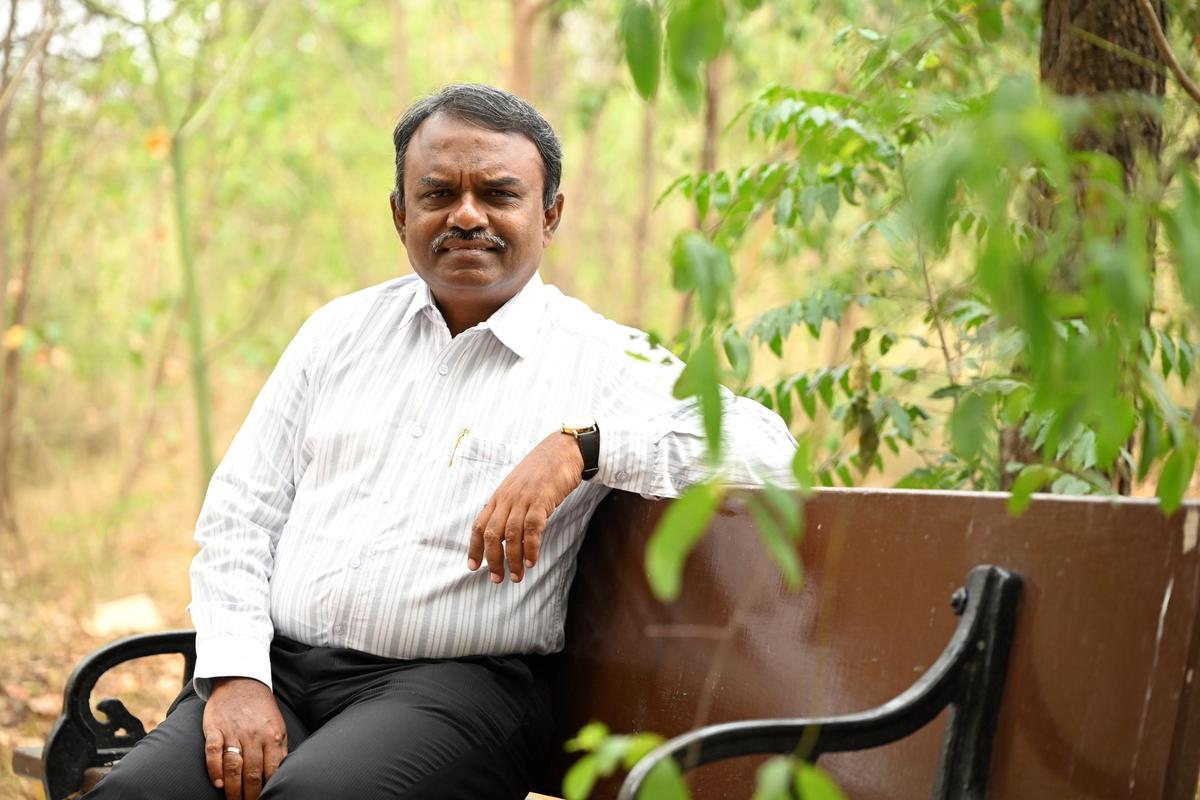
V Thirunavukarasu IFS, Principal, CASFOS, who initiated the project in Coimbatore.
| Photo Credit:
PERIASAMY M
Thirunavukarasu roped in K Muniasamy, Games and PT Instructor at the Academy to take his idea forward. “A group of officers decided on the species,” he explains. “We chose to include flora, fauna, mammals, insects and reptiles to represent the complete bio-diversity of our forests. This will also educate people.” Work began in 2024 and a team of artists from the Kerala-based Madhu Arts worked on the walls. While murals are common across our cities, what sets apart this series is the way the subject is treated.
Each bird, such as the purple sunbird, Eurasian hoopoe, orange-headed thrush, black drongo, painted stork, among a range of others, is rendered lifelike and scientifically accurate. Animals on the wall include Indian gaur, Nilgiri tahr, Indian giant squirrel, spotted deer, impala and leopard. But it is the Bharathi Park stretch that is most interesting: the wall here has reptiles, insects and moths.
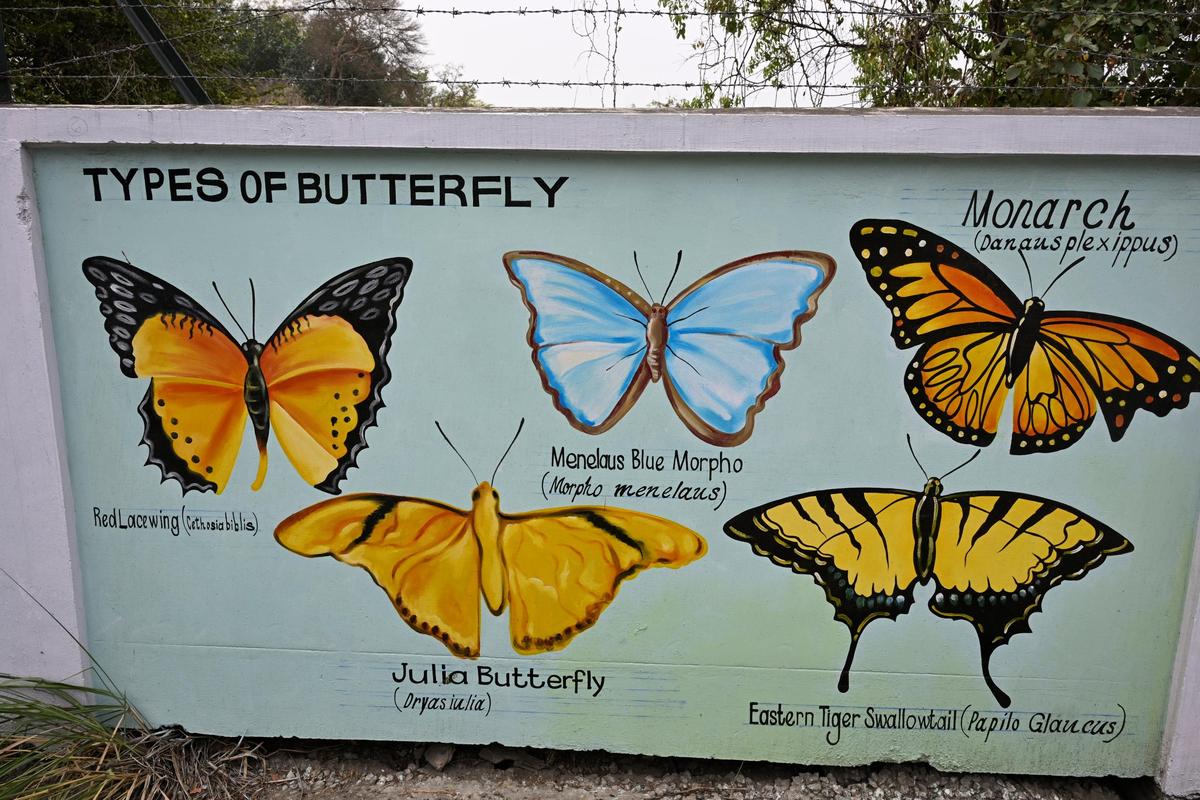
True-to-life paintings of Indian flora and fauna, complete with botanical and Tamil names.
| Photo Credit:
PERIASAMY M
There is the Oriental garden lizard in all its golden glory, next to which is the ornate narrow-mouthed toad with a black pattern on its golden-orange body. The Indian chameleon is shown perching on a twig, while the five-fingered frog gleams green on the wall. Snakes include the Brahminy blind snake, Beddome’s cat snake, banded kukri and the Asian bockadam; followed by ornate moths such as the hummingbird hawk moth, the rosy maple moth in stunning pink and yellow, the dragonfly with its wings spread wide, and the gypsy moth.
A panel describes the different kinds of ants namely black carpenter, Dracula, green-head, black garden, banded sugar, electric, and fire ant, with clear distinction in shape and colour. There is a panel dedicated to mites and crocodiles. The shapes of gharial, crocodiles, alligators and Caiman have been rendered with labels. In between, are thematic forest related drawings, dos and don’ts of snake bites, and important days related to the forest and environment.

The project was initiated in 2024
| Photo Credit:
PERIASAMY M
Muniasamy mentions how the public have been supportive by not sticking posters on the walls. “We are thankful to the public for their feedback and support,” says Thirunavukarasu, adding that they have made provisions for posters and hoardings by placing huge boards at the Lawley Road junction. Even as the artists were at work, Munisamy recalls how passers-by would stop to observe and interact with them, offering them tender coconut water.
The walls have regular admirers. Muniasamy recalls a father-toddler duo who stop by often. “School students who walk past it make it a point to slow down to see the animals and birds,” he adds. The second phase of the project will unfold on the walls of the campus on Cowley Brown Road, and Thirunavukarasu adds that they plan to have paintings done on all four boundary walls.
A colonial building next to the Academy is also set to get a new lease of life soon. Once necessary permissions and clearances are obtained, it will be turned into a centre of excellence for human-animal conflict, Thirunavukarasu says. “The building used to be a living quarters during the British period,” he explains.
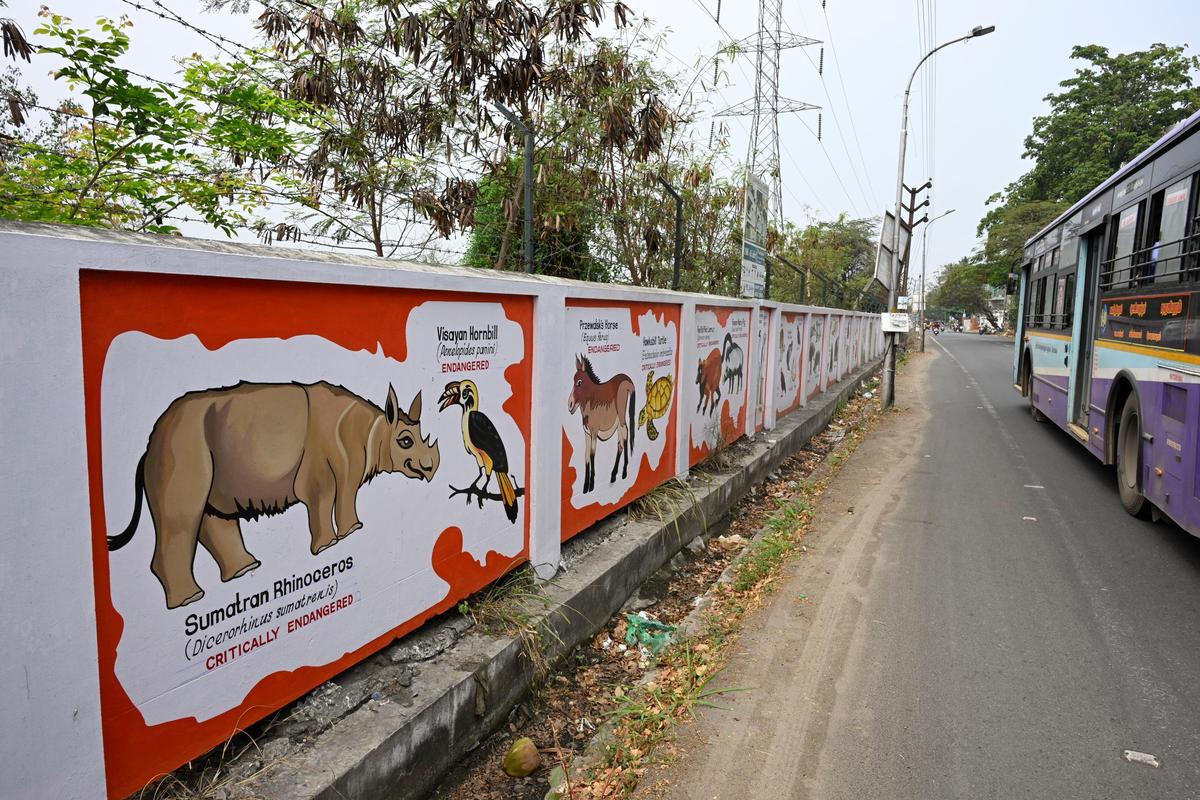
The Central Academy for State Forest Service’s compound walls in Coimbatore
| Photo Credit:
PERIASAMY M
Thirunavukarasu has always believed that our Government buildings or any public property for that matter, should be well taken care of. “Sadly, due to what we call the tragedy of the commons, no one cares about them,” he says. Such buildings, he says, should be considered an asset to every city and should be watched over like one’s own home.
Published – March 03, 2026 11:49 am IST