




Nuclear fusion cost models too optimistic to be viable, experts warn
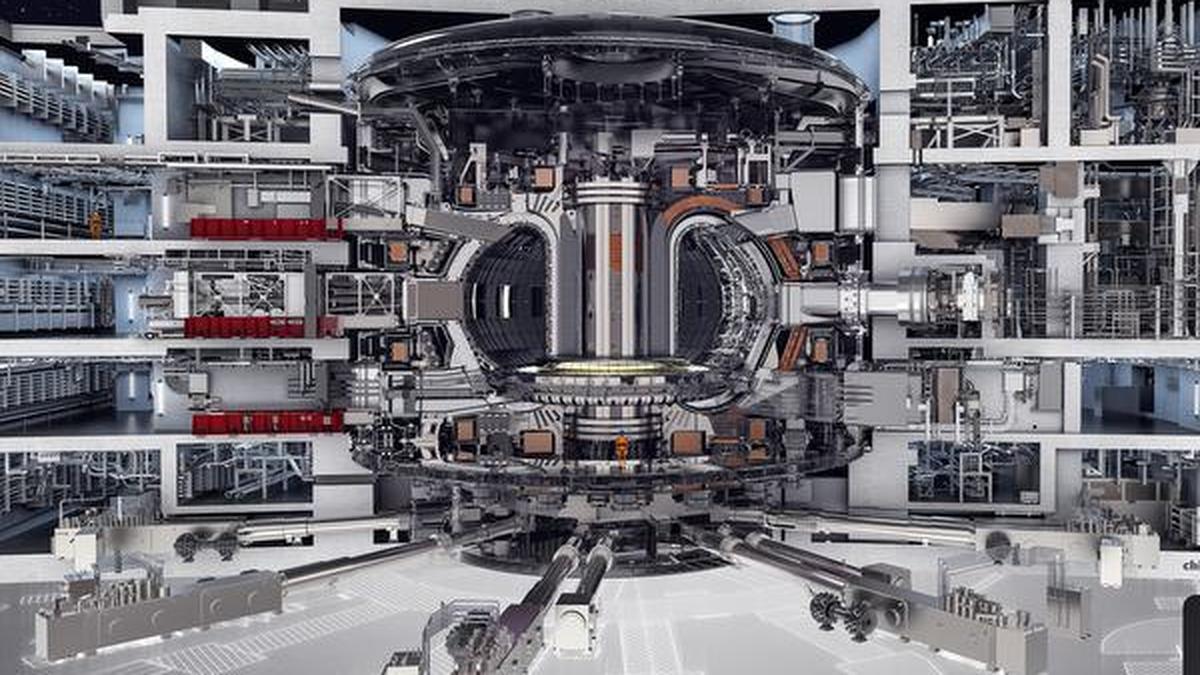
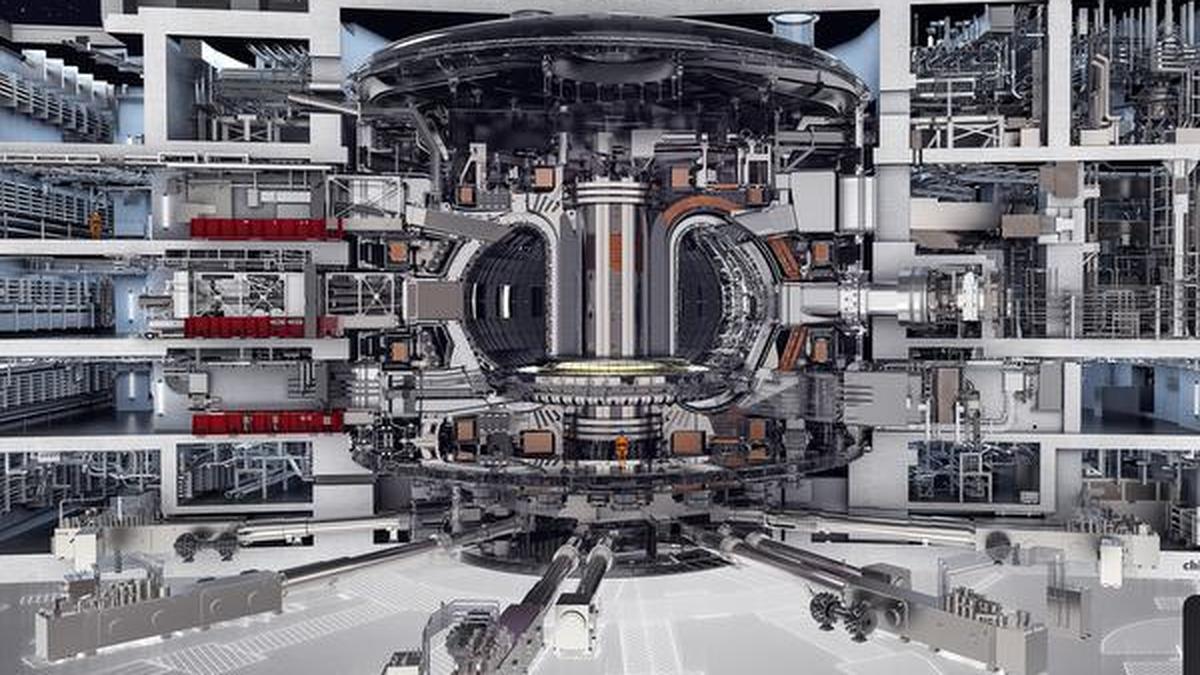
An exploded view of the ITER nuclear-fusion facility. A human figure in orange is shown just below the image’s centre for scale. The reactor vessel is visible at the centre (with the D-shaped cross-section).
| Photo Credit: DOI:10.1088/1741-4326/aa626c
Researchers and investors worldwide are currently pouring billions of dollars into nuclear fusion in the hopes that it will prove to be a reliable source of green power. These investments often bank on economic models that assume the cost of the underlying technologies will drop rapidly as the industry expands. However, researchers have published an analysis in Nature Energy concluding that these projections are based on arbitrary numbers rather than hard evidence.
The authors, from ETH Zürich in Switzerland, have added that if investors continue to use over-optimistic forecasts, they risk misallocating vital funds that can be routed to other, more fruitful climate mitigation plans.

The team’s analysis focuses on the percentage by which a technology’s cost drops every time its global capacity doubles — a factor called the experience rate. Solar panels and batteries have high experience rates, so their prices have plummeted in the last decade. Current nuclear fusion models often assume experience rates between 8% and 20%. After interviewing 28 experts in magnetic fusion and laser-based inertial fusion technologies, the researchers found that these figures are likely too high.
Instead, after examining the unit size, design complexity, and need for customisation, they found that fusion power plants will likely see experience rates of 2% to 8%.
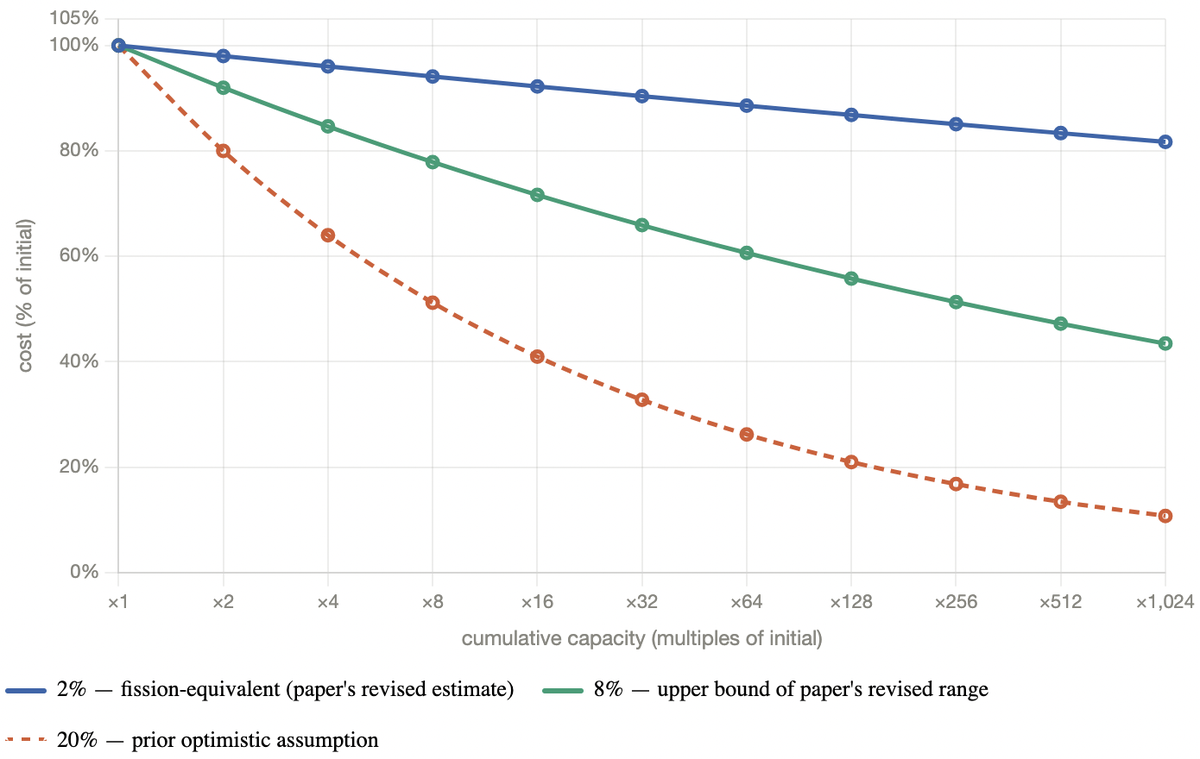
The factor by which capacity increases is shown on the x-axis and the drop in cost on the y-axis. At an experience rate of 2%, capacity will have to increase more than 1,000x for the cost to drop by 20%.
| Photo Credit:
Plot generated by Sonnet 4.6
Fusion plants are bound to be large, with experts estimating even the smallest viable facilities having to produce hundreds of megawatts to overcome the energy requirements of their own cooling and heating systems.
Nuclear fusion is also extraordinarily complex, with experts rating the design complexity as being equal to or even exceeding nuclear fission. One expert described a traditional fission reactor as “trivial” compared to a fusion reactor. Magnetic fusion devices also use an onion-like structure where changing even one component requires redesigning the whole system, making it difficult to streamline manufacturing. Fusion plants also have to be tailored to the local seismic risk, access to cooling water, and the regulatory regime, preventing mass production.
Taken together, the researchers estimated that fusion power’s experience rate is closer to fission power’s historical rate, around 2%. Because the technology’s capital costs are also high, a low experience rate foretells a significant challenge to becoming price-competitive with solar or even advanced fission.
The researchers instead urge the research community to consider alternative designs, such as those using different fuels or smaller reactor configurations, which could offer the potential for better cost reductions.
mukunth.v@thehindu.co.in

Published – April 03, 2026 08:15 am IST