


Nostalgia over the wristwatch – The Hindu

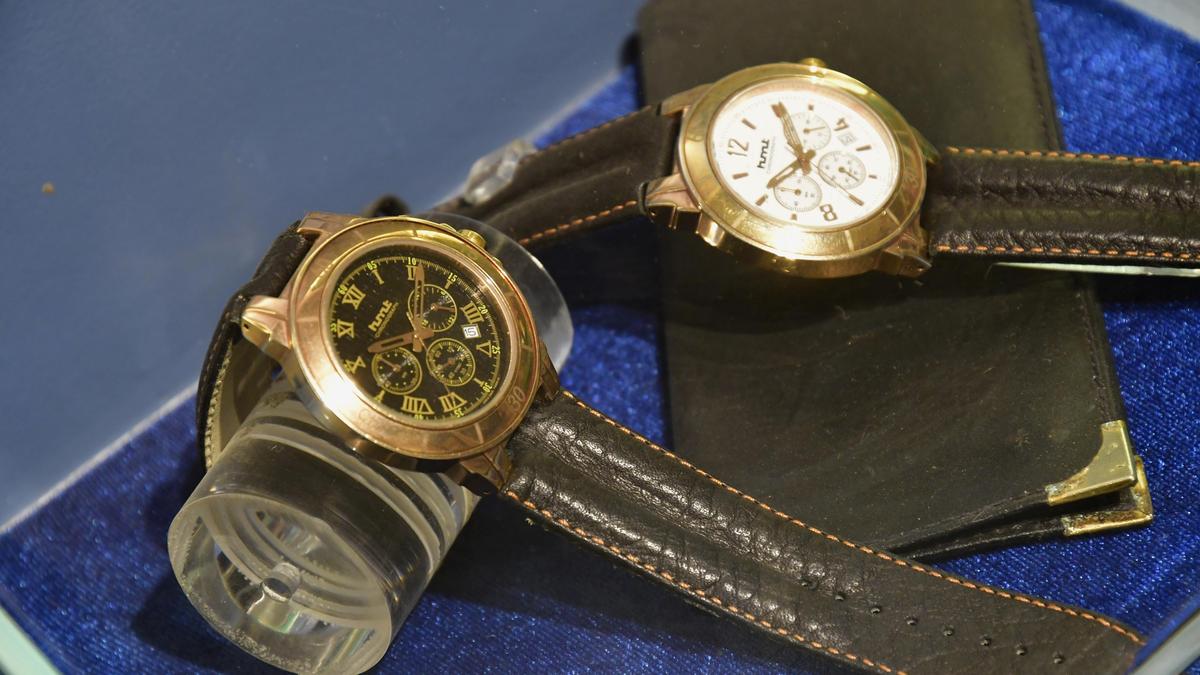
Watches were once cherished heirlooms of family history.
| Photo Credit: MURALI KUMAR K.
My family has a large, royal blue watch-box. This watch-box, which is considered an heirloom, is maintained with much care from generation to generation. Every watch in the box has a small piece of paper attached, bearing details such as the date of purchase, the price, the name of the manufacturing company, its owner and so on.
The box holds several wristwatches of different shapes, sizes, colours and designs. Most of the dials were round. But some of them were square, diamond, rectangular, hexagonal, triangular or oblong. The dials of the wristwatches meant for women were small, some them the size of old one-paisa-coins made of copper or brass.
My attention was drawn to a golden quartz wristwatch with a brown-crimson leather strap made by Timex lying unused for years in the box. It was given to me as an honorarium for contributing a sample question paper for Class 12 for a question bank published by a reputed publication house. The watch looked brand new as I had never used it. It outshone all the other watches in the box.
Gone are those days when wearing a watch was the norm. People irrespective of gender used wristwatches not only as a means of keeping time but also as a status symbol. Never have I seen my grandfather or father, both now no more, without a wristwatch. My father’s first duty early in the morning was to wind his wristwatch made by the Anglo Swiss Watch Company. My mother used a rectangular-faced wristwatch made by Rochees Watches. It had a scarlet dial and a claret leather strap. Women at that time often wore the watch on their right wrist, after a fashion of the day. In the 1960s and 70s, wristwatches with big dials from HMT were popular with the younger generation.
Till the end of the 20th century, a wristwatch was often considered a precious gift. Often, it was part of the gift list during a pre-wedding ceremony. The prospective groom would be blessed with a watch among other valuables by the bride’s family. The custom was almost mandatory, irrespective of social and economic status. Some wealthy families would even make presents of watches made of gold, along with the ring.
Be it to celebrate the success of a student in an exam, the birthday of a family member or first love, watches made excellent gifts. Even in cricket or football tournaments, a wristwatch for the ‘Man of the Match’ was always considered a coveted prize.
While the practice of using traditional watches may be on the wane today, the demand for smartwatches is on the rise.
nandi.budha@gmail.com
Published – February 22, 2026 05:41 am IST