




No kosha, no aloo: Kolkata’s Ranna Ghor by Sienna breaks all the rules
Did you know West Bengal grows around 1,500 rice varieties? Yet, when you go to the market you only see five kinds of basmati and gobindo bhog.
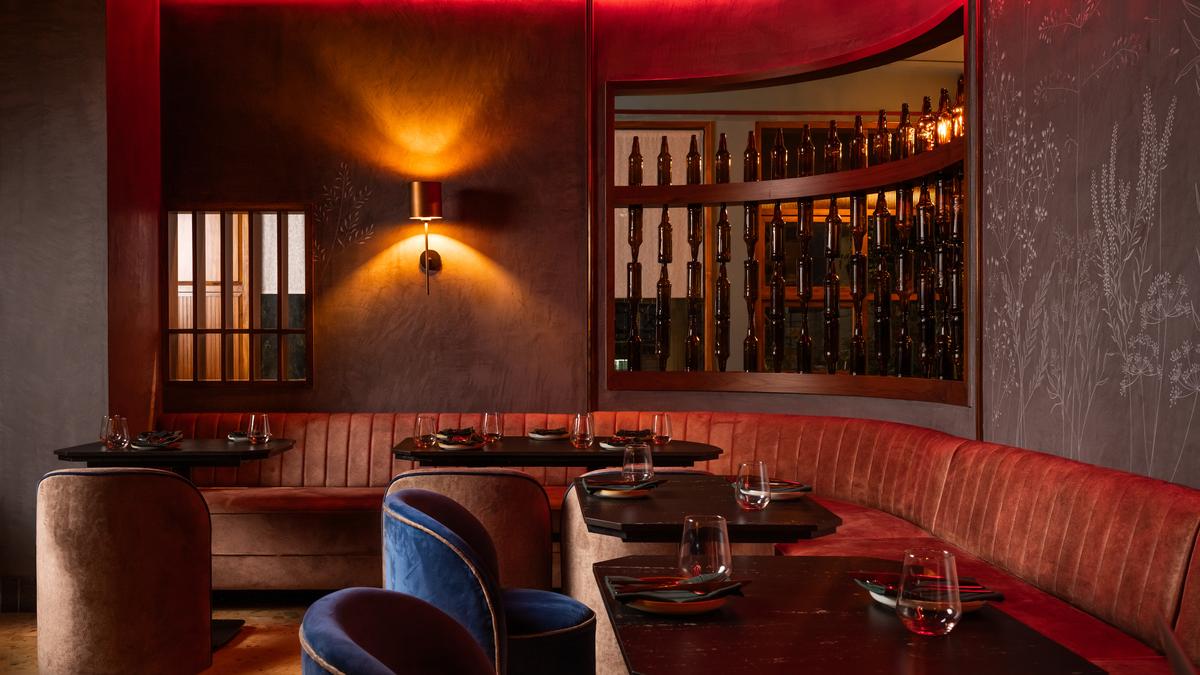
“I remember growing up with chamarmani, shiddho chhal, the GI-tagged tulaipanji and so many other varieties. In the next 10 years, it’ll all be gone,” says Chef Avinandan Kundu of Cafe Sienna and Ranna Ghor. He adds, “As restaurants we need to be responsible about what we cook and what we put out. At Ranna Ghor (Bengali for kitchen) by Sienna we are keeping alive old stories and ingredients from Bengal.” Since August 2025, the top floor of Cafe Sienna has transformed into an intimate eight-seater dining space, open three days a week, with Avinandan and Chef Koyel Nandy running the show with a team of six.
The menu here is a contrast from what the cafe below serves. While the menu in Sienna is urban-centric, in Ranna Ghor, recipes are inspired by childhood memories. “I remember my mom and grandmom in the kitchen, giving me a bite of mach bhaja straight from the korai”, says Avinandan.
The chefs started by exploring the Bankura and Birbhum districts. In Bankura, the chefs tried ant chutney made by the Santhals (indigenous ethic groups in West Bengal, Jharkhand, Bihar, and Odisha.) “We got the ants frozen, it’ll be on the Ranna Ghor menu once we figure out what the vegetarian counterpart is,” smiles Avinandan, adding that in Bankura they don’t use garam masala. “The flavour comes from just onion, garlic, and chilli. We have been to two other districts where they don’t use panchphoron.”
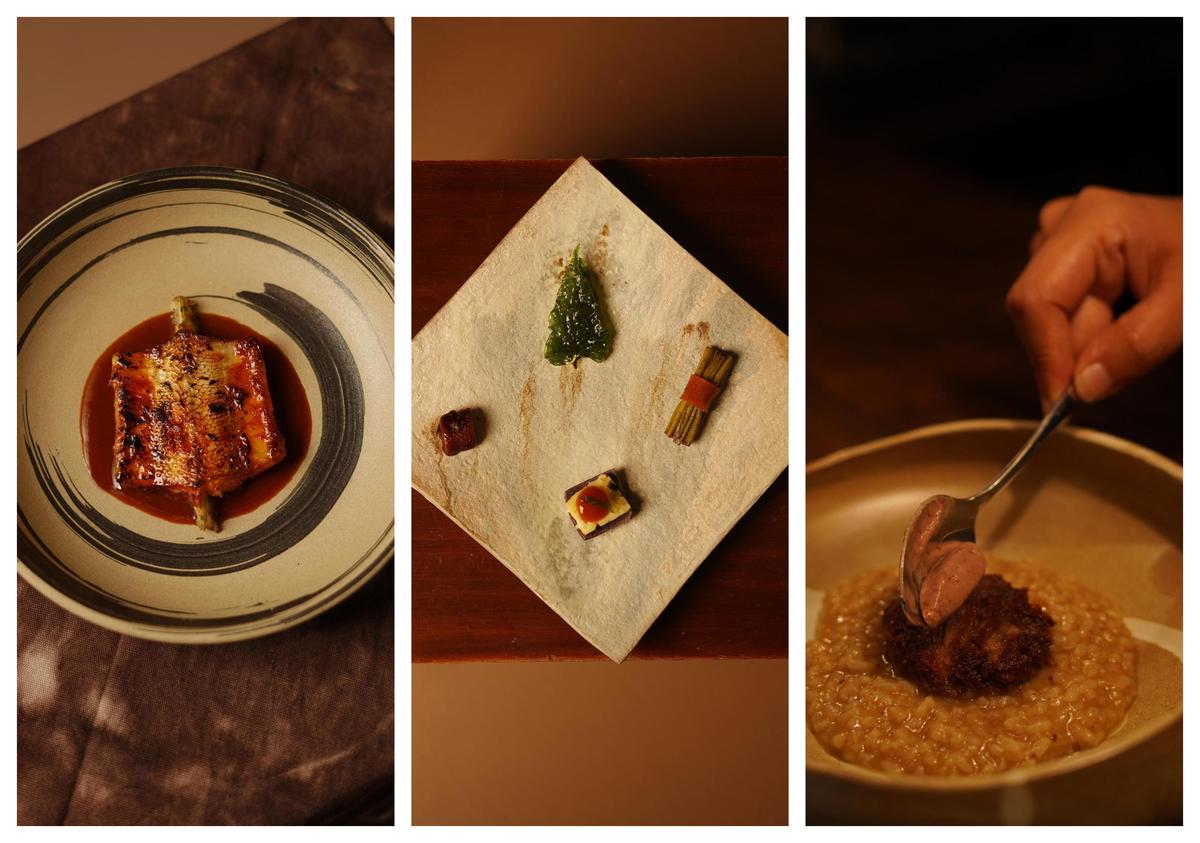
The menu changes seasonally
| Photo Credit:
SPECIAL ARRANGEMENT
The Sunderbans, and North Bengal, is next on their list. “People only know of momos. There is so much dairy fermentation that happens there. There is influence from Tibet and China. Dooars, Kalimpong and Jalpaiguri are also on the list. If we stop exploring and learning, all this (he points to the kitchen) will stop to exist,” he states.
Given Bengal’s diversity, the chefs deliberately avoid familiar dishes. Since it irks them when visitors reduce Bengali food to kosha mangsho, daab chingri and aloo posto, the menu at Ranna Ghor steers clear of these. So they set themselves rules — there is nothing kosha on the menu, no panchphoron, and no (gasp!) potato.
The old-world, handwritten menu deliberately retains Bengali names for the ingredients and dishes, though it has been transliterated into English for the convenience of the diners. For example, scampi is mentioned as galda chingri, bitter gourd as ucchey, cabbage is kopi, and fish — maach.
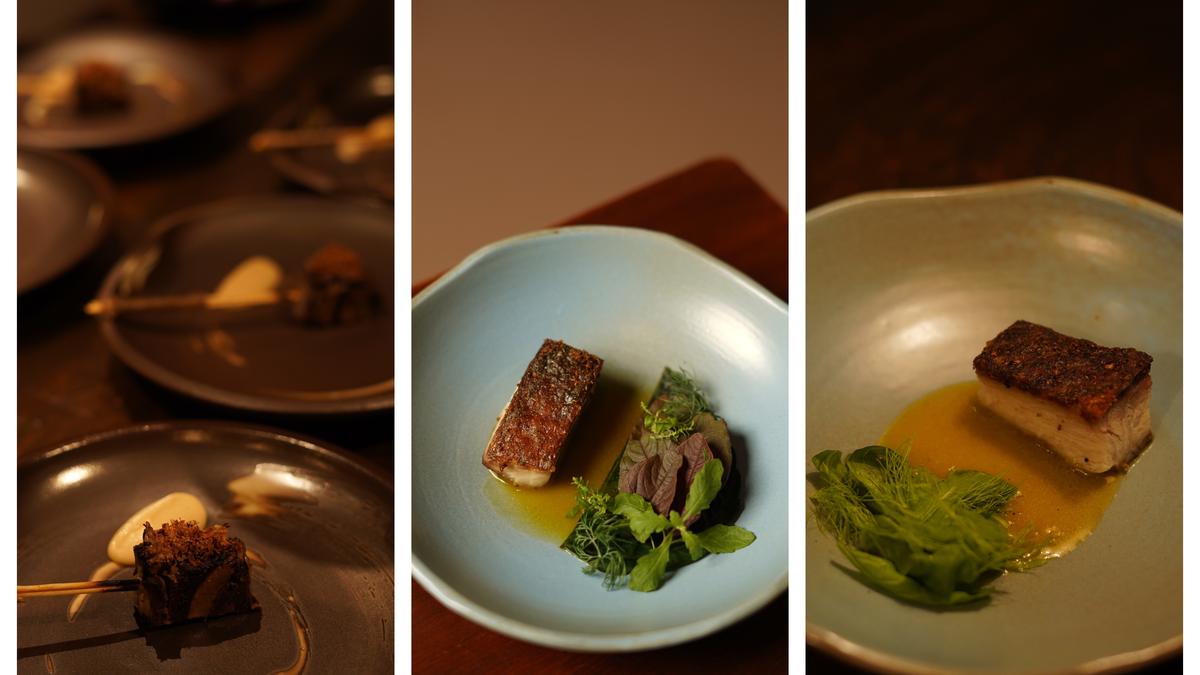
On the day I dine here, the 13-course menu makes even a Bengali like me feel inadequate about my knowledge of the cuisine. The first course is pickled bittergourd served with Bandel cheese and moringa flowers. Flavours are sharp but not harsh, and the dish activates my palate. There is bacon, but it is made from the belly of a 20 kilogram catla fish. It is cured and smoked, and served with cheese made of Dhakai paneer, pineapple jelly and aloobukhara jam. Avinandan’s favourite dish rezala finds place on the menu too. It is my favourite too, especially the deeply savoury bone marrow butter on top.
Courses are paired with cocktails such as Bhaat & Bitters, fragrant with ingredients such as Radha tilak rice, mirin, rum and aromatic bitters; Kalo Jeere Martini that is heady with tequila infused with nigella seeds, vermouth, pickled fig, london dry gin; and Kalo Jeere Sour with gin and kalo jeere infused tequila, charred bell peppers, bitter gourd, jamun, plum and pomegranate dust.
Through the course of the meal, entrees like kopi kidney display techniques the team learned in arid Bankura. Here the dried cabbage is cooked in reduced cabbage stock with mutton kidney on top and a gel made with leaves from the cabbage’s outer layer, with a dash of ginger. Along with that is a sauce that tastes a wee bit like chattur shorbot (a drink made with sattu and water) but here it is recreated with toasted milk powder and goat milk and has a nutty, umami, taste.
“Using dried vegetables, sea fish (Bengal mostly consumes freshwater fish), horse gram (something that’s not common in urban settings), these do not fit into Bengali stereotypes. We have locals in their 70s, who have lived here all their life but come here and discover something new,” says Avinandan.
Dessert is a nostalgic affair. There is a Horlicks caramel ice cream that takes me back to the days when I spooned the powder straight from the jar into my mouth. Mishti dokaan (sweet shop) features four sweets: their take on shor bhaja, malpua, potol mishti (made of pointed gourd) with paan leaves, and monohara.
The seats overlook the compact kitchen where the team efficiently fries, grills, slices, cuts, and plates each dish, unperturbed by curious customers and their raised cameras. Chef Koyel stops by for a chat after the successful service, face flushed but a big smile intact. From her passionate conversation, it is obvious that Koyel is a custodian of all things Bengali cuisine has to offer. The menu, she says will keep changing seasonally.
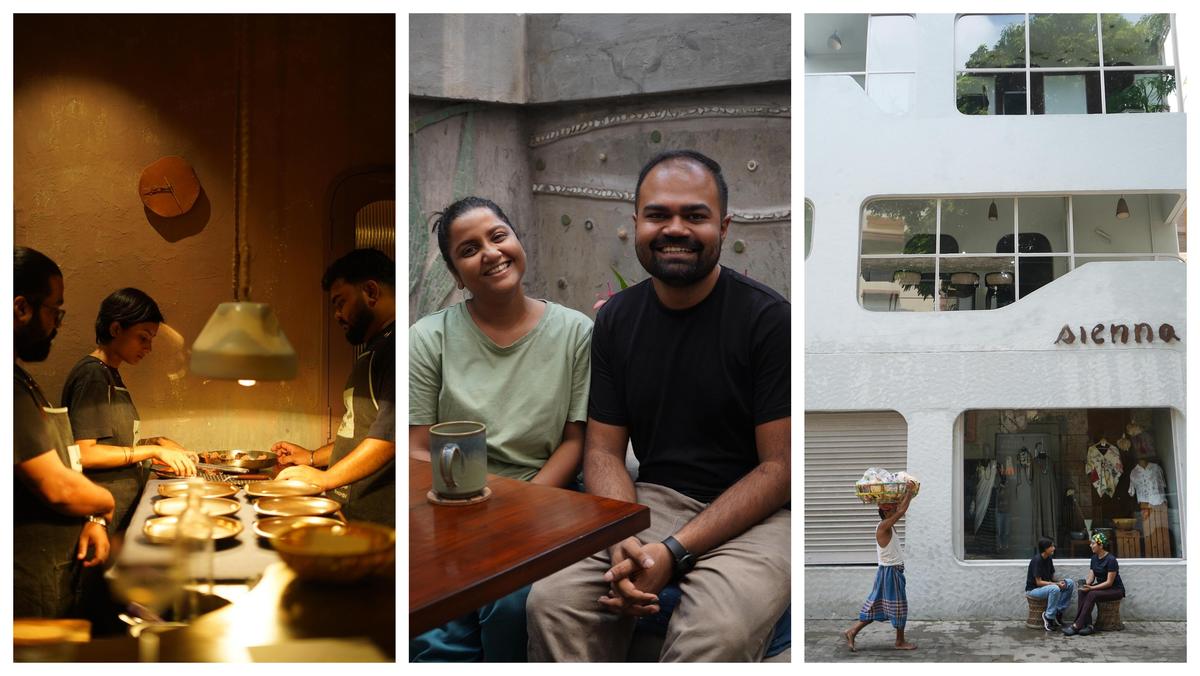
(Left to Right) Inside Ranna Ghor; Chef Koyel and Chef Avinandan; and a view of the 93-yearold building that houses Sienna and Ranna Ghor
| Photo Credit:
SPECIAL ARRANGEMENT
Dinner concludes with a welcome surprise for every Bengali obsessed with their digestion (an inevitable after-dinner discussion on acidity): Aqua Ptychotis, a concentrated solution of jowan (carom seeds). To be honest, it draws a bigger smile than even the macher muro (fish head).
As I leave with my stomach full, acidity under control, and a sense of bliss, I recall an old proverb from the region: “Maach, maangsho, mishti— Bangalir jiboner teen tirtho” (Fish, meat, and sweets — the three holy pilgrimages of a Bengali’s life).
The meal costs ₹4,500 including taxes for the current 13 course menu. Booking is via the District by Zomato app. For details, call 6291068080.
Published – April 04, 2026 09:00 am IST