



NASA hit by fuel leak during practice countdown of moon rocket
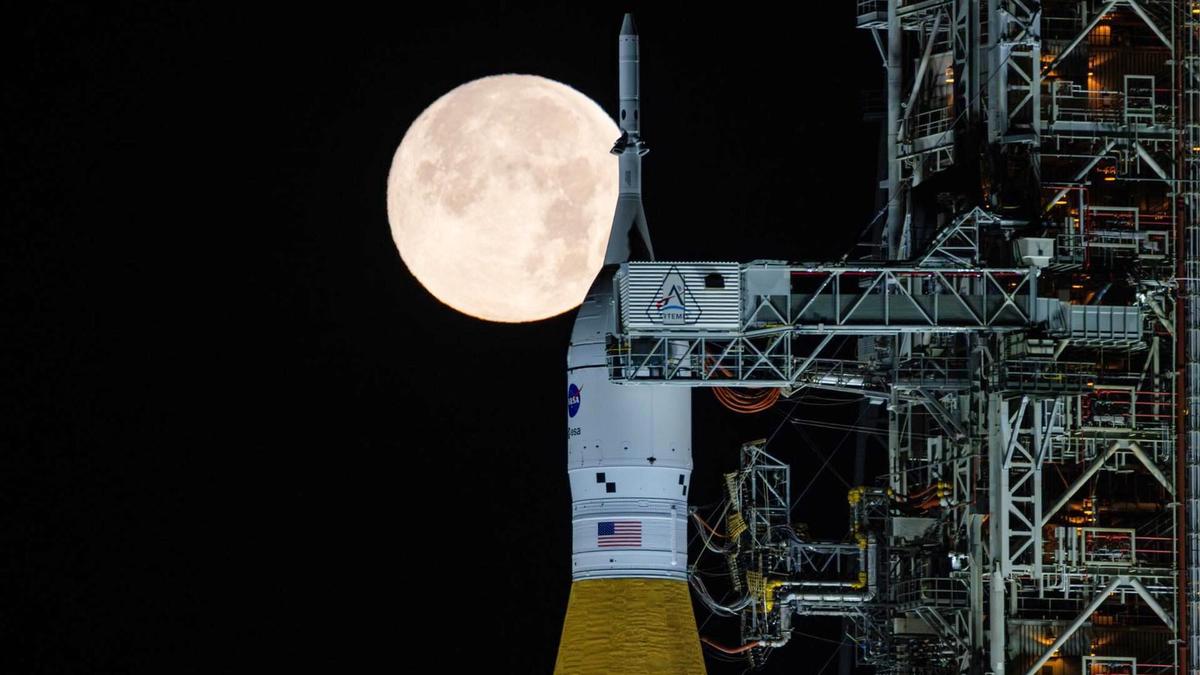
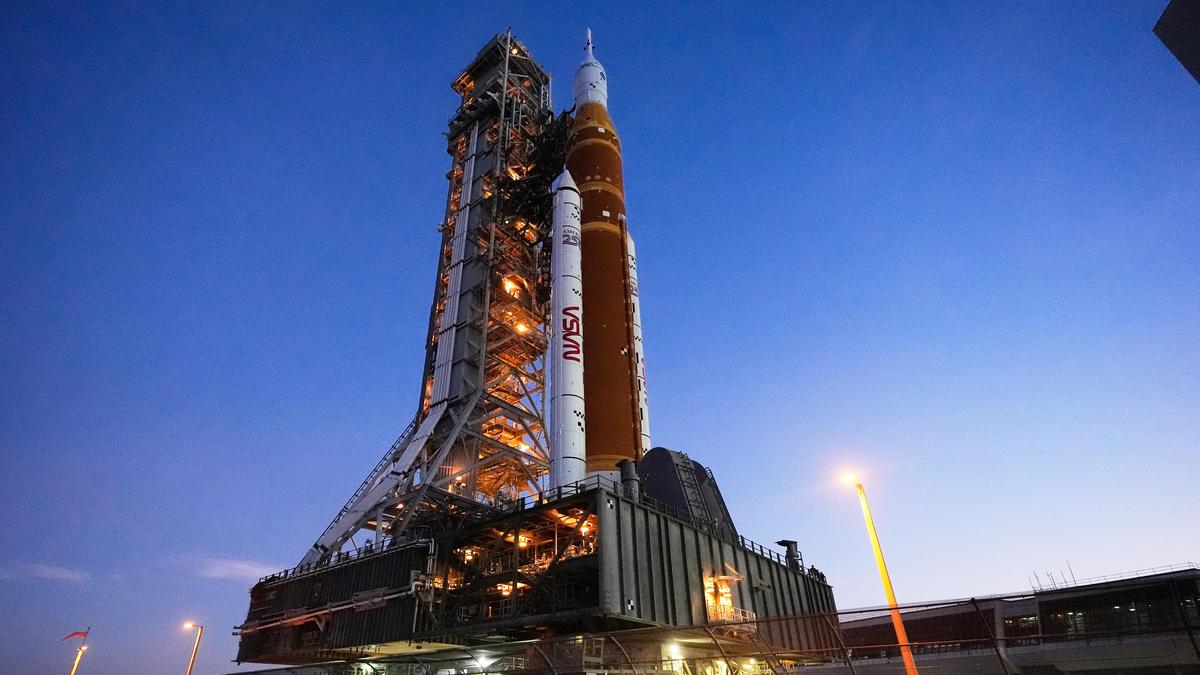
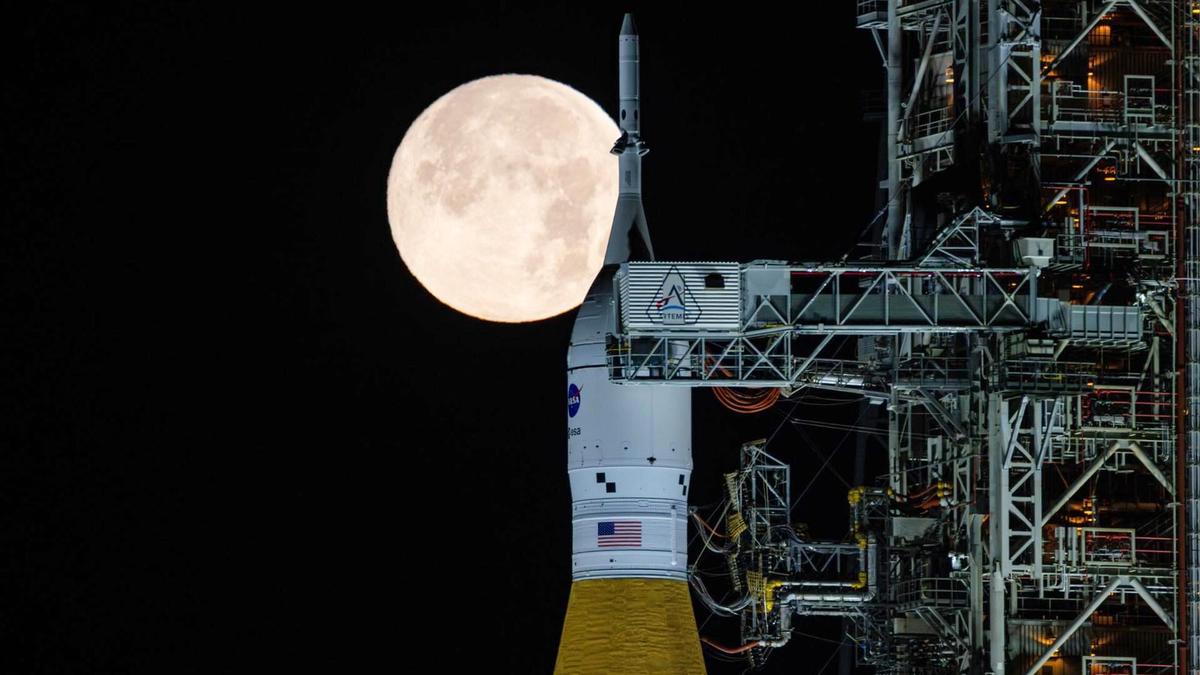
A full moon is seen shining over NASA’s SLS (Space Launch System) and Orion spacecraft, atop the mobile launcher in the early hours of February 1, 2026, at NASA’s Kennedy Space Centre in Florida.
| Photo Credit: AP
NASA ran into a leak while fueling its new moon rocket Monday (February 2, 2026) in one final make-or-break test that will determine when astronauts can launch on a lunar fly-around.
The launch team began loading the 98-meter rocket with super-cold hydrogen and oxygen at Kennedy Space Centre at midday. More than 2.6 million litres had to flow into the tanks and remain on board for several hours, mimicking the final stages of an actual countdown.
But just a couple hours into the daylong operation, excessive hydrogen was detected near the bottom of the rocket. Hydrogen loading was temporarily halted, with just half of the core stage filled.
The launch team scrambled to work around the problem using techniques developed during the only other Space Launch System rocket launch three years ago. That first test flight was plagued by hydrogen leaks before finally soaring.
The crew, three Americans and one Canadian, monitored the critical dress rehearsal from nearly 1,600 km away in Houston, home to Johnson Space Centre. They have been in quarantine for the past one-and-a-half week, awaiting the practice countdown’s outcome.
The all-day operation will determine when they can blast off on the first lunar voyage by a crew in more than half a century.
Running two days behind because of a bitter cold snap, NASA set its countdown clocks to stop a half-minute before reaching zero, just before engine ignition. The clocks began ticking Saturday (January 31, 2026) night, giving launch controllers the chance to go through all the motions and deal with any lingering rocket problems. Hydrogen leaks kept the first SLS rocket on the pad for months in 2022.
If the fuelling demo can be completed successfully on time, NASA could launch commander Reid Wiseman and his crew to the moon as soon as Sunday (February 8, 2026). The rocket must be flying by February 11 or the mission will be called off until March. The space agency only has a few days in any given month to launch the rocket, and the extreme cold already has shortened February’s launch window by two days.
The nearly 10-day mission will send the astronauts past the moon, around the mysterious far side and then straight back to Earth, with the goal of testing the capsule’s life support and other vital systems. The crew will not go into lunar orbit or attempt to land.
NASA last sent astronauts to the moon during the 1960s and 1970s Apollo program. The new Artemis program aims for a more sustained lunar presence, with Wiseman’s crew setting the stage for future moon landings by other astronauts.
Published – February 03, 2026 05:17 am IST