


Mohammad Rasoulof | From the trauma of existence to the trauma of exile
Iranian filmmaker Mohammad Rasoulof’s short film about a writer in exile, titled Sense of Water, recently premiered at the International Film Festival Rotterdam (IFFR). From working under constant repression in his homeland to sending his films clandestinely to festivals like Berlinale and Cannes, for Rasoulof, this is a stark departure. Nevertheless, this freedom has come at a cost. The most prized possession he had — the access to his homeland and the resistance stories he was able to tell — has been seized from him.

In Sense of Water, a forty-minute exploration of immigrant alienation and language politics, a writer contemplates what it means to belong when one must rewire their understanding of words in a foreign language. It follows an Iranian writer whose writer’s block and displacement trauma are compounded by his travails with learning a foreign language.
“I started contemplating the emotional value of words,” Rasoulof said at the press conference in Rotterdam to unveil the film. “That is the root of the film — of trying to understand the language and researching its effect on us.” The project arose out of a programme called Displacement Film Fund, heralded by UNHCR ambassador Cate Blanchett. He received funding to the tune of 100K in euros (around 10 crores), along with other displaced directors from across the world including from Ukraine, Afghanistan, Syria and Somalia.
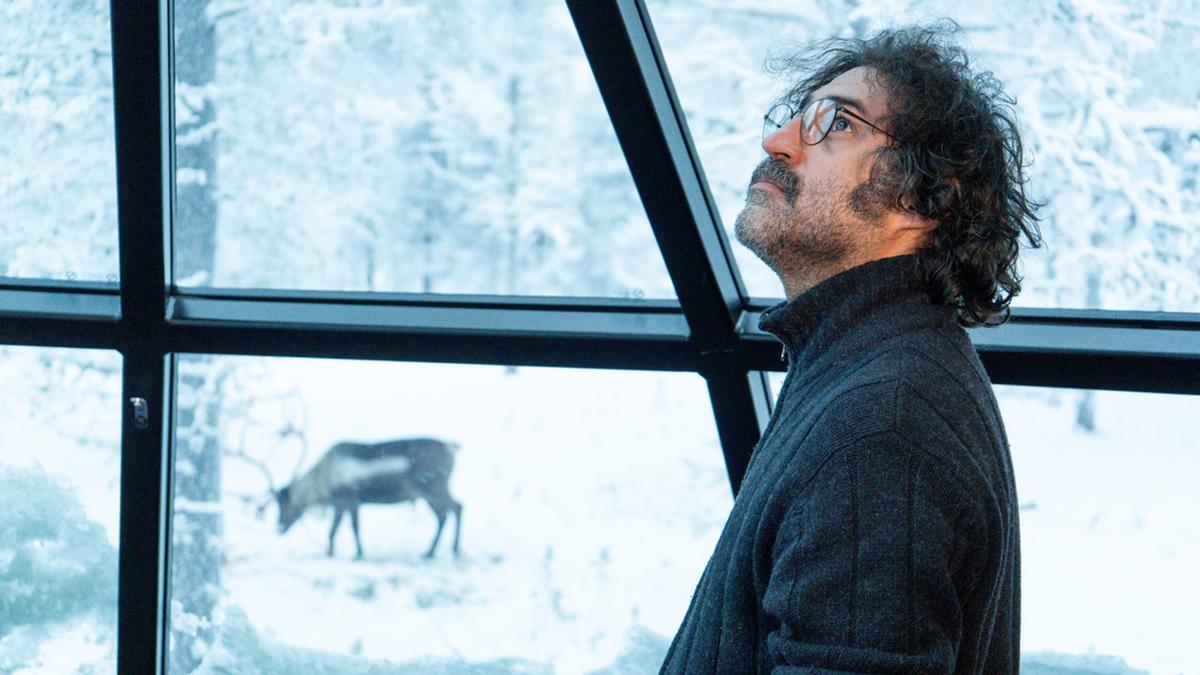
A still from ‘Sense of Water’
| Photo Credit:
IFFR
“There is an urgency to get these stories out. That’s why we decided on the short film format,” said Blanchett on the sidelines of the festival.
In Iran, no profession is more dangerous than filmmaking. Yet working under severe duress, Iranian films have captured everything from simple pleasures of life under a regime (My Favourite Cake, 2024) to subversive themes like underground resistance (No End, 2022) to darkly comic family road trips to the border to smuggle a family member out of the country (Hit the Road, 2021) . Unsurprisingly at every film festival, they deservedly continue to win accolades.
But very few directors have navigated the treacherous path of filmmaking, littered with landmines of prosecution from house arrests to prolonged jailtime. Asghar Farhadi juggles both the responsibilities — to abide by and to make award-winning films admirably, without getting in the bad books of the regime. Jafar Panahi, on the other hand, goes from prison to house arrest and shooting in secret, living his life as an unparalleled filmmaking rebel.

Perhaps no Iranian filmmaker understands exile like Mohammad Rasoulof. The details are sparse, but Rasoulof dramatically escaped Iran with a copy of his film The Seed of the Sacred Fig to show at the Cannes film festival in 2024, where it won the Special Jury Prize. He has been living in exile in Hamburg, Germany since then.
In retrospect, Rasoulof never meant to leave his home country. Speaking to the German media back in 2019, just before his film There is no Evil won the Golden Bear, he struck a defiant chord. “Iran is my home, the country and the culture I love. This is where my father and mother live, the people I care about. My roots are and remain in Iran. Why should I run away?” he questioned. He quoted the renowned late filmmaker Abbas Kiarostami, who once said that “a tree could not be transplanted.”
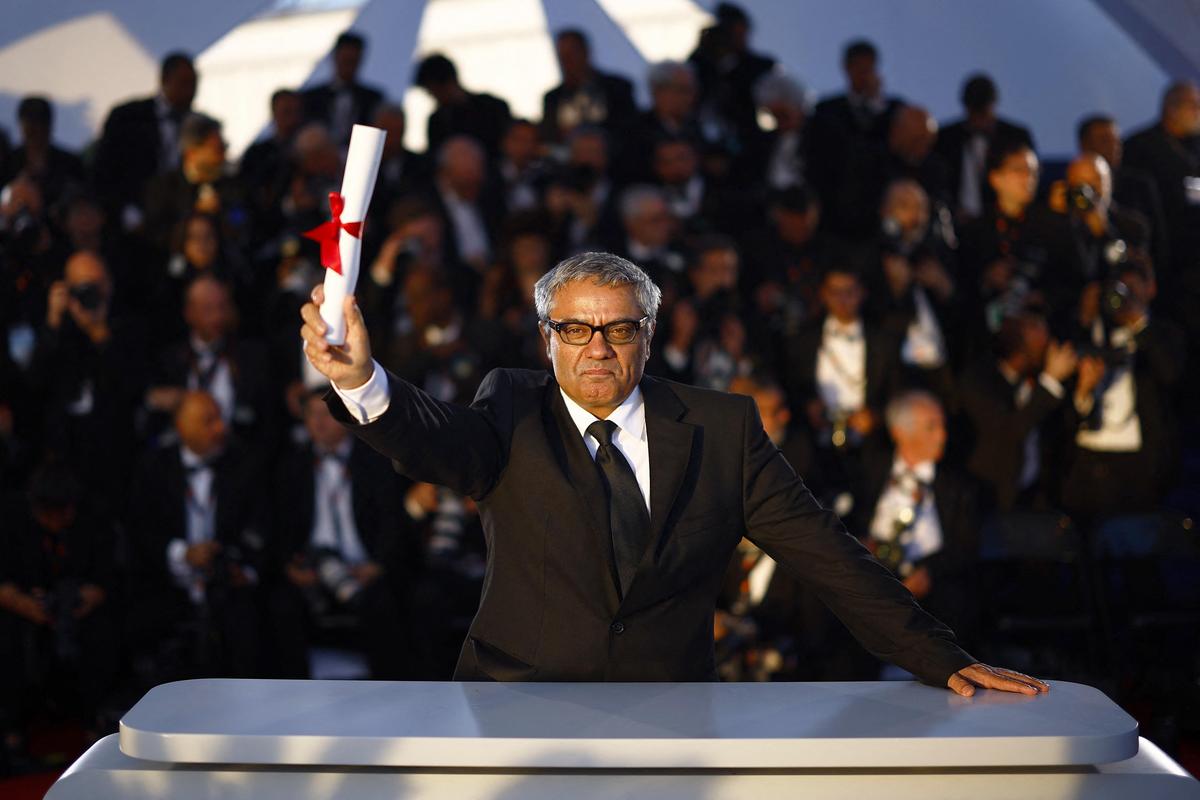
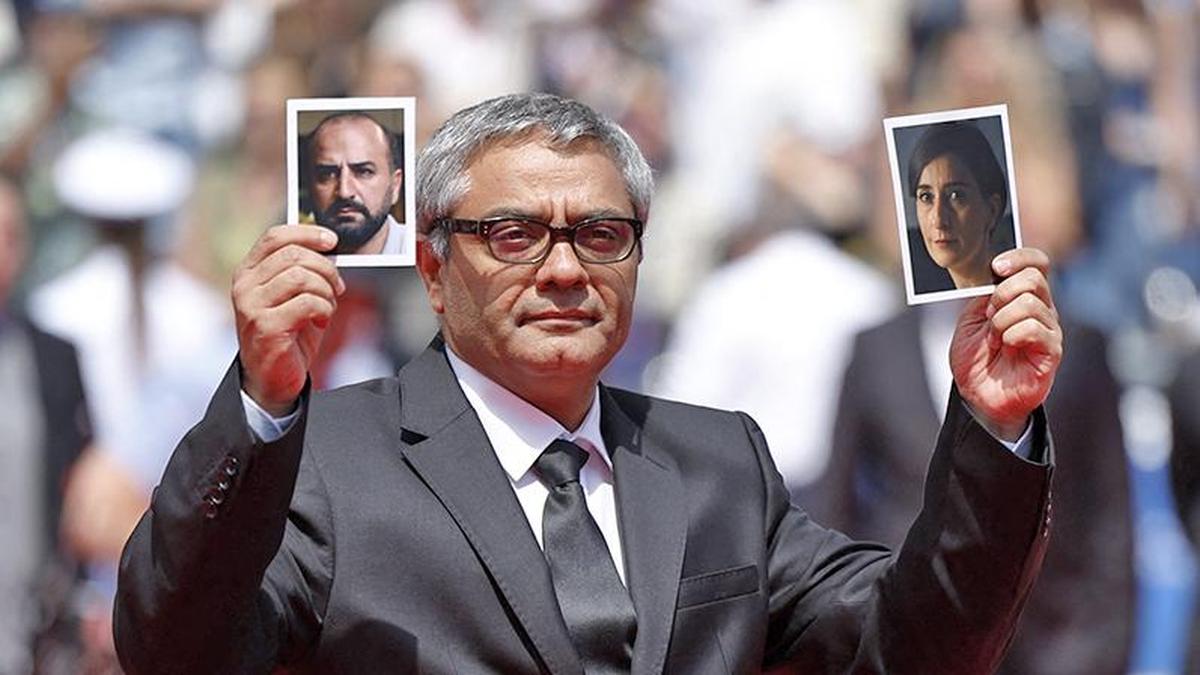
Mohammad Rasoulof, Special Jury Award winner for the film ‘The Seed of the Sacred Fig ‘, poses during a photocall after the closing ceremony of the 77th Cannes Film Festival in Cannes, France, May 25, 2024
| Photo Credit:
REUTERS
Needless to mention, he has clearly toiled with what has not been an easy decision.
It’s little surprise that the trauma of displacement has quietly shaped Rasoulof’s new works. Since his move to Germany, even as he has travelled all over the world judging films at international festivals, Rasoulof has also quietly put out new work. More interestingly, his new work is also looking inward, drawing from themes of freedom, home and the displacement and autonomy of an artist.
His play Destination: Origin debuted in Berlin late last year and has travelled around the country to various cities since then. In it, he collaborates with actors who worked with him in his award-winning The Seed of the Sacred Fig — Setareh Maleki, Mahsa Rostami, and Niousha Akhshi — who left Iran with him.
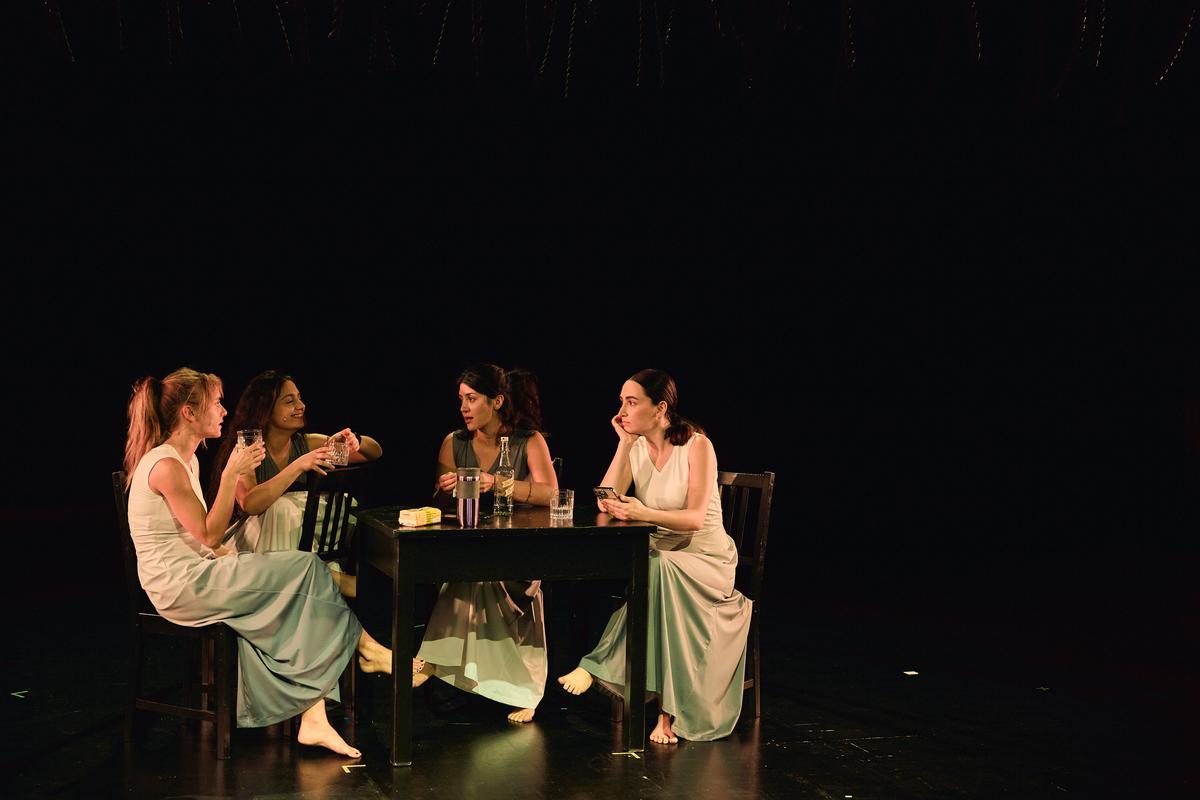
A performance of Mohammad Rasoulof’s play ‘Destination: Origin’ in Berlin
| Photo Credit:
IFFR
The play, a blend of monologues, conversations between the exiled, and modern dance choreography, centres around three women whose journey it traces from Iran to Berlin. They navigate the unchartered territory of freedom while reliving the ordeal of escape in the play.
In Rotterdam, the second edition of the Displacement Film Fund has been announced by Blanchett. It’s unclear whether Rasoulof thinks Sense of Water has the potential to become a full-length feature one day. He is preoccupied with the unrest in Iran and the regime’s brutal quelling of protests. “I’m concerned about the disturbing events happening in my country,” he said in Rotterdam.

Back home in Germany, he can now freely attend Berlinale international film festival that kickstarts this week.
There is reason to believe Rasoulof’s future work will predominantly explore themes of exile even if learning a new language is a stumbling block. When asked about the messaging in Sense of Water, he has this to say: “To everyone who is living in this situation (of exile), I want to say, yes, we can break the wall of language.”
Published – February 17, 2026 04:50 pm IST