




Kerala’s paradox can spark its global vision
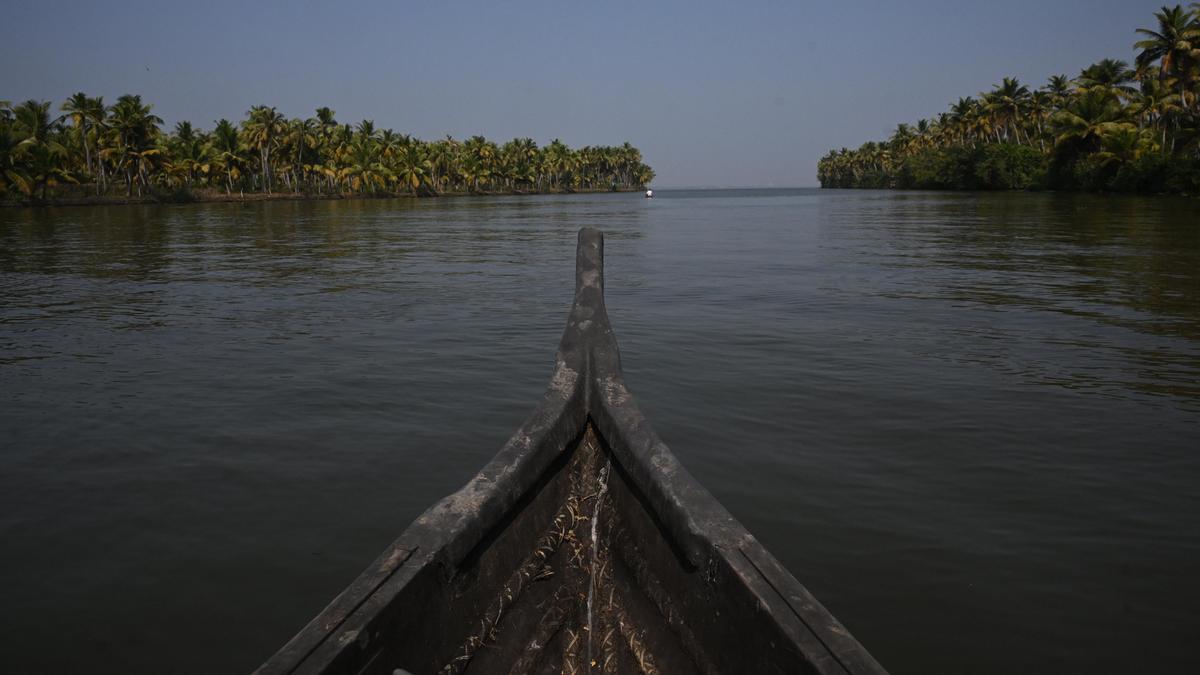
Long before “globalization” became the lingua franca of Davos economists, Kerala, sandwiched between the verdant Western Ghats and the cerulean Arabian Sea, was practising it with cosmopolitan flair. History whispers to us from the excavations of Muziris, where the clinking of Roman sesterces once drowned out local Malayalam dialects. The Chinese, Arabs, Jews and Europeans all arrived in pursuit of our spices and textiles, creating a syncretic civilisation where church bells, the muezzin’s call, and temple chants harmonised into a symphony of coexistence.
Switch from remittance to innovation
This indomitable spirit has metamorphosed into the “Global Malayalee”. From the oil rigs of the Middle East to the boardrooms of Silicon Valley, the Keralite is omnipresent, constructing a “Remittance Economy” worth an estimated ₹1.3 lakh crore annually. We are the super-expats of the 21st century. But the challenge for Kerala is to transform this “Remittance Economy” into an “Innovation Economy”. For too long, Kerala’s economic discourse has been entrapped in a futile exercise of self-flagellation, comparing ourselves to our neighbours, wondering why we cannot replicate the automobile factories of Tamil Nadu or the industrial belts of Maharashtra. But this ignores the crucial truth: Kerala is an anomaly. We are a State boasting first-world social indicators amidst third-world infrastructure pressures, possessing the population density of the Netherlands (901 per square kilometre), the literacy of Singapore (96.2%), and the ecological fragility of Costa Rica. To try to force-fit the heavy industrial models of continental India onto the delicate geography of Kerala is an error of imagination. Our future does not lie in competing with Chennai or Mumbai for smokestacks; it lies in looking outward, across the seas, to the small States that have turned their constraints into competitive advantages.
Kerala is already the nursing capital of the world; we must now aspire to be its healing garden. Our demographic reality — we are the fastest aging society in India — presents us with a unique paradox that is also an opportunity. Leveraging our unique genetic admixture — a blend of Dravidian, Aryan, Arab, and European markers — we must move beyond general health care to precision medicine. Like Iceland, which utilised its population data to drive biotech, we can establish a “Gene Valley”, mapping disease risks and drug responses specific to diverse populations, transforming our diverse heritage into a scientific asset.
Why should we import 80% of our medical devices when we possess the engineering talent to create them? We must look to Costa Rica, a small nation that became a med-tech powerhouse. By leveraging institutions such as the Sree Chitra Tirunal Institute, we can manufacture high-value components — stents, heart valves, and surgical robots — for the world. We already are a leading State in blood-bags.
Furthermore, we must cease viewing our aging population as a liability and recognise it as an economic engine. By emulating the Japanese model and developing “retirement villages” in our climate-friendly highlands, we can offer world-class assisted living not just for locals, but for the “grey nomads” of the West. Additionally, we must elevate Ayurveda from “wellness” to “cure”, much like China successfully globalised Traditional Chinese Medicine (TCM) through scientific validation. By combining our 1,200 species of medicinal plants with modern diagnostics, we can position Kerala as the “Sanatorium of the East”.
One of Kerala’s greatest, yet most neglected, assets is its biological gene pool; as one of the world’s eight “hottest hotspots” of biodiversity, we house approximately 5,679 species of flowering plants (2022-23 data). With no land to spare for low-yield crops, we must adopt the Dutch model of glasshouse farming. The Netherlands is the world’s second largest agri-food exporter despite its diminutive size because it prioritises technology over territory. By focusing on climate-resilient local varieties, such as the saline-tolerant Pokkali rice, and vertically extracting high-value spice oleoresins, we maximise revenue per inch.
Possibilities by the ocean side
We must stop being hunter-gatherers of the sea and become farmers. Like Norway, we should lead in sustainable salmon and shrimp farming and extracting pharmaceuticals from marine algae, while investing in deep-sea fishing fleets and cold storage managed with scientific rigour. The Vizhinjam International Seaport is our gateway, but a port without value addition is merely a parking lot. We must look to Singapore and construct a logistics city that refines, assembles, and repackages goods, transforming Vizhinjam from a transit point into a global economic anchor. We can also be the gas station of the Indian Ocean; like Chile, we can use our solar and wind potential to produce green ammonia for the ships docking at our ports, fuelling the maritime fleets of the future.
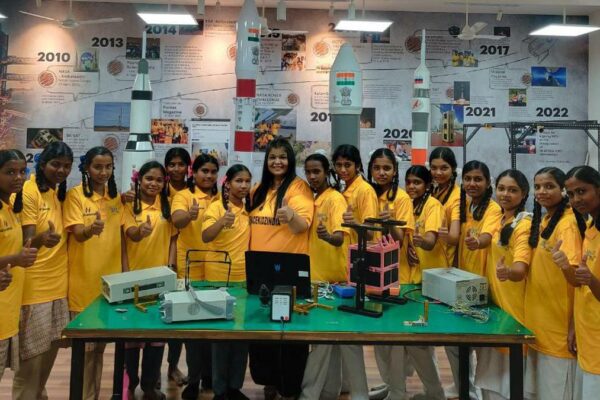
Since heavy industry is ecologically unviable, our path to prosperity lies in the “weightless economy” — sectors requiring high intellect but low physical footprint. We are the Toulouse of India; with the legacy of VSSC, LPSC, and IIST — Vikram Sarabhai Space Centre, Liquid Propulsion Systems Centre and Indian Institute of Space Science and Technology — Thiruvananthapuram is already a space citadel. We must encourage private startups, creating a commercial “space coast” for nano-satellite launches and propulsion systems. Similarly, the presence of Brahmos should be leveraged to set up auxiliary defence production. We must emulate Manchester (“Graphene City”) by turning our rare earth minerals (ilmenite, monazite) into the microchips and superconductors of tomorrow. The India Innovation Centre for Graphene in Kochi is merely the seed; we must grow the forest.
Given our financial literacy and an economy fuelled by global remittances, we need a regulatory “sandbox” in a Global FinTech Centre, similar to the Dubai International Financial Centre (DIFC), to attract the world’s crypto and fintech pioneers. Furthermore, like The Hague or Singapore, Kerala can become a venue for international commercial arbitration, leveraging our legal expertise and the serene “peace dividend” of locations such as Kumarakom to settle global corporate disputes at a fraction of London’s cost.
The change begins here
“God’s Own Country” is a brilliant slogan, but scenic beauty is no longer enough; the modern traveller craves immersion and activity. We can be the Montreal of Asia, utilising our vibrant cinema culture and artistic youth to become the post-production back-office for Hollywood and Bollywood, offering tax credits to attract global gaming studios and VFX houses/visual effects studios. We must pivot from selling handicrafts to selling “heritage luxury”. Consider the Aranmula Kannadi or the exquisite Balaramapuram handloom; currently, these are marketed merely as curiosities for tourists. We must look to Italy’s Tuscany or France’s Lyon — why must a Kasavu saree be mere attire when it can be couture? We need to establish a “Kerala Design Institute” partnering with Milan or Paris to elevate our master craftsmen into designers, exporting not just the cloth, but the brand. Imagine a global luxury brand based on Kerala’s eco-friendly hand-woven textiles, utilising the narrative of “sustainable luxury”.
Finally, we must turn our climate vulnerability into expertise. Like the Dutch, who sell their water management engineering to the world, Kerala can become a “living lab” for disaster-resilient infrastructure, exporting low-cost, flood-resistant housing and soil stabilisation technologies to the tropical world.
The path forward requires a psychological shift. We must cease asking, “How do we catch up with Bangalore?” and start inquiring, “How do we collaborate with Amsterdam? How do we compete with Colombo? How do we learn from Kyoto?” Kerala has historically served as a bridge between the east and the west. It is time we ceased being merely a bridge — and started being the destination. A destination where the best of the world is adapted, improved, and offered back to humanity with a distinctly Malayali touch.
Shashi Tharoor is the fourth-term Member of Parliament (Congress) for Thiruvananthapuram (Lok Sabha), a member of the Congress Working Committee and the award-winning author of 28 books
Published – February 28, 2026 12:16 am IST