



I’ve Spent Almost 2 Years Level 1 Charging My EV. It Sucks
I set out on an experiment in July 2024. I leased a Chevy Blazer EV despite not having a home charger, an outdoor power outlet or even a guaranteed parking space. The plan was to see whether living with an EV without a level 2 charger was worth it. Nineteen months later, I am at my wit’s end.
This isn’t the blog I wanted to write. But it’s the reality.
Why I Had To Do This
I’ve been on the internet long enough to know not to post any pictures of my house for you freaks to scrutinize. But here’s the setup: I live in a little beach cottage in San Diego, with relatively abundant street parking but no driveway. The house is a rental, and had no power outlets on its exterior. Even the ones on the interior were hard to trust, with just two 15-amp circuits for the entire house and breakers that trip every time we try to make toast with the heat on.

I leased a 2024 Chevy Blazer EV without a level 2 home charger.
Photo by: Mack Hogan/InsideEVs
Yet I did not go in blind. I knew this was a terrible setup for home charging, but also a reality that many Americans live with. In a rental, without guaranteed parking, was it even possible? I was a good candidate to find out. I work from home, and most of my friends live within a few miles. I walk to the gym. I get review cars once a month or so, too, and my fiancé has a gas Ford Escape I can use in a pinch. Finally, given where I work, if I have to take a meeting from a public fast-charger, I knew my colleagues would understand.
San Diego’s temperate climate also gave me hope, as level 1 charging below freezing is a fool’s errand. And with a 278-mile EPA range, my Blazer EV had enough endurance that it all seemed doable.
It is possible.
But possible and enjoyable are different words for a reason. And after 11,000 miles of this schtick, any enjoyment has long since faded.
How I Charge My Car
I wasn’t going to rely purely on DC fast charging. It’s too expensive and time consuming. So the first step was the most fraught: I needed to convince my landlord to let me install a new breaker and outlet into his rickety old house’s electrical system. With some sweet talk and $350 to a local electrician, though, that proved easy enough.
Yet the outlet was still about 70 feet from the charge door on my Blazer, which is sadly not on the curb side of the car. My General Motors Dual Voltage Charge Cord was already 25 feet, but that means I still needed an extension cord.
Charging my Blazer EV at home requires a 50-foot extension cord and a lot of waiting.
Photo by: Mack Hogan/InsideEVs
Already, we are off the reservation. Manufacturers are clear that EV chargers are not designed to be used with extension cords. It’s so taboo that you can’t even get a level 2 extension cord from a reputable brand, or at least couldn’t back then. But after consulting with a few electricians, they confirmed that if I got a 10-gauge extension cord rated for 30 amps, I wasn’t risking much by running 12 amps through it.
Because that load is continuous, and because the extension cord can easily be scraped up by rocks, and because the charger’s ground-fault detection may not work as designed with an extension cord, this is explicitly something I do not recommend. But while I used to think I’d write that with a wink, I now mean it sincerely.
Of course, even assuming the setup itself can safely carry electricity, it still has to carry it across a public sidewalk. I try to be a good neighbor. If I wanted to really succeed, I would simply not do this. Instead I split the difference and put one of those ramped cable covers over the cord every time I plug in. That way nobody has to trip or lift their stroller to get by.
Already, you can see the problem. If I want to plug in my car, I have to unwind a grimy, bulky 50 foot extension cord out to the curb. Then I have to schlep the bulky two-part charge cord over, plug it in, and get it connected to the car. Then the gross cable cover comes out, covered in grime from below and above.
About two third of the time, the light on the charger goes yellow, indicating a problem either at the charge port, the switchable connector on the charger itself, the contact point with the extension cord, or the extension cord’s connection to the house. So I run back and forth wiggling things until everything goes green.
My conservative neighbor, who is generally fun but anti-EV for a lot of reasons that seem silly to me, gets quite a kick out of this. The first time she saw me do it, she said “that’s so fuckin’ stupid.” Nearly two years later, every time I’m wiping road grime off my nice pants after coming home from dinner, I remember those words. We may not agree on much, but when she’s right, she’s right.
Slow, Annoying, And Unreliable
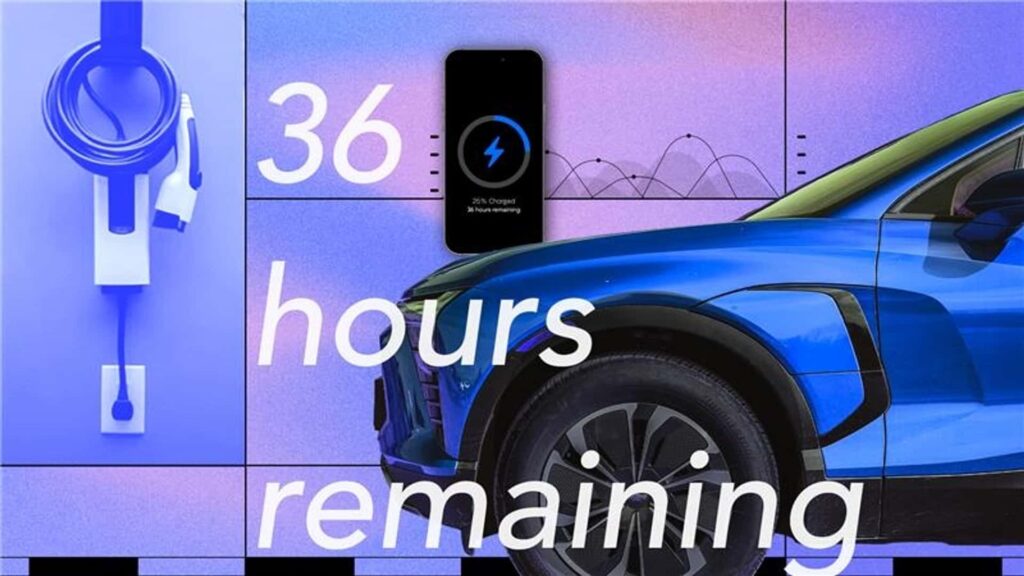
If I go through all of this rigamarole, I am rewarded in the following way: about 50 miles of range per 24 hours on the charger. Forgive me for not jumping for joy.
So if I want to plan a weekend trip, and my battery is at 20%, I need to plug in on Tuesday and basically not move until then. If I move and my spot gets taken, tough luck. Time to unwind the whole thing, wait for it to clear, and do it all over. This is usually not a problem, as I typically get my spot. But just a few weeks ago, I had to rework my entire Saturday plan after I came home Friday night to find my spot taken.
The whole situation means I charge my Blazer EV at fast chargers often.
Photo by: Mack Hogan/InsideEVs
All of this planning and running and wiggling and hand-washing could be worth it, if it was at least cheap. It isn’t. San Diego’s electricity rates are some of the highest in the country, thanks to San Diego Gas & Electric, a company that makes the Gotti family look above-board. Somehow I pay 12 cents on peak per kilowatt-hour for the electricity I actually buy from my community power company, but SDG&E charges an unthinkable 32.9 cents per kilowatt hour to deliver the power.
That means I pay about double the average overall power price in this country just to get the power delivered. Generating it costs extra. On a completely unrelated note, SDG&E is prohibited by law from making money on power generation, but the government-protected monopoly is permitted to profit off delivery fees, in order to “incentivize investment.” Boy, do I love incentivized investments.
The natural solution would be to charge during the “super off-peak” hours of 12-6 a.m. on weekdays, when EV owners get discounted rates. Then, instead of paying 32.9 cents to use power lines that are already built, I’d only be paying 4.3 cents per kWh for the privilege. But there, again, is the problem with level one charging: I can’t only charge for six hours a night, because I’d barely get enough power for a coffee run.
The Extra-Expensive Way To Plug The Gaps
The result of all of this nonsense is that I have to choose between leaving my power cord constantly connected, as an eyesore that also annoys pedestrians, just to keep the car near 80%. If I don’t want to do that, which I don’t, I have to plug the gaps with DC fast charging.
Photo by: Tesla
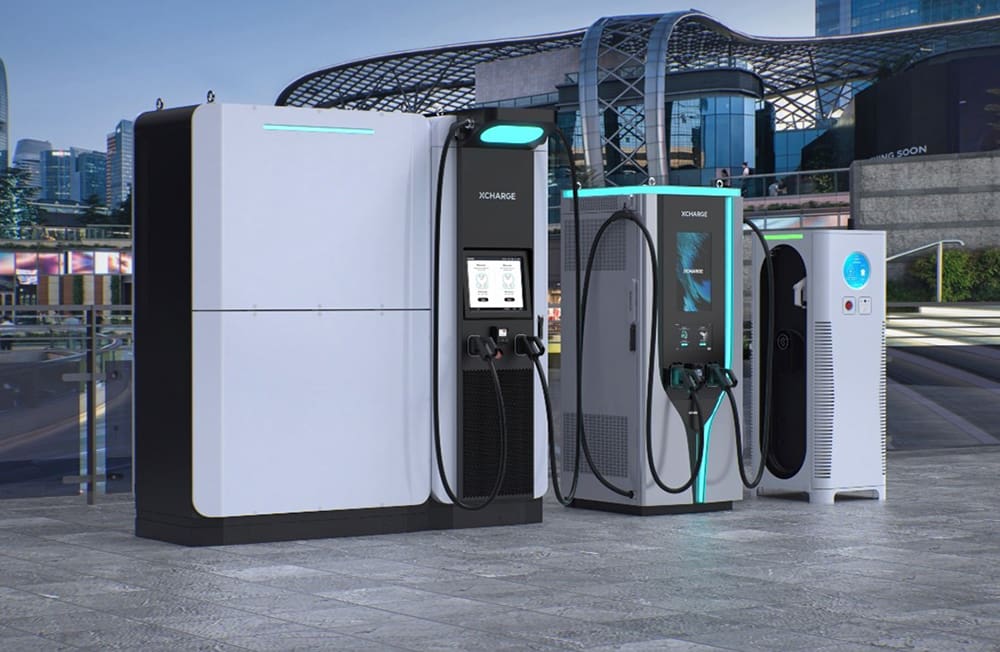
I’m not going to turn this into another diatribe about public charging infrastructure sucking, because I think you understand my nuanced view. It sucks. I basically have to choose between an Electrify America station that’s always full but at least has a grocery store and a Tesla Supercharger that is always available but more expensive and with no real shopping or dining options.
Financially, the choice is between getting merely fleeced or utterly robbed. The “affordable” option is the EA station that charges $0.65 per kWh. The Tesla station has the stones to charge an are-you-kidding $0.72 per kWh to non-Teslas. I’ve seen carjackers treat people with more decency.
If you’re unfamiliar, as most of us are, with how these rates translate, let me do some basic math. My Blazer EV has an 85-kWh battery, which means a full charge costs $55.25 at EA and $61.20 at Tesla. I get about 3.0 miles per kWh in the real world, which means 255 miles of range for the price. That’s $0.22 per mile at EA and $0.24 per mile at Tesla. (Both offer discounted rates to members, but if you don’t drive that much and do some at-home charging as I do, it’s not worth it.)
In a hypothetical world where I had worse taste, if I purchased a gas-powered all-wheel-drive Chevy Blazer, I would be getting about 24 miles per gallon and paying $4.64 per gallon. That’s unimpressive fuel economy teamed with one of the highest average gas prices of any county in the country, and I’d still be paying just $0.19 per mile, far less than what I pay now. I also would not spend 30 minutes in a Petco parking lot every time I wanted to go hike in the mountains.
What I Really Lose
I knew going into this that I’d never recommend this experience to the average American. If someone tells me they can’t charge at home or at work, I tell them to get a hybrid and wait. The best part of EV ownership is waking up with a full tank every day, or at least so I’m told. But I was willing to deal with the lost time, and even with spending more money, to drive an EV.
I love exploring nature, and I want to protect it. I love zipping around with instant torque in perfect silence. I love my car’s built-in music streaming and practical but sophisticated interior. I love the little bit of hope it gives me, a precious commodity in this time.
But there’s a big, stinky trade-off I didn’t consider. The charging issues make me want to not drive my car. That may be good for the environment, but it sucks for a 28-year-old with a love of exploring. I love impromptu trips to the mountains. I love road trips to visit my friends. I love taking the ambling, twisty way through the woods.
Yet when I know that my trip will start and end with 40 minutes in a dilapidated parking lot, or that I’ll have to come home and run wires across my lawn for three days just to dig out of a low-battery hole, it’s yet another reason to say no. It’s why I’m less than five months from the end of this lease, and have only used 11,000 of the 20,000 miles I paid for. It’s why it took me so long to finally sell my gas truck; it was so nice to have a car that was always ready to go, without three days worth of foresight.
Photo by: Mack Hogan/InsideEVs
That’s the sense of adventure that made me fall in love with cars. The feeling that the key to my Tahoe was the key to going anywhere, anytime, over any terrain. My EV isn’t like that. It is far, far better for the realities of daily driving, but with its limited capability and my own limited charging situation, it is not the subject of my idle daydreams. It is another thing to plan around, another thing to worry about.
I don’t think I’d feel that way if I had level 2 charging. The public network may be frustrating and expensive, but it is, to me, absolutely reliable enough for the occasional road trip or back-country jaunt. Yet relying on it day to day is expensive and exhausting.
That leaves the seamless EV dream out of reach for a large swath of Americans. I knew that was true. I just didn’t think I was one of them.
Contact the author: Mack.Hogan@InsideEVs.com