



India Art Fair 2026 | Design collectibles are at an inflection point in India
At India Art Fair (IAF) Design, architect Kunal Maniar’s Love Bench, a 21-foot, 3,000 kg sculptural metal piece with a bolster made of water hyacinth and banana pulp fibre, had guests pausing. Elsewhere, Bloom, a chandelier by designer Dhruv Agarwwal explored nostalgia and childlike curiosity through colourful Channapatna beads, with a colour palette inspired by his visit to the Kumbh mela. And architect-designer Ashiesh Shah’s Taamr (copper) saw traditional matkas reimagined as light fixtures.
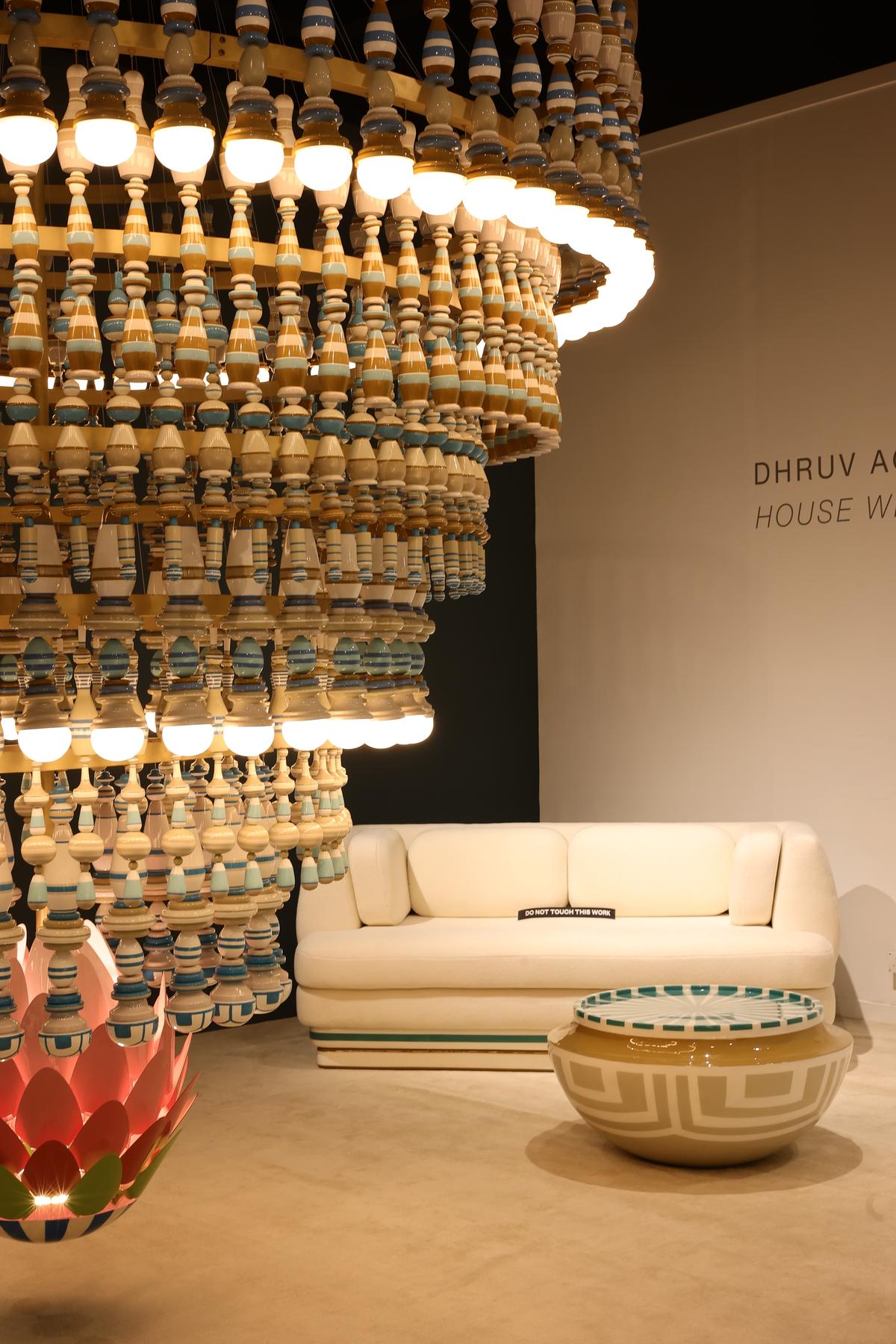
Dhruv Agarwwal’s Bloom chandelier
| Photo Credit:
Special arrangement
Bigger, bolder, and more expansive than ever before, the design section, now in its third year, featured 14 Indian studios and two international design galleries. The limited-edition, process-led works offered a snapshot of the diversity and momentum of contemporary design. “What began as a focused introduction has grown into a space that foregrounds craft-based practices, material intelligence, and cross-disciplinary thinking,” explains Jaya Asokan, the fair’s director. “Each year, we’ve seen deeper engagement — from audiences, institutions, and practitioners — affirming that design is not peripheral to the art conversation but very much part of it. Boundaries between art, design, craft and architecture are increasingly fluid.”
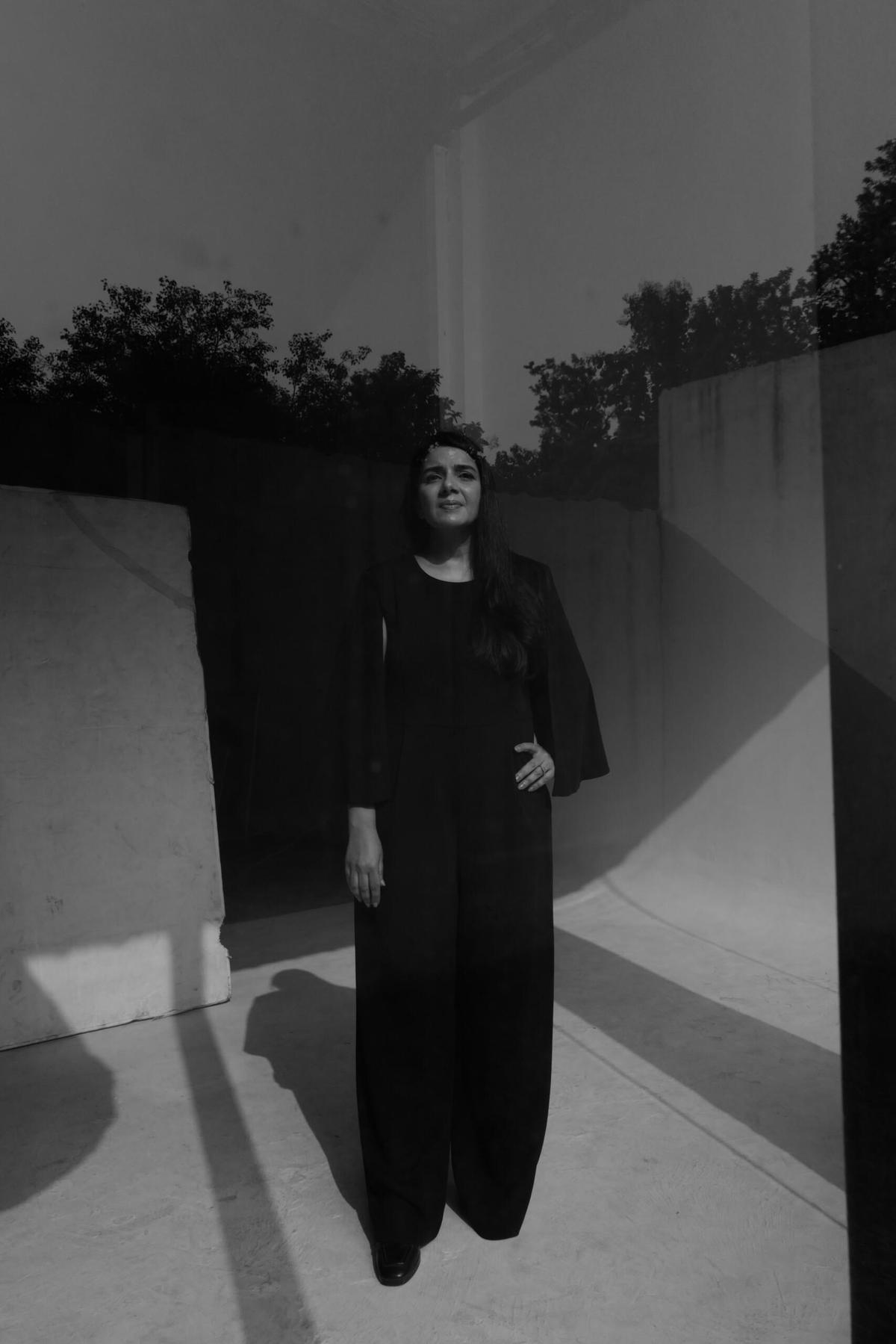
Jaya Asokan, director, India Art Fair
| Photo Credit:
Special arrangement
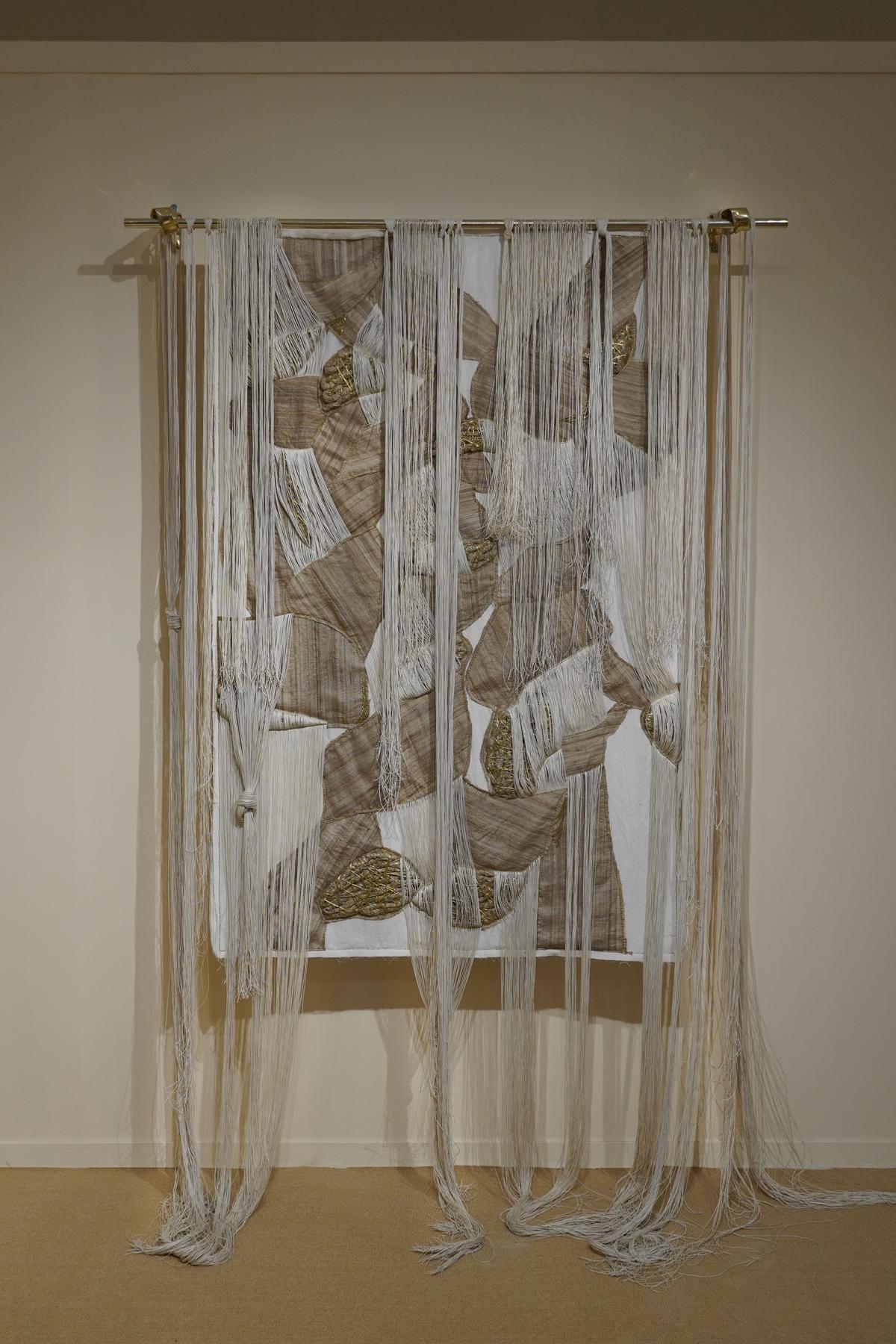
Villa Swagatam and Æquo presented the work of French designer Marie Gastini. The booth displayed embroideries, lighting and seating.
| Photo Credit:
Special arrangement

“Design complements the arts ecosystem. It connects craft, culture, functionality and creativity in ways that belong in the broader cultural dialogue.”Kunal ManiarPrincipal architect, Kunal Maniar and Associates
Overlap between art and design
Design is at an inflection point in India today. Besides being a distinctive commercial category at the art fair, 2026 saw a delegation from Salone del Mobile, the world’s premier Milanese design fair, visiting the country during IAF, and events such as India Design ID following soon after. Expanding infrastructure — with dedicated exhibitions, collectible design galleries, residencies, and a growing base of informed collectors — underlines this structural shift.
And designers are responding: Vikram Goyal’s more accessible label, Viya, opened a Mumbai store last week, underscoring growing confidence in the domestic market. At IAF Design, several participants, including Galerie Maria Wettergren (France), Kunal Maniar (Mumbai), Kohelika Kohli Karkhana (New Delhi), and Morii Design (Gujarat), were presenting for the first time.
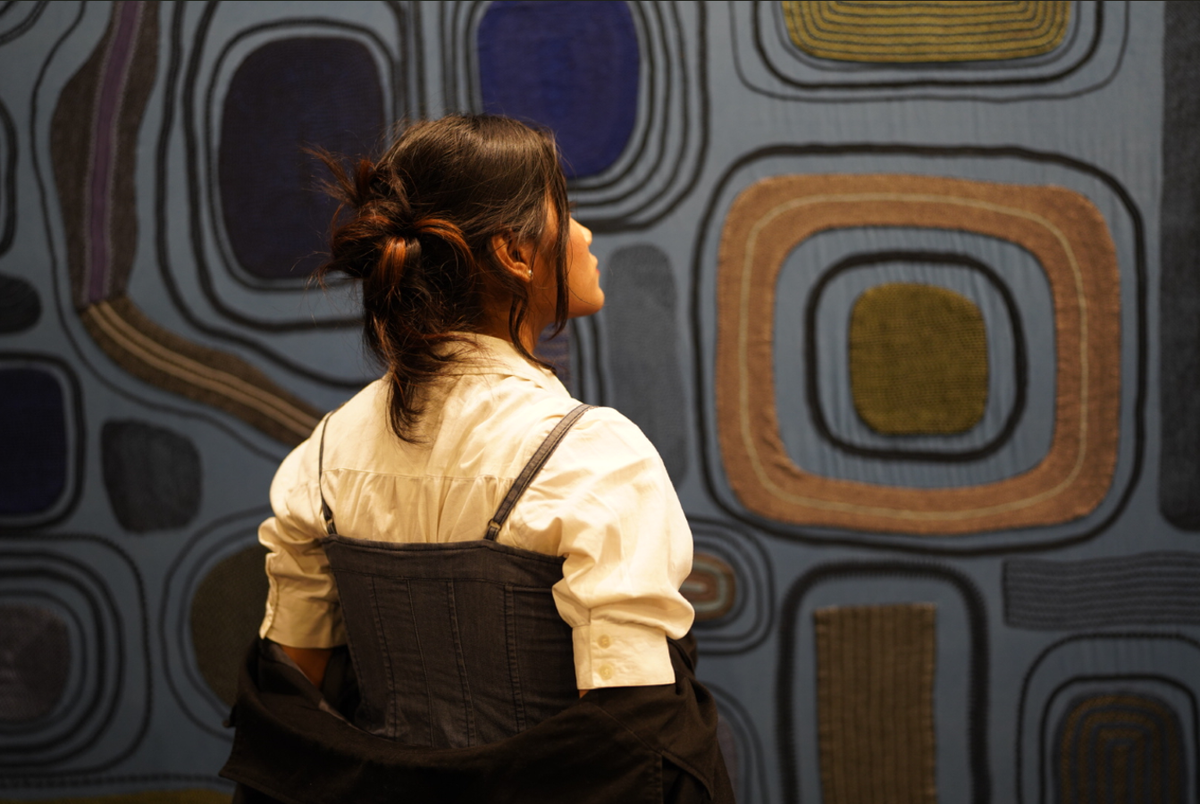
Morii Design
| Photo Credit:
Special arrangement
“The art fair’s evolution from a purely art-focused platform to one that acknowledges the strong overlap between art and design mirrors the way the world is thinking today,” says Kohelika Kohli, CEO of the multidisciplinary design atelier. “As audiences become more globally exposed and culturally informed, art is no longer confined to walls; it shapes furniture, objects and entire environments.”

Modern narratives
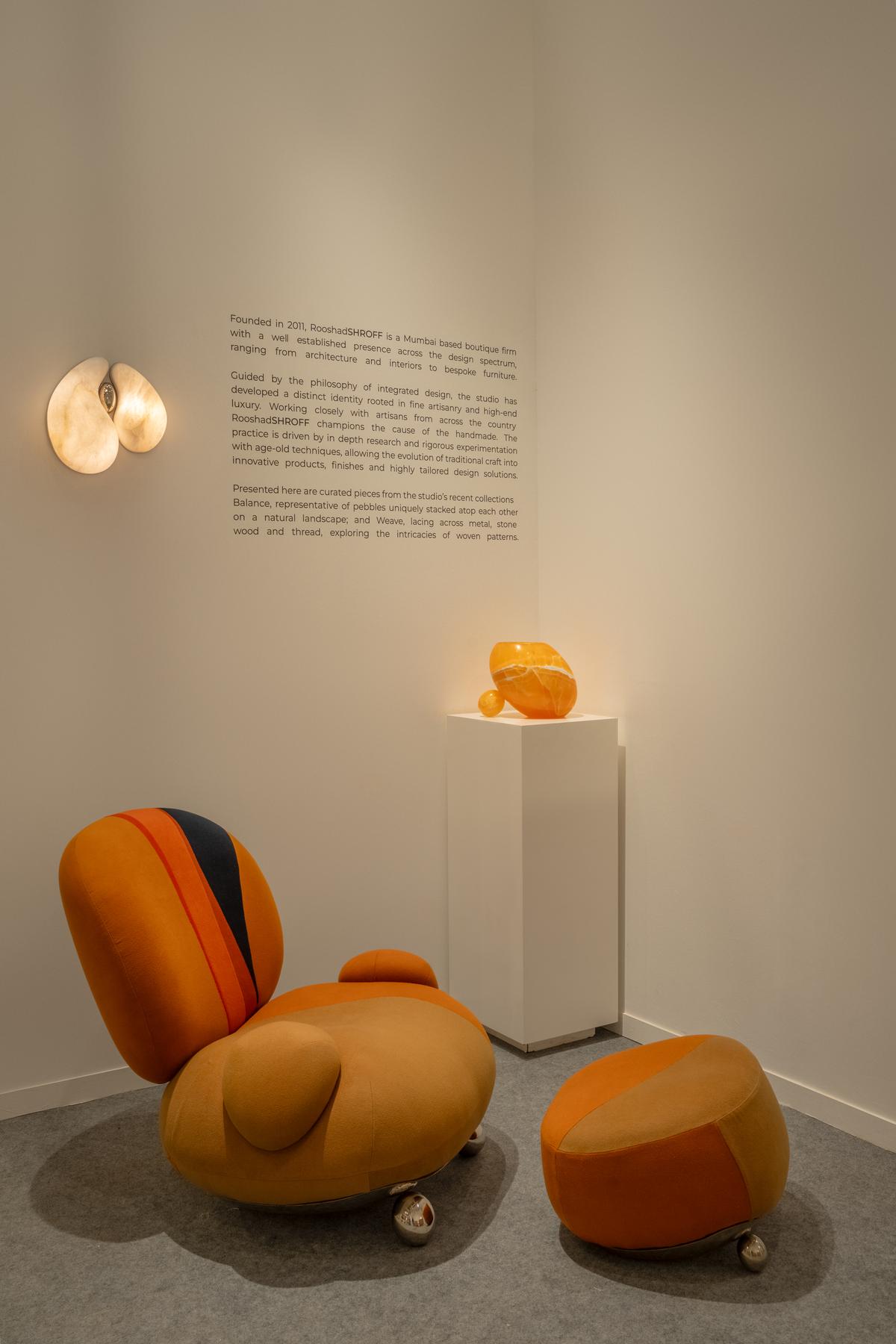
Mumbai-based architect-designer Rooshad Shroff believes design needs its own space, and that the growing number of platforms is good news. “I see India’s luxury landscape shifting away from overt branding and large-scale production, gravitating instead towards the handcrafted and the bespoke,” says the founder of the boutique firm RooshadSHROFF, whose installations at IAF used stone, metal and fine textiles, including his first exploration of upholstered furniture.
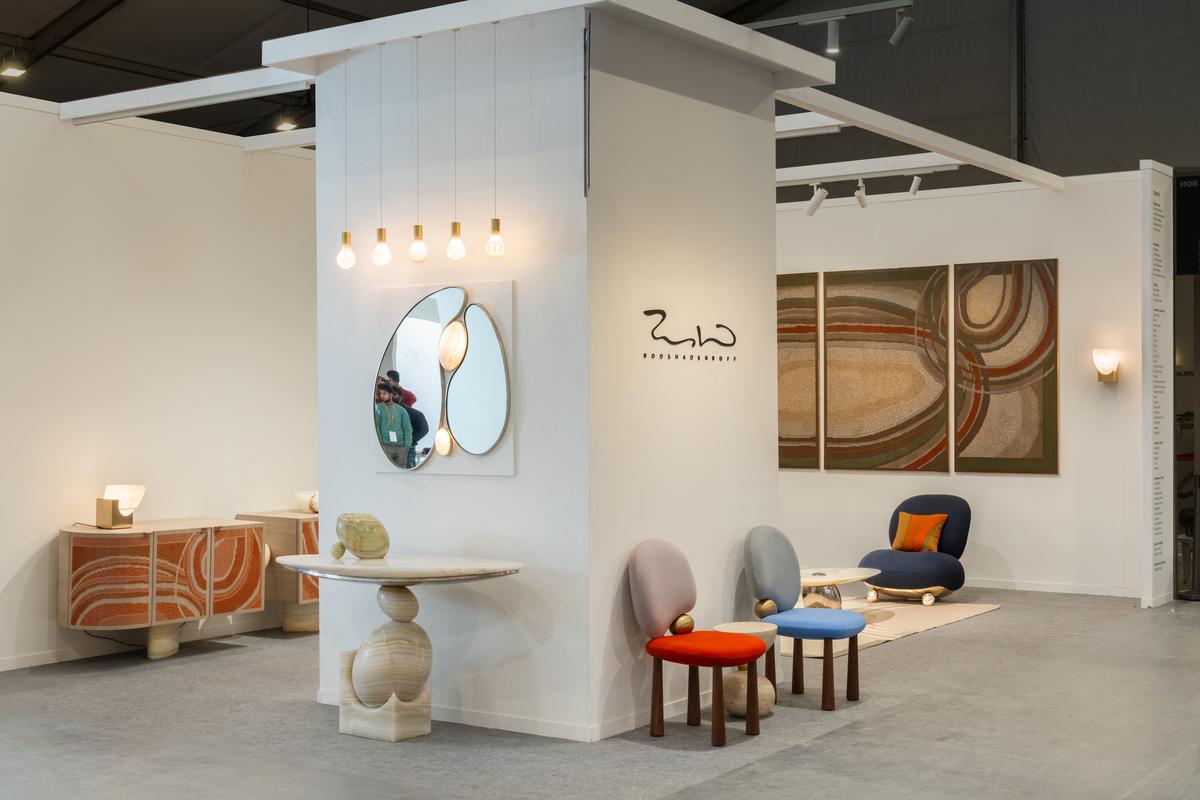
Rooshad Shroff’s booth
| Photo Credit:
Special arrangement
His sofas, armchairs and footstools were draped in fine cashmere. “The luxury connoisseur today is more perceptive, drawn to modern narratives that acknowledge history and heritage, and this shift, to me, reflects a deeper cultural perception of authenticity, craftsmanship and personal expression within the realm of luxury,” he adds.
Goyal’s The Measure of Life had brass objects that reinterpreted traditional techniques such as repoussé and inlay, taking inspiration from cosmology, nature, and Indian fables such as the Panchatantra. “The intention was to evoke communal tranquillity, a reminder that harmony is not the absence of tension, but the balance of multiple voices within a shared space,” he explains.
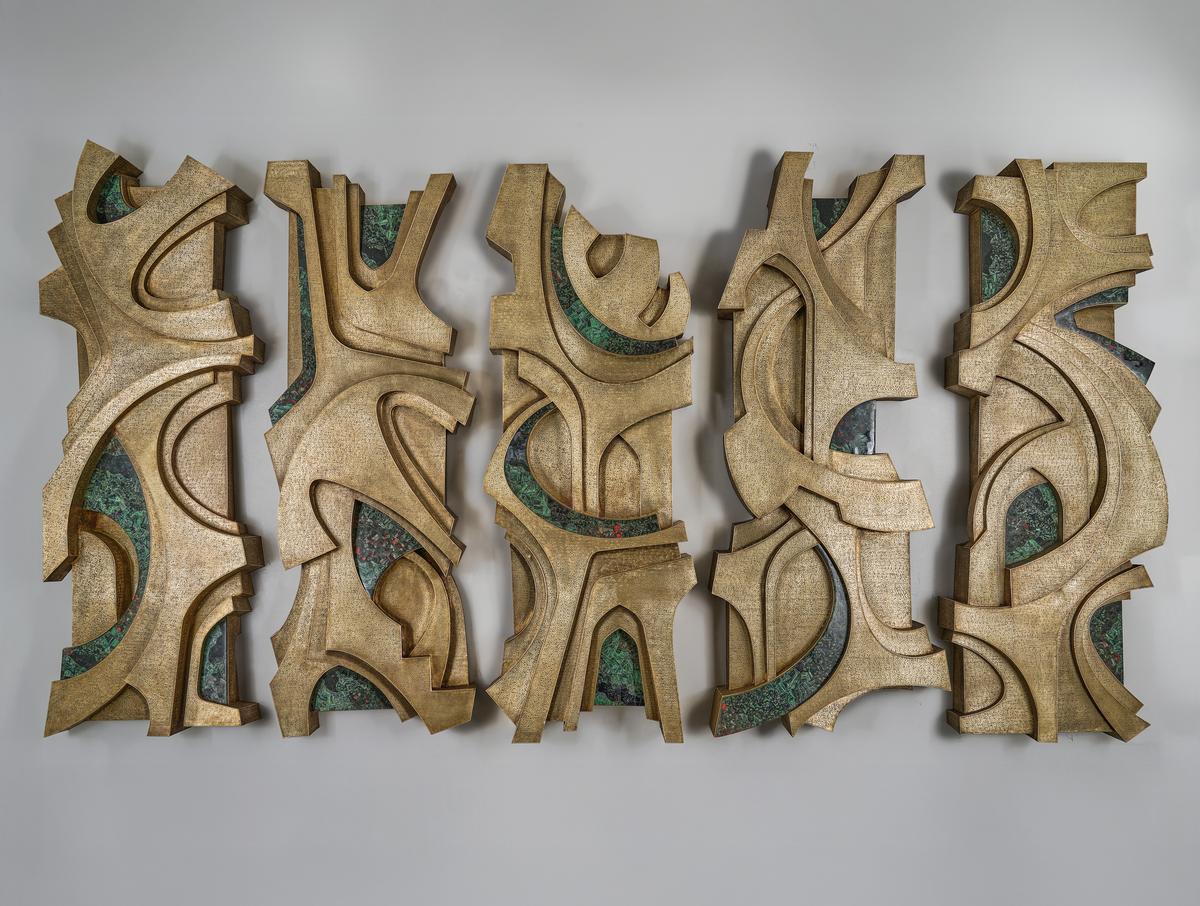
Harmony of the Heavens panel
| Photo Credit:
Special arrangement
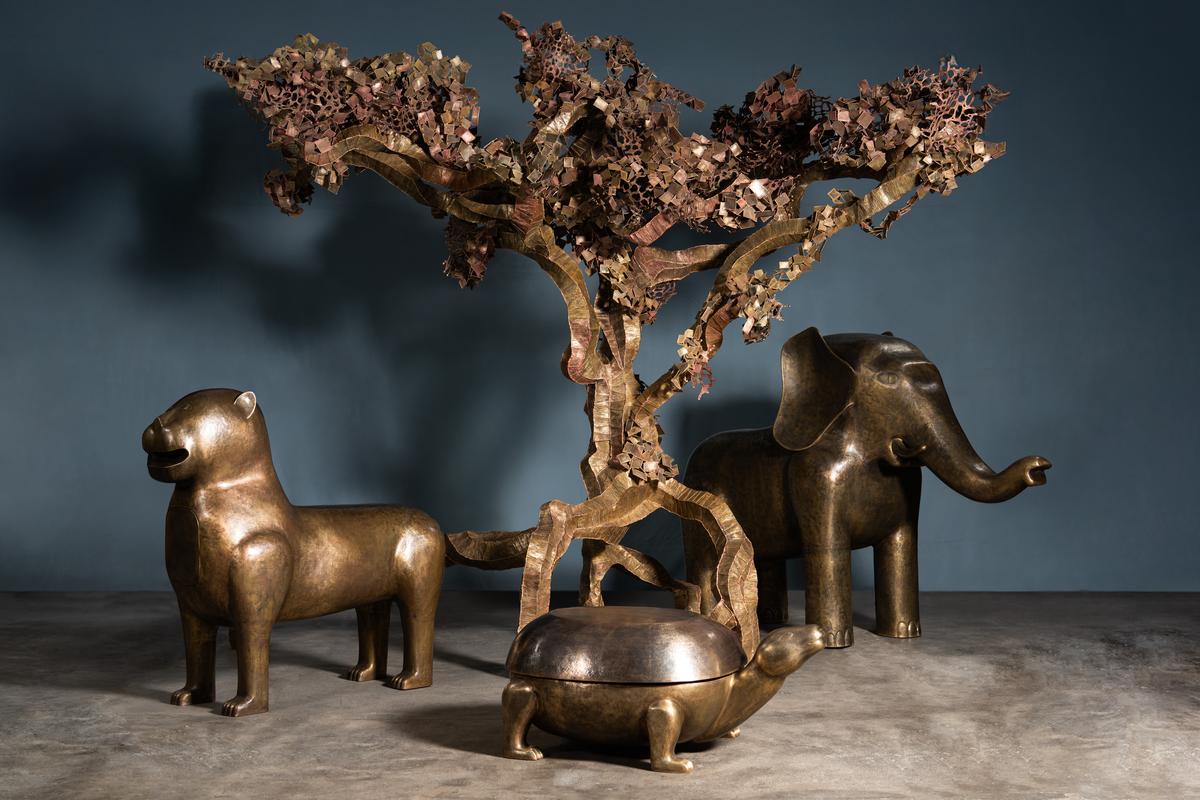
Vana; Gaja . The Elephant; Vyaghra . The Tiger; and Kurma . The Tortoise
| Photo Credit:
Special arrangement
Studios such as Nitush-Aroosh pushed industrial materials in new directions, using stainless steel to shape sculptural forms. Using hydroforming and pressure techniques, they coaxed the metal into fluid forms. “We created works where the process remains visible, allowing each piece to exist not just as furniture, but as an object with its own presence and identity,” explains Nitush Mahipal, one half of the New Delhi-based design duo.
Textile and tactile
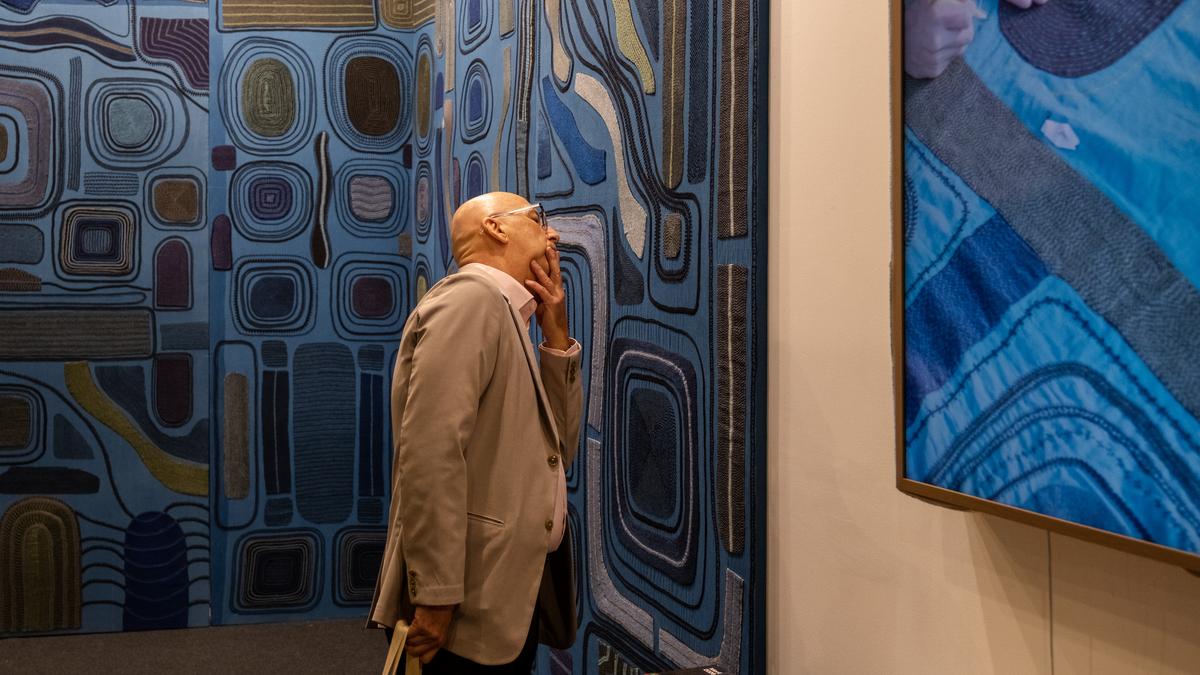
Craft traditions, particularly textile practices, anchored many booths. The Chanakya School of Craft displayed embroidery, weaving, and lace-making as embodied by women’s labour. Morii Design, a textile studio based in Gandhinagar — working with 200 women artisans across India, including Rabari embroiderers from Kutch, Sujni artisans in Bihar, and Kantha artisans in Bengal — displayed Deep Space, an immersive installation created with hand embroidered indigo panels inspired by the night sky.
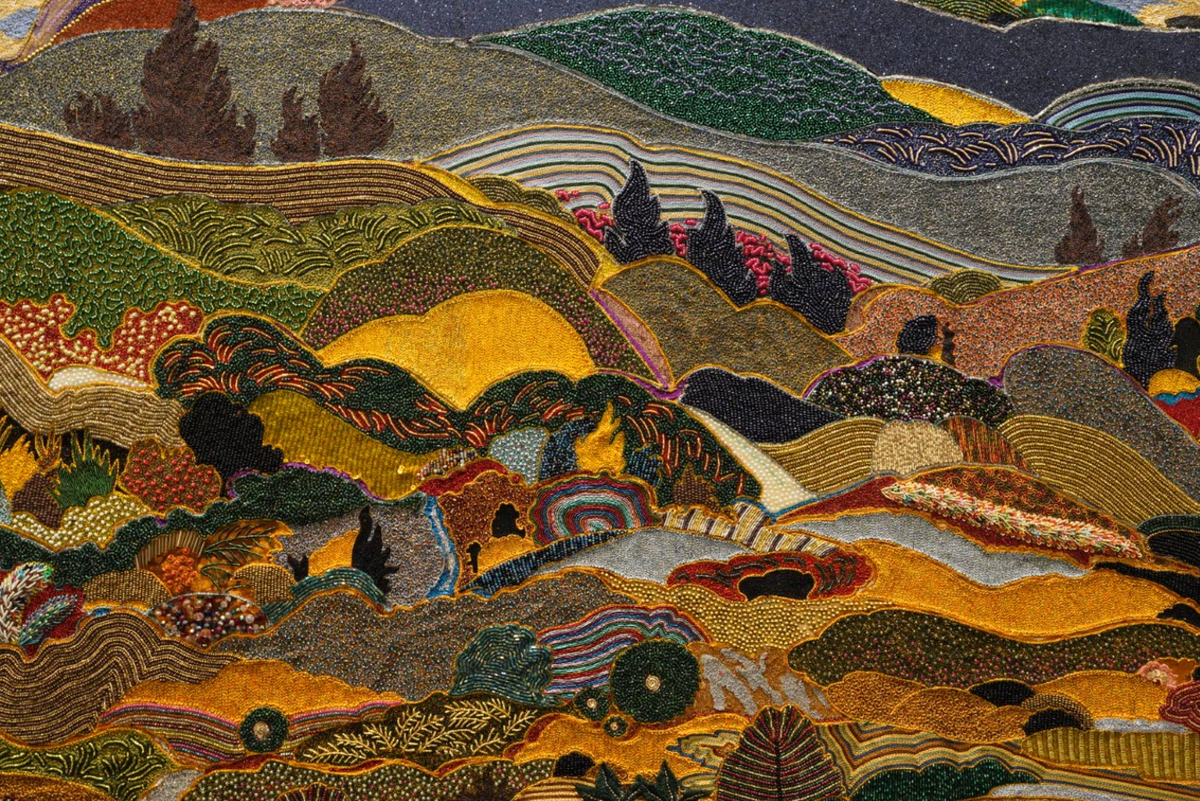
Close-up of embroidery from the Chanakya School of Craft
| Photo Credit:
Special arrangement
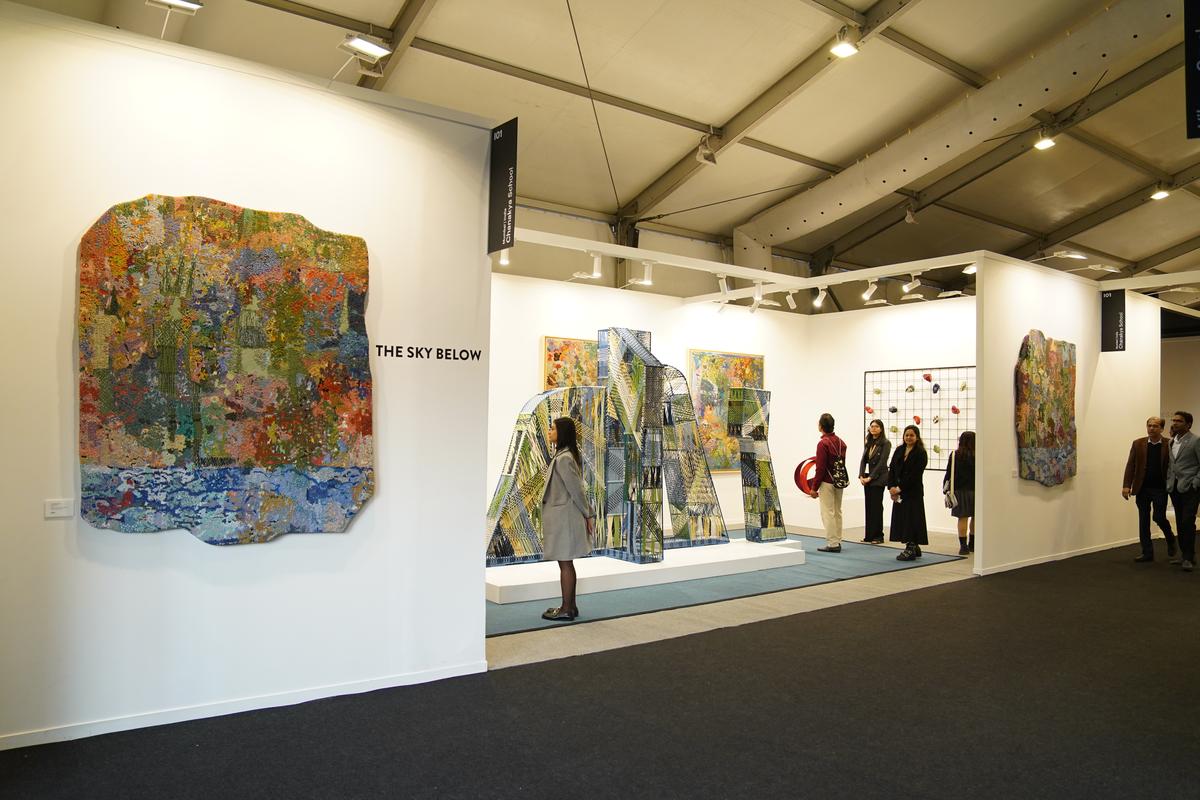
Chanakya School of Craft booth
| Photo Credit:
Special arrangement
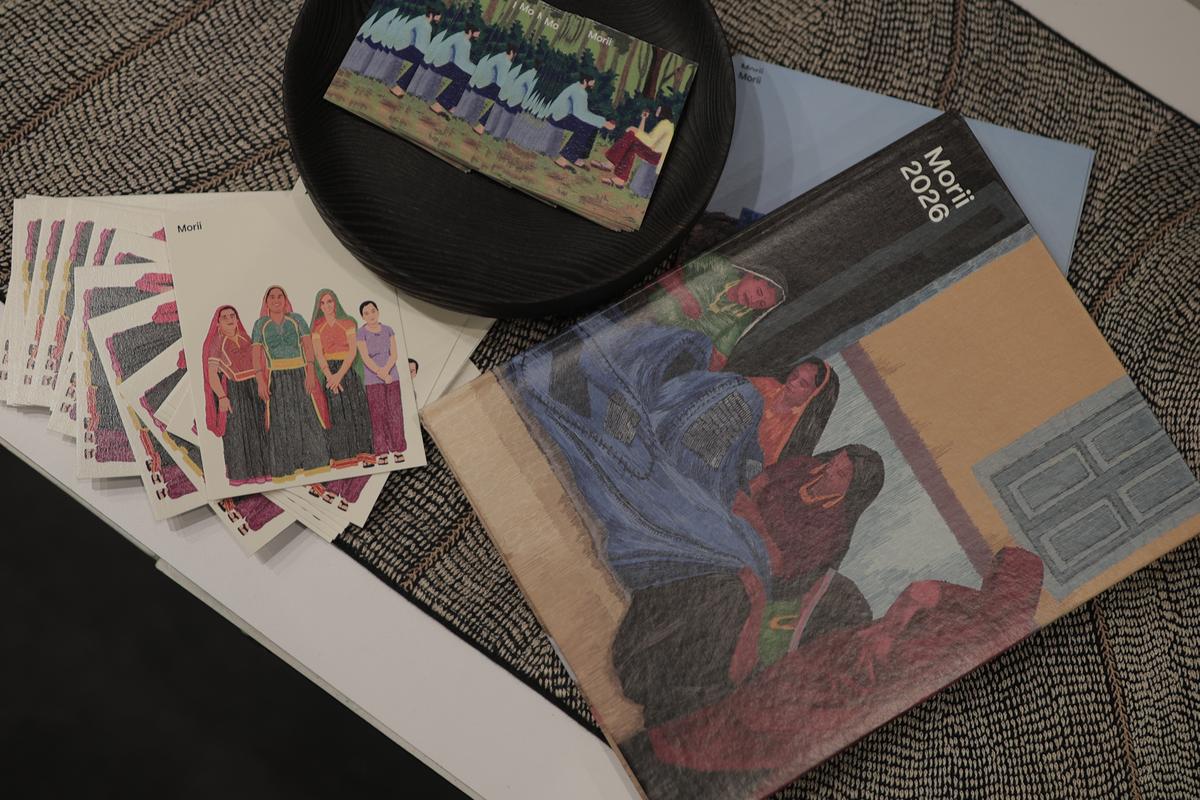
Morii Design
| Photo Credit:
Special arrangement
Aspura, a gallery founded by Jaipur Rugs for collectible carpets displayed a limited edition of the Kamala House Carpet, an off-white checked shag pile carpet, crafted in bamboo silk, designed by the late Pritzker Prize-winning architect B.V. Doshi. The gallery also presented two antique desks designed by Doshi, complemented by a picture of the carpet by photographer Dayanita Singh.
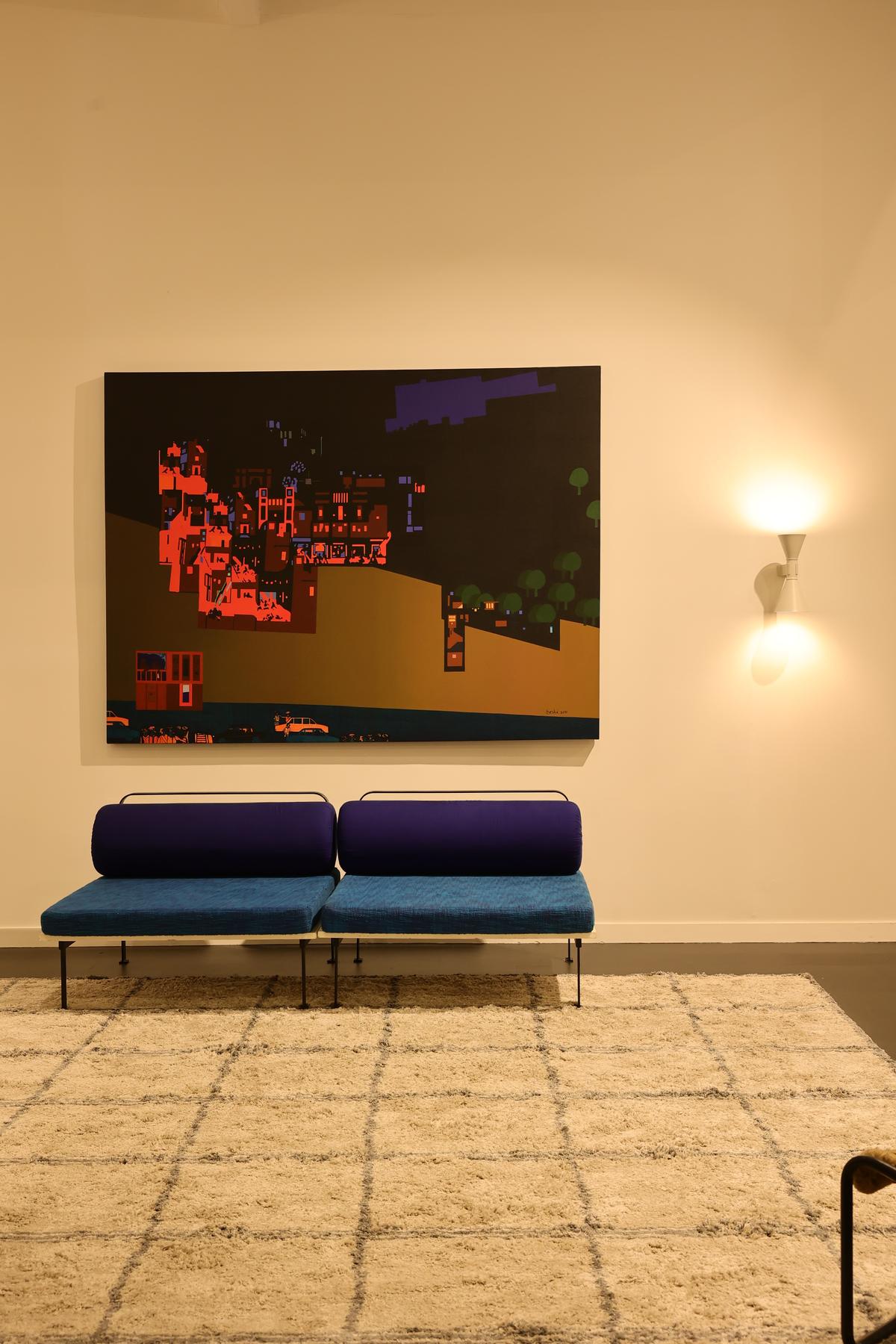
Kamala House Carpet at Aspura
| Photo Credit:
Special arrangement
Culturally literate clientele
New York-based multi-disciplinary artist Ghiora Aharoni’s practice treats objects as vessels of memory. His presented works centred on Zamrud, an emerald reliquary in brass, as well as wall sculptures in Hindru, his invented visual language (that merges Hindi and Urdu). Across mediums, he blurred categories: art and design, object and text. The reliquary was both a sacred container and a household object; the script-like wall pieces functioned as visual poetry. He says visitors were extremely curious and knowledgeable, and that the reception to his work was “extraordinary”.
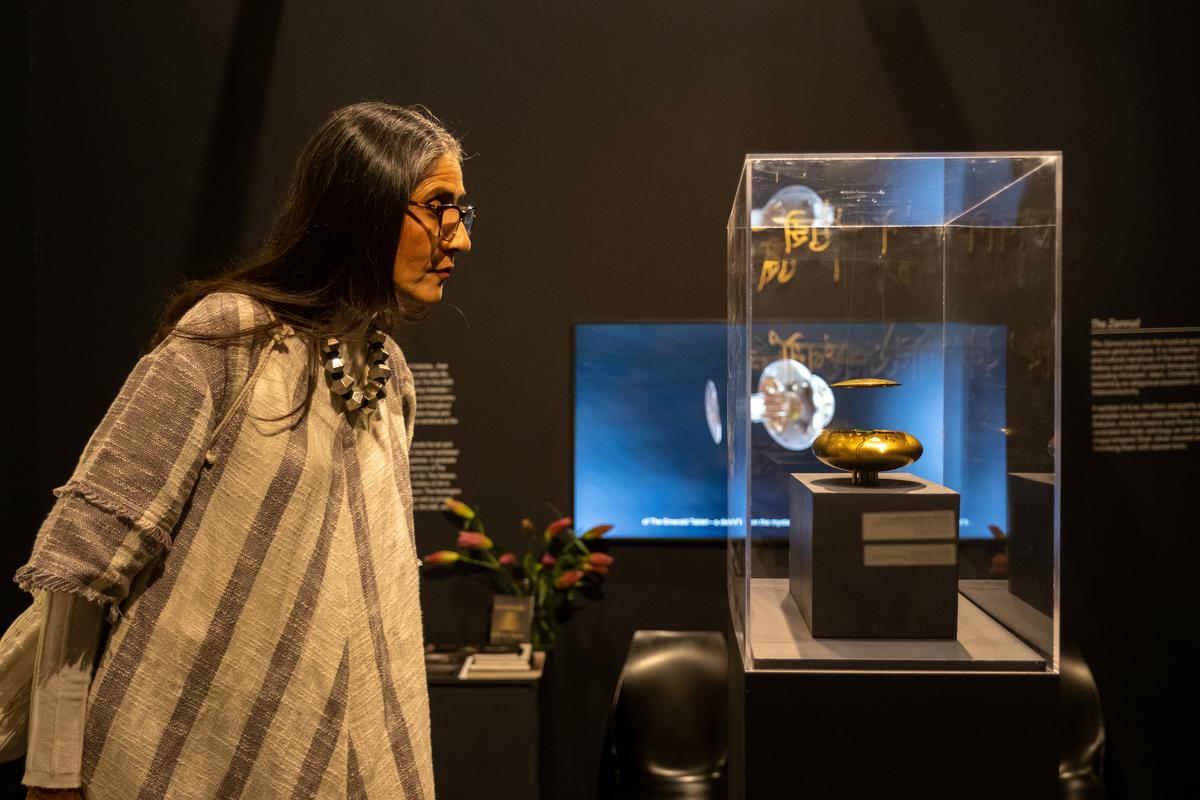
At Ghiora Aharoni’s booth
| Photo Credit:
Special arrangement
Elsewhere, product designer Gunjan Gupta’s research-driven practice questioned India’s relationship with the chair — using vases, baskets, and stools in innovative ways. For instance, the Tokri Wala Throne captured the iconic imagery of tokris (baskets) carried by street vendors across India superimposed on a chair. “As collectors become more culturally literate, they are seeking depth over decoration,” she says. “The future of collectible design will reward integrity of process, collaboration and ideas that hold their ground over time.”
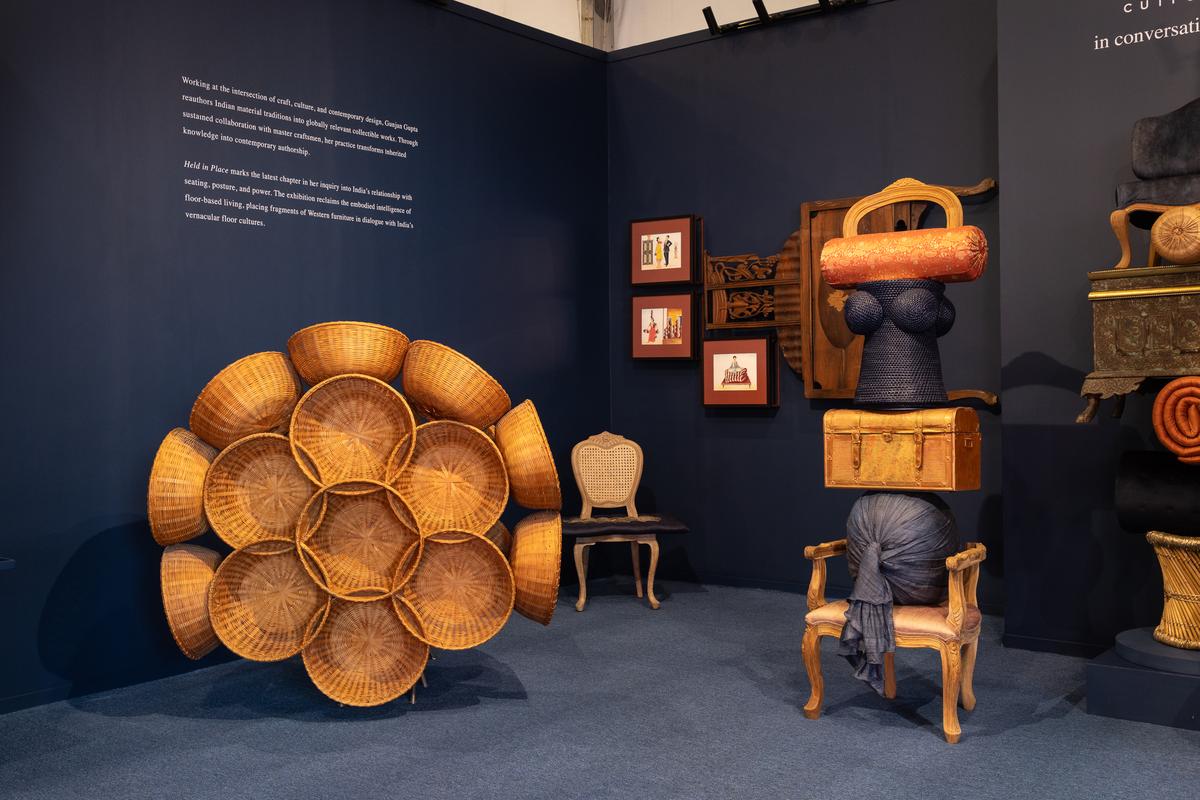
Tokri Wala Throne (left)
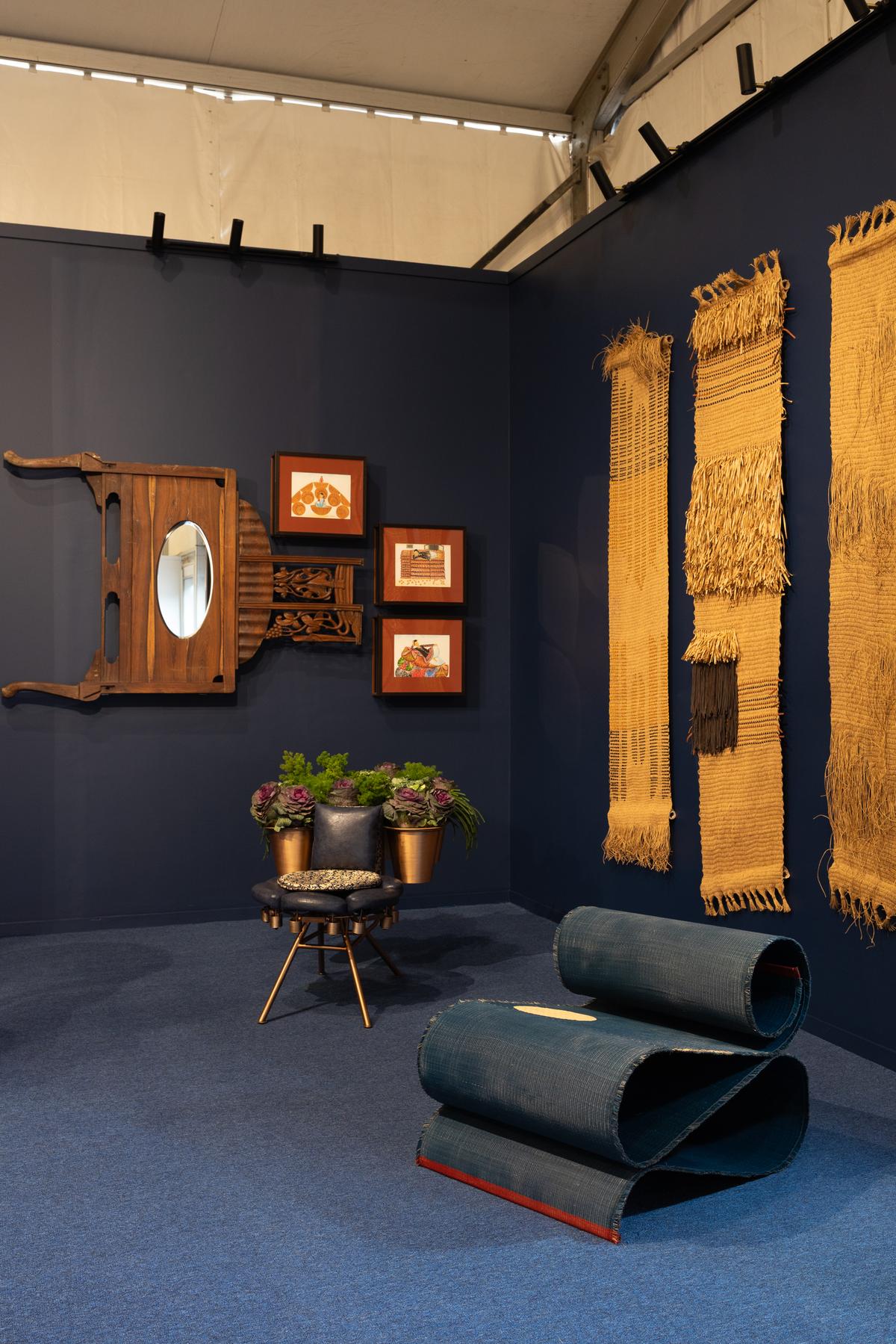
Space for the collectible
But is there really room for design at an art fair? There are some who wonder. As culture writer Gautami Reddy recently wrote in a piece for digital platform Ocula, “Art and design sharing the same platform was a recurring topic of conversation [at the art fair] and an obvious source of discomfort. ‘It’s probably a money decision,’ someone said.”

But others are keeping an open mind. “In recent years, art fairs have started making space for art historical material, often through booths organised by museums and institutions. Now that design seems to have found a footing at these fairs too, it will be interesting to see whether its own histories will begin to be presented in a similar way,” says gallerist Mortimer Chatterjee, of Chatterjee & Lal.
In a world of increasing intersectionality, can’t art and design sit side by side? After all, design booths are often an opening for first-time buyers to access works, and a gateway into the larger (and often more expensive) world of art.
The writer is a Mumbai-based journalist and author.