






In Udaipur, storytellers and listeners come together to reclaim the power of the spoken word
Salman Rushdie once imagined a sea of stories so vast that every tale ever told flowed into it and nourished new ones. Sitting inside a warm tent in Udaipur’s freezing winter, it was hard not to feel that this sea still existed — though now it survives in pockets. Films, books, plays, music, gossip, conversations among loved ones: all of them carry stories and keep the tide alive.
At the Udaipur Tales International Storytelling Festival, warmed by bodies, breath, and endless cups of ginger tea, stories unfolded the way they always have through time. Words came alive from voices instead of pages or screens. Laughter rippled, music lingered, and sometimes the room fell so still it felt as though listening itself had become a collective act of faith.
At the seventh edition of Udaipur Tales, over three days, more than 30 performers (including Actor Rajit Kapoor, actor Arif Zakaria, author Geetika Lidder, storyteller Maia Ganatra, and more) spanning oral storytelling, music, movement and theatre, stepped onto a stage and did something radical in its simplicity: they trusted the human voice to be enough. This was not an escape from the modern world so much as a return to something elemental within it.
“Every child knows how to tell a story,” says storyteller Divy Nidhi Sharma, who co-wrote the popular Hindi film Laapataa Ladies. “When a teacher asks, ‘Why are you late?’ and a child says, ‘Sir, a dog ate my homework,’ that child is telling a story. Over time, we take this skill away from children. So this is not an art that needs to be learned anew. It is something that needs to be remembered again.”
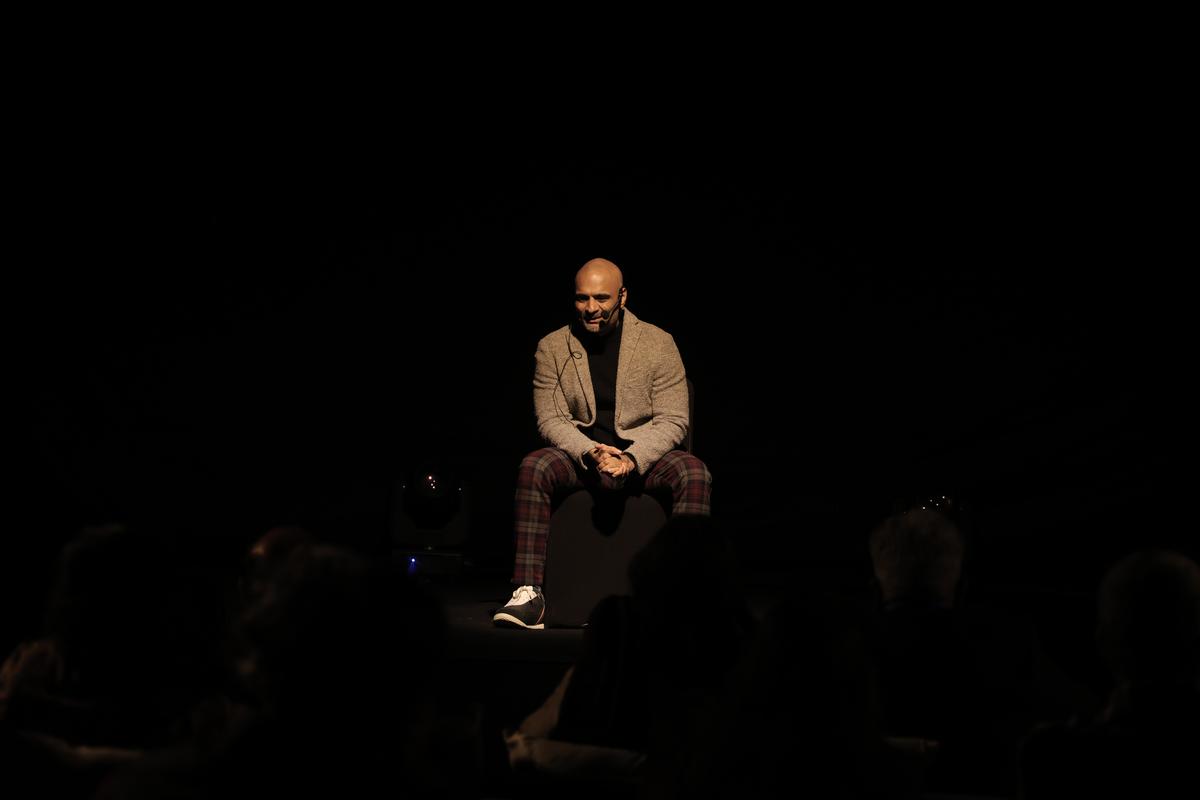
Divy Nidhi Sharma
| Photo Credit:
Special Arrangement
Alongside curated sessions, the festival also hosted Jamghat, an open platform for emerging storytellers and local voices, in which children from various local schools participated. If storytelling here was rooted in voice, it was not limited to it. Music, too, became a vehicle for memory. Singer and performer Meiyang Chang, whose set emerged as one of the festival’s highlights, stepped away from the grammar of Bollywood gigs to shape an intimate, acoustic performance. “This festival gave me the opportunity to try something new, I’m a huge fan of Indian songs from the late 1990s to the early 2000s, but I don’t usually get to perform them on stage. Since it’s a storytelling festival at its core, I added a few anecdotes to every rendition, which were very well received,” he said.
The festival did not treat storytelling as a contemporary experiment alone. It also asked uncomfortable questions about memory, language, and what gets lost when traditions fall out of use. Actor, poet and storyteller Danish Hussain addressed these questions by turning to dastangoi, a form of oral storytelling that once dominated the subcontinent’s imaginative life. “Dastangoi is an art form of narrating long romance epic stories,” Hussain said. “These are stories that cannot be finished in one sitting. They take several sittings. Sometimes days, months, sometimes even years.”
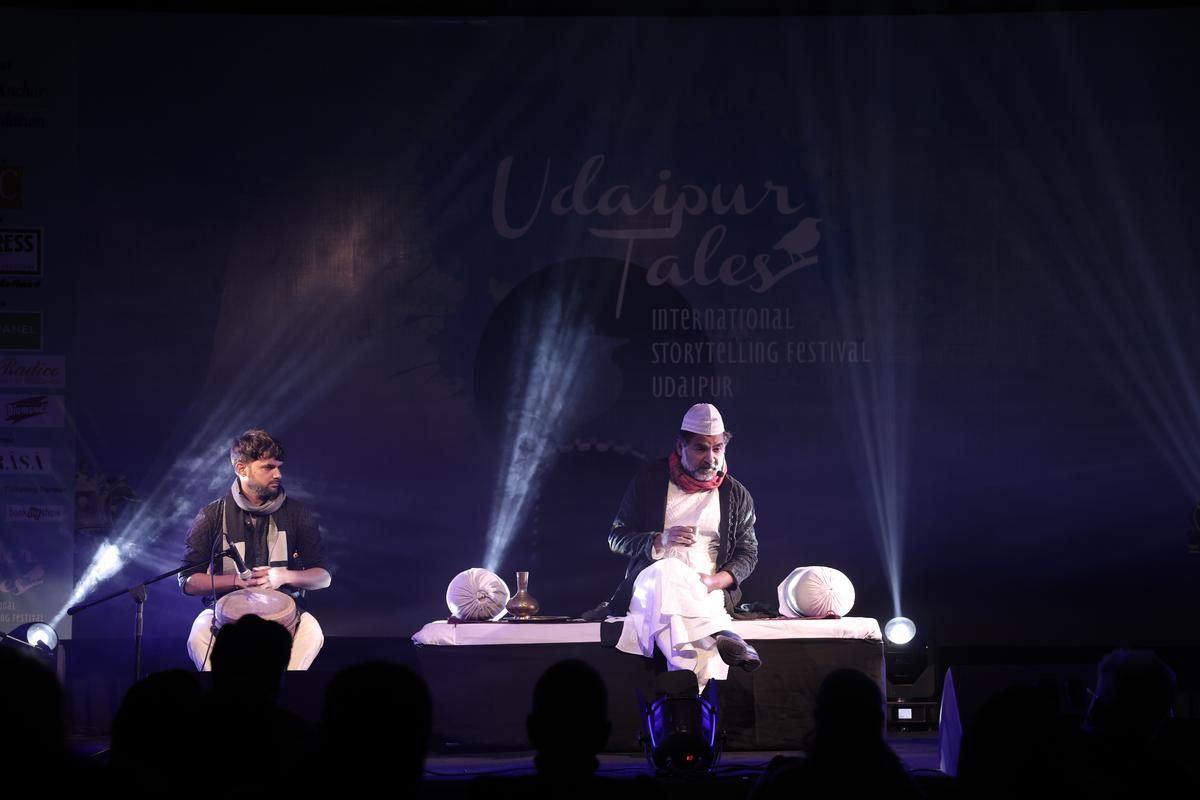
Danish Hussain
| Photo Credit:
Special Arrangement
Danish was candid about why such forms faded from public memory. “In the 20th Century, with cinema, radio and television coming in, and with the Progressive Writers’ Movement, art was expected to serve a cause. Dastangoi was looked at as fantasy storytelling, something that existed only for pleasure, not for a cause,” he said.
Those anxieties about loss and scale are not abstract at Udaipur Tales. They shape the festival’s most deliberate choices. For Salil Bhandari, one of the festival’s co-founders, the question has never been how to revive storytelling, but how to create the conditions in which it can still be heard. “Storytelling is all about human connection. The storyteller has to be in connect with the audience. That’s why we don’t want projection equipment or screens. Once that comes in, the connection changes,” he says.
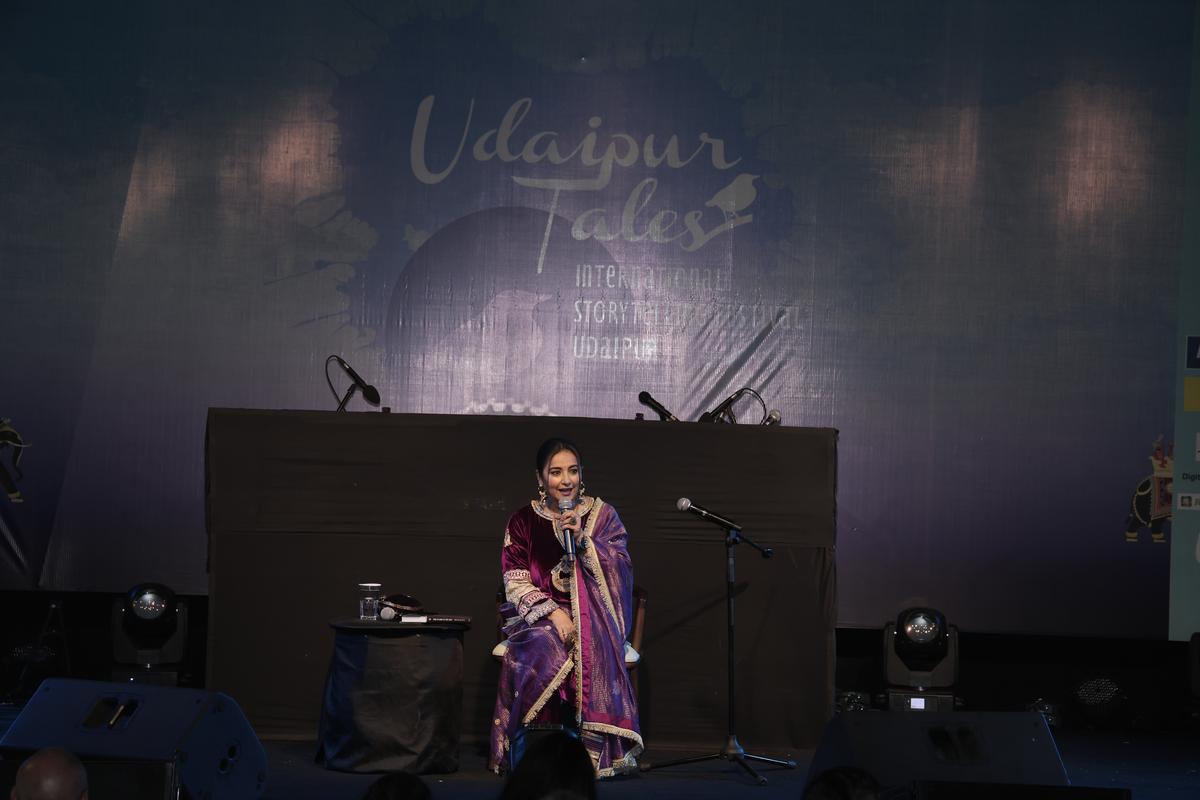
Divya Dutta
| Photo Credit:
Special Arrangement
That intimacy is what performers respond to most immediately. Actor and author Divya Dutta spoke about how telling stories aloud creates a different kind of exchange, one shaped as much by the audience as by the teller. “Telling stories is a different thing. They listen, they absorb. They give so much love. Someone is crying, someone is laughing. That interaction you get is unparalleled,” she says. She recited four stories, anecdotes of her interactions and relationships with four people in the film industry, who have now passed away. These stories are documented in her latest book The Stars in My Sky.
What stories like these require, Salil believes, is not amplification but care. “Beyond a point, the storyteller will not reach the listener, and when that happens, the experience breaks,” he says speaking about how it was deliberate to keep the audience capped to 400, so the experience feels intimate and personal, just like how we remember hearing stories from our grandparents.
This writer was in Udaipur at the invitation of Udaipur Tales International Storytelling Festival
Published – January 27, 2026 12:40 pm IST


