



I Drove The $37,000 Toyota C-HR. Here Are 4 Things I Liked, And 3 Ways It Fell Short
Toyota’s skimpy EV lineup is finally getting some love. In fact, by the end of 2026, the Japanese automaker is on track to have more electric models on sale in the U.S. than Tesla does. (Tesla may have it beat on robots, though.)
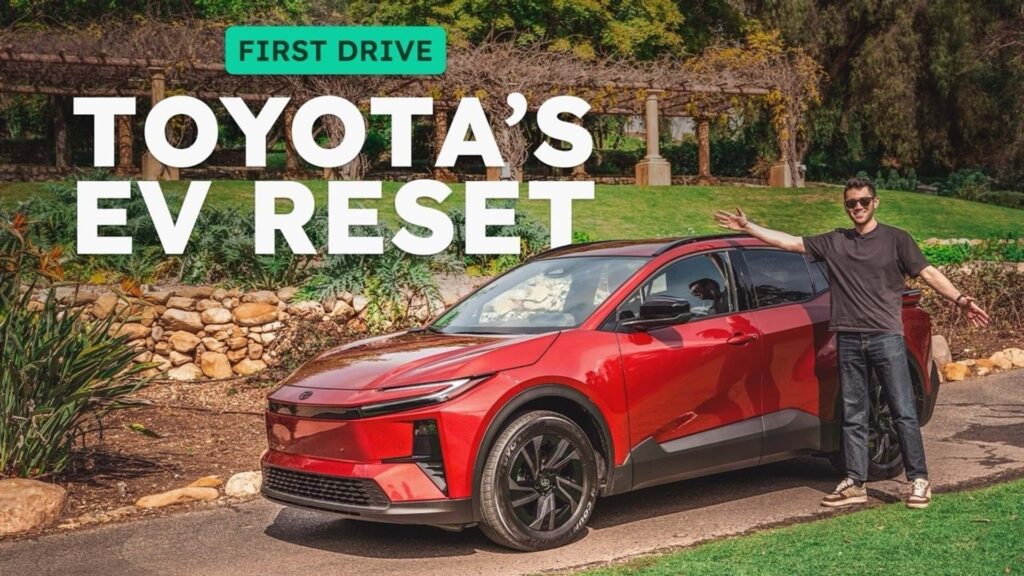
Later this year, the bZ will be joined by the fifth-generation Highlander. The fact that Toyota is converting that popular nameplate to battery power is perhaps the surest sign that it’s really getting serious about EVs. Before that, Toyota fans will gain two other EV options: the wagon-like bZ Woodland and the compact C-HR, both of which I drove recently in Ojai, California.
After spending some time with the 2026 C-HR, I think it’s a solid electric option for the price, and one that fixes some of the shortcomings of Toyota’s earlier EVs. But it also falls short on EV-specific features in a way that’s hard to excuse in 2026.
(Full Disclosure: Toyota flew me to Southern California, put me up in a nice hotel and fed me so I could drive the C-HR.)
Pro: Quick, Fun And Comfortable On The Road
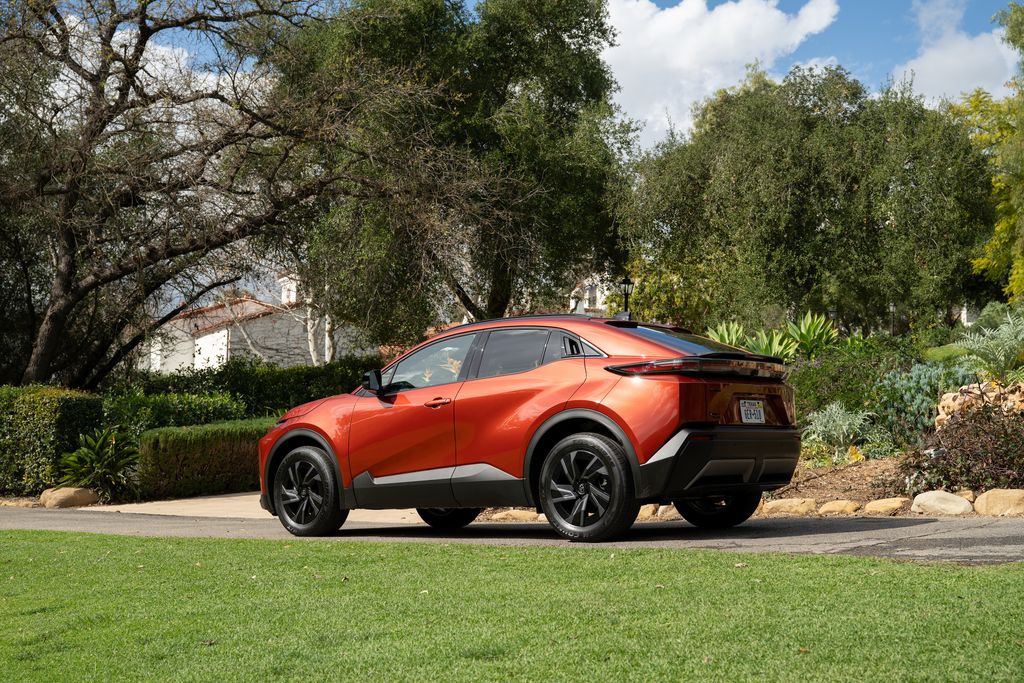
Photo by: Nathan Leach-Proffer
At the heart of the C-HR is a 74.7 kilowatt-hour battery pack that powers a 338-horsepower all-wheel-drive setup. That’s the only configuration for the C-HR right now: dual motors and all-wheel drive.
That bumps the price up slightly, as I’ll discuss in a bit, but it also results in a punchy little EV that’s fun to drive. Toyota quotes a 0-60-mph time of 4.9 seconds. And while I didn’t test that myself, I can confirm that the C-HR feels plenty quick for a commuter crossover.
If, like me, your current daily driver is a 15-year-old gas car, you’ll appreciate the ability to dart through traffic and get up to highway speed quickly. It’s far quicker than cars like the Chevy Bolt and Nissan Leaf, which are similar in size but only offer far less powerful front-wheel-drive setups.
It’s pretty quiet on the highway and comfortable over various road surfaces, too. And like Toyota’s other EVs, it feels fairly light and nimble compared to other EVs.
Pro: An EV With Flair
2026 Toyota C-HR
Photo by: Nathan Leach-Proffer
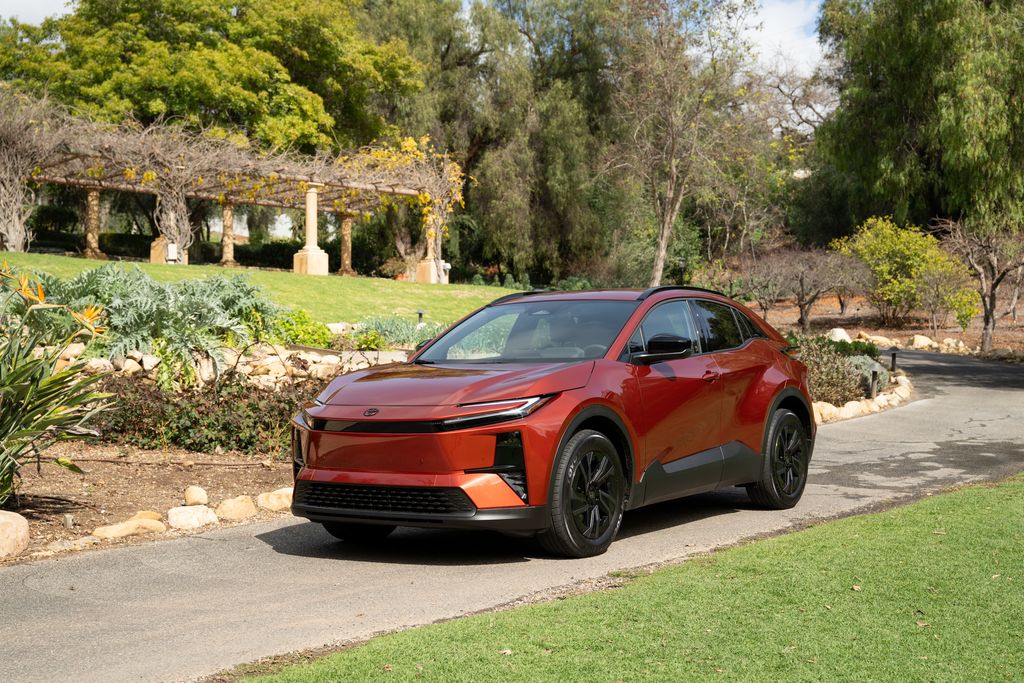
C-HR, a name Toyota borrowed from a discontinued gas crossover, stands for “coupe high rider.” As such, the C-HR’s roofline slopes sharply toward a pinched rear end. It’s not the best form factor for rear cargo space, but it gives this little EV a striking presence. The C-HR looks sharp up front too, borrowing the “hammerhead” design language from the bZ and bZ Woodland.
Pro: Solid Range And Charging Specs

Photo by: Suvrat Kothari
The C-HR offers up to 287 miles of EPA-rated range on the smaller 18-inch wheels that come fitted to the base SE trim. Range drops to an estimated 273 miles if you move up to the pricier XSE, which comes with bigger 20-inchers.
It can pull 150 kilowatts from a DC fast charger and, the automaker says, recharge from 10% to 80% in roughly 30 minutes. Thanks to a native Tesla-style North American Charging System (NACS) port, C-HR owners can pull up to Superchargers adapter-free. If anything, that’s great because NACS plugs are so much slimmer and less cumbersome to handle than the alternative. The C-HR will also support Plug & Charge.
None of these specs are class-leading, but in context they’re pretty good. Nearly 300 miles of range should satisfy most peoples’ daily needs. It’s not quite as much as the 303-mile Leaf, but that car isn’t all-wheel drive. The C-HR is about 20 miles short of the AWD Chevy Equinox EV, but the Equinox is larger and AWD trims cost more than the C-HR.
Likewise, a Hyundai Ioniq 5, Tesla Model Y, or Kia EV6 will recoup the miles far more quickly during a road trip, but again, those cost more. Importantly, the C-HR represents a big improvement over Toyota’s original bZ4X, which got slammed for both slow charging and limited range.
Pro: It’s Another Sub-$40K EV
Photo by: Toyota
At $38,450 after destination fees, the C-HR adds another option to the chronically underserved sub-$40,000 EV segment. But is it a good value? That’s a bit more complicated. The slightly larger bZ actually starts at a few thousand dollars less, if you select the base FWD option.
I think if you need AWD in a small crossover—or want the extra oomph associated with it—the answer is yes, especially given its nearly 300 miles of estimated range. AWD versions of the larger Equinox EV, Ioniq 5 or Model Y cost considerably more. And other EVs close in size to the C-HR—the Leaf, Bolt EV and Hyundai Kona EV cost less—but don’t offer AWD.
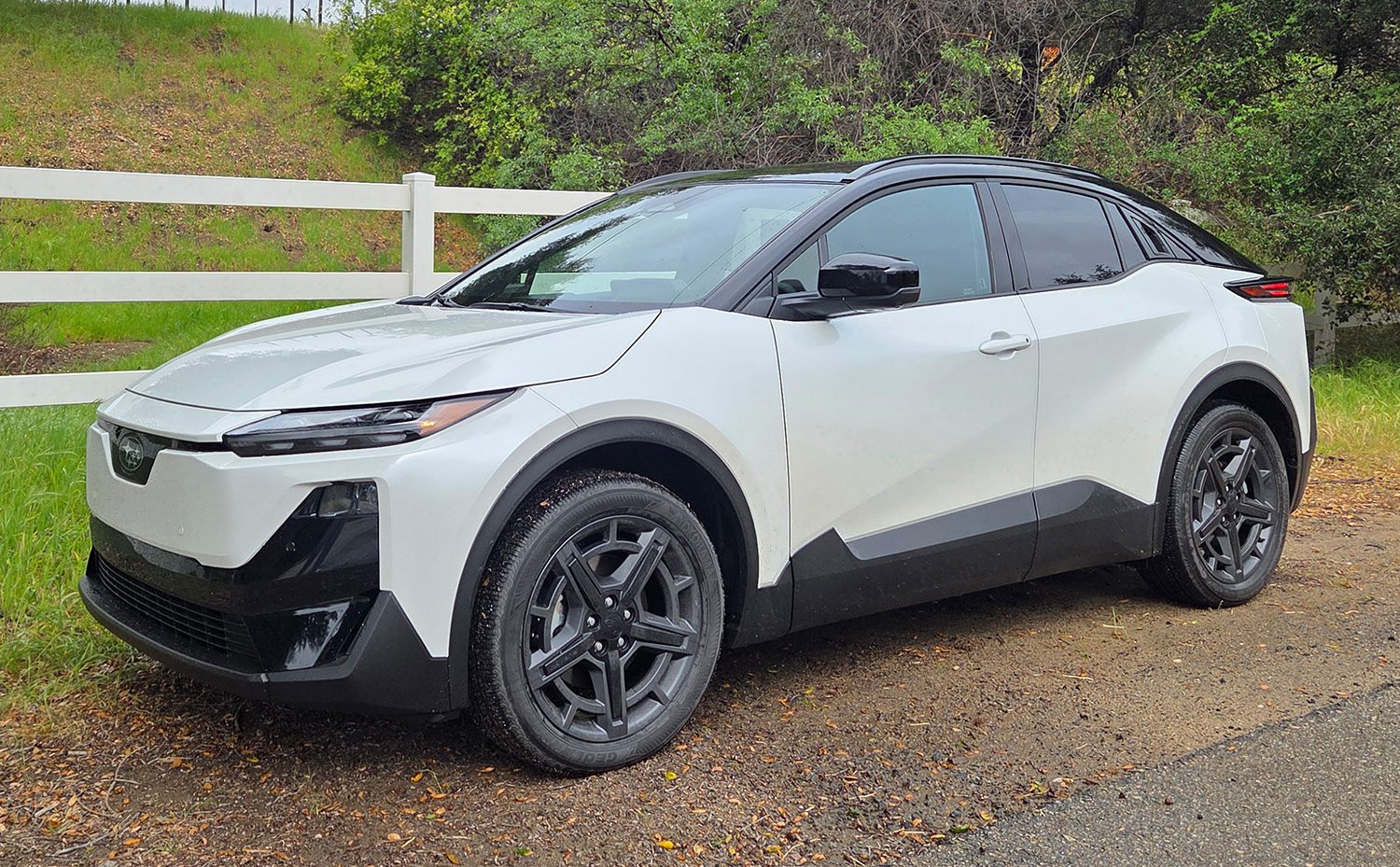
The C-HR and its Subaru sibling, the Uncharted, are the only EVs in this class that offer all-wheel drive. (Strangely enough, it’s the Uncharted that offers a FWD variant, meaning that it starts a bit cheaper than the Toyota equivalent.) But it’s also worth noting that you can step up to their respective bigger brothers—the bZ and Subaru Solterra—for not that much extra cash. The Solterra, which only comes in AWD, costs just under $40,000 after fees. An AWD bZ costs $41,350.
The 2026 Subaru Uncharted is identical under the skin to the C-HR, but costs a bit less due to its FWD option.
Photo by: Mack Hogan/InsideEVs
The C-HR SE also comes with a strong array of standard equipment, including wireless phone chargers, multiple USB-C ports, heated front seats, an 8-way-adjustable driver’s seat with lumbar support, automatic high beams, rain-sensing wipers, wireless Apple CarPlay and Android Auto, ambient lighting and Toyota’s SafetySense suite of driver-assist features, which includes an adaptive cruise/lane centering function.
Overall, I thought the base C-HR’s interior was pretty stylish and comfy, save for some hard black plastic on the center console and doors. The upmarket XSE trim is even snazzier.
Big picture, there are only a handful of EVs available in the U.S. for under $40,000. And the C-HR is a competitive addition to the list. But it’s not perfect either, and there are a few decisions Toyota made that left me scratching my head.
Con: Basic Software
2026 Toyota C-HR
Photo by: InsideEVs
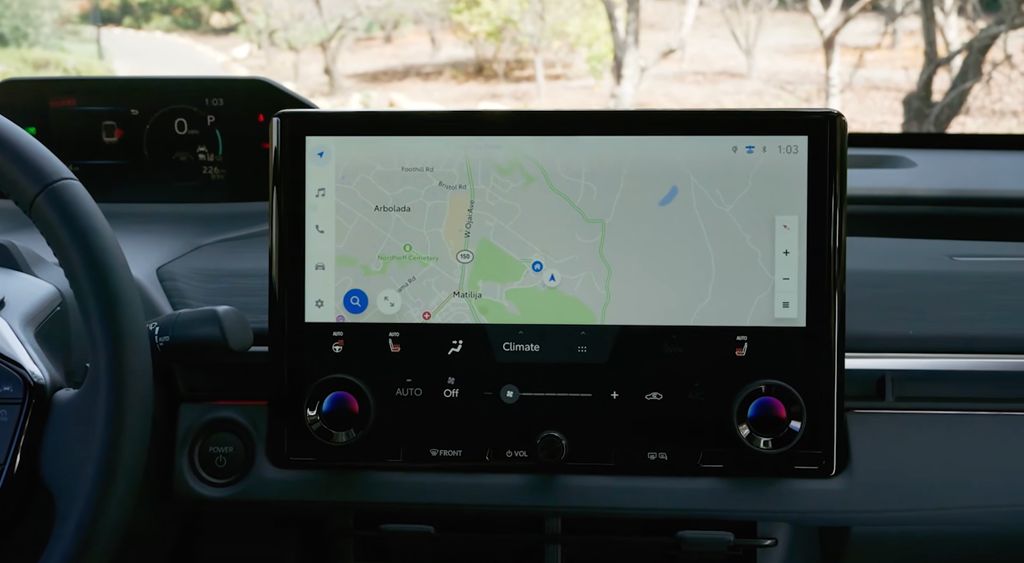
Despite the strides Toyota has made on some fronts since launching the bZ4X, its user interface is behind the times. Just like the bZ and bZ Woodland, the C-HR comes with a large 14-inch touchscreen smack in the middle of the dash. It’s responsive enough, but it’s not terribly attractive and doesn’t do a whole lot.
There’s no home screen to speak of, which would be a great opportunity to show you basics like the weather, your media player, and navigation at a glance. (This is coming to Toyota’s next-generation UI, which will roll out to its cars over time.) There are no music, video streaming, or EV-specific apps to download, nor are there many settings or features to play around with.
2026 Toyota C-HR
Photo by: InsideEVs
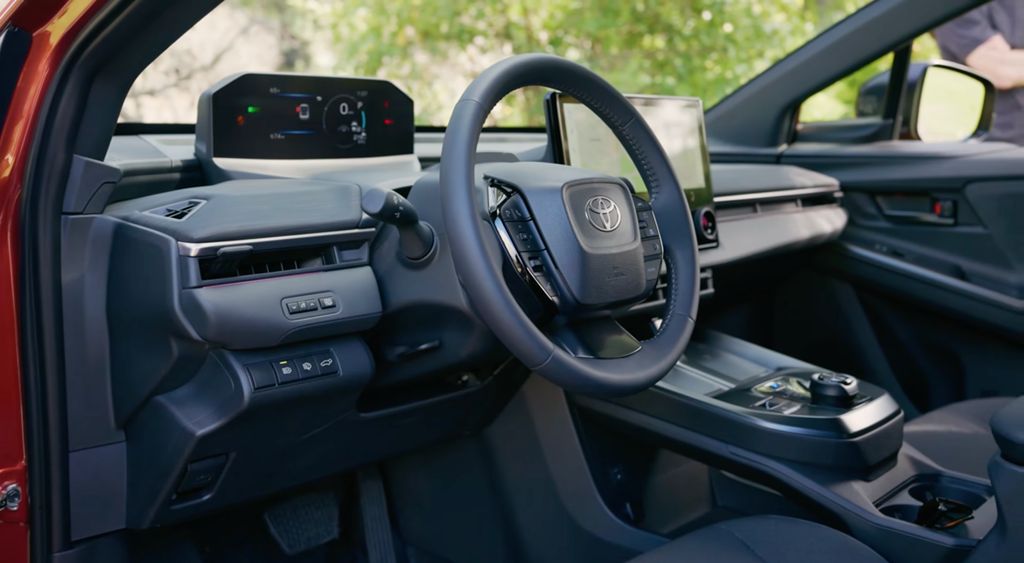
There’s also a small digital gauge cluster pushed up and back over the wheel, close to the windshield. This display’s graphics look about a decade old, and it’s not very customizable. So if you’re looking for the cutting edge in vehicle software and user experience, look elsewhere.
(I actually like the positioning of that smaller screen, since you don’t have to look through the spokes of the steering wheel to see it. But, since it seems like I’m about the only person on Earth who’s a fan, I’ll mention that this feature is pretty controversial. A lot of drivers have trouble seeing this screen from their ideal seat and steering wheel position.)
Compare this all to the Equinox EV, which offers a dazzling screen with a bevy of apps and Google Maps integration. On GM EVs, you can even put the map right in front of you in the digital gauge cluster.
But the C-HR offers one piece of tech the Equinox doesn’t: phone mirroring via Apple CarPlay and Android Auto. I suspect a lot of buyers will be using that.
Con: Lacks EV Features
Photo by: Toyota
I think the bigger offense here is that some of the no-brainer features that make EV ownership easier simply aren’t present in the C-HR, or any of Toyota’s other EVs, for that matter.
Toyota EVs don’t offer native route planning. So if you plug in a destination that’s outside of the C-HR’s range, it won’t suggest charging stops or do anything to help besides tell you you can’t make it. This is a big miss, especially this late in the game.
Toyota did recently introduce route planning through Apple CarPlay and Apple Maps, but this workaround has its own limitations. The interface will suggest charging stops based on your state of charge, but it won’t automatically start battery preconditioning when you get close to a charger. However, the car will automatically precondition if you route to a charger in the native navigation system. It’s all a little hodge-podge, and confusing for a first-time EV buyer.
There also isn’t a shortcut from the navigation screen for quickly locating charging stations. One-pedal driving is missing too; though the C-HR offers adjustable regenerative braking with four levels, the strongest one will slow you to a crawl but not all the way to a stop. I’m not sure everybody needs or wants one-pedal driving, but having the option is nice and it’s certainly something many EV buyers are looking for.
In sum: Toyota’s EV offerings are notably more competent than they were a few years ago, but they’re still missing some of the basics that rivals have included for years.
Con: Small Interior
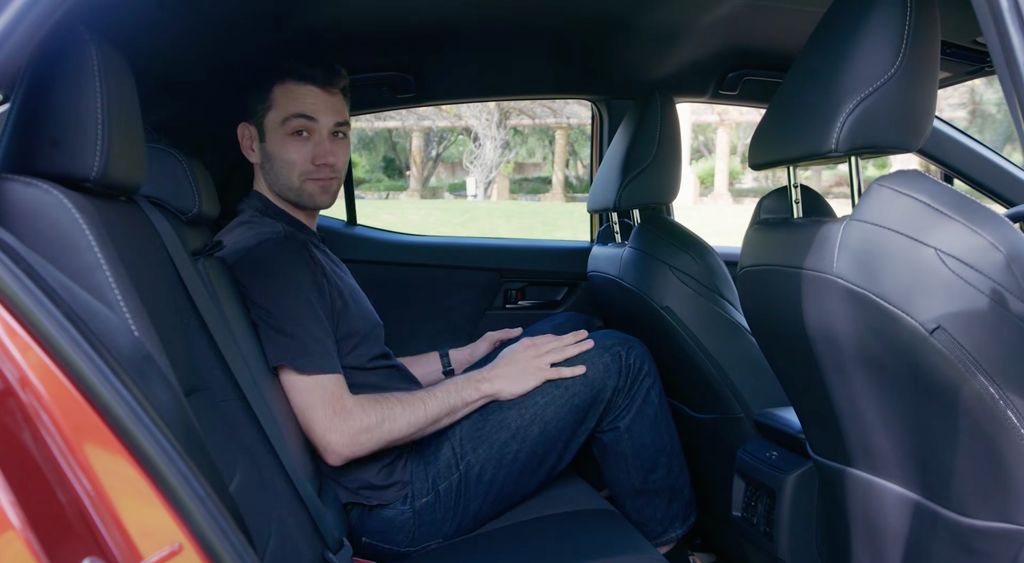
The author sitting in the back seat of the 2026 Toyota C-HR.
Photo by: InsideEVs
This is where the value argument for many EVs starts to fall short. The C-HR is pretty small. And you can get a much more usable RAV4 hybrid for about the same chunk of change.
At 6 foot 1, I had to duck down pretty darn low to climb into the C-HR’s back seat. Truth be told, I smacked my head on the roof the first time I tried (as you’ll see if you watch the video above). Space back there isn’t terrible, but the low seat and high floor—likely due to the battery being down there—mean that you sit in kind of a squat, with your knees up high.
If you want a more usable back seat at around this price point, you’ll have to forego AWD, step up to a larger option, or—and this is probably the best idea for most EV buyers—pick up something used.
Bottom Line
Overall, I liked the 2026 Toyota C-HR during the short time I spent with it. It doesn’t radically outperform rivals on key metrics like range or charging speed, and it lacks some of the thoughtful software that makes other EVs charming and easy to live with. But it’s attractive, has enough power to have a good time in and is a worthy entrant to the sub-$40,000 EV space.
Contact the author: Tim.Levin@InsideEVs.com