




‘Humour can expose social inequalities and hypocrisies with great effect’
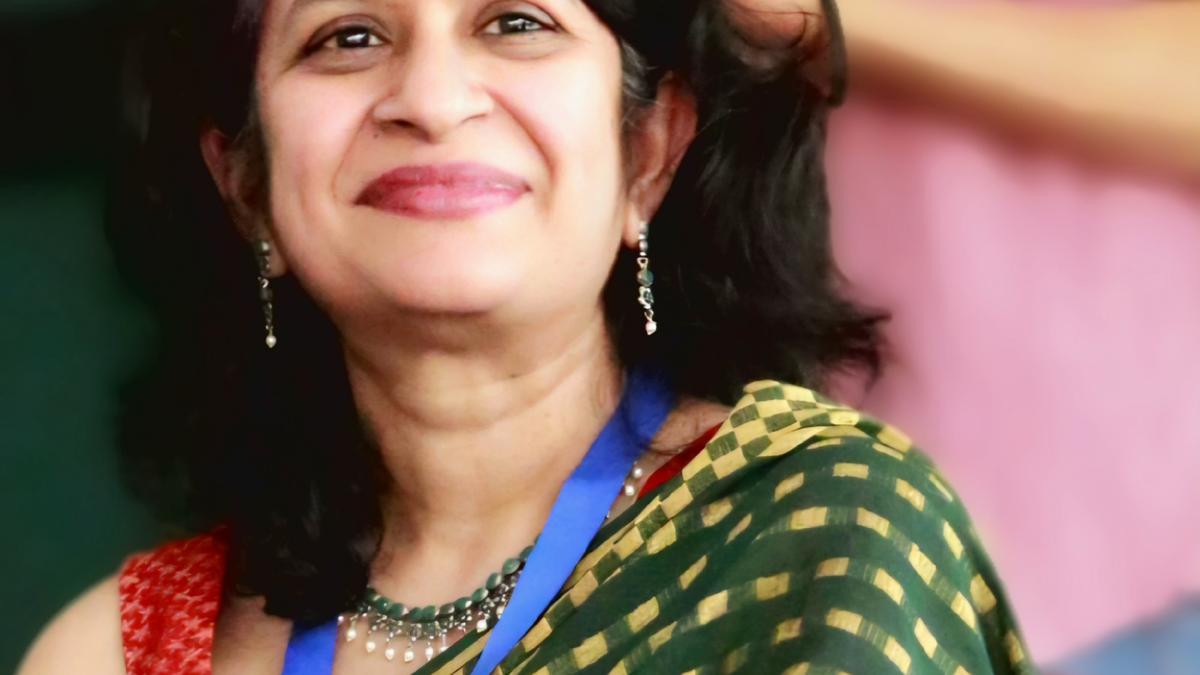
Aruna Nambiar remembers the security guard of her apartment who would regularly feed a community dog in the neighbourhood. “He was an undemonstrative man, but he loved that dog and would steal away to the store to buy biscuits for her, and let her cuddle up to him in the nights,” she says. This relationship between the dog and the security guard appears to be the inspiration for Lucy, one of the 13 stories in her recently released book Aiyyo, What Will the Neighbours Say?
“I wanted to write a story about that from the dog’s point of view,” says the Bengaluru-based writer, whose ideas often come from what she sees around her. While her novels are often “born from a central premise, usually an idea I feel strongly about,” the stories in this short story collection have been sparked by seemingly quotidian things.
“Happier Journeys by a family I observed on vacation, The Great Indian Vacation by travellers I’ve met, Manic Monday by an enterprising little girl I saw at a store, Nothing by an obituary in the paper and Courtroom Drama by the things one sees on television when a politically charged verdict is announced,” says Aruna, adding that “she seems to have this habit of filing things away in my head. When I start to write, they come back to me.”
Aiyyo, What Will the Neighbours Say?, Aruna’s first collection of short stories, comprises 13 witty, twist-in-the-tale tales that reflect the ironies, idiosyncrasies, and quirkiness of everyday life in contemporary India. These stories have been gestating for a few years now, with most written between 2023 and 2024, and a few even earlier, she says. “Courtroom Drama was probably the earliest, which I wrote for an anthology (Jest Like That) published in 2018.”
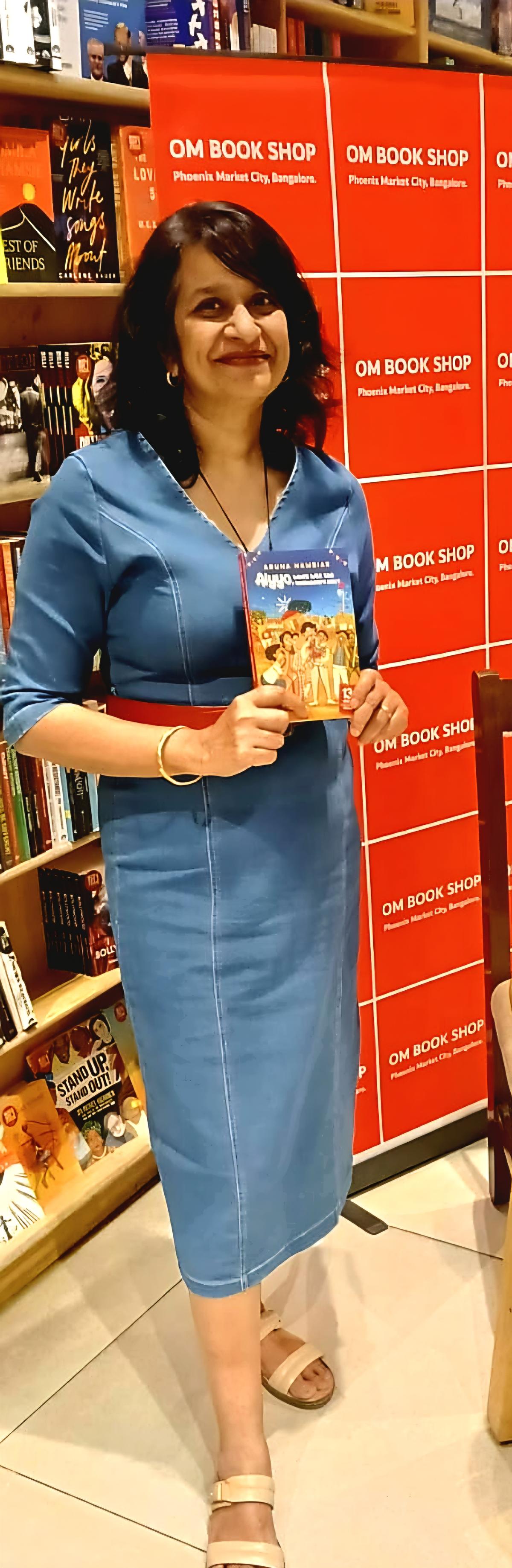
Aiyyo, What Will the Neighbours Say? is Aruna’s first collection of short stories
| Photo Credit:
Special Arrangement
Aruna, a former banker holding degrees in engineering and management, has been writing since childhood. “I enjoyed writing when I was in school and college…was the editor of my school magazine…used to be the girl who would be writing during my commute on the train in Mumbai, where I used to live.” Then life and work happened, and writing “fell by the wayside” until she moved abroad in the early 2000s and quit her bank job. “When I returned, I thought I should try some writing, so I started writing financial articles for a national daily.”
She forayed into fiction soon after, in 2005 or so, beginning with short stories, some of which were published in a collection by a small independent publishing house, Unisun Publications. “They also asked me to edit a travel collection they were working on. I didn’t know anything about editing at that time, because I don’t have a background in literature, but they told me that since I could write, I could also edit.”
Aruna went on to work for Stark World, which did travel publishing, including some books on Bengaluru and Karnataka. “I did a bit of writing and editing for them. Then, I worked as a freelance editor with Westland Books and Penguin,” says Aruna, who believes that having this editing experience was useful because it helped her hone “my critical eye for my work.”
She began writing her first novel, Mango Cheeks, Metal Teeth, “a social satire, whose central premise was the relationship between the householder and domestic help” , in 2011 or ‘12. “It was published at the end of 2013, and I have been writing fiction since then,” says Aruna, also the author of The Monsters Still Lurk (2019), an exploration of ageing, and The Weird Women’s Club (2022), a celebration of sisterhood and women who do not fit into societal standards and expectations.
Aruna already has several ideas for her next project, though she isn’t very sure what they will become: a novel or a collection of short stories. “Like all writers, I have this secret folder of ideas, some of which become characters, episodes or scenes in a novel, others which become short stories.” Different writing forms, Aruna says, require you to flex different writing muscles. “In a short story, one doesn’t have the luxury of backstory or the gradual building up of plots and characters. Every sentence must earn its place, and often does double duty, moving the story forward while painting a character or describing a setting.”
Irrespective of form, however, one thing ties all her writing together: humour, which she says was “an important part of my reading and writing experience.” According to her, it was books such as Angela’s Ashes by Frank McCourt and The Curious Incident of the Dog in the Night-Time by Mark Haddon that taught her that one could write about serious subjects with humour and lightness. “Humour steals up on you quite gently but can expose social inequalities and hypocrisies with great effect. It can highlight the pompous and the ridiculous, and reveal the flaws and vulnerabilities of great dictators and mighty institutions alike, thus blunting their influence and changing the equations of power.”
Aruna also loves the work of authors such as PG Wodehouse, Bill Bryson, Dave Barry, Richard Gordon, David Nicholls, Nick Hornby, Helen Fielding, Anuja Chauhan, Marina Lewycka, RK Narayan, Roald Dahl, Daphne du Maurier, Saki, and O. Henry, among many others. “I do feel, though, that writers must, as they mature, move beyond influences and discover their own voice, and I hope mine is one that is contemporary, tongue-in-cheek and rooted in Indian culture.”
Published – February 12, 2026 11:17 am IST