


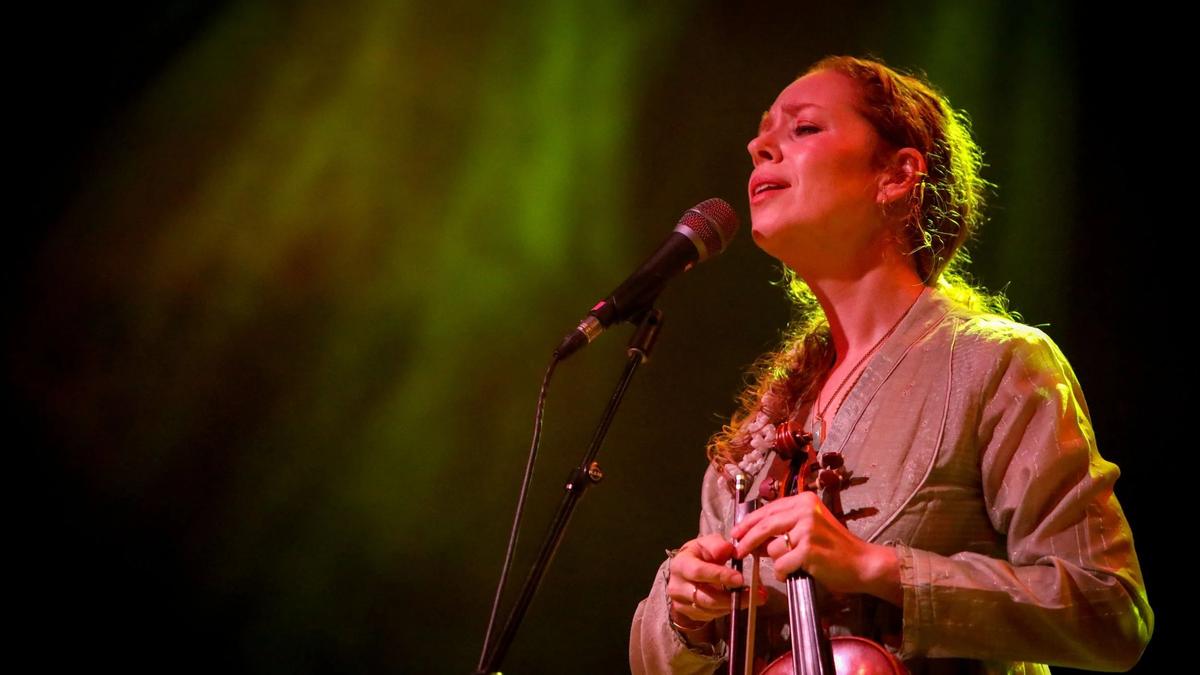
How Jahnavi Harrison’s love for Indian devotional music has led to a Grammy nomination
Though not Indian by birth, Jahnavi Harrison has been immersed in Indian spirituality and music since childhood. She grew up surrounded by kirtan, the Bhagavad Gita, the works of saint-poet Tukaram, the devotional songs of M.S. Subbulakshmi, and the music of maestros such as Carnatic violinist Lalgudi Jayaraman and sitarist Pt. Ravi Shankar. Her album Into The Forest — nominated for this year’s Grammy in the Best New Age, Ambient or Chant Album category — beautifully blends Sanskrit mantras with English lyrics.
Jahnavi’s passion for Indian culture is a legacy from her family. Her mother, raised in a Jewish household in Canada, and her father, brought up in a Christian family in England, both embraced Bhakti Yoga. “The only Indian connection was that my great-great-grandfather had spent some time in Allahabad,” she explains. “My father wanted to be a monk when he was five. At 12, he discovered a book on yoga and began practising asanas. Soon after, he heard the Hare Krishna mantra on a record produced by George Harrison. Both my parents eventually became disciples of A.C. Bhaktivedanta Swami Prabhupada, the founder-acharya of ISKCON.”
For Jahnavi, kirtan was woven into daily life. “We would recite Sanskrit prayers with harmonium and khol at school and before every meal,” she recalls. “I was also deeply influenced by Indian classical music through recordings. One of my fondest memories is listening to Ustad Bismillah Khan’s evocative performance of a morning raag on the shehnai.”
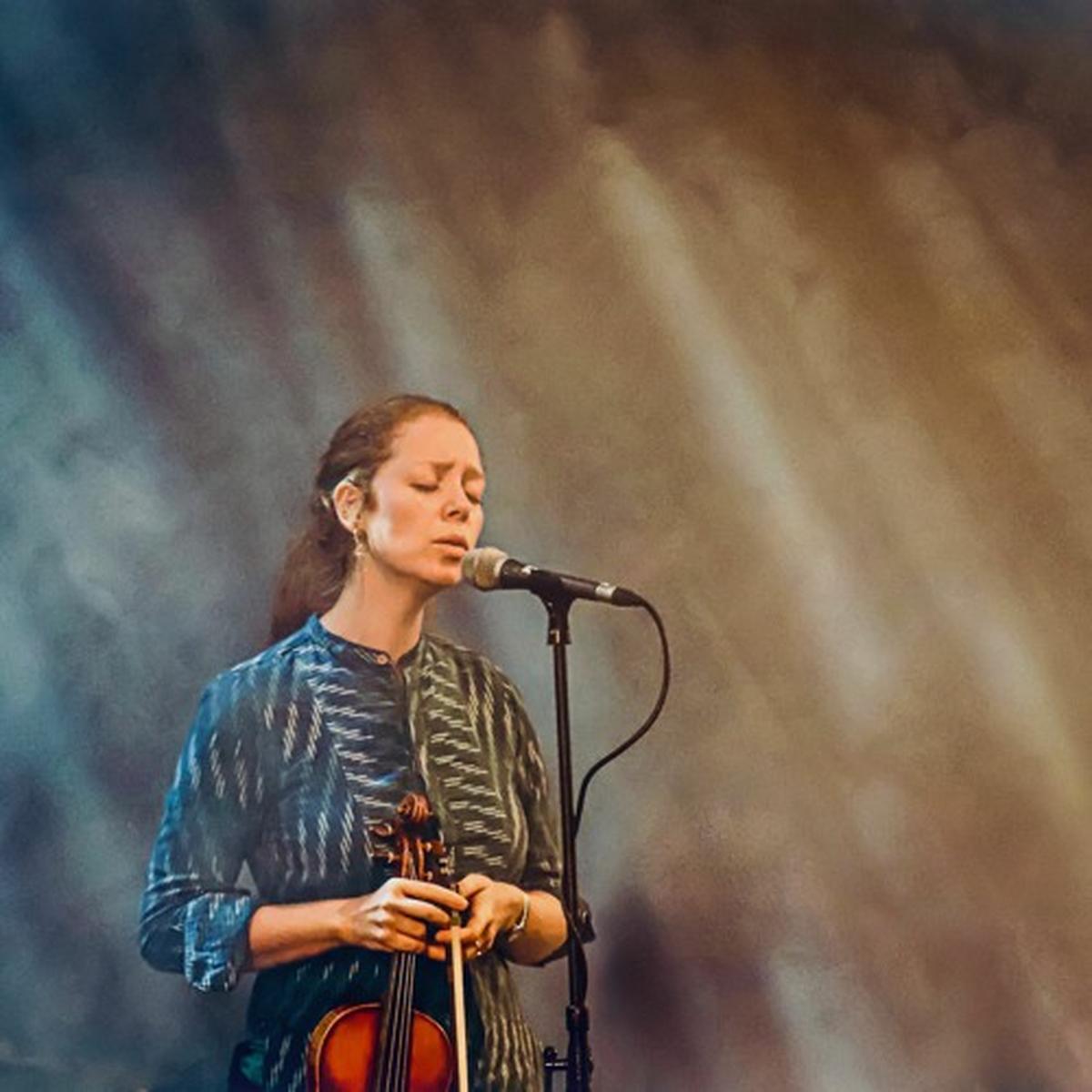
Jahnavi’s spiritual journey began at Bhaktivedanta Manor, in the village of Lethchmore Heath near Watford.
| Photo Credit:
Special Arrangement
Jahnavi’s spiritual journey began at Bhaktivedanta Manor, in the village of Lethchmore Heath near Watford. George Harrison bought the estate for Krishna devotees in the early 1970s, when he saw they were fast outgrowing their small temple in central London. Says Jahnavi, “The temple also has its own primary school, which I attended, as well as youth groups and an array of programmes, festivals and satellite projects.”
Jahnavi first encountered Indian music at the age of 16. “Though I had studied a little Western violin, I never realised how deeply the instrument was woven into Indian music until I discovered a cassette of Lalgudi Jayaraman,” she recalls. “His music opened up an entirely new world for me. Soon after, I learned that one of his senior disciples, A.G.A. Gnanasundaram, was teaching in London, and I decided to study with him.” Alongside violin, Jahnavi also trained in Bharatanatyam and Carnatic vocals, further deepening her connection to Indian traditions.
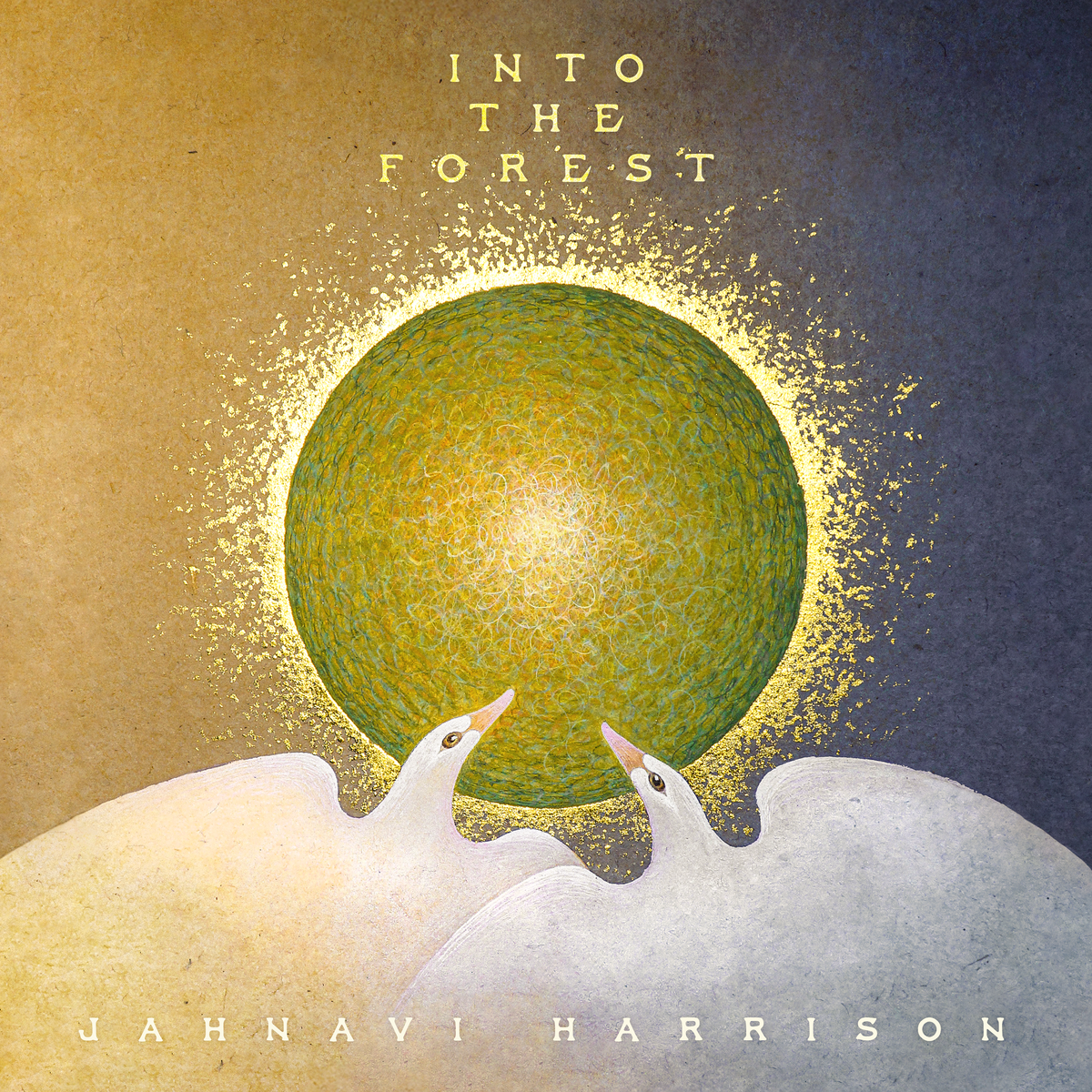
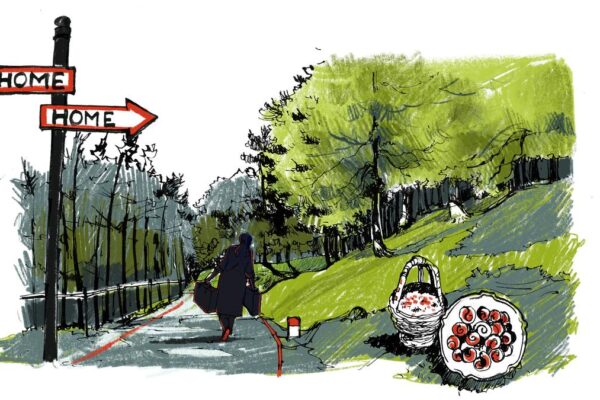
The Grammy-nominated album
| Photo Credit:
Special Arrangement
This was a period when yoga and related practices were flourishing across the West, and devotional music was finding new audiences. Kirtankars such as Jai Uttal and Krishna Das were drawing large crowds to their concerts, bringing sacred chants into mainstream spaces. In 2009, Jahnavi’s friend Gaura Vani invited her to join his new devotional music project, Mantralogy. It proved to be a turning point in her life.
Jahnavi released her debut album Like A River To The Sea in 2015, and later collaborated with singers Madi Das and Willow Smith. The Grammy-nominated album Into The Forest was conceptualised during the pandemic, when she got in touch with producer and musician Chris Sholar. The guest musicians in the album include pianist Utsav Lal, spoken word poet Londrelle and mridangist Ananta Cuffee.
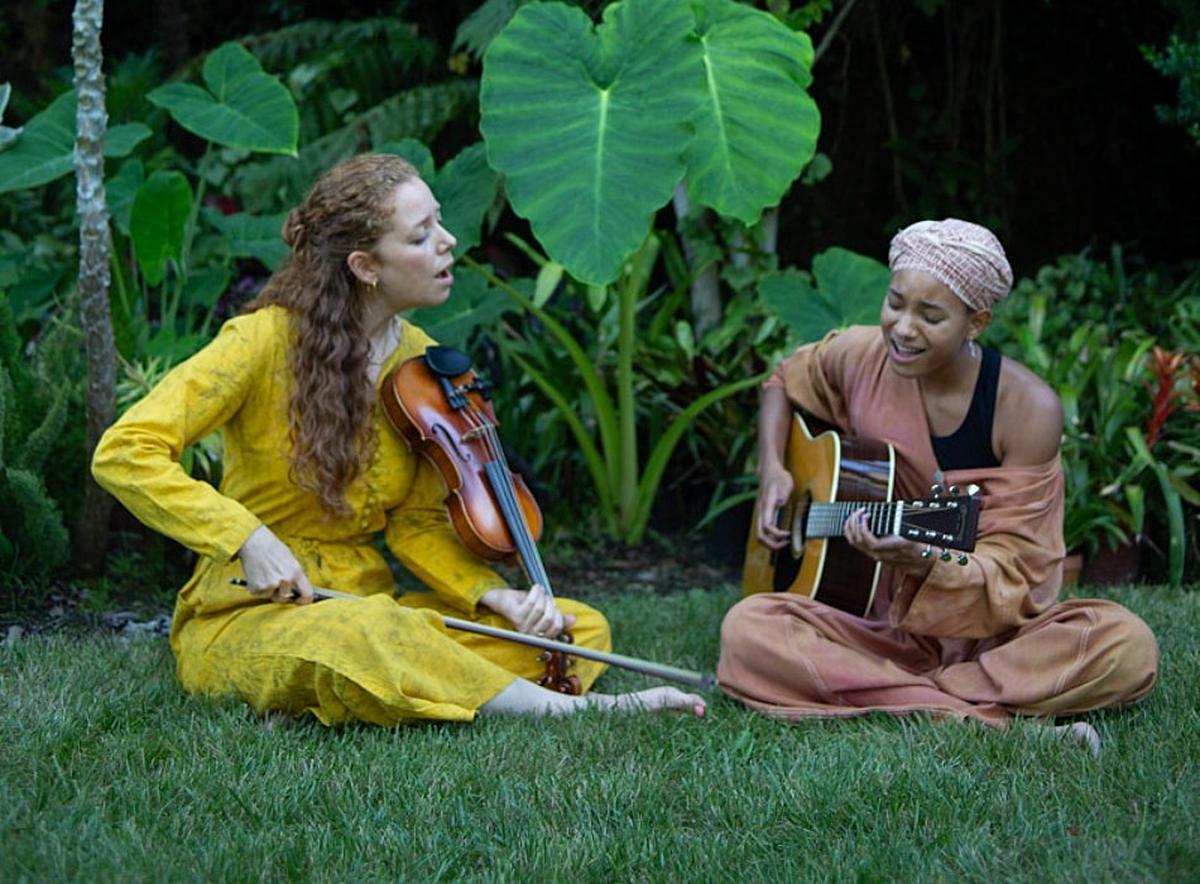
Jahnavi Harrison with Willow Smith.
| Photo Credit:
Special Arrangement
Besides her own songs in English, the album also features ‘Guha maha mantra’, ‘Govind damodar madhaveti’ and Tukaram’s popular abhang ‘Sundar te dhyan’.
On her maiden India visit last year, Jahnavi performed in Mumbai, Delhi and Chandigarh. She looks forward to returning this year. “The response was phenomenal. In my travels around the world for over 20 years, I can confidently say spiritual music, particularly kirtan, is becoming popular among youngsters. In India, people feel it’s only for the old and devout. Even in the West there was a hippy or counterculture stereotype in the past. But I feel those ideas are now outdated,” she says.
According to Jahnavi, the fact that the Grammys has a category for ‘chant music’ means a lot for musicians like me. “With increasing conflict, divide and tech addiction, people are being driven to find peace and deeper meaning to life,” she says.
Published – January 30, 2026 03:41 pm IST