





How Can I Tell If A Car Is Reliable? An Honest Guide
When you ask what car is reliable, you’re really asking me for certainty. Everybody wants to live without fear of unscheduled repairs, with iron-clad confidence that they have chosen a perfectly reliable car. I have bad news: I can’t offer that. The world of automotive reliability is anything but certain. The data is messy, the samples are skewed, and the variations are wild. But if you know how to comb through it, and face that uncertainty, you can get a hell of a lot closer to the truth.
Let me tell you how.
What Is Reliability?
Reliability is broadly defined by how often your car experiences unscheduled failures or malfunctions. Normal maintenance—like replacing brakes or tires, or changing a timing belt in a vehicle that has one—isn’t factored in, even if the service is expensive.
Failing to do maintenance can lead to unscheduled failures. But for the purposes of this story, we’ll focus on failures caused by quality issues from the factory, regular use, and the broad entropy that will one day consume us all.
A car that is more likely to experience failures is considered unreliable, whereas one that can go for 150,000 miles with nothing but regular maintenance would be considered reliable. One last distinction: Consumer Reports doesn’t count a recall as a “reliability” issue if you don’t actually experience the problem it addresses. I choose to use that narrow definition as well. Recalls are not necessarily bad, as they can show the manufacturer is responding to a concern, so I agree with that choice.

Hyundai makes a lot of reliable cars. But the Ioniq 5 and other Hyundai EVs have suffered with some reliability problems, including an issue with the vehicle’s Integrated Charging Control Unit (ICCU) that can immobilize the car.
Photo by: InsideEVs
I know some of this sounds obvious, but we have to define key terms, as they get jumbled up quite a bit.
Is Reliability Different From Quality, And Durability?
People often use reliability, quality, and durability interchangeably, but these are actually separate concepts. And it’s important to know the difference.
“A lot of these terms are really kind of mushed together in a lot of things that you might see,” Jake Fisher, the senior director at Consumer Reports’ auto test center, told me.
The BMW i7 has an extremely high-quality interior. But that isn’t always directly correlated with being reliable, as ultra-complicated and cutting-edge cars tend to have more issues.
Quality is the main one people get tripped up by, as studies like the J.D. Power Initial Quality Survey are often perceived as reliability data. But that’s about quality, which is a different metric.
Quality factors in taste and subjectivity. It is about the craftsmanship, design, and build of the vehicle. When I think about the distinction, I often think about ultra-high-end German sedans loaded up with technology gizmos. A new Mercedes S-Class may be about the highest-quality car you can buy, but you wouldn’t want to own one out of warranty, as all of those gadgets can break, making the car less reliable.
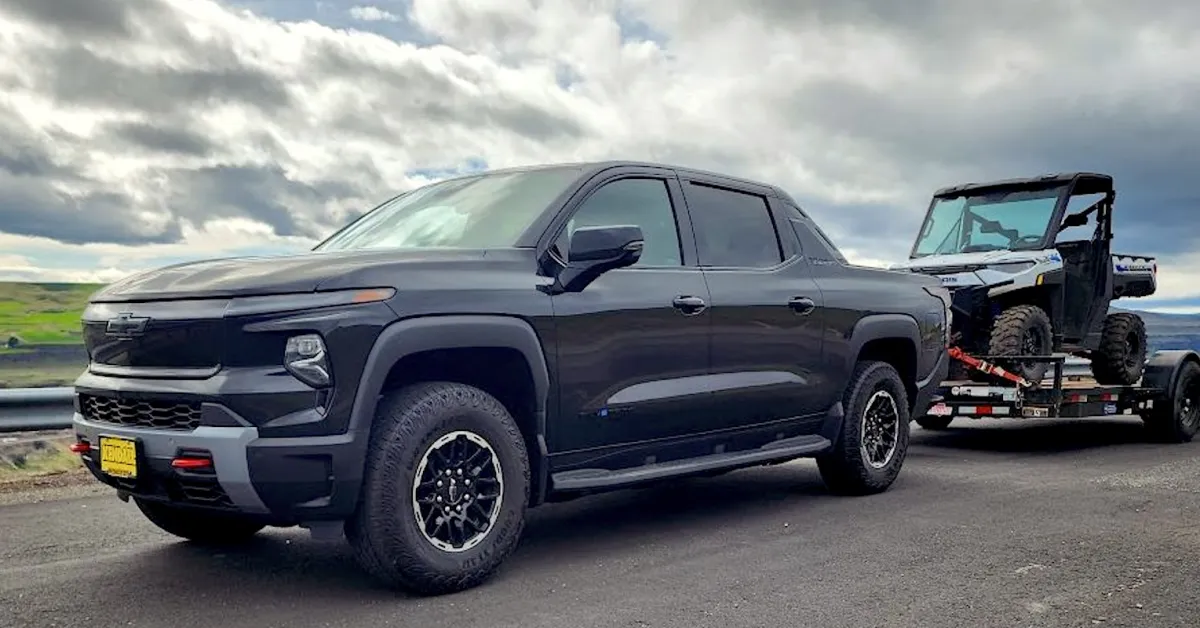
A Chevy Silverado EV is probably no more reliable than an Equinox EV. But it is likely far more durable.
Photo by: Mack Hogan/InsideEVs
Durable vehicles hold up well to abuse and high-stress environments. So while a Ram 1500 may be less reliable than a Honda Civic and exhibit similar quality, it’s far more durable on dirt roads and extreme conditions, such as towing.
Of these, I have always considered reliability the most important. The most critical thing for most buyers is that their car is trouble-free for years of commuting and everyday usage. So how do you actually find out what cars meet that standard?
Who Has The Best Reliability Data?
It’s not easy to know, and there are a few inherent limitations. The big one is time itself. The only way to know with certainty whether a car holds up well to years of aging and tens of thousands of miles of driving is to drive it for tens of thousands of miles, over many years, in a variety of conditions. But neither you nor I can do that with a brand-new car. Even with a used car, a model that has a bunch of year-one issues may prove to be reliable on a longer timeline. That means guesswork will always factor in.
But if you’re predicting based on a big enough sample size, this can be mostly mitigated. If you are shopping for a 2026 model year car that hasn’t been redesigned since 2021, it’s pretty easy to make an educated guess about that car’s reliability. And if you know what cars, engines, and companies have consistently proved reliable, you can make a prediction that’s a lot more useful than a guess.
Tesla makes the most reliable electric cars, according to Consumer Reports.
Photo by: Patrick George
You just need the data. And here we run into a problem. The best data would include all cars, but the only people that have anything close to that sample size are the automakers themselves through warranty-claim data. For obvious reasons, they are not going to share exactly how often their cars fail. That leaves external data providers.
The best of them, in my opinion, is Consumer Reports. The company is a nonprofit entirely focused on providing you and me with information to make smarter purchases. I have been combing over their reliability data tables since I was in third grade, because I’m a nut job, and I have always been impressed by the detailed information on reliability. The brand rates cars relative to other vehicles in their class, in a variety of categories including things like powertrain, suspension/steering, climate system, and in-car electronics. That way, if you want a reliable EV powertrain but don’t really care about occasionally having to fix a power mirror or something, you have the data to make that call.
This year’s data is based on a survey of Consumer Reports subscribers that captured 380,000 individual vehicles dating back to the 2000 model year, according to Fisher. He admits that there’s some selection bias—as Consumer Reports subscribers are more detail-oriented, educated, and wealthy than the average American—but because the data is comparative, that should wash out in the ratings. You’re comparing Consumer Reports readers to other readers with different cars.
It’s an effective way to get good data. But there are limitations. It doesn’t cover differences in buyer behavior, so brands that have more maintenance-conscious and gentle owners may do better. And though 380,000 vehicles sounds like a lot, that’s not enough to give them a useful sample for every make or model, especially when you factor in that Consumer Reports readers tend to bias towards more reliable models. That means last year’s survey didn’t have enough data to rank Alfa Romeo, Dodge, Fiat, Infiniti, Jaguar, Land Rover, Lucid, Maserati, Mini, Mitsubishi, Polestar, or Porsche.
J.D. Power’s Vehicle Dependability Study may plug some gaps. It covers three-year-old models from just about every brand, and ranks them on the basis of problems per 100 vehicles. It’s a useful tool as well, but limited in different ways. There’s no breakdown of what types of problems vehicles experience, and it is purely on a brand basis. This makes it relatively limited for my purposes, and probably for yours. Just because Toyota as a whole makes reliable vehicles does not mean that the specific Toyota you’re looking at is reliable.
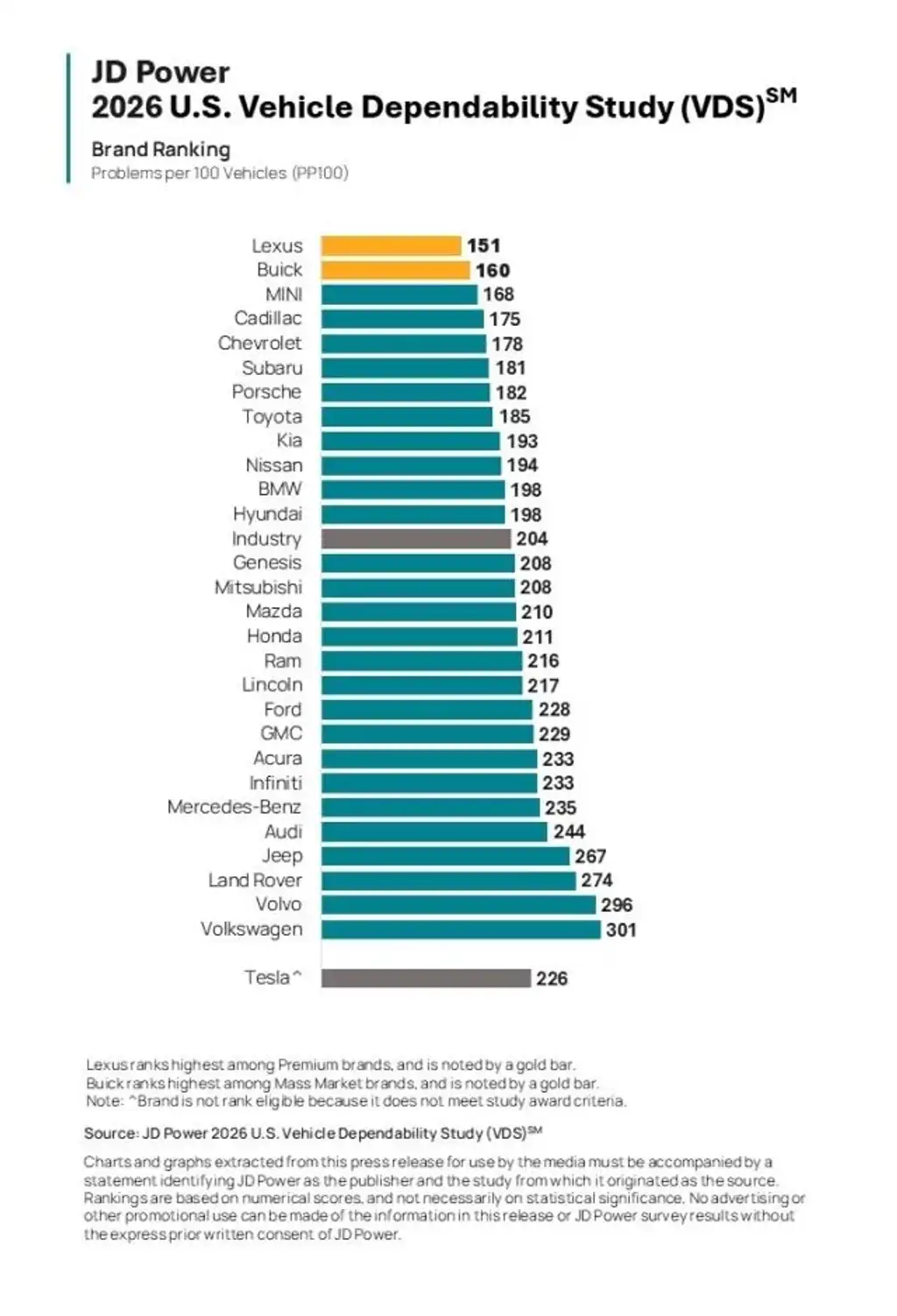
The 2026 JD Power Vehicle Dependability Study results.
Photo by: J.D. Power
Can I Trust Forums, Common Wisdom, And Social Media For Reliability Data?
The same limit tends to apply to folk wisdom. Ask anybody online who makes the most reliable cars and they’ll probably tell you Toyota. And in Consumer Reports’ brand-wide data, that’s true. But it doesn’t tell the full picture.
I experience software issues with a Lucid Gravity tester. I’d love to see hard data on how reliable these cars are, but there were not enough Lucid owners in Consumer Reports’ latest data set to draw conclusions.
Photo by: Mack Hogan/InsideEVs
“I would bet a lot of people buy Hondas and Toyotas because they’re like, oh, Consumer Reports says they’re good. And I bet a lot of people buy the unreliable Hondas and Toyotas. They think that, you know, we blanket all of them. And the truth is that Honda and Toyota don’t make all great, reliable cars. You really have to look at the latest data,” Fisher said. Some models are far less reliable than others. The Ford F-150 is the firm’s top pick for trucks, not the Toyota Tundra, he said.
“Because guess what? Ford is more reliable than Toyota when it comes to pick trucks. I bet most people don’t know that.”
Generally, I find this blanket-based approach to be rampant on social media and on forums. Casual observers will tell you that every Toyota and Honda is reliable, and claim that all Hyundais are unreliable, even if the data doesn’t support either story. The truth is that reliability is a constantly moving target, and consumers usually don’t have the latest info.
Toyota is known for making ultra reliable cars. But the bZ4X received just a 47 out of 100 in Consumer Reports’ reliability score. That’s far behind the Tesla Model Y, which scored and 81 out of 100.
Photo by: Toyota
“I think that there’s a lag,” Fisher said. Hyundai is still perceived as bottom-tier due to older designs, while brands like Mercedes and Honda benefit from reputations of older models.
What forums are good for is surfacing information about common issues experienced in the community. If you want to know about what you have to worry about with a used Hyundai Ioniq 5, forums will correctly note that you have to be aware of the ICCU issue, but that the motors seem solid. I highly recommend searching the forums or subreddits for any vehicle you intend to buy in order to get a general idea of common issues.
Just don’t get scared off. By nature, forums bring out the loudest and most dissatisfied buyers. The more popular the car is, too, the more customers there are, and therefore you should expect more complaints. Fisher points out that there are probably more complaint posts about a car like the Toyota RAV4 than many other cars, not because it’s unreliable, but because there are just so many of them. Looking at complaints, then, is useful but incomplete.
Just like every other source I’ve mentioned.
How Can I Ever Be Sure?
The short answer is you can’t. The long answer is that you can’t be sure about anything in life, but you can make a smarter guess if you get more information. For most people, this means starting with a brand that has a good reputation in multiple sources of independent data—i.e. one that ranks well in both Consumer Reports and J.D. Power data. Then you comb through the model-specific data on Consumer Reports looking for details on how it ranks in various categories from powertrain to climate control reliability. If you’re still feeling good, look at forum posts, which are also the only source that is likely to have info on a brand-new, redesigned model.
Then, the hard part: surrender to the universe. At the end of the day, there are Toyota Corollas that are lemons and Alfa Romeos that go for 200,000 miles trouble-free. Make an informed choice based on the data you have access to, budget for some rainy-day repairs, and leave the rest to time. Like everything in life, it’s ultimately a roll of the dice. All you can do is increase your odds.
Contact the author: Mack.Hogan@insideevs.com