




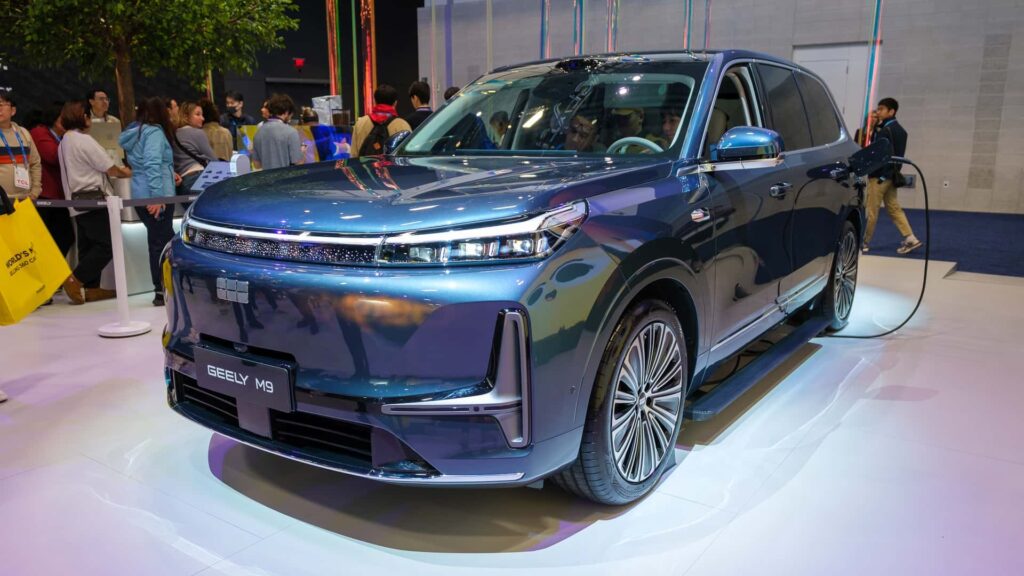
Geely SUV Crushes Every U.S. Competitor In New Test
- The Geely Galaxy M9 is a plug-in hybrid (PHEV) crossover SUV that is about the same size as the Kia EV9 or Telluride.
- Edmunds was able to get a full 101 miles of EV range from the Galaxy M9’s 41 kWh battery before the gas generator kicked on.
- In China, this vehicle starts at about $25,000.
As Chinese cars get into the hands of more U.S. experts and commentators, people are learning that I was right all along: these things are seriously good vehicles. Geely left behind an imported Galaxy M9 in the U.S. in the aftermath this year’s CES, and recently let Edmunds put it through its paces, just like the outlet would do for any vehicle sold officially in the United States.
It shocked them. Geely’s biggest PHEV crossover bested some of our best big hybrid crossovers, while achieving a full 101 miles of driving on full electric power alone. In all, Edmunds staffers and road testers agreed that Chinese cars were ready for prime time, and that if the Galaxy M9 came to the U.S., it would hold its own against established mainstream and premium big crossovers.
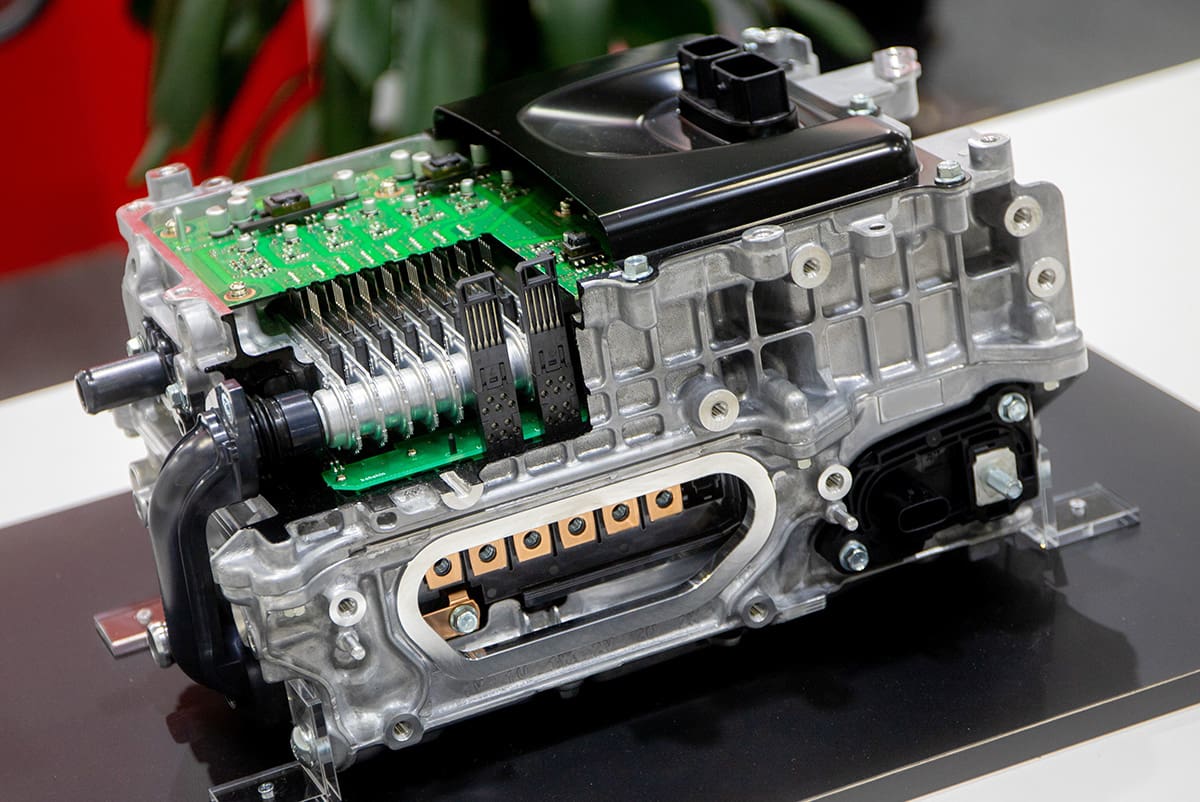
For those not in the know, the Geely Galaxy M9 is a medium to large crossover about the same size as the Kia Telluride, Toyota Grand Highlander, and the Kia EV9. It’s available in six or seven seats, and sits at the very top of Geely’s Chinese lineup. Power comes from a 1.5-liter turbocharged four-cylinder, which works in concert with a three-speed dedicated hybrid transmission (DHT) and three different electric motors.
These electric motors are fed by a fairly large 41 kWh battery. In all, it’s good for a staggering 858 horsepower. This is very similar to the powertrain I’ve experienced in the Lynk & Co 900, although the Geely Galaxy M9 has a smaller battery and smaller gas engine than the Lynk & Co 900. I liked the Lynk & Co 900’s powertrain and road manners; it was quick and whisper-quiet.
Edmunds found that the Galaxy M9 had similar manners, too. The M9 sprinted to 60 mph in a very quick 4.2 seconds, beating out all of its contemporaries like the Hyundai Palisade, Kia EV9, and even the Lexus TX. It’s right on pace with the BMW X5 PHEV, which is a much more expensive car. It did all of this while being measurably quieter inside than the ultra-luxury, $400,000 Rolls-Royce Spectre. That’s pretty impressive for a vehicle with an as-tested price that equates to roughly $35,000. Similarly, Edmunds loved its lightning-fast infotainment, comparing it to Tesla and Rivian in terms of responsiveness.

It’s worth noting that the price would likely be a lot higher if it were to ever come to the U.S. Vehicle prices typically cannot be directly converted between currencies and markets, as a variety of factors influence final pricing. But for a vehicle at any price in its class, the Galaxy M9 is very impressive.
Now, for me, it feels like Edmunds is sort of preaching to the choir here. I’ve been writing about how good Chinese cars are for the last part of my career. I’ve put them through their paces, driven them around racetracks, and talked to plenty of laypeople and industry insiders who have experienced them. But now we have actual empirical evidence as to how good these cars are, straight from a source that measures and tests their vehicles. A 0-60 time of 4.2 seconds does best nearly all of anything of this size in the U.S, while its 101-mile tested EV range has yet to be matched by any sort of PHEV on our market.
Geely itself has been relatively open when it comes to entering the U.S. market. The M9 may not be its first choice of vehicle, but it has expressed the desire to possibly bring more of its cars here, and not under brands like Polestar or Volvo, two brands that it also owns. However, they are facing an uphill battle; there is still a 100% tariff on Chinese-made vehicles.
Also, some politicians aren’t keen on Chinese brands coming here in any fashion. Recently, Senator Bernie Moreno called Chinese cars a “cancer” and wants to introduce stronger legislation to block them from coming here at all, even through partnerships with non-Chinese brands. The U.S. already bans Chinese connected car software, making the process of creating an export version far more expensive.
Regardless, it’s clear that Chinese cars are very much ready for the world. And if they ever show up on our shores, then established brands are going to be in for a pretty big fight.
Contact the author: Kevin.Williams@InsideEVs.com