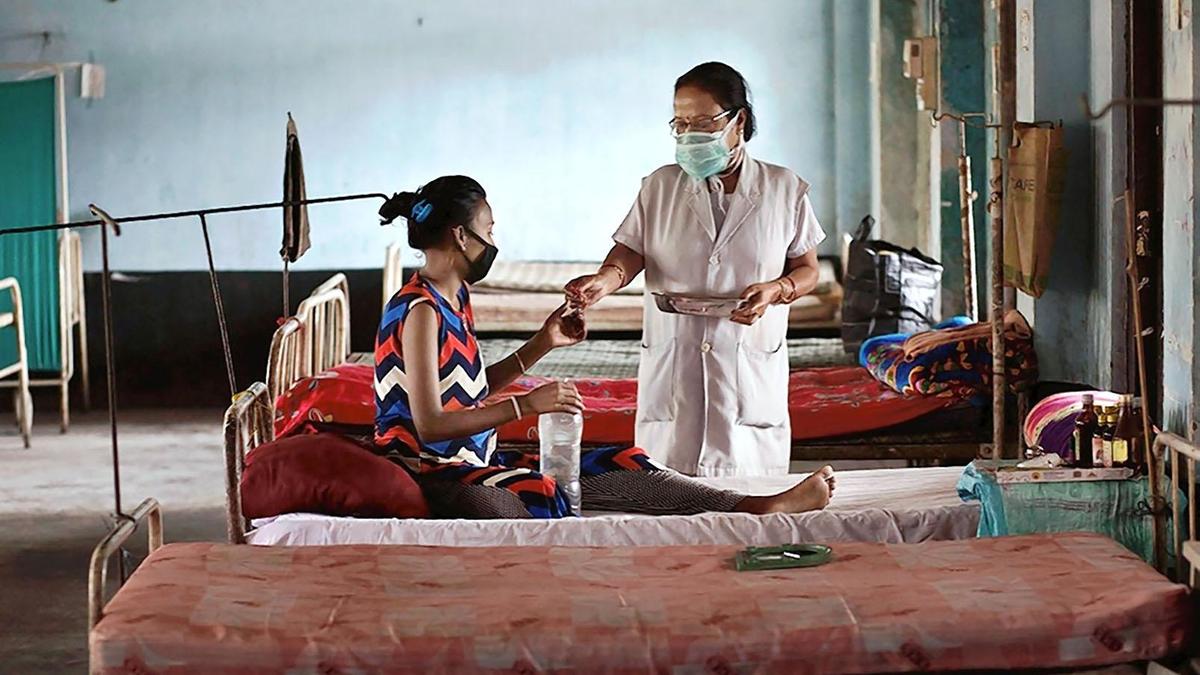






Gastrointestinal cancers and the danger of delay
A troubling pattern is increasingly evident in clinical settings: patients often seek medical attention late, not due to lack of access, but because the seriousness of their symptoms was underestimated. Complaints are frequently dismissed as minor issues such as “just acidity.”
This is not merely a clinical concern; it is a public health issue.
Gastrointestinal cancers — affecting the oesophagus, stomach, liver, pancreas, colon, and rectum — are steadily rising in India, yet they remain under recognised in public discourse. Unlike heart disease or diabetes, these cancers rarely trigger an early alarm. They do not present suddenly; instead, they develop quietly. That silence is precisely what makes them dangerous.
Delayed presentation continues to be one of the greatest challenges in managing gastrointestinal cancers.
India is witnessing a shift in cancer epidemiology. With over 2.7 lakh new cases annually, gastrointestinal malignancies contribute significantly to the national cancer burden. More concerning is the demographic shift, with increasing diagnoses among younger individuals, often at advanced stages. This reflects a growing and under-recognised burden.
This raises an important question: are early warning signs being ignored until it is too late?
Missed warning signs
Gastrointestinal cancers rarely present dramatically in their early stages. Instead, they manifest through symptoms that are easy to dismiss — mild abdominal discomfort, subtle bowel changes, fatigue, or gradual weight loss. These symptoms are often rationalised, self-treated, or ignored.
However, medicine operates on timelines. In oncology, time lost frequently translates into disease progression. By the time medical attention is sought, the disease has often advanced, making treatment more complex, more expensive, and outcomes less predictable.
Lifestyle transitions have further compounded the problem. Urbanisation has led to diets high in processed foods and red meat, along with sedentary habits, alcohol use, and tobacco consumption. Together, these factors create conditions that allow digestive cancers to develop silently over time.
At the same time, chronic conditions such as fatty liver disease, hepatitis, inflammatory bowel disease, and long-standing acid reflux are becoming increasingly common, further elevating cancer risk.
Despite these realities, preventive healthcare remains underutilised. Screening for colorectal cancer is recommended from the age of 45 for average-risk individuals, and earlier for those with additional risk factors. Yet, very few asymptomatic individuals undergo screening. Healthcare engagement remains reactive rather than preventive.
Early action
This approach carries consequences.
The encouraging reality is that many gastrointestinal cancers are preventable and, when detected early, treatable. Advances in endoscopy, imaging, and multidisciplinary care have significantly improved outcomes. However, these benefits depend entirely on timely diagnosis and early intervention.
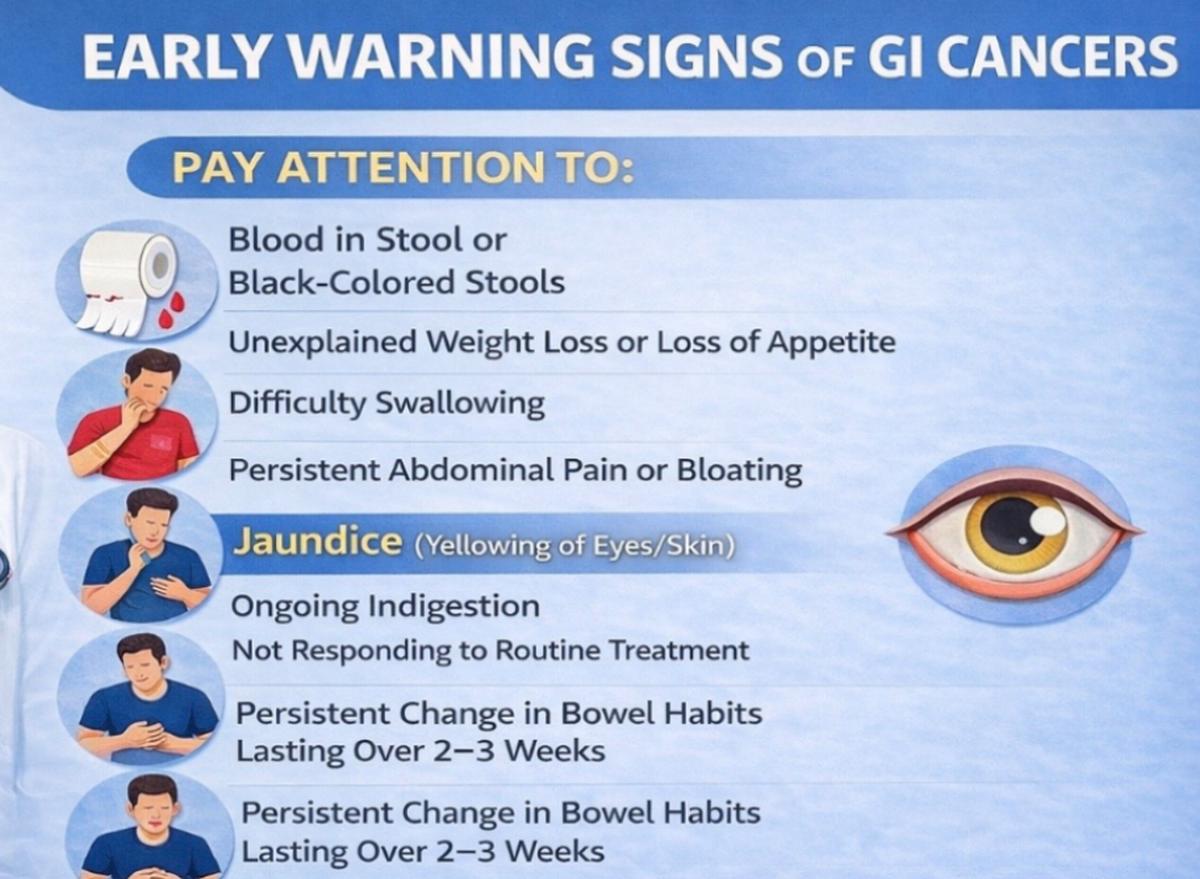
Awareness, therefore, is not optional. Persistent symptoms such as indigestion, unexplained weight loss, gastrointestinal bleeding, or difficulty swallowing should not be ignored. While not every symptom indicates cancer, persistence always warrants clinical evaluation.
Prevention must also be prioritised. Avoiding tobacco, limiting alcohol intake, maintaining a healthy weight, staying physically active, and consuming a fibre-rich diet are evidence-based measures that significantly reduce cancer risk.
At a broader level, the conversation around gastrointestinal cancers in India must evolve — from silence to awareness, from delay to early action, and from reaction to prevention.
Health is not merely the absence of severe symptoms, but the presence of awareness. Waiting for symptoms to worsen is not caution; it is risk.
India needs a stronger public health narrative that integrates awareness, screening, and early consultation into routine life. Primary care systems must identify warning signs early, while media and medical institutions must normalise conversations around digestive health.
The future of cancer control will depend not only on advanced treatments, but on how early care is sought. Medical systems can treat disease, but early recognition remains a responsibility. Awareness is the first step, action the next. Together, they determine whether outcomes are curative or compromised.
Rajat Keshari is a Gastroenterologist and Hepatologist
Published – April 07, 2026 11:15 am IST