



Europe’s January EV Sales Surge Leaves The U.S. In The Rearview Mirror
- Non-hybrid gas cars are becoming increasingly irrelevant in Europe.
- Hybrids, plug-in hybrids and fully electric models are now overwhelmingly popular.
- EV sales continue to rise faster than any other powertrain.
It’s a tough period for the sales of electric vehicles in the U.S., with extreme polarization along party lines and radical policy reversals. But across the Atlantic, the story looks very different. In Europe, progress towards a cleaner transportation sector marches on.
Battery-powered vehicles accounted for a growing share of the European Union’s car market in January, while sales of non-hybrid gas and diesel cars witnessed a stunning drop. That’s even more notable since the EU’s overall car market contracted by 3.9% compared to last January.
The European Automobile Manufacturers’ Association (ACEA) said on Tuesday that the share of EV sales in January increased by five percentage points to 19.3%, up from 14.9% during the same period a year ago.

Hybrids remained the single largest powertrain category with a 38.6% market share, while the combined market share of non-hybrid gas and diesel cars collapsed to 30.1%, down from 39.5% a year ago.
Volkswagen continued to be the continent’s top EV seller with 17,230 sales. But that number actually represents a 17% year-over-year drop thanks to increasing competition, according to Dataforce numbers cited by Automotive News.
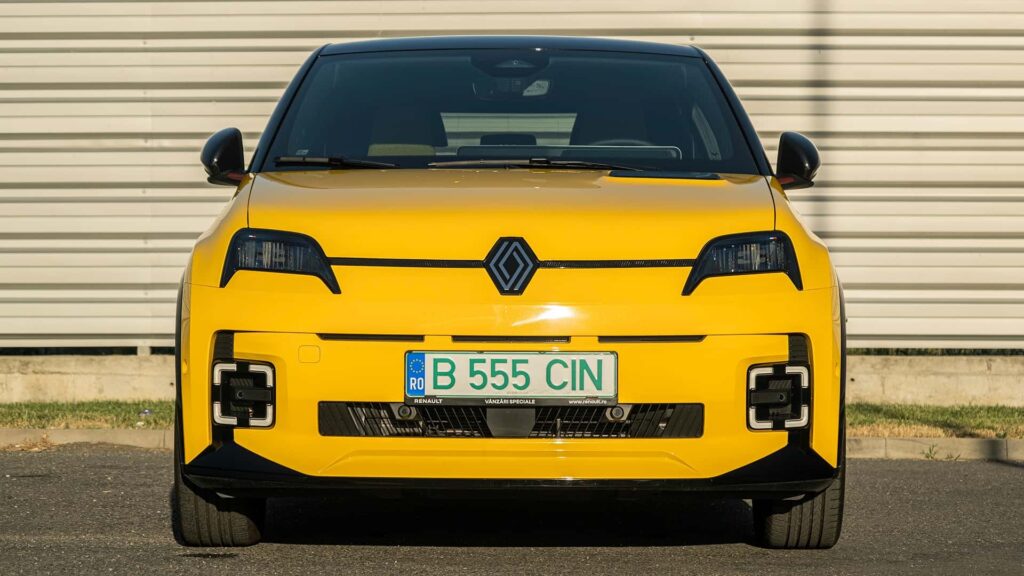
Renault climbed five spots to become Europe’s second-best EV seller, growing 64% to deliver 14,447 units. Its fresh lineup of affordable EVs like the Renault 5 E-Tech, Scenic E-Tech and Renault 4 E-Tech continues to find new buyers. These are mainstream cars priced and positioned for mass adoption.
Tesla’s market share, on the other hand, continued to erode. It fell six places to the tenth spot with just 7,794 units sold last month, marking a 17% year-over-year drop. The company’s downward spiral in Europe can be attributed in part to CEO Elon Musk’s far-right politics and in part due to an aging model line-up that looks stale compared to new and high-tech offerings from European and Chinese automakers.
Photo by: Kevin Williams/InsideEVs
Speaking of which, BYD essentially doubled its EV sales in Europe, climbing six spots to race past Tesla with 8,711 sales, a 94% year-over-year increase. That’s despite the EU’s 27% tariffs on made-in-China EVs.
This surge of EV sales on the continent is mainly led by affordable models. The Dolphin Surf (Also called Seagull) starts at just €18,990 ($ 22,350) in France as of current exchange rates. While Renault’s retro-modern superminis like the reborn Twingo and Renault 5 start at just €15,870 ($18,679) and €21,370 ($25,000), respectively.
The takeaway is hard to ignore here: Affordability drives adoption. That’s a lesson U.S. automakers have only recently started to act on. And while progress is rarely linear, there’s a stark contrast in how the market is evolving on both sides of the Atlantic.
Contact the author: suvrat.kothari@insideevs.com