




DNA of authoritarianism | Interview with Anne Applebaum on her book Autocracy, Inc.
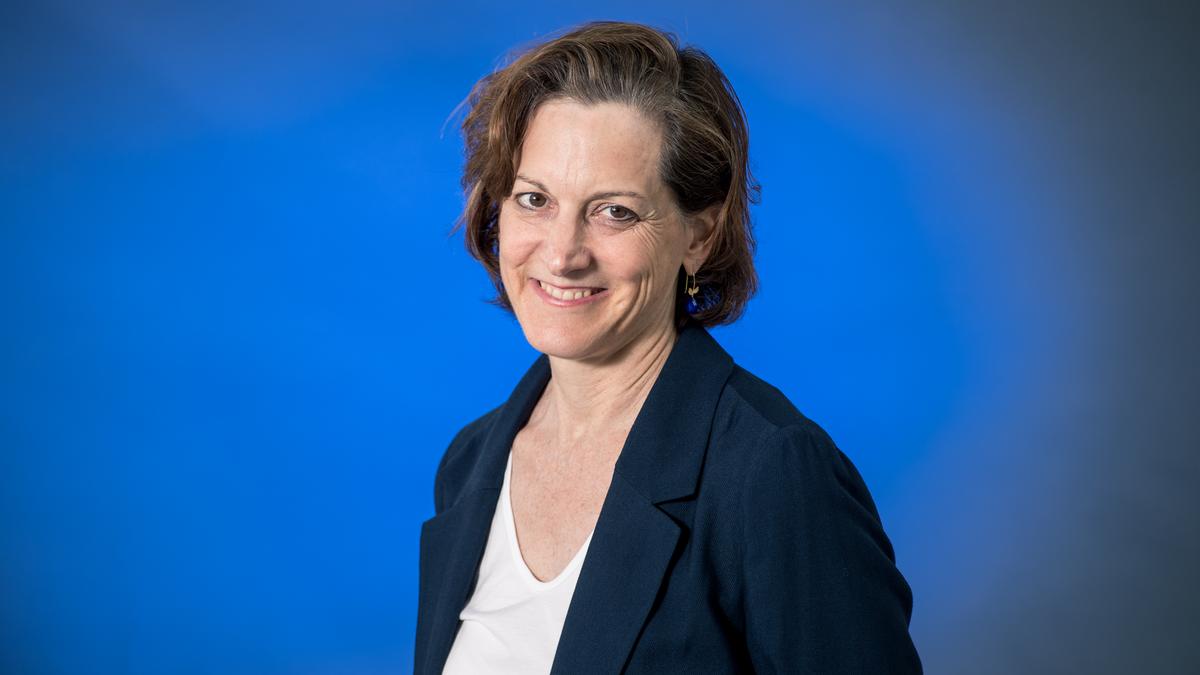
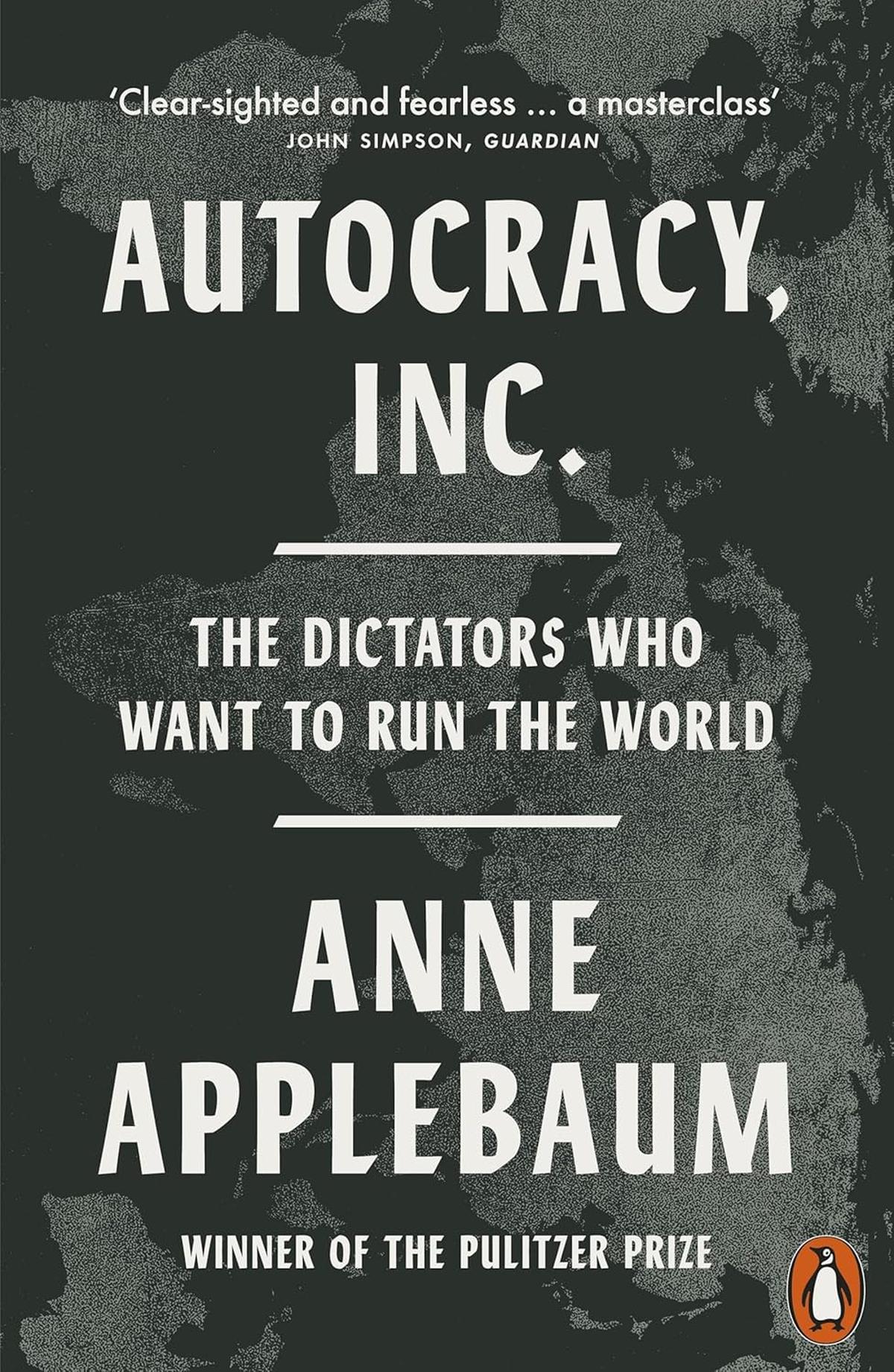
After a series of books on the rise of communism in Russia, journalist Anne Applebaum is chronicling the rise of populism and how even democratically elected governments are turning authoritarian worldwide. In her recent works, Twilight of Democracy: The Failure of Politics and the Parting of Friends (Penguin); her introduction to Hannah Arendt’s seminal work, The Origins of Totalitarianism (Penguin); and last year’s Autocracy, Inc.: The Dictators Who Want to Run the World (Allen Lane, Penguin), Applebaum has tried to draw common threads between regimes, trace the rise of kleptocracies, technological controls, and the cooperation networks between countries. Applebaum, who lives in Poland and is married to Polish Foreign Minister Radoslaw Sikorski, has often been accused of a pro-Western bias. She focuses her critiques on countries aligned with Russia and China rather than on the U.S. and Europe. A trenchant critic of U.S. President Donald Trump in her regular column at The Atlantic, Applebaum says in this interview on Zoom that she studies authoritarian behaviours rather than seeking to classify countries. Edited excerpts:

Is the world turning more autocratic and authoritarian?

Yes, it feels like that right now, because of changes in the U.S., Russia, China, and elsewhere. But I would urge everyone to remember that nothing about history is inevitable — what happens tomorrow depends on what we do today. If you look back even on the history of the last 20-30 years, there are a lot of inflection points when things could have gone differently. [Former Russian President] Boris Yeltsin might have chosen a different leader [than Vladimir Putin]. He almost chose Boris Nemtsov, who would have led Russia in a different direction. [In the U.S., Democrat] Hillary Clinton came very close to winning the election in 2016. She, in fact, won the most number of individual votes. [If she had won,] that would have set the U.S. in a different direction. There is a lot about the current moment that is accidental or has happened through random coincidences. Things could go in another direction. So I don’t want people to think that they should give up and not continue to think about creating a better and more just world.
Tell us about Autocracy, Inc.
The book was an attempt to explain the relationship between countries that don’t have the same ideology, but were nevertheless assisting one another and helping one another stay in power, such as Russia, China, Iran, North Korea and, until recently, Venezuela.
These countries were sharing surveillance technology. They were watching one another to learn how to control their populations. For example, in Ukraine, Iranian drones and North Korean troops are fighting on the side of the Russians. Chinese technology is also supporting the Russian war effort. Together, they create a common authoritarian narrative: the idea that autocracies are stable and safe, while democracies are weak and divided. They are seeking to defeat the ideas of their internal political opposition, who almost always use the language of rights, rule of law, democracy, freedom, and transparency. To do this, they push back against those ideas wherever they appear — within their own countries and abroad.
Many would say the names you give are essentially from a Western prism. How do you stratify each of these countries that you write about?
I don’t like to classify countries. I like to talk about authoritarian behaviours and practices. And those behaviours and practices are pushing back against the rule of law. When courts make decisions not based on the law or the Constitution, but because those in power tell them what to decide, this is an authoritarian practice. You can find this in China, Russia, and in some American states.
Another authoritarian practice is the secretive stealing, hiding, and transferring of money around the world, often using offshore accounts and anonymous shell companies. That is a practice you can find in the U.S. as well.
I am not making a judgment about this or that country; I am saying that these are the practices and the countries that use them the most are beginning to work together. The Chinese government has a fully controlled Internet. In Russia, [foreign] apps and platforms are cut off, and state propaganda is a way of marginalising and excluding anybody who has different views. These are practices you can also see in democracies; autocratic practices are available everywhere. I don’t think it is particularly Western or non-Western to talk about them. I see them in the U.S. and I see them in China.
A lot of these leaders and regimes are popular…
You have to ask what popular means in a society where there are no alternatives, no public sphere, and no real debate. For example, it is illegal in Russia to criticise the war. In the beginning of the war in Ukraine, you had to talk about it as a special military operation. If it is illegal to speak about it and people are arrested for speaking about it in public, [then] when a pollster calls up a taxi driver in Krasnoyarsk and says, “Hello, I’m calling from Moscow, what do you think of the President?”, what do you expect the driver to say? He is going to say, “I’m in favour of him”. “What do you think of the war?” “Of course, I support it.”
The goal of illiberal leaders is to move in the direction where people are more and more afraid to criticise the regime or the government, where technically the apparatus of democracy might be there, but in practice, it is very difficult for anyone to say what they think or for any opposition leaders to emerge. There is a whole scale and spectrum of different countries with different systems, but be careful with the word popularity in places where the media is controlled and where people are afraid.
suhasini.h@thehindu.co.in
Published – March 13, 2026 06:15 am IST