

DMK-Congress seat-sharing deal: A successful but battered alliance

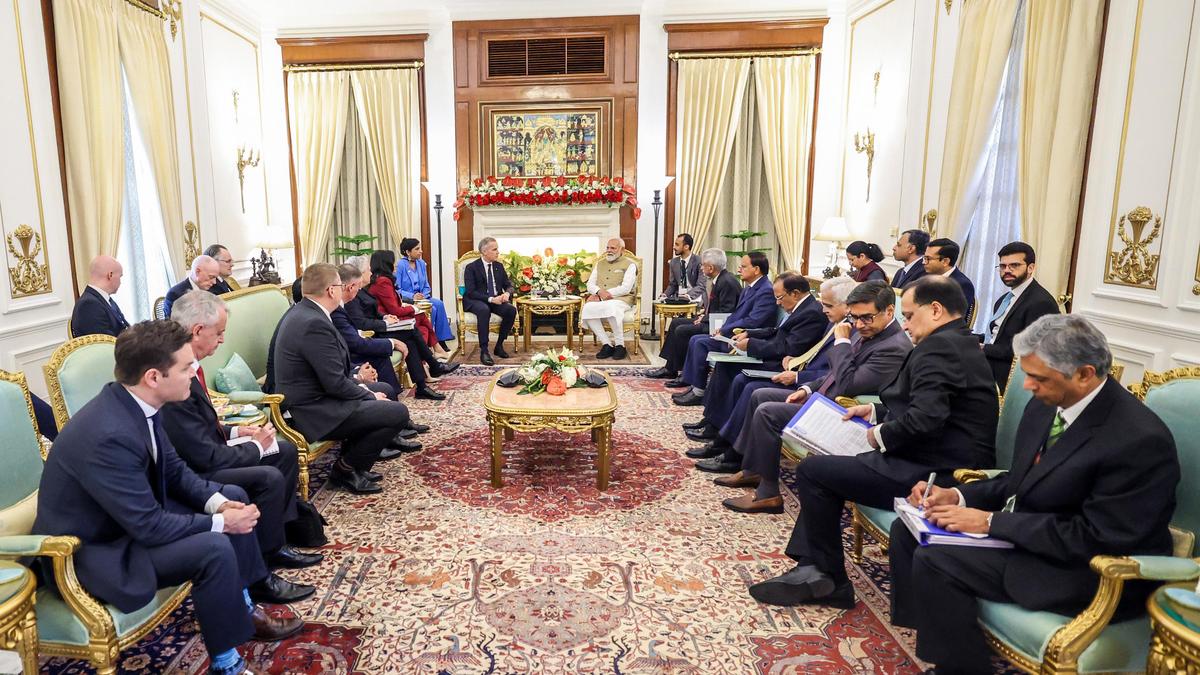
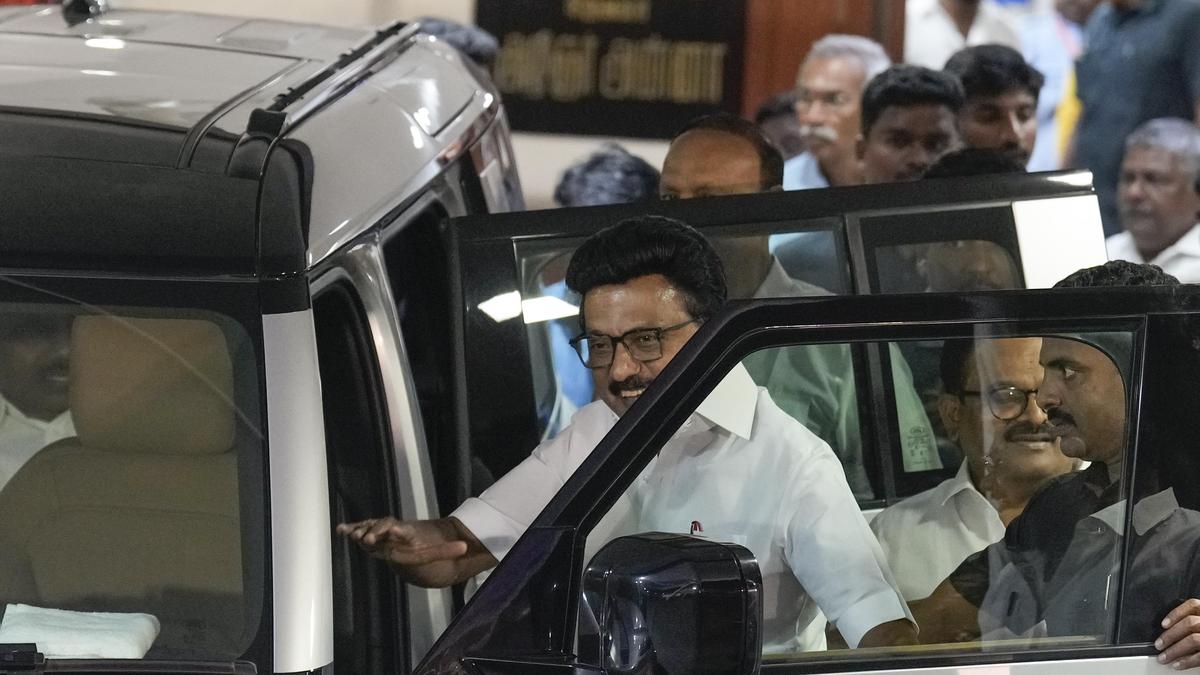
Tamil Nadu Chief Minister and DMK chief M.K. Stalin leaves party headquarters Anna Arivalayam in Chennai on March 4, 2026 after seat-sharing talks with State Congress president K. Selvaperunthagai, AICC state in-charge Girish Chodankar and other party representatives.
| Photo Credit: PTI
After days of hard bargaining, and at times pushing the alliance to the brink of collapse, the Congress in Tamil Nadu has finally sealed a seat-sharing pact with the ruling Dravida Munnetra Kazhagam (DMK) for the forthcoming Assembly elections. The Congress, which was allotted 25 seats and won 18 in the 2021 Assembly polls, has managed to secure three additional seats and a Rajya Sabha berth from the DMK as part of the agreement.
An unrelenting Congress
The Congress’s hardened stance surprised even leaders in the rival camp, particularly because the party has been a constituent of the DMK-led alliance for nearly 22 years, barring a brief separation in 2014. The DMK-Congress combine in Tamil Nadu is often cited as a model alliance against the Bharatiya Janata Party (BJP)-led combine at the Centre.
Editorial | One for all: On seat-sharing for the Tamil Nadu Assembly election
The Congress high command, however, appeared to be quietly preparing for an experiment in Tamil Nadu despite the much-publicised bonhomie between Chief Minister M.K. Stalin and Congress leader Rahul Gandhi, who often address each other as “brother.” Throughout the roller-coaster negotiations, Mr. Gandhi kept himself away from directly dealing with Mr. Stalin. The continuation of the alliance was eventually ensured by the intervention of former Union Minister and senior Congress leader P. Chidambaram, who was asked by Congress president Mallikarjun Kharge and Sonia Gandhi to negotiate for the party.
The Congress appears to be readying itself for an experiment after the emergence of actor Vijay’s Tamilaga Vetri Kazhagam (TVK). For decades, Tamil Nadu politics has been dominated by two Dravidian parties — the DMK and the All India Anna Dravida Munnetra Kazhagam (AIADMK) — despite challenges from sub-regional forces such as the Pattali Makkal Katchi (PMK), the Tamil nationalist outfit Naam Tamizhar Katchi (NTK), and the promise once shown by actor Vijayakant’s Desiya Murpokku Dravida Kazhagam (DMDK).
Actor Vijay, however, has succeeded in creating the perception that he represents a possible alternative. A section of leaders within the Congress favoured exploring an alliance with the TVK, believing it could allow the party to contest a larger number of seats. Yet such a move would have once again underlined the Congress’s continuing dependence on regional allies rather than its own organisational strength — effectively piggybacking on another party instead of the DMK.
However, the very idea that the Congress was thinking of joining hands with the TVK surprised many observers, as it would have led to far-reaching consequences for Indian politics in general. Such a realignment would have been precisely the opportunity the BJP might have been waiting for, as it could have dealt a severe blow to the INDIA bloc by weakening one of its most significant pillars in the south.
The BJP, fully aware that the DMK has, in recent years, emerged as one of its strongest ideological opponents, is unlikely to soften its stance. For the Congress, losing the DMK’s backing in Parliament would have made it considerably more vulnerable at the national level, both politically and numerically — an opportunity the BJP would have been keen to exploit.
DMK’s dilemma
The sealing of the pact has, for now, saved the alliance but left deep scars. The Congress may have succeeded in persuading the DMK to part with a few additional seats, but it has also paved the way for other allies in the DMK-led front to demand more. Already overcrowded with nearly 20 political parties and fringe groups, the DMK alliance is under enormous pressure to accommodate competing demands.
Anticipating the possibility of a breakdown in talks with the Congress, the DMK had already roped in several parties, including the DMDK. It had also inducted former AIADMK Chief Minister O. Panneerselvam into the ruling party.
The DMK’s next challenge will be identifying seats for its allies, as their interests overlap in many constituencies. At the same time, the party is keen to contest as many seats as possible to avoid a repeat of the situation in 2006, when M. Karunanidhi had to form a government with outside support from its allies, particularly the Congress and the PMK. The DMK leadership is well aware that if it falls short of a majority again, the Congress will not hesitate to demand its pound of flesh.
Published – March 09, 2026 12:49 am IST