


China’s Next Safety Target May Be Yoke Steering Wheels

- MIIT’s draft safety standard could effectively end the use of yokes in new cars in China from 2027.
- Yokes may fail mandated rim impact-test points because key sections of the rim don’t exist.
- Regulators flagged the risk of the airbag not being effective and its cover fragmenting and causing dangerous debris.
The days of the steering yoke in cars could be numbered in China after the country’s Ministry of Industry and Information Technology (MIIT) published a draft for a new safety standard. It makes validating a yoke in a passenger car much harder since it requires impact points forces to be measured on the upper and lower part of the rim, which are missing in a yoke-type setup.
The thinking behind this new standard, which is set to take effect starting in 2027, is that by having a full wheel, the danger of the driver missing the airbag when it deploys is considerably smaller. In a yoke steering wheel, when the airbag inflates, it could slide under the driver’s head, reducing its cushioning effect in the event of an impact. The driver could therefore hit the steering column or the dashboard directly, resulting in more serious injuries.
CarNewsChina quotes local outlet AutoHome with information from the new regulatory filing, which also lists the “irregular fragmentation” of a yoke’s airbag cover (and the potential flying debris it creates as another potential source of danger).
The source also shows how they simulate a head impact test and how a round steering wheel is much safer in this regard. MIIT said its data shows that 46% of all driver injuries are caused by the steering wheel and column assembly.
But there’s more to it than that. The yoke also has a real-world usability issue—unless it’s paired with steer-by-wire or a very quick variable-ratio system. Tesla’s yoke in the Model S and X drew criticism because drivers still needed large steering inputs for parking maneuvers, and the missing upper rim makes quick hand-over-hand corrections more awkward, which could make bringing the car back under control more difficult in an emergency.
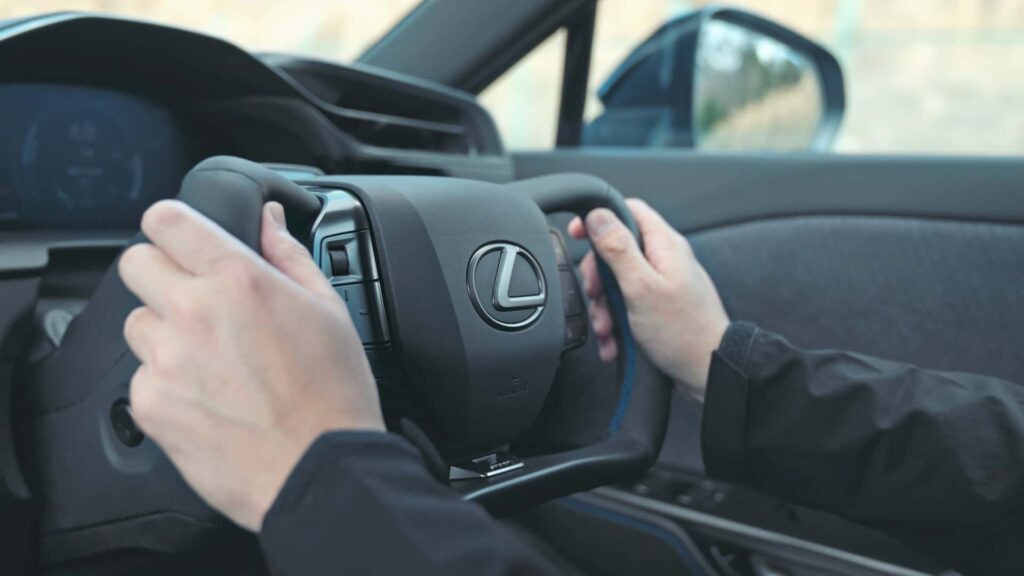
Some automakers address that with steer-by-wire. Lexus, for example, pairs its yoke-style helm with steer-by-wire on the RZ, which works much better than the Tesla setup. The manufacturer explains it chose a yoke because it “helps focus the driver’s attention on the road ahead and, being compact, it frees up more space around the knees and legs for easier entry and exit to the car.”
While a handful of cars from Western manufacturers have embraced the yoke trend, it’s much more common in China, which is why it drew regulators’ attention. This lands amid a broader regulatory mood that’s increasingly skeptical of unique design solutions that look cool but ultimately complicate safety validation—something we’ve also seen in China’s move to ban hidden door handles over emergency-access concerns.
China is also looking to mitigate the risk of EV battery fires. Several ideas are being tested, ranging from sensible to extreme, such as shooting the burning battery pack out the side of the vehicle.