



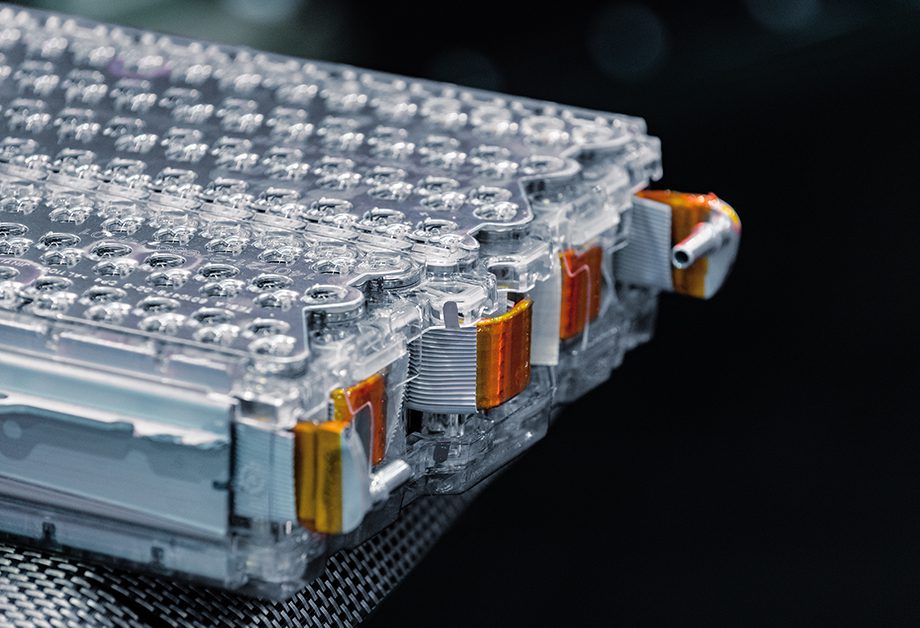
Charged EVs | How PSA tapes optimize battery production
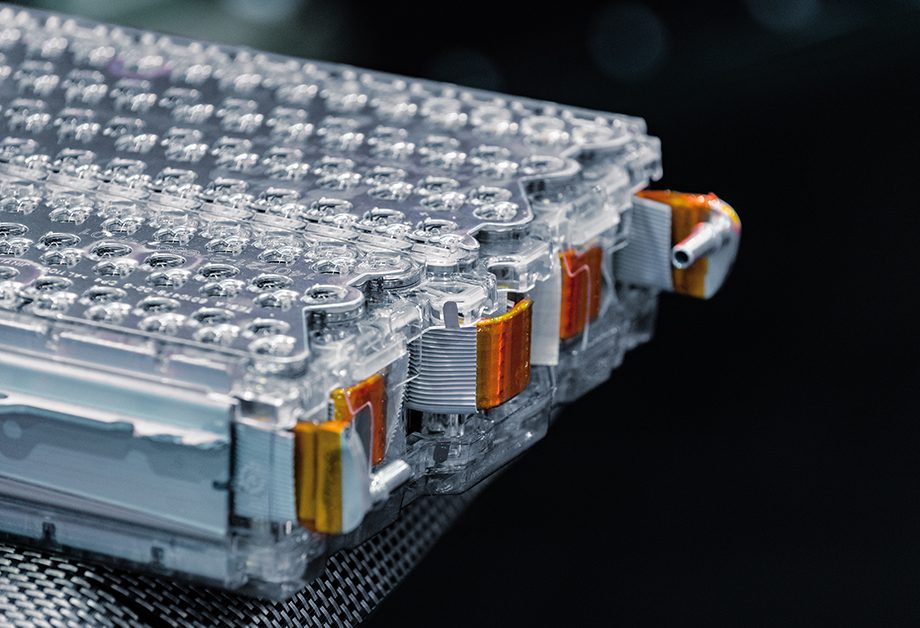
Sponsored by Avery Dennison Performance Tapes.
Tapes can simplify complex processes, support robotic assembly, reduce scrap, and more.
By Max VanRaaphorst
Globally, more than 60 million EVs are now on the road. It’s a number that might have seemed unimaginable just a few years ago. It underscores how EV OEMs have moved beyond needing only to prove feasibility, and must now prove manufacturability — the ability to scale-up rapidly while maximizing quality, safety and profits.
The same holds true for EV and e-mobility batteries. While the technology continues to evolve, the path to marketability now goes through manufacturing. Winning providers will be those that can optimize their production processes, automate effectively and produce high quality at a low cost.
That path may seem daunting. But there are strategies available that can result in greater quality and throughput. One such strategy is materials selection, particularly that of pressure-sensitive adhesive (PSA) tapes.
What do PSA tapes offer for battery design?
PSA tapes are a mature, sophisticated and diverse technology used in a wide range of industries, including automotive and transportation. Depending on its configuration, a tape may feature one or two adhesives that bond to a substrate upon the application of light pressure, a facestock that provides dimensional stability and other qualities, and a liner that protects the adhesive until its application.
These versatile tapes can easily fit in tight spaces while helping limit a pack’s overall mass. They offer clean and repeatable application and are typically compatible with automated production processes.
From a manufacturing perspective, such benefits may make PSA tapes an enhanced alternative choice to liquid adhesives, which require cure time and have variance in their application; and mechanical fasteners, which increase part count and mass.
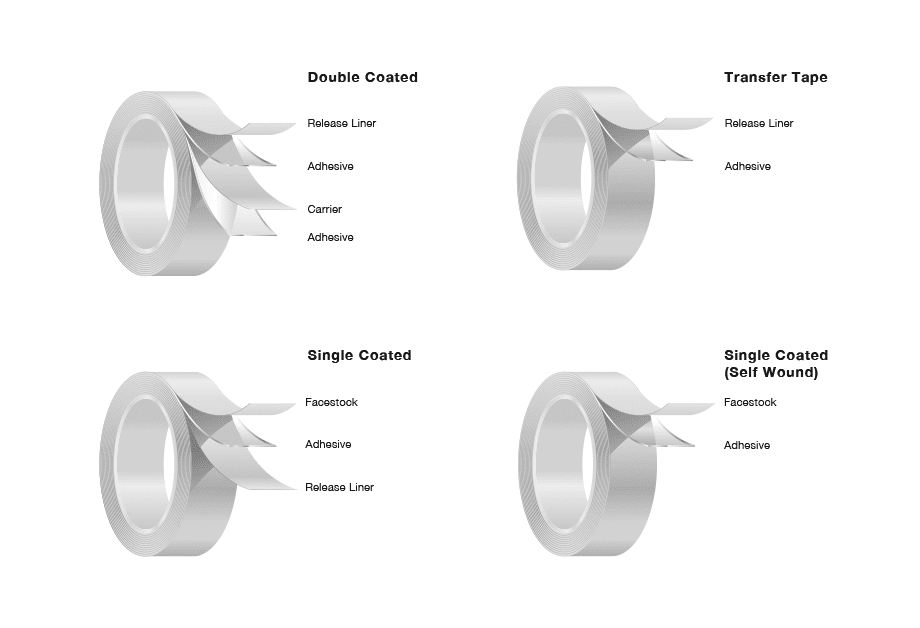
PSA tapes can also be customized to provide qualities that go beyond simple bonding. Some examples: Electrically insulative film facestocks can enhance a system’s dielectric protection
strategy. Tapes combined with flame barrier materials, such as mica, can enhance thermal protection. Tapes laminated to thick foam facestocks can provide shock absorption for delicate components.
PSA tapes as a design-for-manufacturability solution
Importantly, PSA tapes can be customized not just for the end use, but for specific challenges of the manufacturing process itself. This is the essence of DFM.
The fact is, battery manufacturing is highly complex at multiple levels. Cell, module and pack production involve different substrates, tight tolerances and layered assemblies, and electrical and thermal management requirements. Wasteful production steps and damage to fragile battery components are pain points, and may be frequent occurrences for manufacturers using traditional bonding and assembly methods.
How PSA tapes address pain points and optimize battery production
Enter PSA tapes. Here are just a few ways this DFM solution can help optimize battery production.
PSA tapes reduce process steps, production line costs and complexity
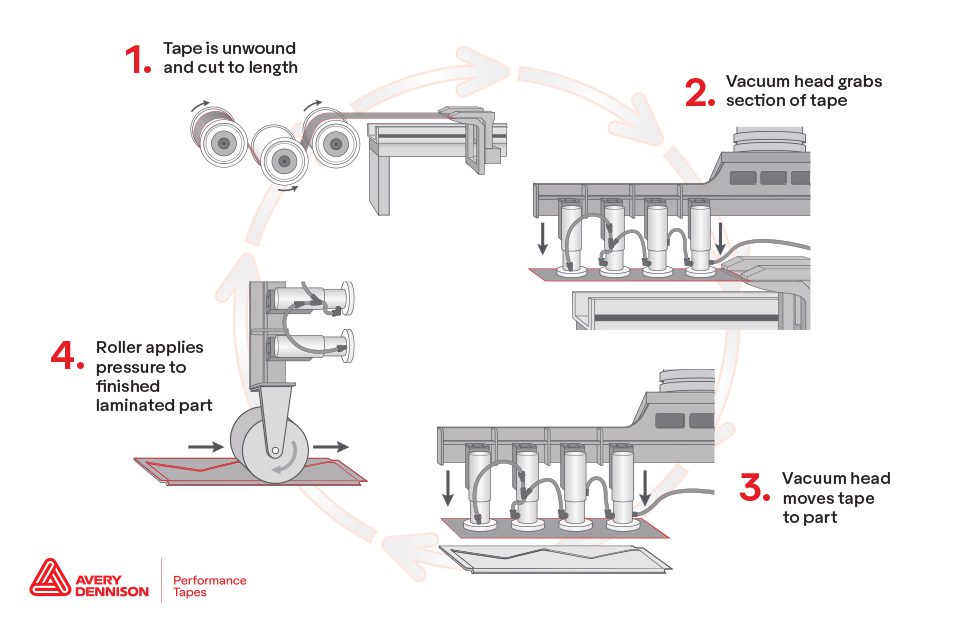
The use of PSA tapes eliminates some of the time-and effort-intensive steps associated with traditional bonding and fastening methods. As mentioned earlier, tapes require no cure time. Once adhered, a taped part can move immediately to the next step of the production process. This saves time and eliminates the need for equipment such as curing ovens, helping manage CAPEX.
Avery Dennison next-gen Volt ToughTM Stretch offers a prime example of these benefits.
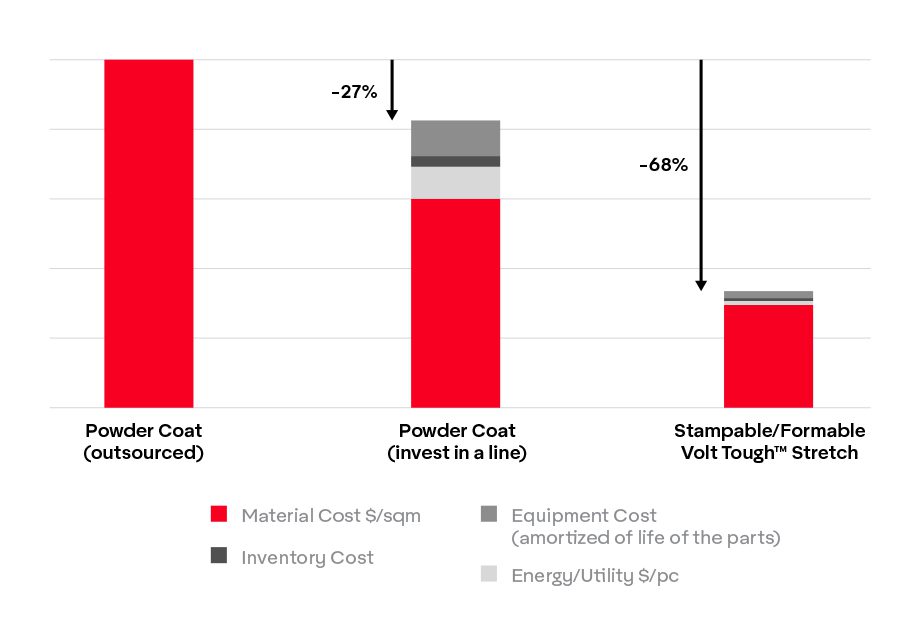
The product is a PSA-tape-based dielectric insulation solution engineered for adhering to flat metal blanks. Those blanks can then be cut and stamped into whatever shapes are needed for the battery component’s design. The “stretchability” engineered into the tape prevents the dielectric barrier from tearing or cracking during those processes.
Traditional dielectric strategies, such as powder coating, can add complexity and cost to a production process whether done in-house or outsourced. As a PSA tape, next-gen Volt Tough Stretch can more easily be applied inline, manually or robotically, to promote simplicity and cost savings.
PSA tapes support automation and robotic application
By using tape constructions tailored to their application and automation methods, e-mobility manufacturers can design efficient and effective automated processes. PSA tapes support multiple automation strategies, including pick-and-place of die-cut parts, single-pass liner removal and application, and wide-web lamination for large components such as cooling plates.
Because PSA tape bonding occurs immediately upon contact with a substrate, components are less likely to shift during transfer between stations. This is particularly important for layered battery assemblies, where misalignment can lead to electrical clearance issues, uneven thermal interfaces and downstream assembly failures.
Dimensional stability is another plus for PSA tapes applied robotically. Film-based carriers such as PET resist stretching during robotic handling and placement, improving positional accuracy at high application speeds. Where assemblies require conformity around edges or uneven surfaces, nonwoven or foam carriers can be used to balance flexibility with automation compatibility.
For battery producers focused on scale, PSA tapes engineered for robotic application can help stabilize production lines, improve yield and increase overall equipment effectiveness.
PSA tapes help manage scrap rates and promote quality
Many battery materials are delicate and difficult to handle, making them especially vulnerable to damage during high-speed assembly. PSA tapes can be customized to help battery manufacturers limit these materials’ contribution to waste and scrap rates.
A common challenge occurs during liner removal. Materials such as mica or ceramic paper can tear, delaminate or fracture if subjected to excessive stress and forces.
PSA tape constructions that pair controlled-release liners with appropriately balanced adhesive systems reduce the mechanical stress placed on these materials during automated or semi-automated removal. This results in fewer damaged parts entering downstream processes.
Manufacturers such as Avery Dennison can fine tune a liner’s removal force through approaches such as controlling the release formula (low, medium or high) and/or zone coating the adhesive.
In addition, tapes can be designed for compatibility with vision systems to support inline quality checks. Printed liners or pigmented adhesive systems allow automated equipment to verify part presence and placement before the assembly progresses further down the line. Identifying defects early allows for removal of noncompliant parts prior to the addition of value, thus reducing the total cost of scrap.
At scale, such incremental improvements compound. By reducing handling damage, misalignment and late-stage defects, PSA tapes optimized for battery manufacturing help improve overall yield while decreasing manufacturing costs.
Engineering PSA-tape-based DFM solutions for your production line

A logical first step in creating PSA-tape solutions for your manufacturing needs is to locate collaborators who can provide expertise and capabilities you may not have in-house. The industry is served by a variety of PSA tape manufacturers who can fulfill this role.
Some questions to consider as you vet tape manufacturers:
- Does the manufacturer have experience and application expertise in the battery industry?
- Does the manufacturer have the R&D capabilities to develop the solutions I need?
- Does the manufacturer have the business appetite to develop customized solutions? (Not all do.)
- Does the manufacturer have access to a network of additional companies, such as tape converters and functional material manufacturers, who may be crucial to my success?
- Does the tape manufacturer provide ongoing support?
Ideally, this relationship begins early in your product design phase. This gives the tape manufacturer maximum leverage to develop solutions that work for your manufacturing process.
My company, Avery Dennison, collaborates with OEMs and suppliers to tailor PSA-tape-based solutions to specific cell, module, and pack designs. We offer a wide range of PSA-tape solutions for the e-mobility battery industry, and our portfolio is backed by extensive R&D capabilities.
About the author
Max VanRaaphorst is market manager for Energy Storage at Avery Dennison Materials Group North America. With a decade of technical, sales, and marketing experience in the adhesives and tapes field, Max strives to help OEMs and suppliers address design, manufacturing, and performance challenges in the fast-evolving energy storage segment.