



Charged EVs | 2027 Chevrolet Bolt First Drive: $29K price, 262 miles, all the old Bolt virtues
Components borrowed from other GM EVs, a LFP battery, and up-to-date new software gives the classic Bolt a brief new life.
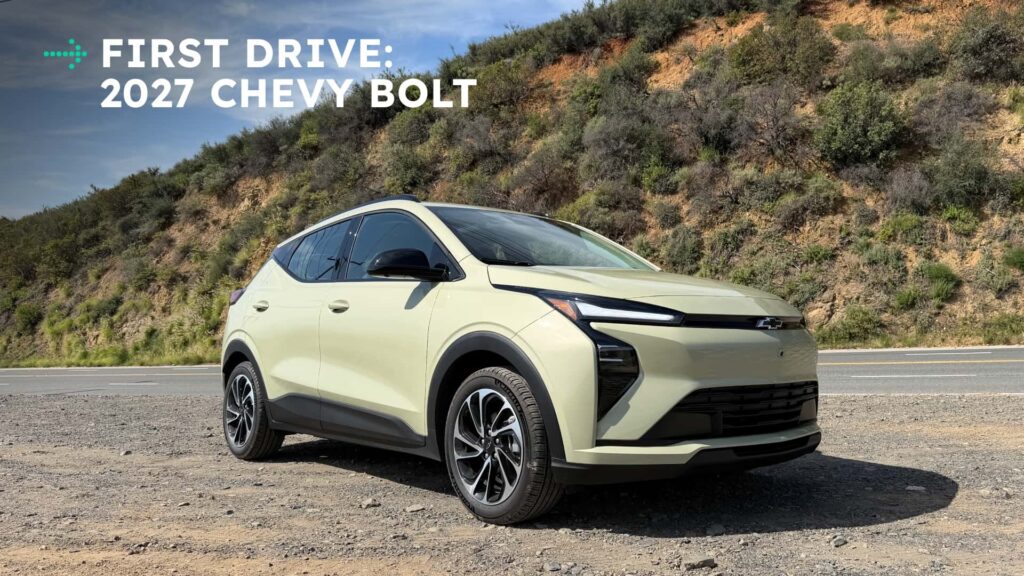
The Bolt is back! The new 2027 Chevrolet Bolt has been available at some Chevy dealers since last month, and now we’ve driven it. GM’s lowest-priced EV remains what it always was: a practical small EV hatchback with a range of 262 miles. In 2017, its 238 miles was class-leading, at a price $7,500 higher; today, 250-plus miles is adequate, and it’s a good value for the money.
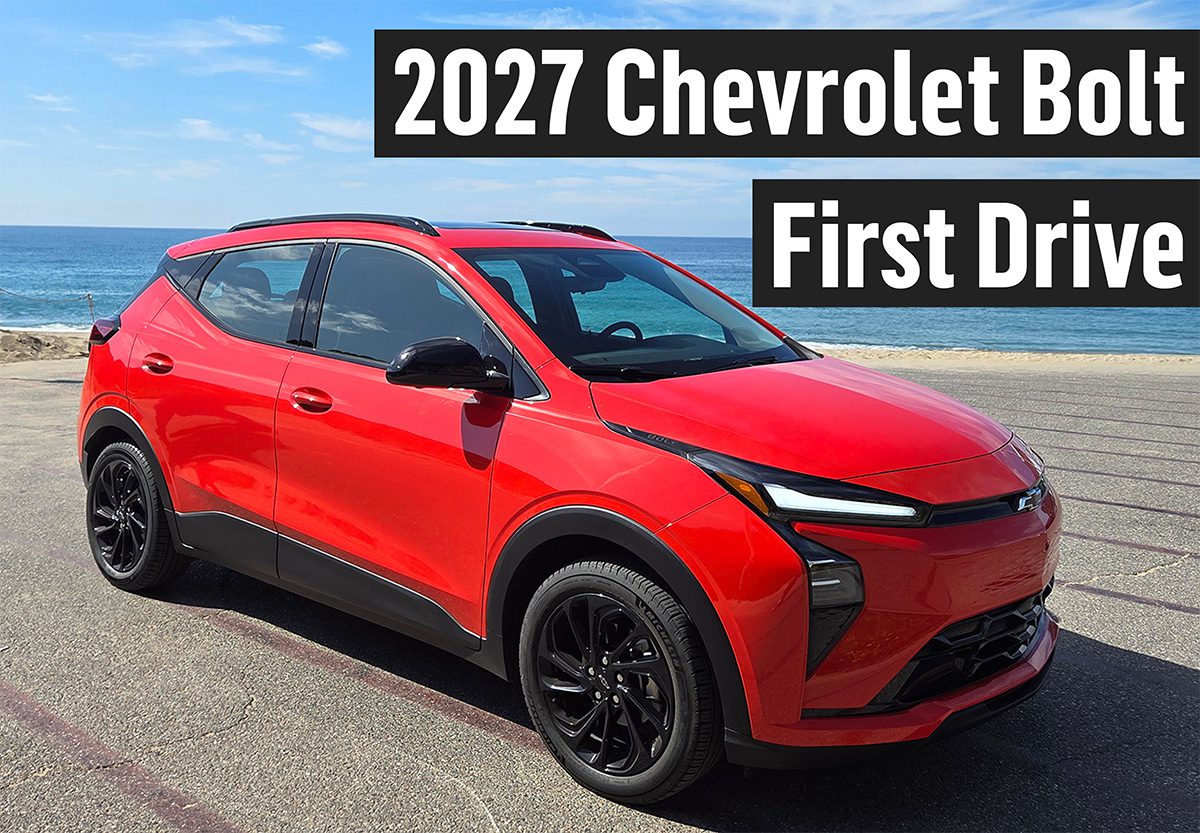
That price may be the single most important aspect of the new Bolt. A 2027 Chevrolet Bolt LT starts at $28,995. The sportier Bolt RS trim adds $4,000, and the priciest Bolt is the RS with the Technology Package, Super Cruise, and a sunroof, at $38,990. (All prices include a mandatory destination fee of $1,395.)
But shoppers who like the new Bolt shouldn’t dawdle. Chevrolet says the car will have a “limited run” of one long model year, with cars available from now through the end of 2027. Its Fairfax assembly plant in Kansas will switch to building gasoline-powered Equinox compact SUVs in mid-2027. What will follow the Bolt when it sunsets? Chevy repeatedly declined to say.
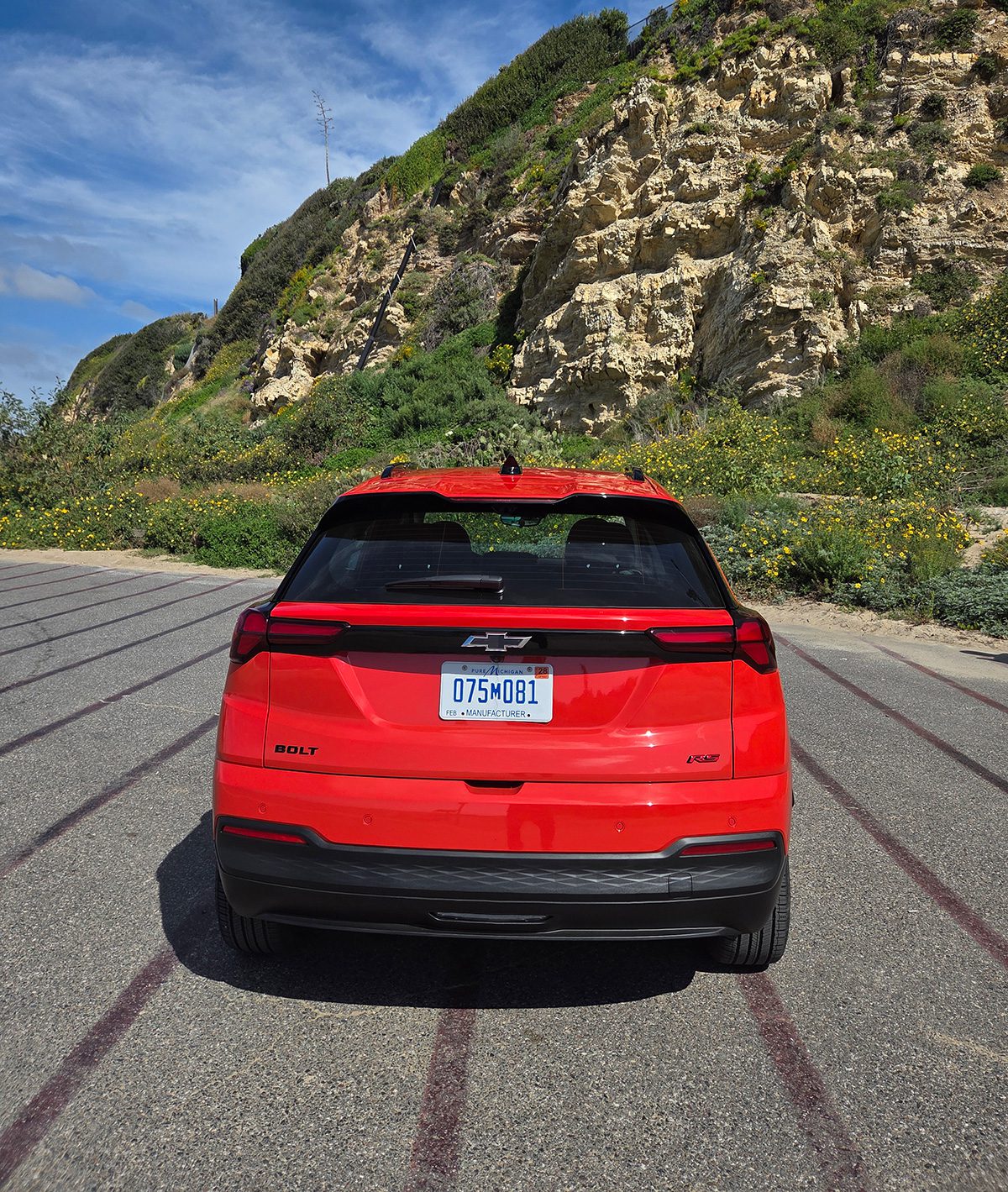
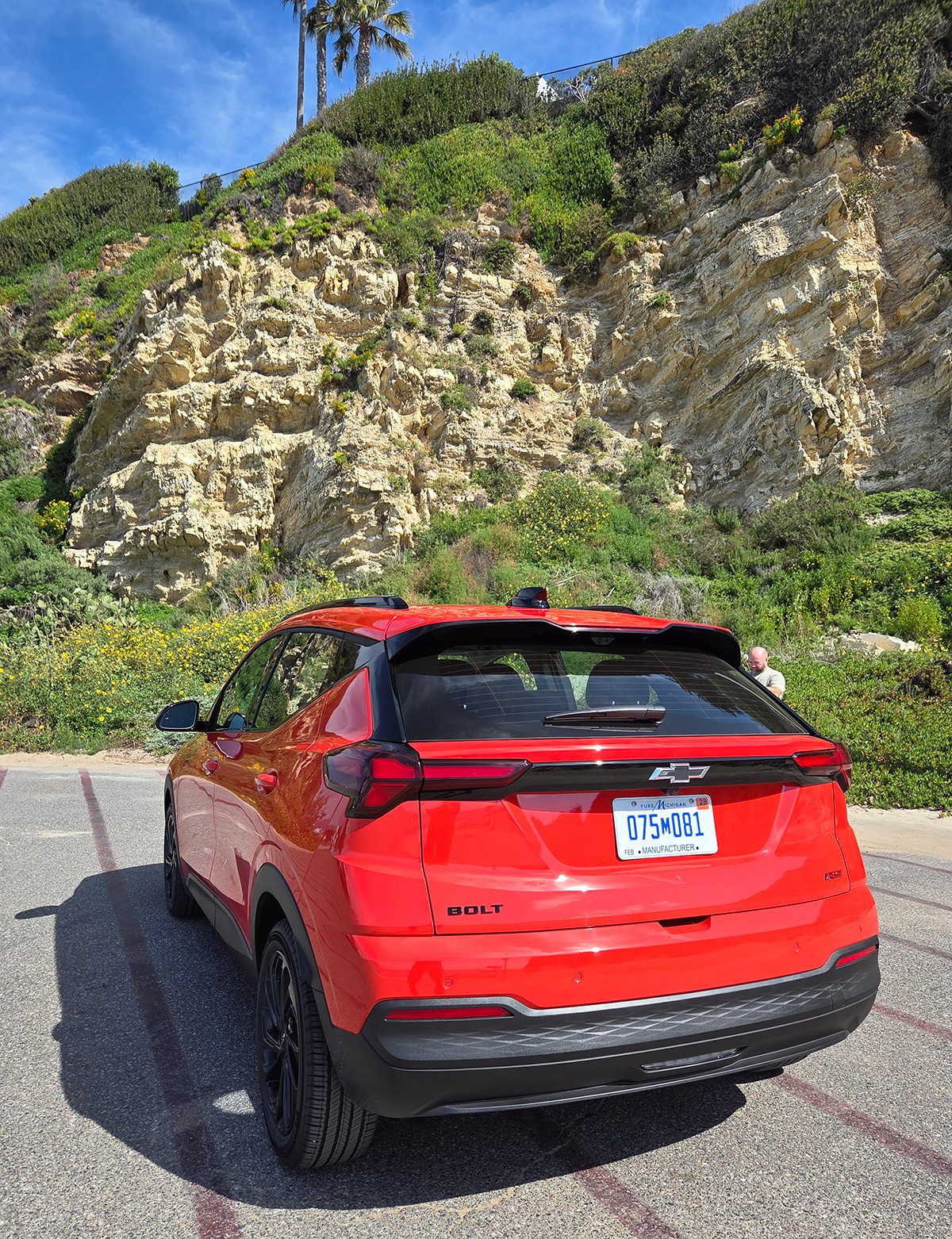
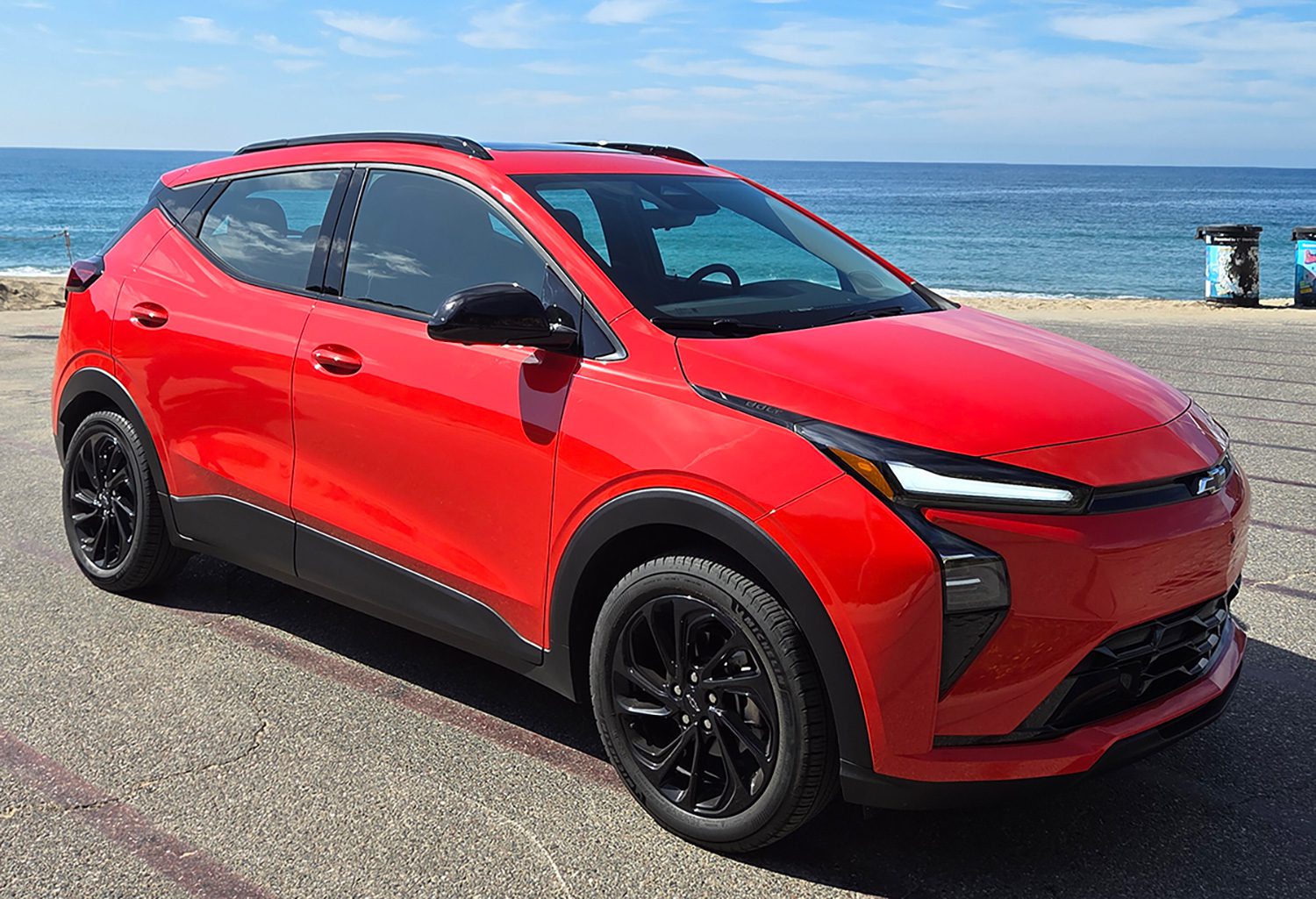
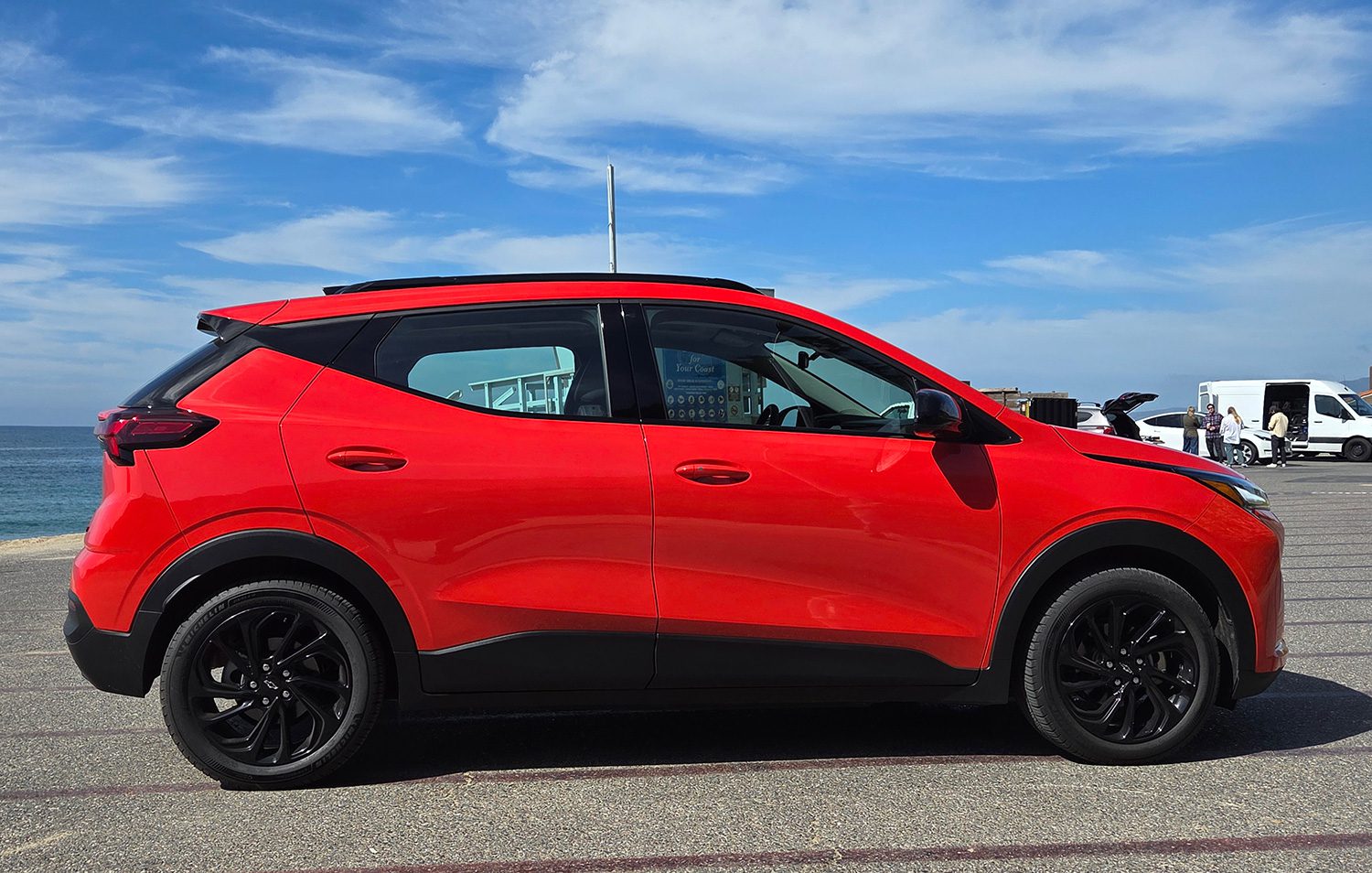
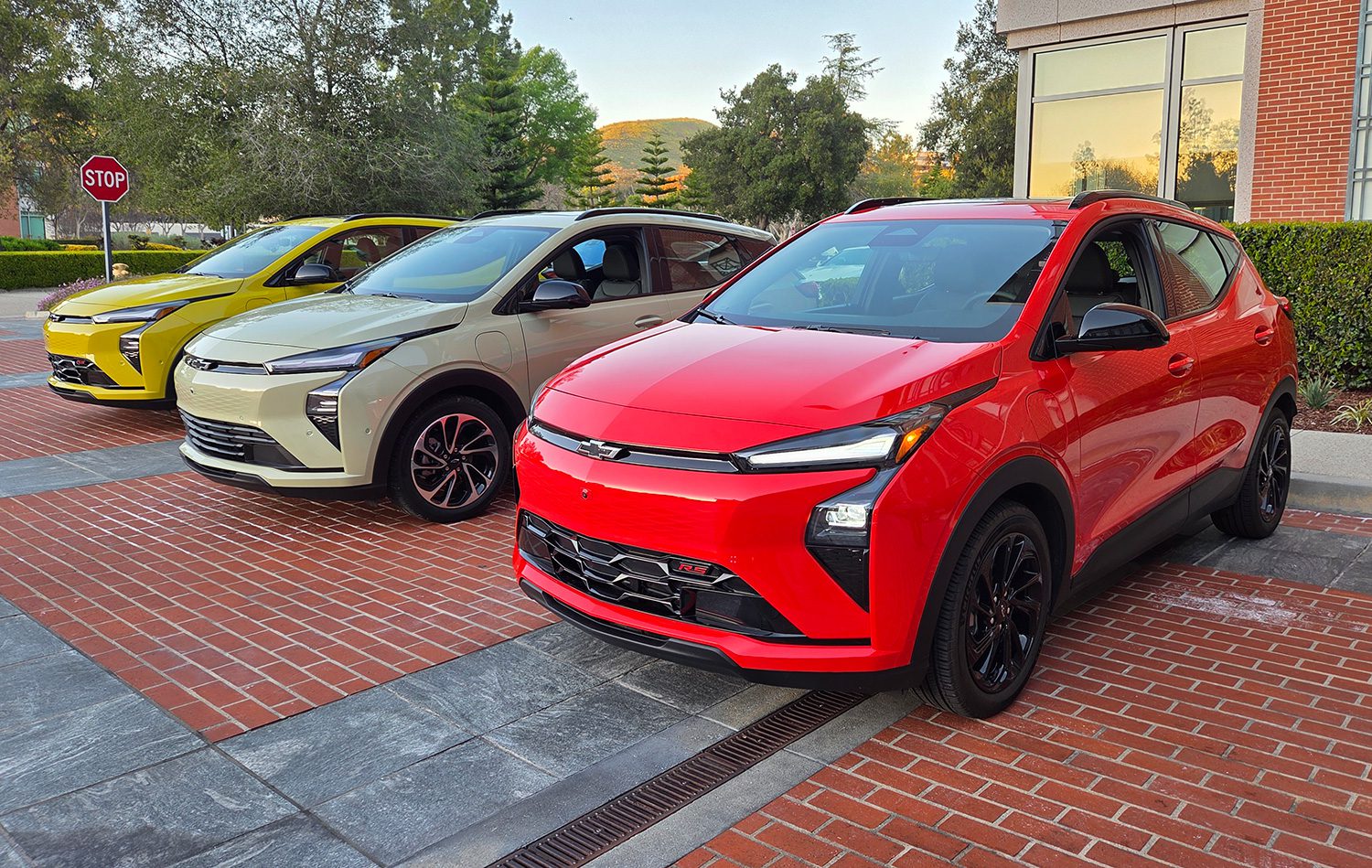
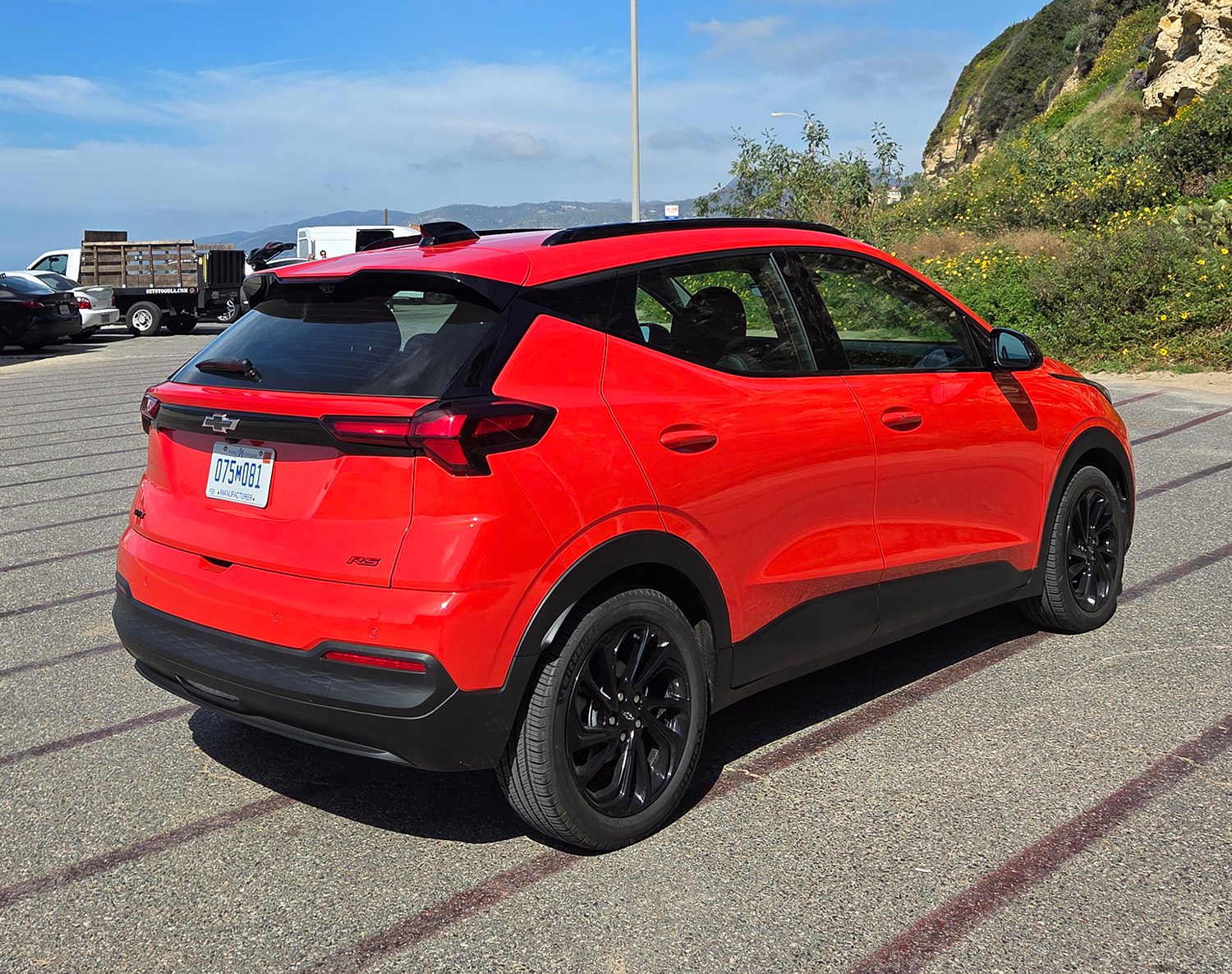
Photos by John Voelcker
Same exterior, new interior
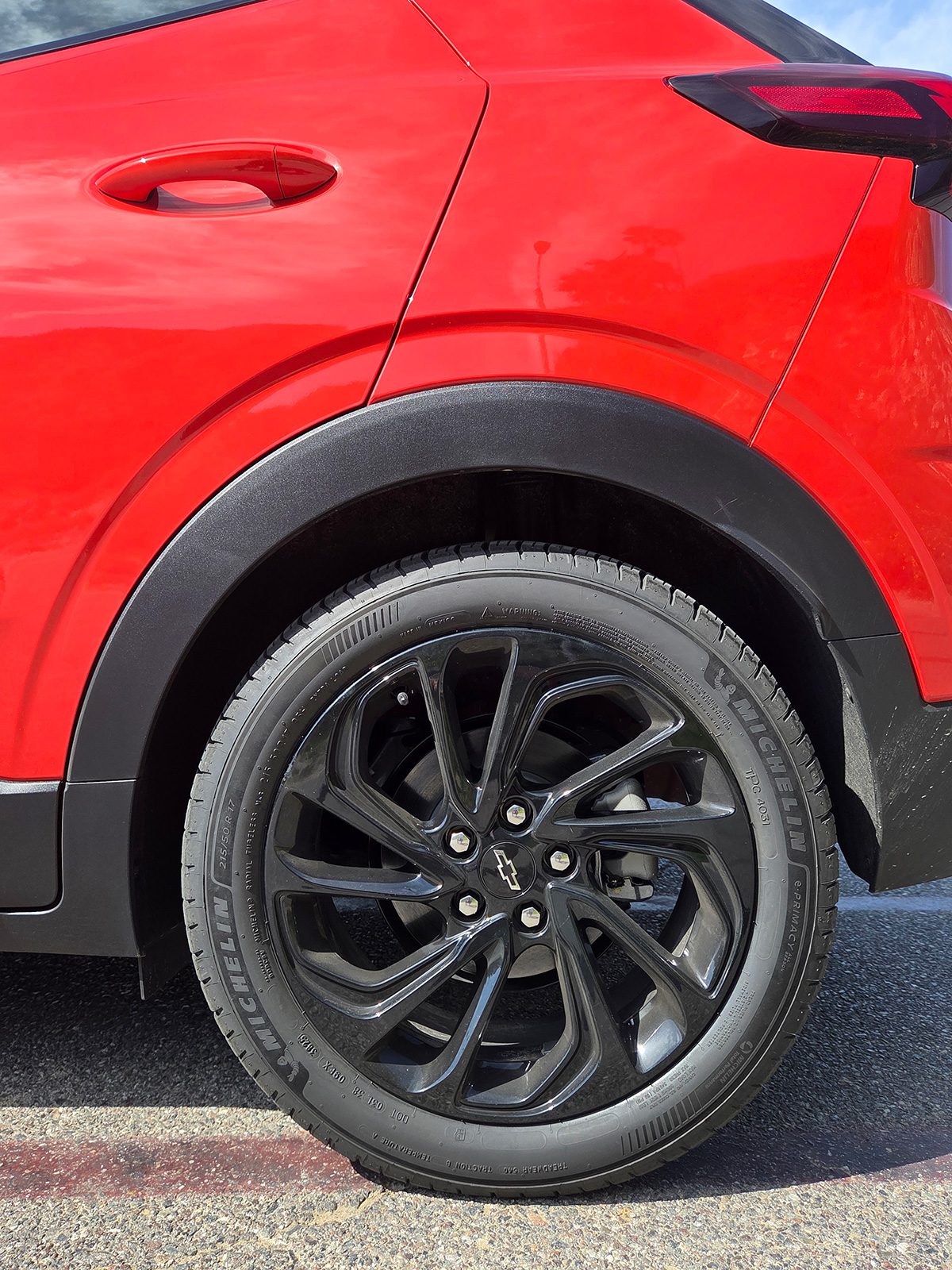
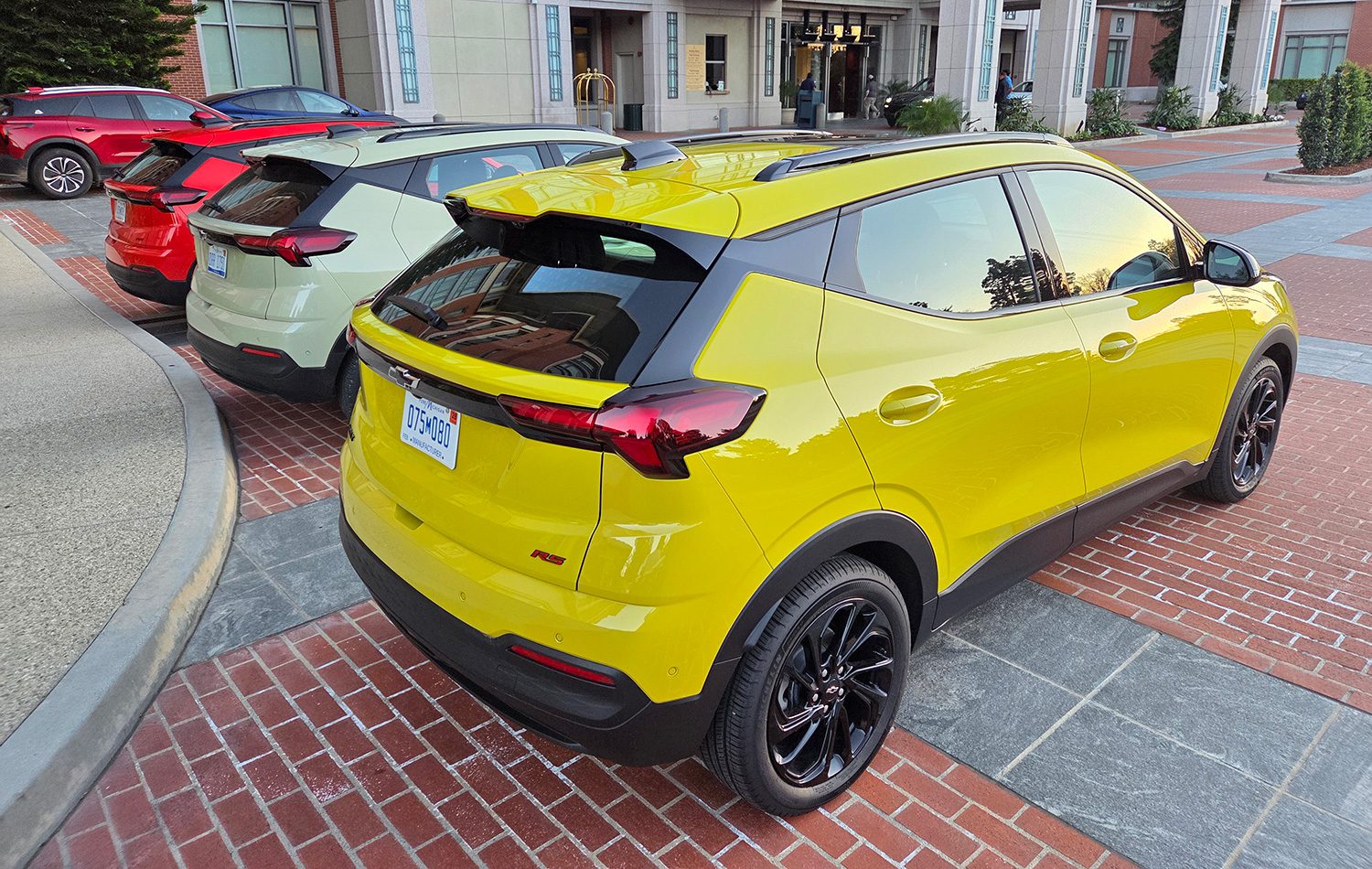
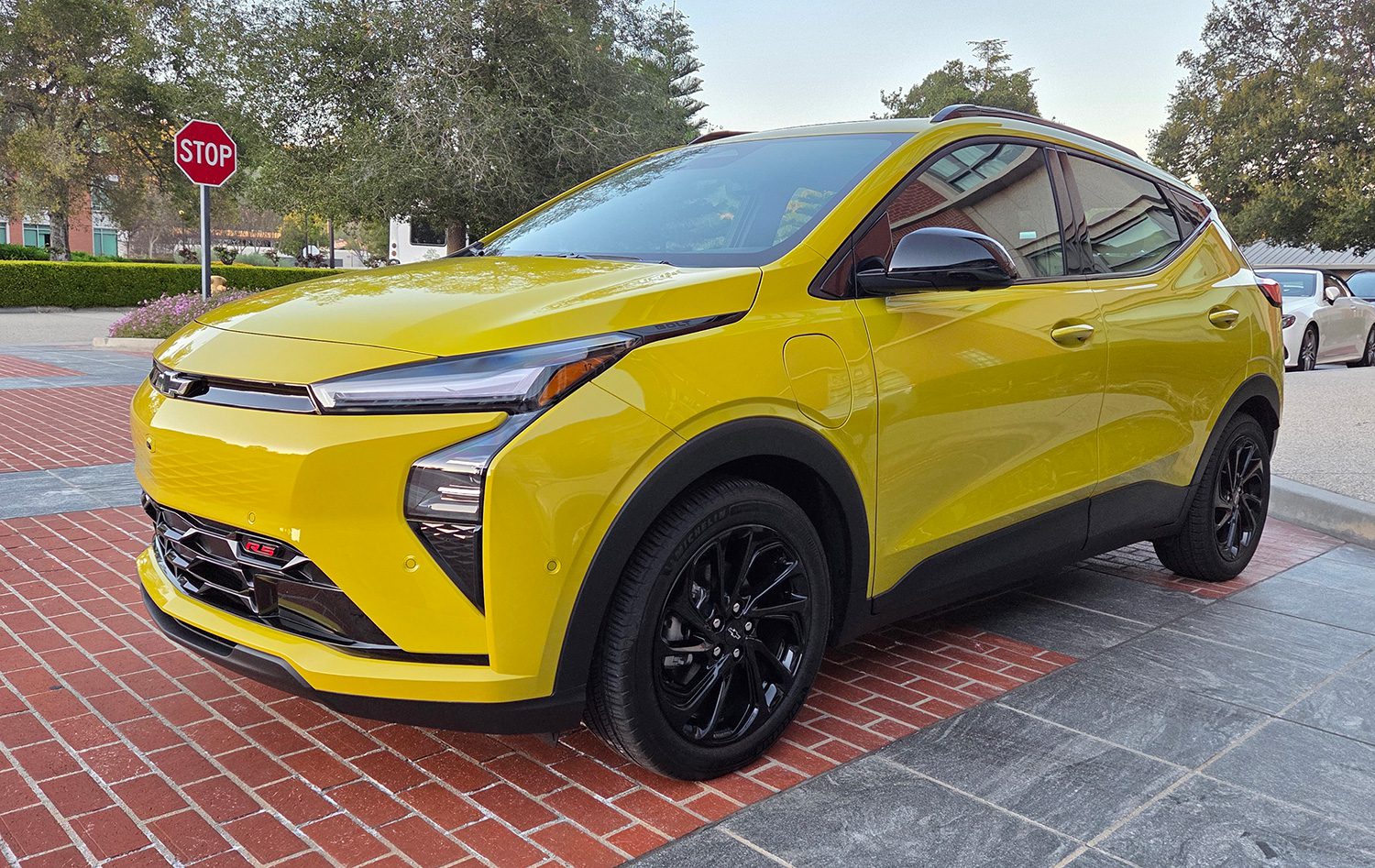
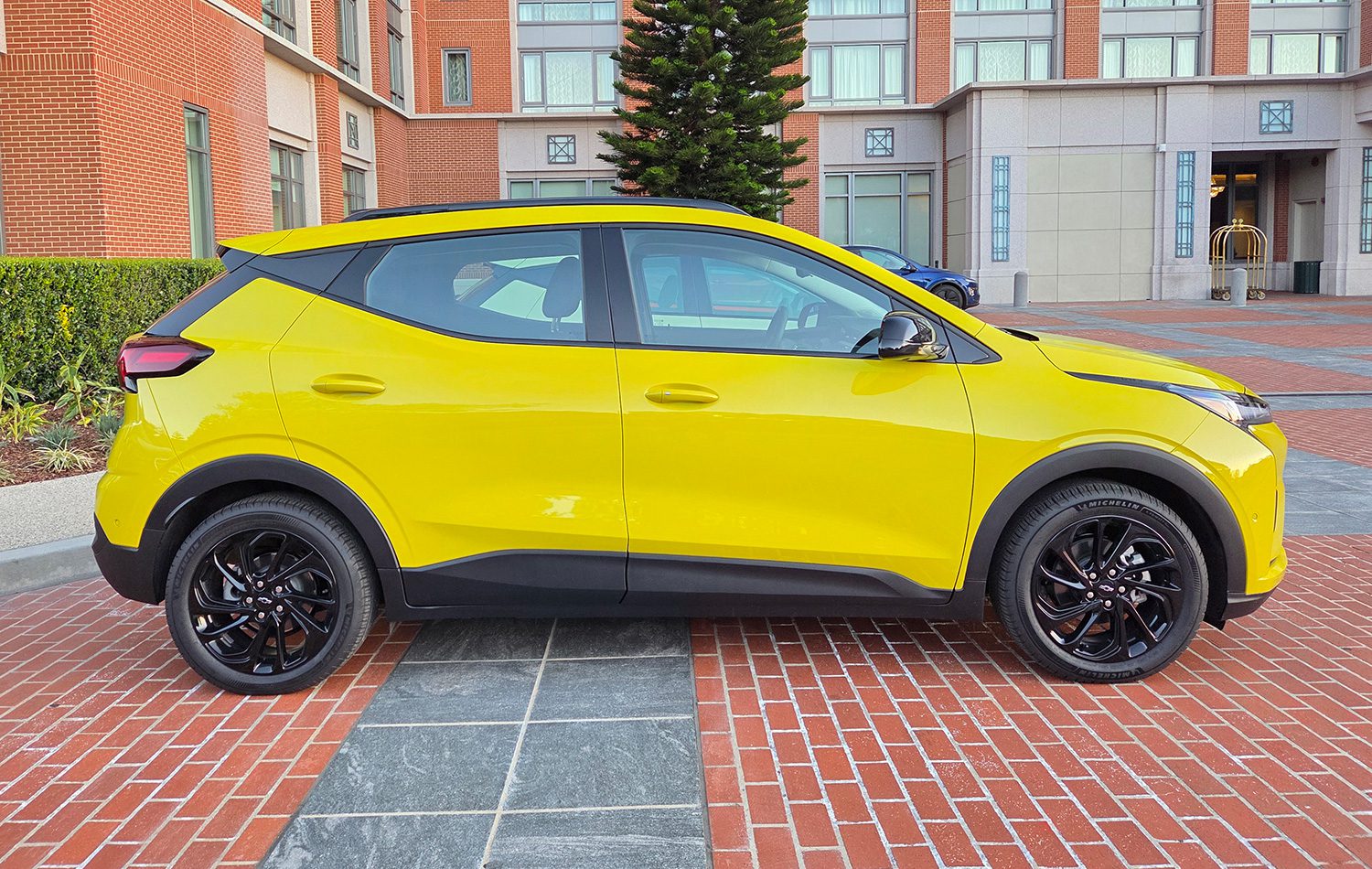
The Chevy Bolt is now the VW Beetle of EVs: on the outside, a 2027 Bolt looks very close to one from its first model year in 2017. It hit dealerships in December 2016, even earlier than the Tesla Model 3 now in its 10th model year. (The Bolt skipped model years 2024, 2025, and 2026.)
The 2027 Bolt, however, is actually an updated version of the slightly longer Bolt EUV introduced for the 2022 model year. Now the “EV” and “EUV” suffixes are gone, and there’s only a single Bolt, the bigger one. It’s still a subcompact, and the sheet metal remains identical, with only mild updates to the front and rear. GM kept cost down by adapting components from other models.
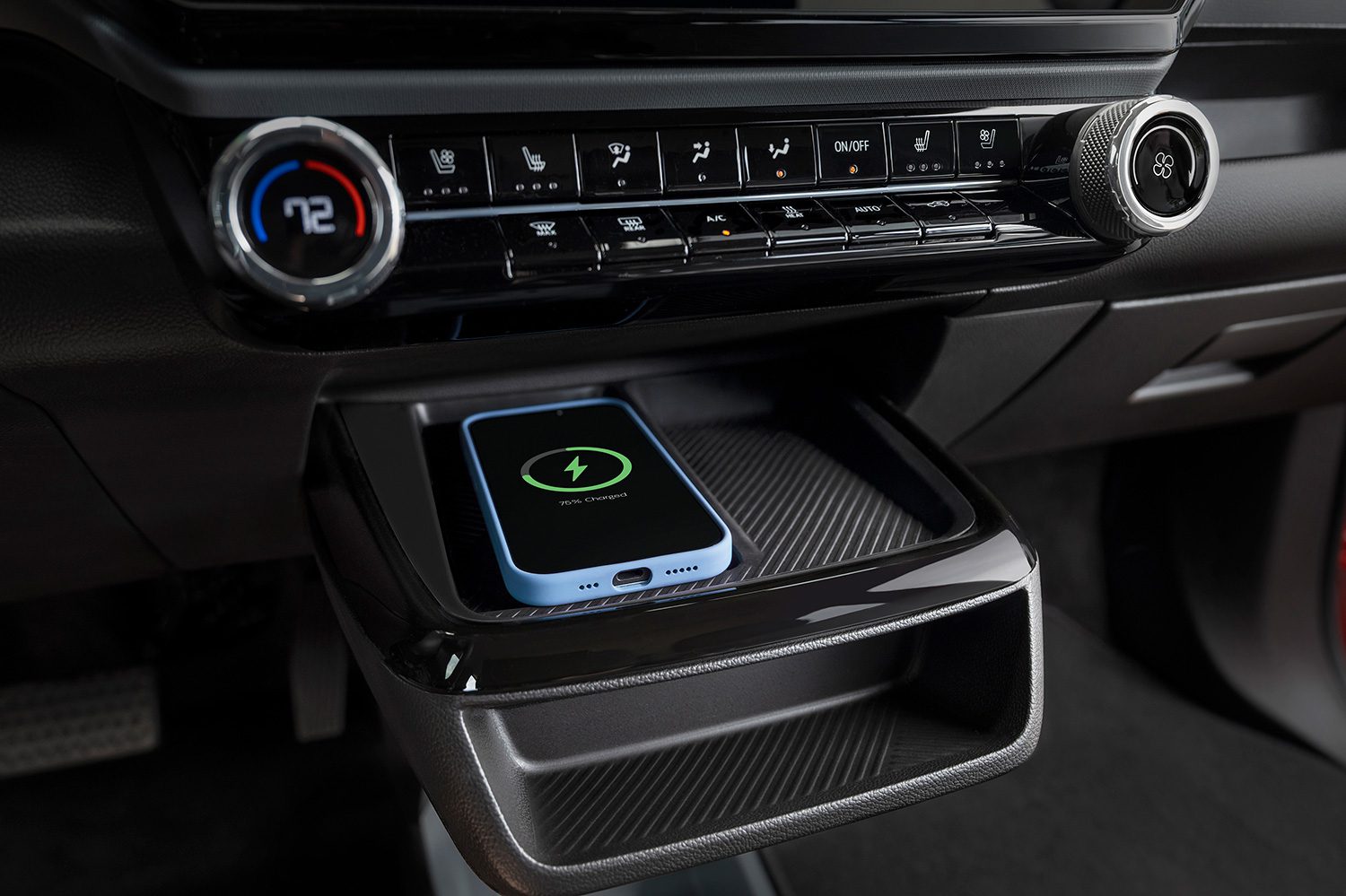
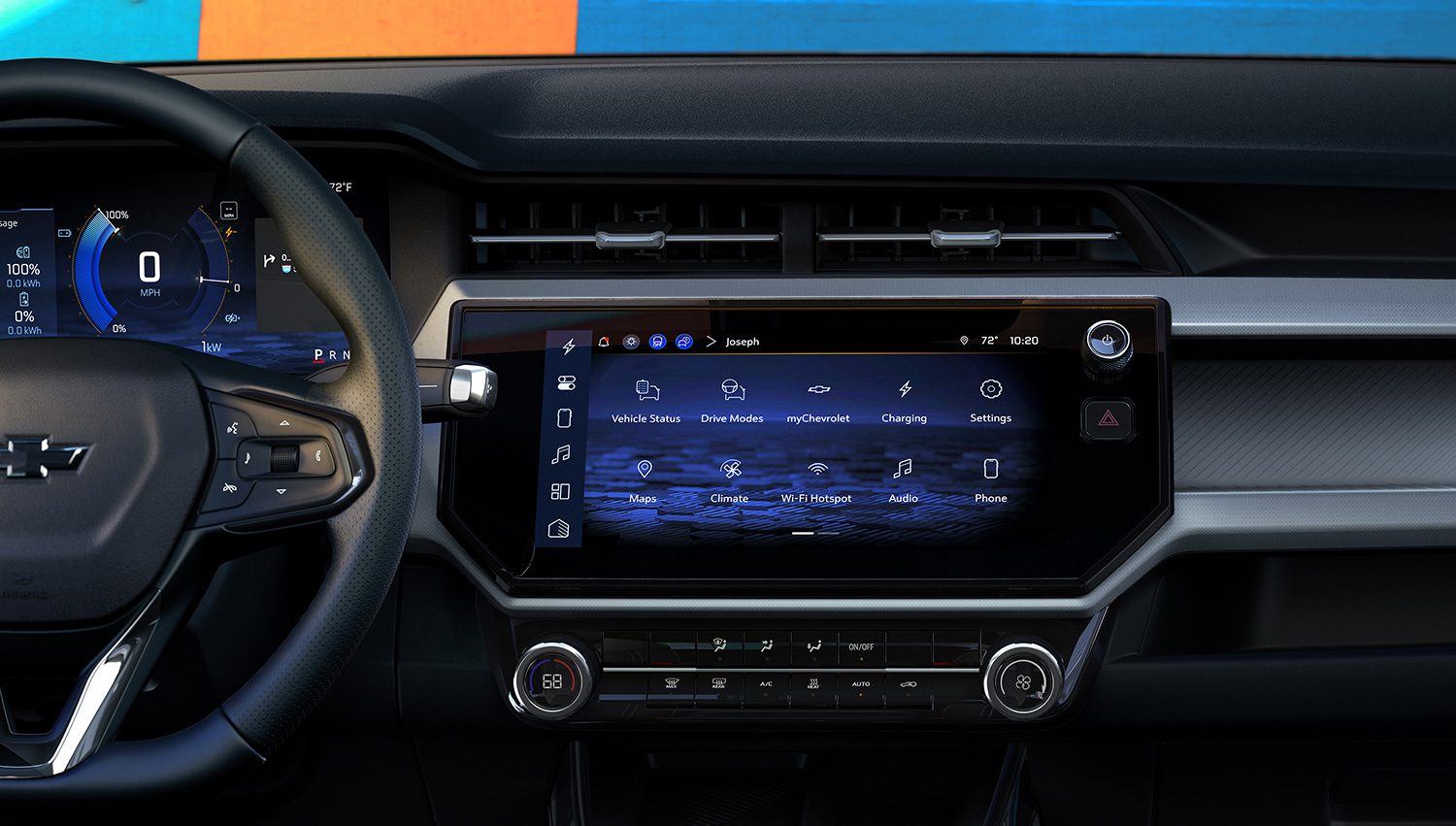
Photos by GM
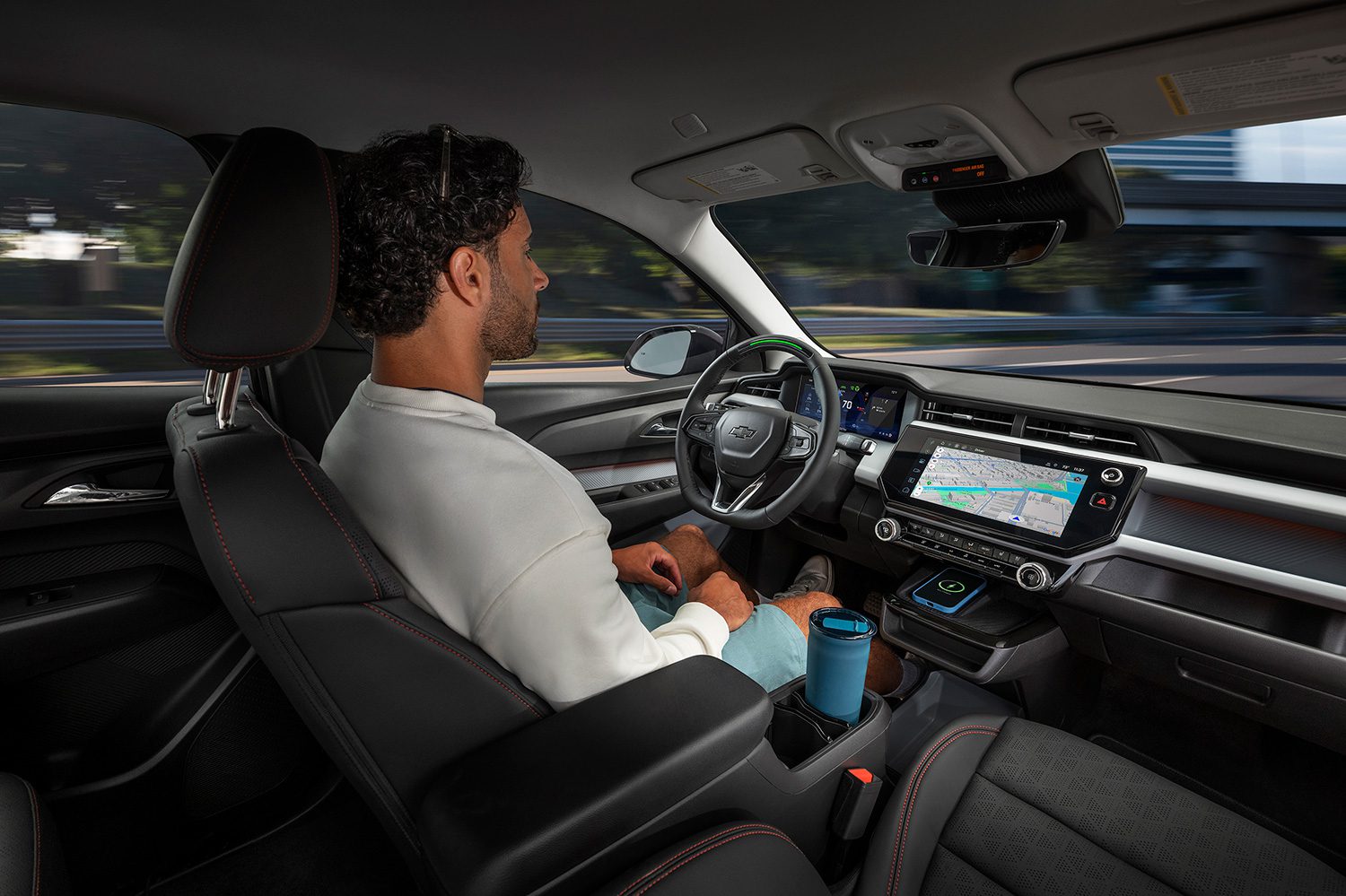
Current Bolt owners, however, will find an entirely new interior that takes elements from a number of GM’s other EVs. The 11-inch digital instrument cluster was carried over from the Equinox EV, but that car’s wide central touchscreen was too large—so the Bolt adapted an 11.3-inch unit from the Chevy Colorado midsize pickup truck. The column-mounted “shifter” is shared with other Chevy EVs, freeing up console space.
Over parts of two days in the temperate weather of Westlake Village, north of Los Angeles, we had the chance to drive two different Bolts, including a top-spec RS, a total of roughly 65 miles.
Familiar feel behind the wheel
On the road, the 2027 Bolt feels remarkably like the old one: punchy when needed, but otherwise competent, quiet, and generally free of fuss. Its motor produces 156 kilowatts (210 horsepower, or 10 hp more than the 2022 model) and 169 pound-feet of torque. A final drive ratio of 11.59:1 means torque to the wheels is slightly higher than its predecessor, for a 0-to-60-mph acceleration time of 6.8 seconds, according to Bolt chief engineer Jeremy Short. It has three regenerative braking levels: None, Normal, and Strong. We left it in Normal; the Strong was just … too strong.
Fully 57 percent of its components are new or adapted from other GM electric vehicles. Most crucially, the battery pack now uses lithium iron phosphate (LFP) cells. The new Bolt is GM’s first EV to use LFP (if you discount one year of the low-volume Chevy Spark EV, which used A123 Systems’ “Nanophosphate” LiFePO4 cells in 2014; the 2015 Spark EV switched to LG Chem cells with a nickel-manganese-cobalt chemistry).
Photos by John Voelcker
You’d never know the new battery uses a different cell chemistry—nor should you have to. While its prismatic LFP cells contain 20 to 30 percent less energy than the nickel-manganese-cobalt-aluminium cells used by GM in its other EVs, evolution in LFP chemistries gives the 2027 Bolt battery pack 65 kWh of energy—and better range than earlier models. The 2022 Bolt EUV was EPA-rated at 247 miles; the 2027 Bolt gets a 262-mile rating.
The new cells are housed in a battery of identical dimensions to previous Bolts, using the same attachments, despite having differently arranged internals. It’s also a cell-to-pack configuration, meaning the prismatic cells are not contained in modules but sit in rows directly on a cooling plate at the bottom of the pack. Though the pack itself is roughly 200 pounds heavier than its predecessor, weight savings in other parts of the car—Short cited an entirely new front suspension cradle and far more integrated power electronics and charging gear—reduced total weight gain to only about 20 pounds more than the 2023 Bolt EUV.
From late next year, GM will produce LFP cells in the U.S. at its joint-venture Ultium Cells plant in Spring Hill, Tennessee. Until that plant comes online at scale, GM must purchase LFP cells for the 2027 Bolt from an outside vendor. In a statement last August, the company said, “To stay competitive, GM will temporarily source these packs from similar suppliers to power our most affordable EV model.” The Wall Street Journal reported the vendor was China’s Contemporary Amperex Technology Co., or CATL.
150 kW, NACS port, 100% charges
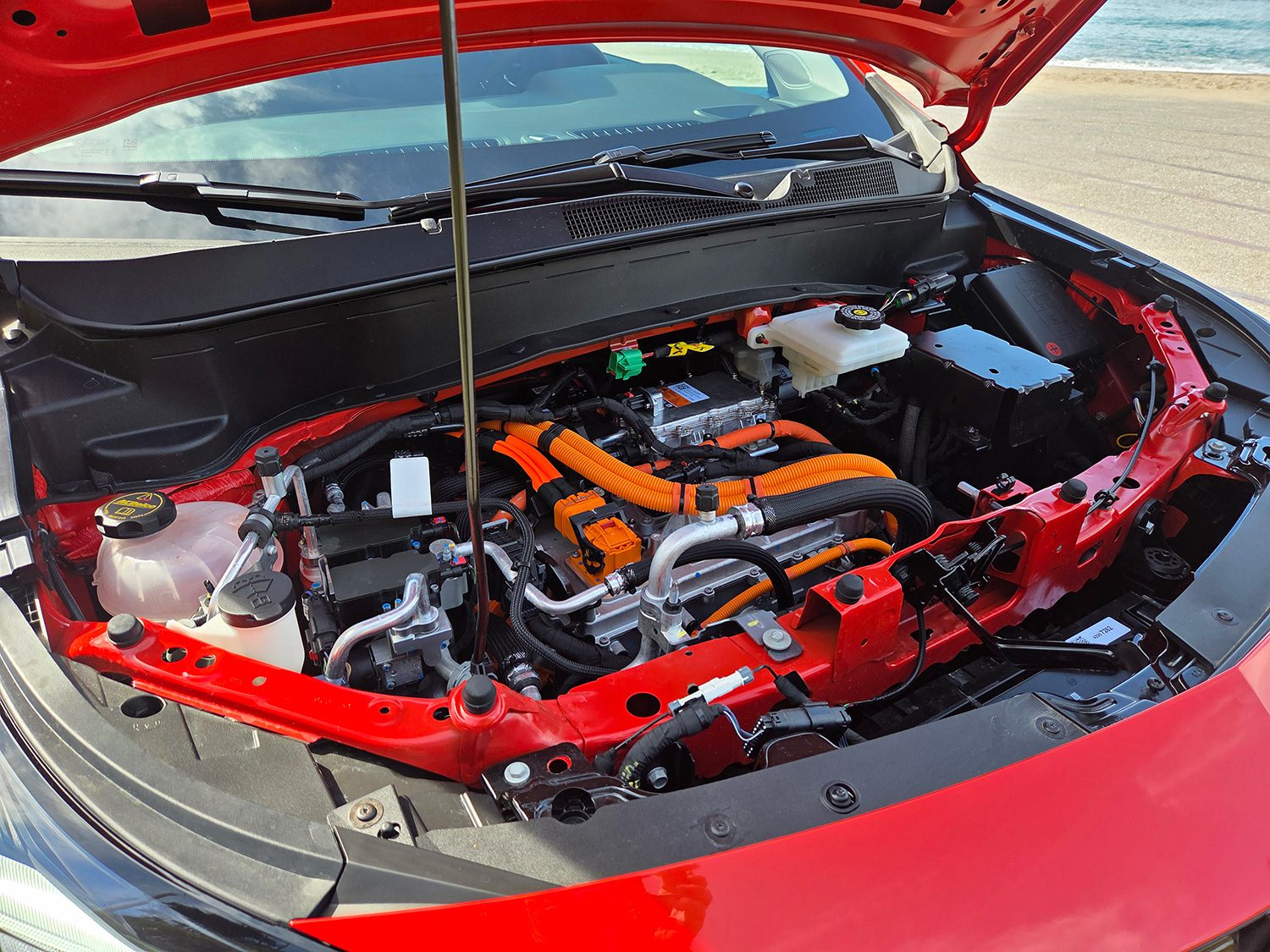
Rebooting the Bolt wasn’t nearly as simple as owners imagine; while the shell of the car remains the same, its electrical architecture is almost entirely new. That means not just the battery pack, electric motors and power electronics, but also the switches and wires to control modules and high-voltage components. It’s fitted with a heat pump for the first time, for more efficient heating and cooling of not only the cabin but the battery pack as well.
Photos by John Voelcker
The old Bolt maxed out at a DC fast-charging rate of 53 kilowatts; the update almost triples that, “up to 150 kW.” In our test, with no battery preconditioning, we saw a sustained rate of 119 kW starting at a charge level of 19 percent. One driver saw a rate of 153 kW. GM cites charging from 10 to 80 percent in 25 minutes, under ideal circumstances.
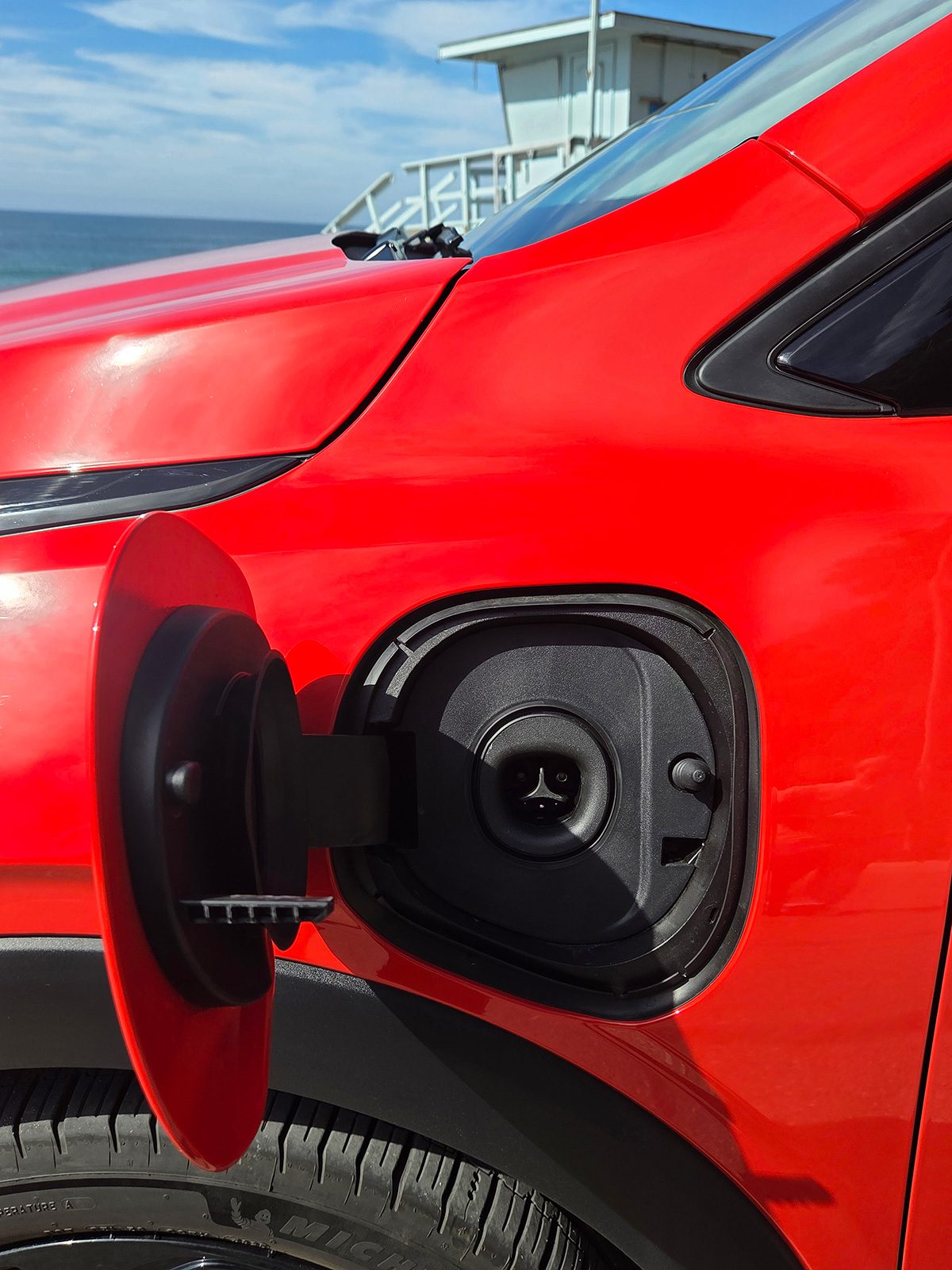
The 2027 Bolt is Chevy’s first EV with a standard J3400, or NACS (Tesla), charging port—still on the left-front fender, as the old CCS port was. The onboard AC charger can deliver up to 11.5 kW from charging stations that can provide it. The 2027 Bolt comes standard with a portable charger capable of charging at either120 or 240 volts via swappable pigtail connectors included. Adapters for J1772-to-NACS ($67) and CCS-to-NACS ($189) are available from Chevrolet.
One drawback to the 2027 Bolt is that it’s not presently Plug & Charge compatible. That’s the protocol that lets drivers simply plug in and walk away, with all session validation and billing done in the background. A member of the charging team told us the car “is ISO 15118-ready, and we’re working on growing the compatible networks for this vehicle to use Plug & Charge with.” The first of those networks is to be Tesla’s Superchargers—or at least the 25,000 Version 3 and Version 4 stations out of its total of 36,000 chargers.
Asked about Plug & Charge at any other U.S. charging networks, where some drivers of other EV makes have used it for more than five years, GM released an anodyne statement: “We’re committed to continuously working with our partners to expand coverage, improve reliability and enhance the overall charging experience.” Gosh, which maker isn’t committed to those things? Sadly, GM gave Bolt shoppers not a shred of information on when, or whether, Chevy EV drivers can expect Plug & Charge functionality one day at Electrify America, Ionna, and other networks.
A wrinkle to the new LFP cells is the need to charge the battery to 100 percent regularly. That keeps the range-estimating software properly calibrated, but for owners of other EVs used to capping charges at 80 or 90 percent, it’s contrary to common practice and requires adjustment. The car will suggest to owners every so often they should charge to 100% when convenient.
All new electrical everything
The 2027 Bolt can export energy to power a home during a blackout, known as Vehicle-to-Home (V2H). That capability requires a specific GM Home Energy charging station—meaning owners of older Bolts may have to replace their home charger to take advantage of bidirectional charging.
The old Bolt used GM’s “Global A” electrical architecture, but now, every EV in the lineup uses its “Global B” architecture. That offers five times the processor power, over-the-air (OTA) software updates, and cybersecurity improvements. Buyers can now specify a greater range of advanced safety features: automatic emergency braking, rear cross-traffic alert, a Surround Vision Recorder that captures camera views onto a USB drive inserted into the console, and more. The new architecture also enables the latest version of GM’s well-reviewed Super Cruise hands-free adaptive cruise control, now including automatic lane changing.
Boosting GM’s bottom line, Global B allows new apps and features—some with monthly fees. Chevy has aligned the new Bolt with its other EVs by removing phone mirroring: No more Android Auto or Apple CarPlay. That was controversial. Now, audio apps like Spotify and Apple Music have been added into the 8-year period during which Chevy won’t charge for OnStar Basics (Google Maps, Voice Assistance, Automatic Crash Response, and mobile app features like remote commands). Bolts with Super Cruise get three years of Onstar One, which adds video streaming, then the Super Cruise subscription fee alone is $40 a month or $399 a year. Bolts without get Super Cruise get a one-month trial of OnStar One, then it costs $35 per month.
What comes after 2027?
When Chevrolet announced the return of the Bolt for 2027 as a “limited run,” the phrasing begged the question: What happens after that run ends? While GM remains tight-lipped, some hints have emerged in comments from GM president Mark Reuss. Last October, he said on Inside EVs’ Plugged-In podcast that Chevy is planning a “family” of low-cost EVs to come after the Bolt.
We believe the company is working on a new, low-cost EV platform of its own. This replaces the one GM and Honda agreed in April 2022 to develop together; that project was ended in October 2023 by both partners. As early as January 2023, its design studio also sketched a small electric pickup truck, which might compete directly with Ford’s upcoming midsize electric pickup.
Will there another Bolt for 2029 or 2030? We certainly wouldn’t bet against it.
Chevrolet provided airfare, lodging, and meals to enable Charged to bring you this first-person drive report.