




Balancing innovation with women’s digital safety
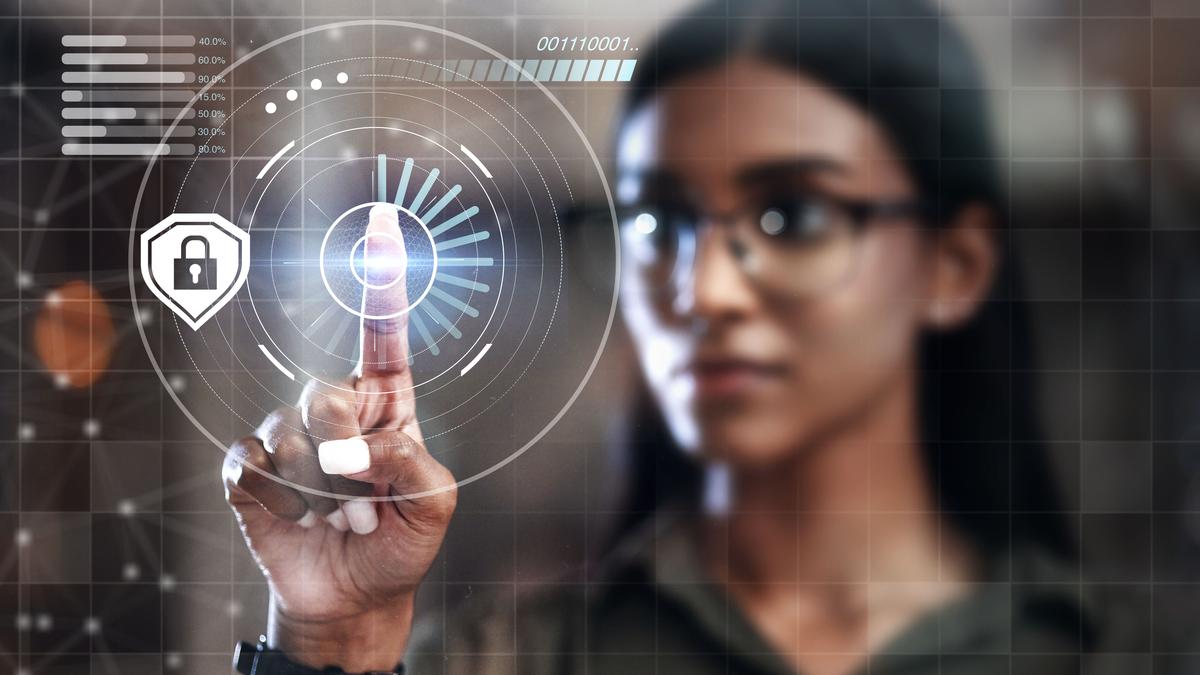
‘With a steady rise in accessible Internet, women bear the brunt of digital threats’
| Photo Credit: Getty Images/iStockphoto
The conversation around artificial intelligence (AI) has taken centre stage, and after the India AI Impact Summit 2026, in February, India’s engagement with AI has heightened. While there is enough to appreciate how the world has transformed in terms of technology and innovation, on the occasion of International Women’s Day 2026 (March 8), the need is to focus on “ethical AI” and women’s digital safety.
With a steady rise in accessible Internet, women are continuously bearing the brunt of digital threats and humiliation. About 16%-58% of women have faced online harassment and abuse, a number that could rise further. Even as one in three women face physical or sexual violence, abuse against women has now crossed physical boundaries and geographies.
In the physical world, women can take a “degree of precaution”, though never foolproof, to protect themselves. But in the digital world, protecting oneself from harm, doxxing and abuse is significantly difficult. This is driven by technology’s deep integration into daily life and the anonymity that the digital world affords the perpetrators of abuse.
This is the deepfake era
The rise of deepfakes and the recent Grok AI issue are a case in point. Deepfakes are digitally altered images, audio, or videos created using AI that appear as though someone has said or done something they never actually did. Grok AI, an AI chatbot developed by xAI, is being used to generate non-consensual sexualised images of women.

In India, women endure deep inequalities and widespread violence. With the use of AI and access to deepfake technologies, the traditional and societal restraints of unacceptable behaviour melt away due to online anonymity. While one is not denouncing the use of AI and technology, the dialogue around the ethical use of AI is paramount now more than ever.
No women developers
One of the major concerns about AI and a lack of women’s digital safety is the lack of representation of women at the stage of designing AI tools. According to a report by UN Women, many deepfake tools — mostly built by men — rarely work on images of men. According to the United Nations Development Programme, women make up only 22% of AI professionals and below 14% work at senior levels.
This lack of women’s representation at the stage of AI development leads to fewer diverse viewpoints shaping innovation. Research suggests that with more women and diversity in AI development teams, the overall effectiveness and applicability of AI increases. It has been proposed by UN Women that if there are more women researchers in AI, then the unique lived experiences of women can “profoundly shape the theoretical foundations of technology” and open new applications of the technology”. When this is achieved and diverse expertise is integrated in AI development, the hope is that AI supports and weaves in women as equal stakeholders in the digital world. This should help in creating safer online spaces and technologies, including swiftly removing harmful content and responding effectively to abuse at the source.
Stronger laws to ensure prompt investigations into the unethical use of AI are key to ethical AI use. While Indian legislation attempts to do its bit to address online abuse, implementation is far from prompt.
The new notification introduced by the Ministry of Electronics and Information Technology directs that online intermediaries must take down reports of deepfakes within three hours of receiving a takedown notice. Notwithstanding the criticism of the new guidelines and the strong review process, the hope is that these guidelines are a step towards strengthening legislation to protect women from irreparable harm caused by unethical AI-like deepfakes.
Start young
A third way to address the unethical use of AI is to address the issue at the ground level. As one in three Internet users are children, one must accept that they are “digital natives” who are dependent on the web. Therefore, the emphasis on digital safety being taught at an elementary level to children is more crucial than ever. Children and young adults must be sensitised to the issue of digital abuse and AI misuse as seriously as the issue of sexual and physical abuse.
Resisting technological change, especially to AI, is futile and is not a sustainable solution as its integration into daily life is inevitable. However, on the occasion of International Women’s Day 2026, prioritising women’s digital safety and ethical AI use is essential so that women are not left bearing the brunt of advancement and technology.
Prachi Dutta is a corporate lawyer licensed in New York and India, advises companies and funds, and serves as an Adjunct Professor at Jindal Global Law School and Shiv Nadar University
Published – March 07, 2026 12:08 am IST