
Art SG: Indian art finds new audience in Singapore
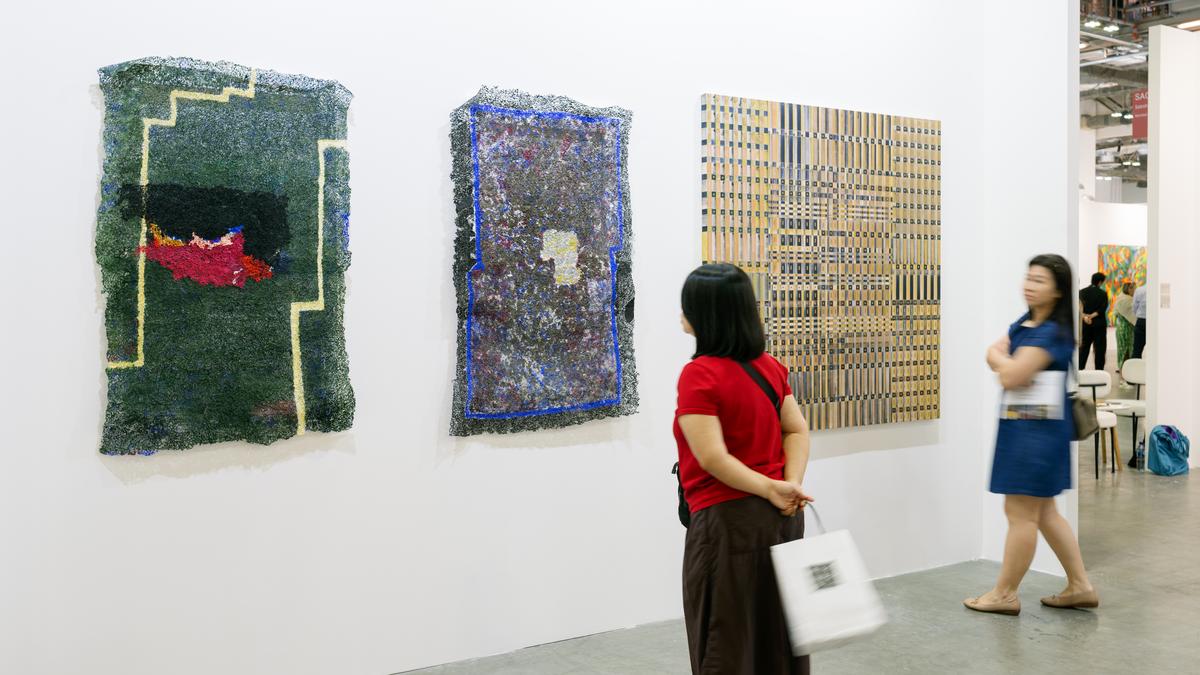
On the opening day of Art SG, Singapore’s flagship contemporary art fair, visitors lingered and occasionally posed before a billboard-scale painting, titled PalindromeAnagram, by Indian artist Jitish Kallat. Just behind it, a richly woven, near-apocalyptic tapestry by renowned British-Indian artist Raqib Shaw glimmered under the exhibition lights. Conversations drifted between English and Mandarin and, in some corners, even Tamil. For a fair far from Delhi or Mumbai, the presence of Indian and South Asian art felt unexpectedly familiar.
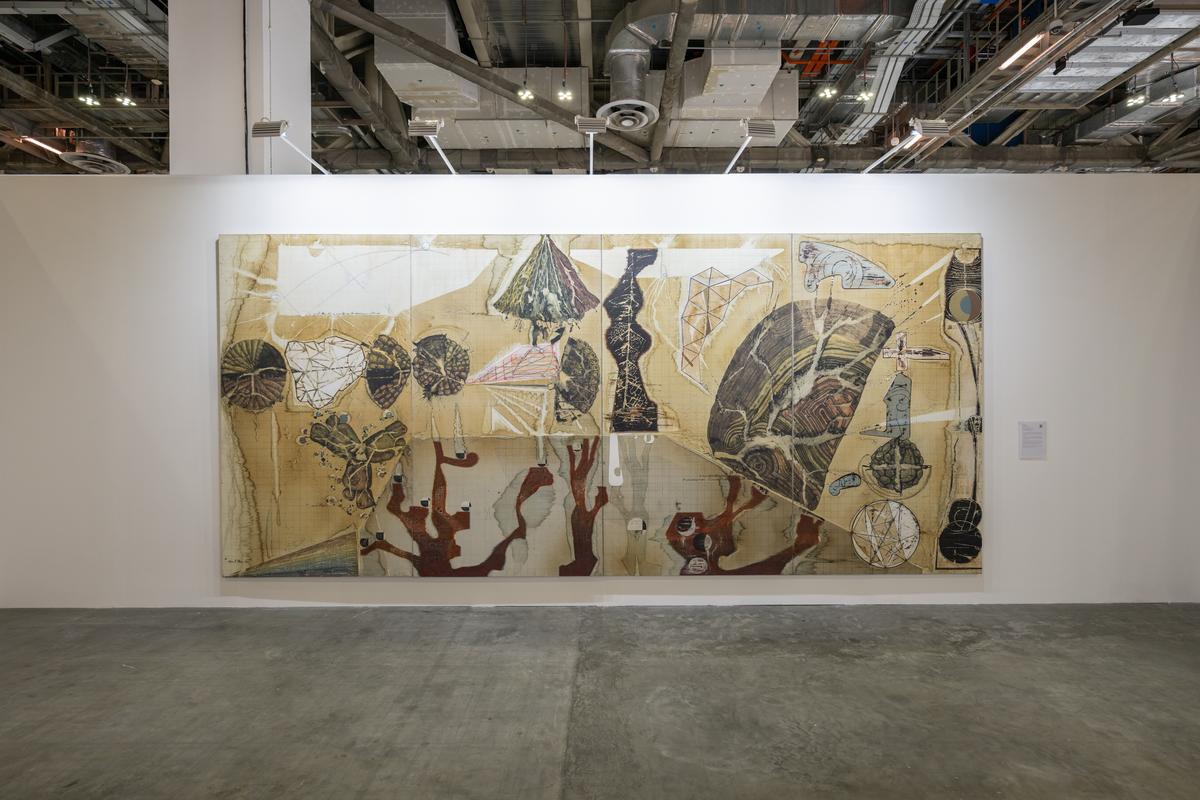
Jitish Kallat’s Palindrome/Anagram Painting
| Photo Credit:
Courtesy Art SG
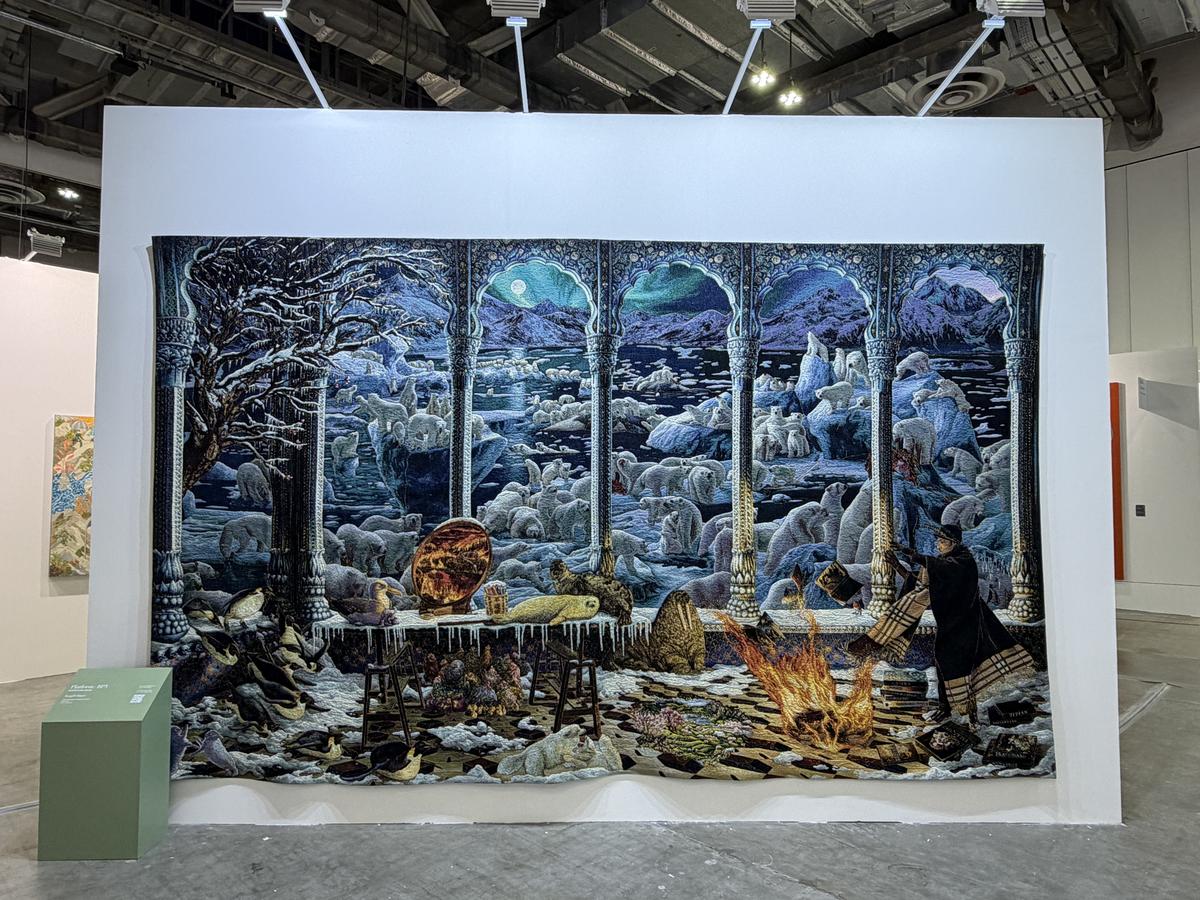
Raqib Shaw’s The Pragmatic Pessimist
| Photo Credit:
Courtesy Art SG
More than 10 Indian galleries — a record presence for the fair — participated in the recently concluded fourth edition of Art SG, joined by three international galleries with a strong South Asia focus. Their presence was anchored by South Asia Insights, a dedicated section supported by the TVS Initiative for Indian and South Asian Contemporary Art. “Singapore has long functioned as a meeting point for the region,” says Magnus Renfrew, one of the fair’s co-founders. “The growing visibility of Indian artists and galleries reflects a broader shift from an Asia-Pacific to an Indo-Pacific imagination.”
This moment builds on a longer shift within India’s art ecosystem. Over the past decade, cultural infrastructure has expanded steadily: new museums and private institutions have opened, philanthropic foundations and artist-run spaces have grown, and a more stable support system has taken shape. Alongside this, commercial platforms — most notably India Art Fair, founded in 2008, and Art Mumbai, launched in 2024 — have consolidated the market while encouraging galleries to look outward. The effects are increasingly visible, with Indian artists appearing regularly at major fairs, biennales and museum exhibitions, from Venice and Sharjah to institutions across Europe, the United States and, increasingly, Asia.
Renewed interest
Curator Srinivas Aditya Mopidevi of the Kiran Nadar Museum of Art in Delhi, who advised on South Asia Insights, sees the moment as part of a longer rhythm. “There has always been exchange between South Asia and Southeast Asia,” he says. “But as the market for South Asian art expanded westward, those regional ties slowed. What we’re seeing now is a renewed momentum.”
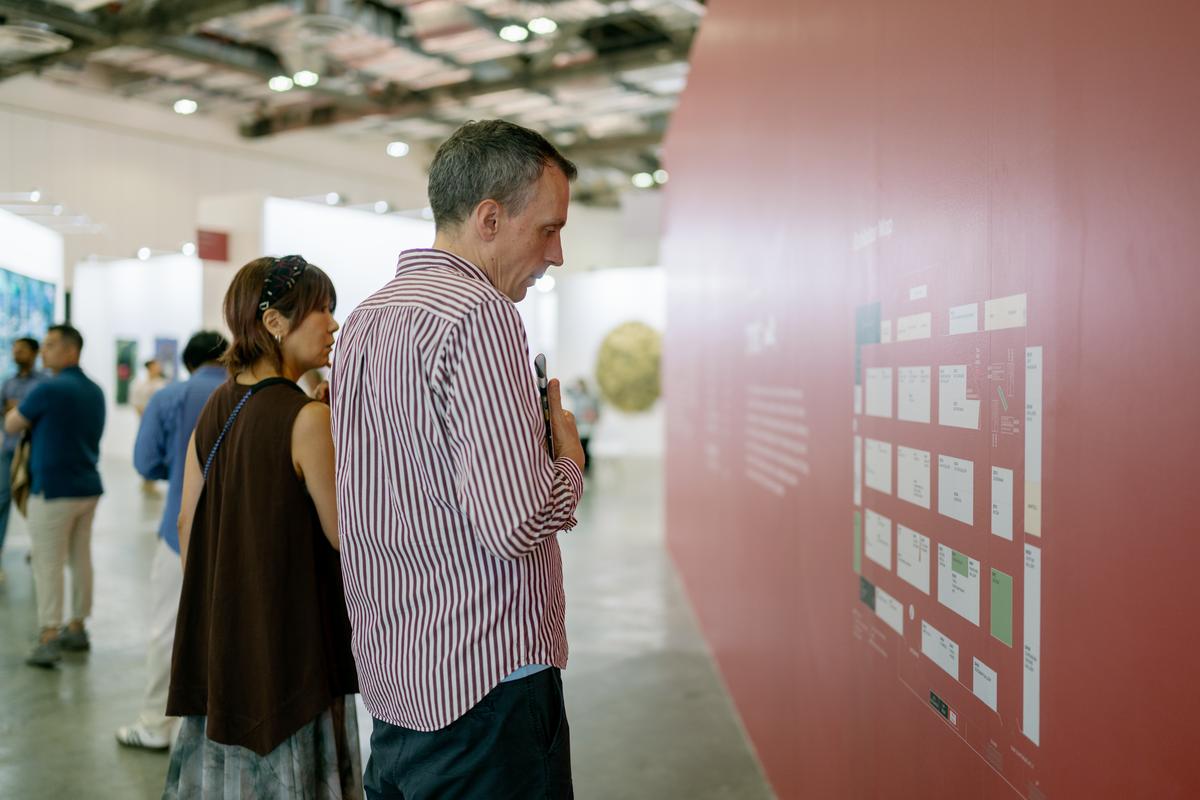
Installation view of South Asia Insights
| Photo Credit:
Courtesy Art SG
That momentum was reflected in the choice of artists: established figures such as Shaw and Kallat, who also gave a talk in conversation with Mopidevi, alongside works by artist-printmaker Surendran Nair, Pakistani-American contemporary artist Anila Quayyum Agha, Colombo-based multidisciplinary artist Firi Rahman, interdisciplinary artist Ayesha Singh and Pakistani-American contemporary artist Zaam Arif, while modern masters including Jamini Roy, M.F. Husain and S.H. Raza added historical depth, situating contemporary practices within a longer South Asian lineage.
The conversation between South Asia and Southeast Asia, however, is not new. An early institutional marker was Traditions/Tensions: Contemporary Art in Asia, staged by the Asia Society in New York in 1996, which brought together artists from India, Indonesia, the Philippines, South Korea and Thailand, challenging the rigid binaries of East and West, modern and traditional. In more recent years, this exchange has surfaced through platforms such as the Jogja Biennale in Indonesia, the Gwangju Biennale in South Korea, the Bangkok Art Biennale, and trans-Asian initiatives like the Japan Foundation’s Under Construction exhibitions.
In Singapore, artists from the region have appeared at the Singapore Biennale and in exhibitions such as Awakenings: Art in Society in Asia 1960s-1990s at the National Gallery Singapore, while the Singapore Art Museum has exhibited and collected South Asian artists, including Nalani Malani, Amar Kanwar, and Shubigi Rao.
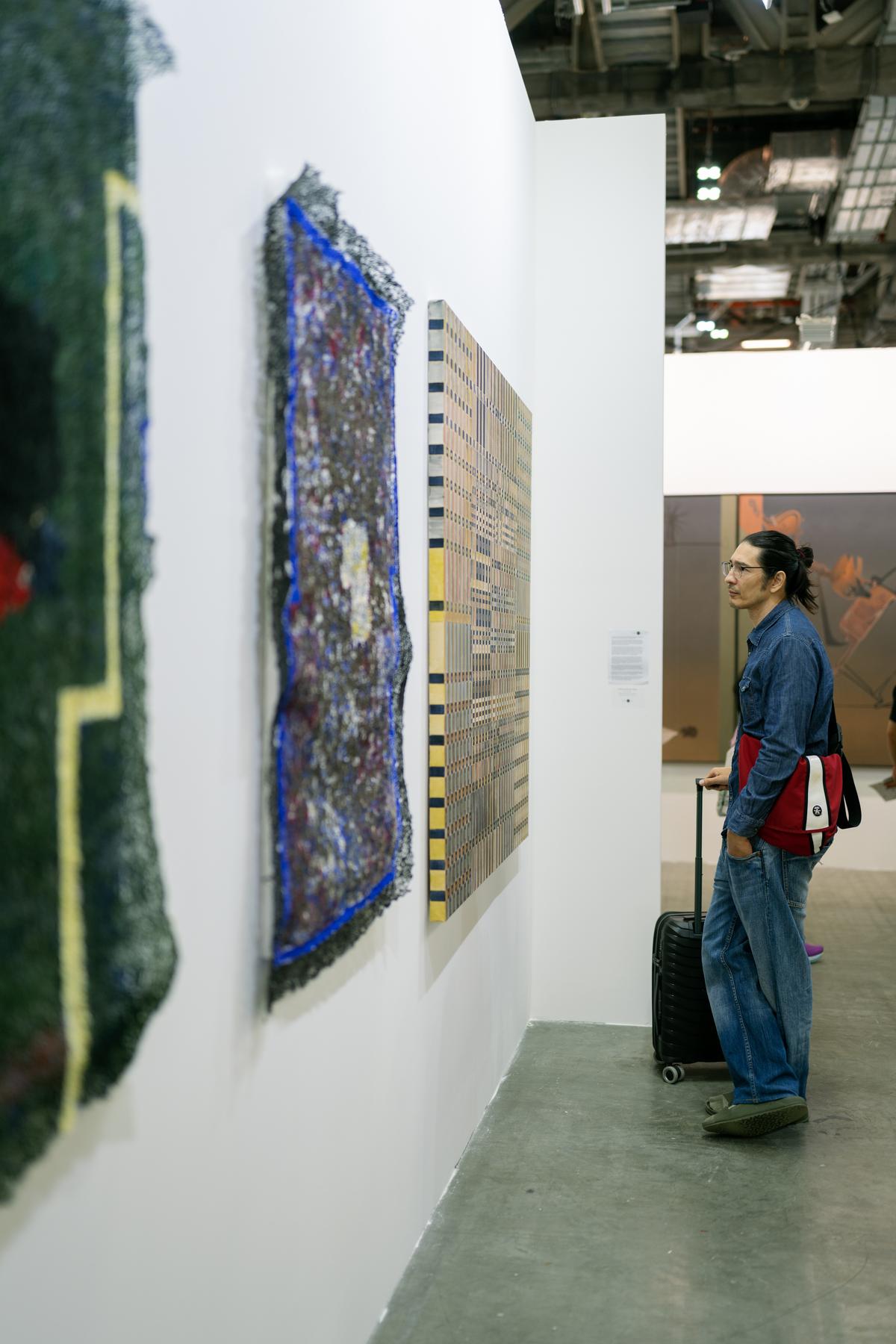
Visitors at Art SG 2026
| Photo Credit:
Courtesy Art SG
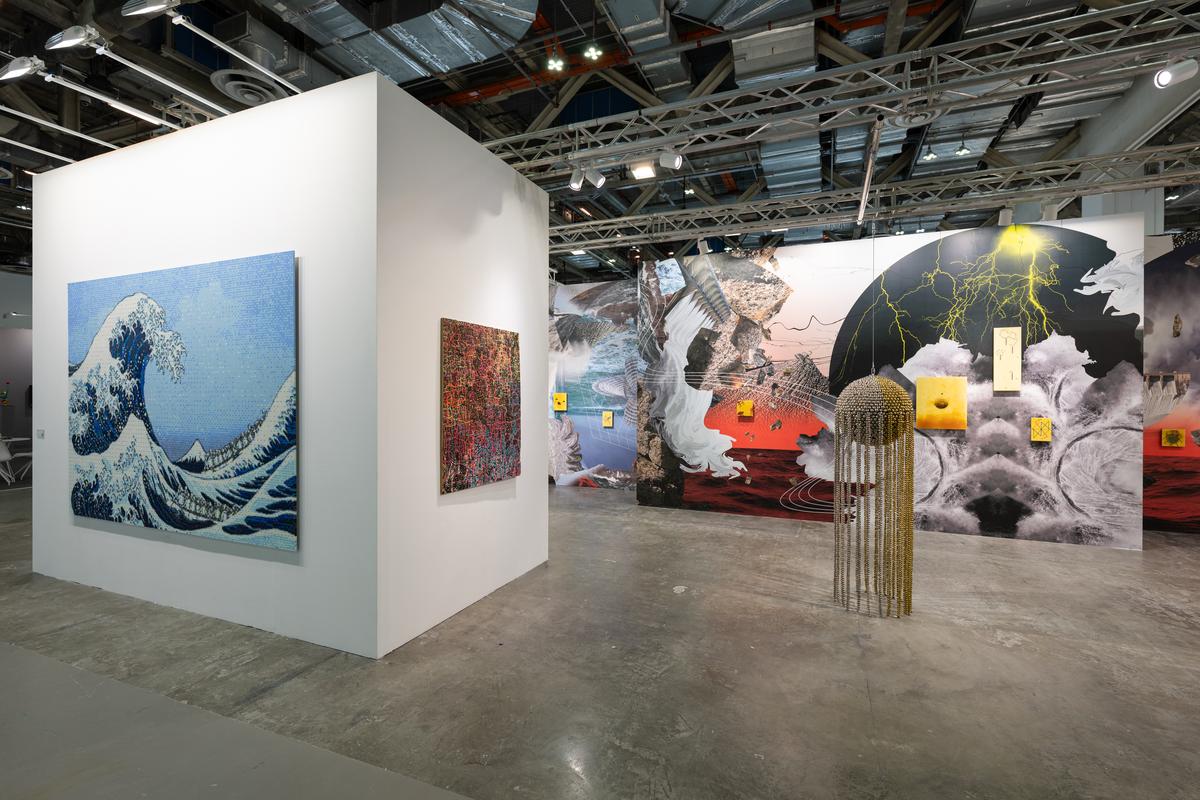
Installation view of neugerriemschneider’s booth
| Photo Credit:
Courtesy Art SG
Shared regional conversations
In the post-pandemic years, Singapore — long a financial hub and home to a substantial South Asian diaspora — has begun to function as connective tissue within Asia’s art landscape. With efficient logistics, active collectors and deep cultural familiarity, the city offers conditions for sustained exchange.
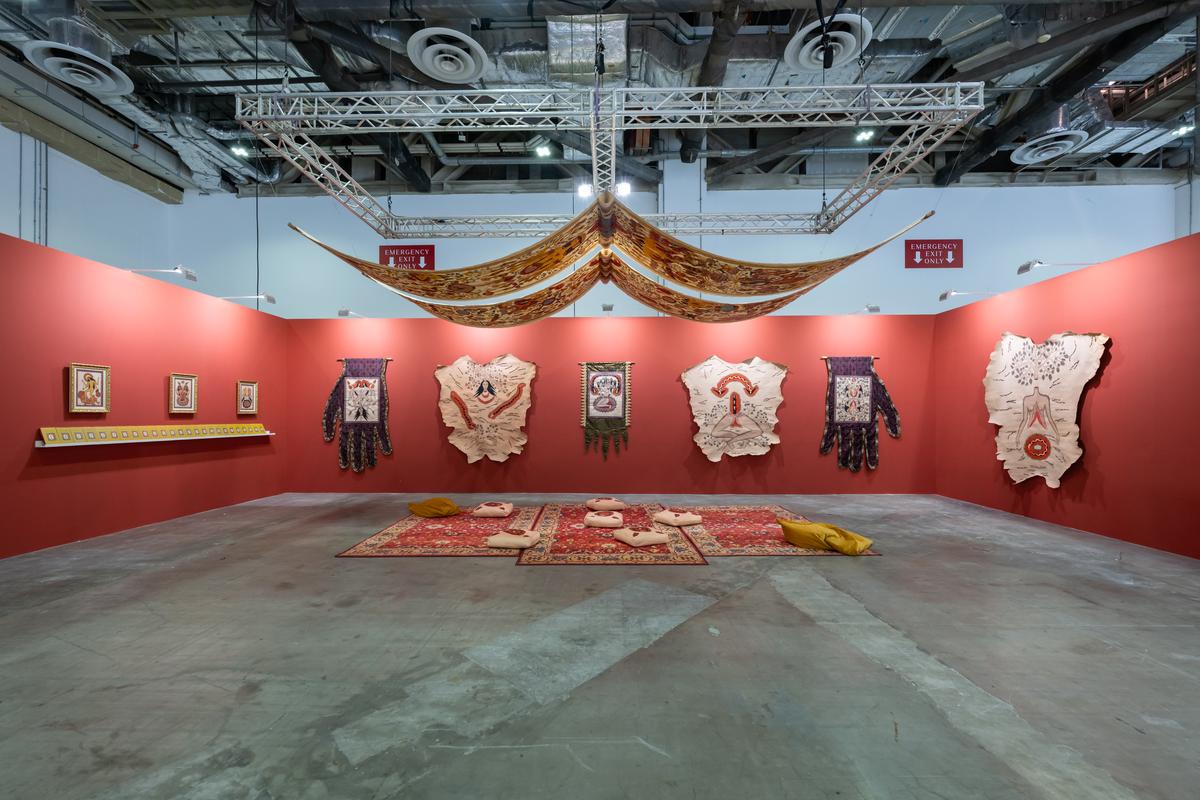
Citra Sasmita, Timur Merah Project X Bedtime Story
| Photo Credit:
Courtesy Art SG
“The Singaporean audience is incredibly open to art,” says Ashvin Rajagopalan, director of Ashvita’s, a Chennai-based gallery known for its focus on the Madras moderns, now extending into contemporary practice, which presented works by young Chennai-based artists C. Krishnaswamy, G. Gurunathan, Maanas Udayakumar and Jagath Ravi at the fair. “Chennai and Singapore feel closely connected. It was heartening to see people stop, look, and respond, and most of our works went to non-Indian collectors.”
The significance of this moment lies less in scale than in alignment: South Asian art encountered not as an export, but as part of a shared regional conversation, unfolding once again across Asia.
The writer specialises in reporting on art, design and architecture.
Published – February 03, 2026 07:43 pm IST