



Apurva Kasaravalli’s new play Shurpanakhi reveals the woman behind the demoness
Shurpanakhi is remembered as a rakshasi — crude, fearsome and mocked for daring to voice her desire for Rama and later Lakshmana. Yet, that is not the focus of writer Apurva Kasaravalli’s play Shurpanakhi. Instead, it presents the demon as a woman, who can also be vulnerable. Presented by Anandi Arts Foundation, Shurpanakhi will be staged at Ranga Shankara, Bengaluru, on February 10 at 7.30 p.m.
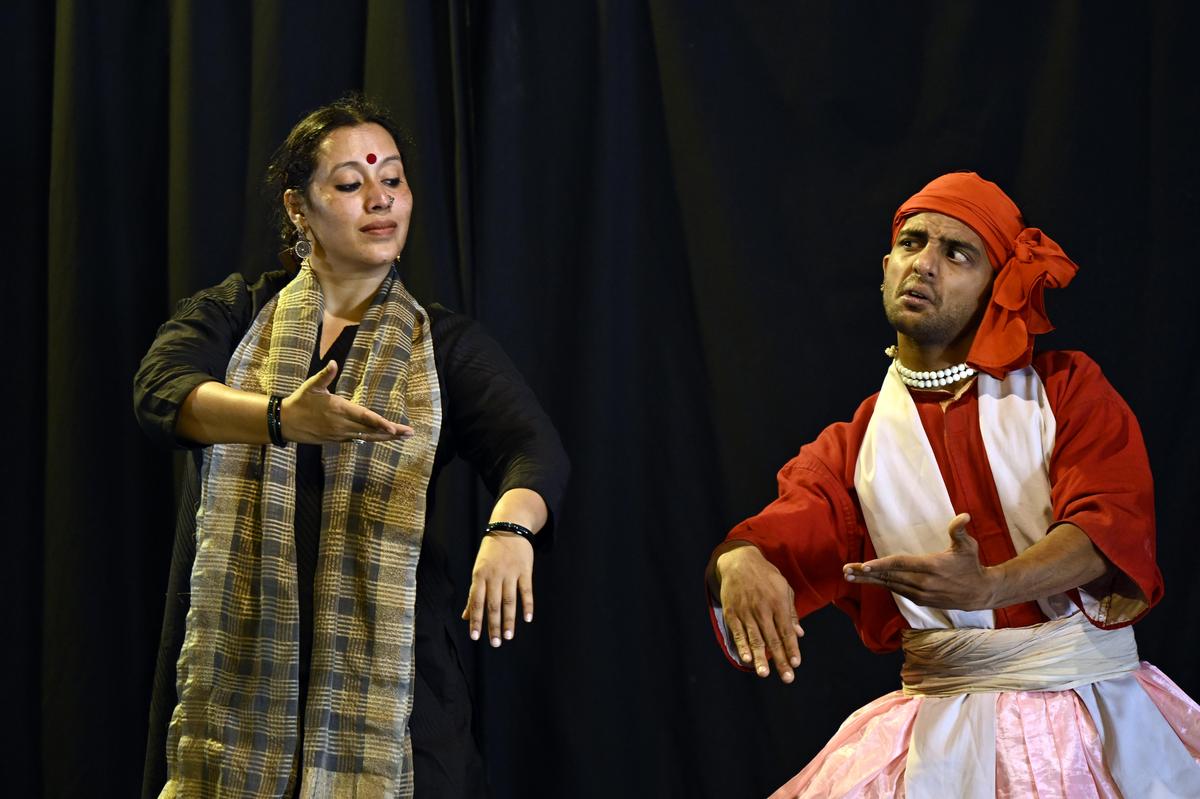
The dancers at the reahearsal
| Photo Credit:
Sudhakara Jain
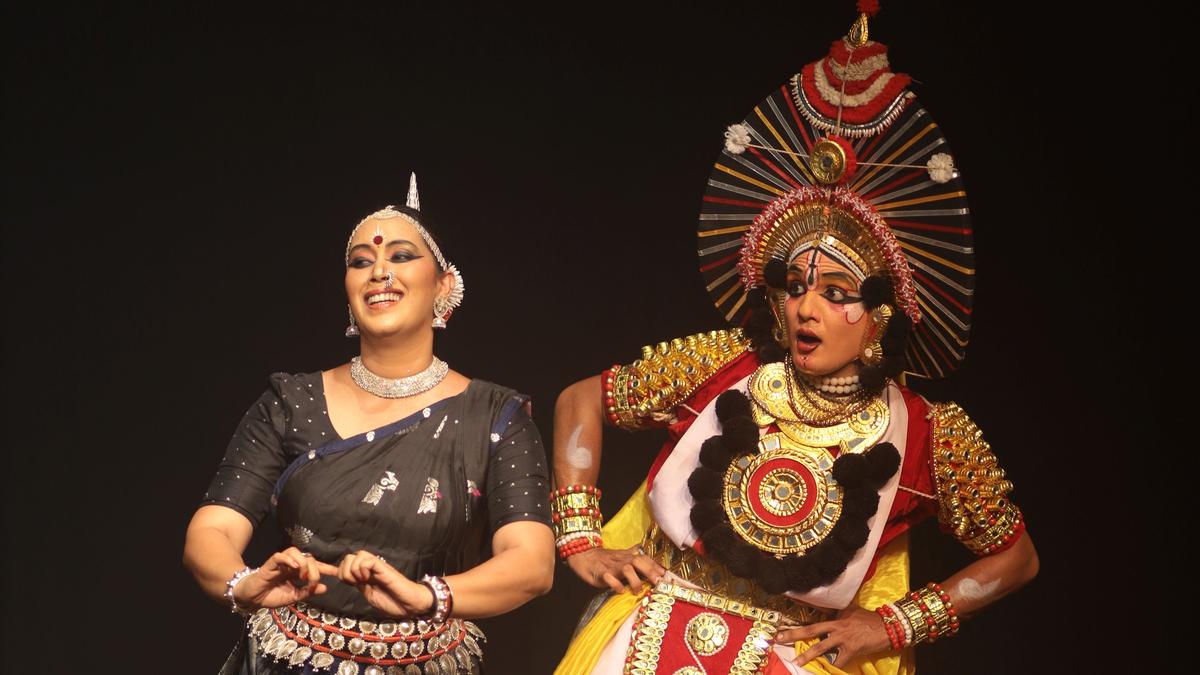
Directed by Vandana Supriya Kasaravalli, this 90‑minute Kannada play blends Odissi’s sculptural grace with Yakshagana’s folk vigour and presents Shurpanakhi not as caricature but as a woman with humour, longing, and strength. “I wanted to place a woman at the centre of the stage with strength and honesty, without justifying her or condemning her. Her presence is something we rush past and I wanted to stop there and listen,” says Apurva, who invited us to watch the rehearshal of Shurpanakhi at Vyoma Artspace and Studio, J.P Nagar.
The play features Vandana as Shurpanakhi and Yakshagana artiste Srinidhi Holla as the sakha. Vandana, trained in Odissi at Nrityagram and under guru Bichitrananda Swain in Bhubaneswar, moves gracefully, adapting the classical dance form seamlessly to Kannada lyrics. Alongside her, Yakshagana artiste Srinidhi Holla, with 18 years of experience, brings folk vigour and stylised exaggeration.
“Most of the characters have a sakhi. So we thought why not Shurpanakhi too, and that is how the story was created,” shares Vandana, who adds: “The play is a result of intense discussions, arguments and collaborations between me and Apurva. It all started when I was trying to choreograph movements to one rasa from Shoorpanakha Navarasa Gadya by Karthik Hebbar. And Apurva suggested we write a script about what happens to Shurpanakhi before and after Karthik’s composition, and that is how the work came into being.” Apurva wrote the script in 2019 and Shurpanakhi premiered at Adishakti’s Veenapani Festival in Pondicherry in 2020. Since then, it has travelled across venues.

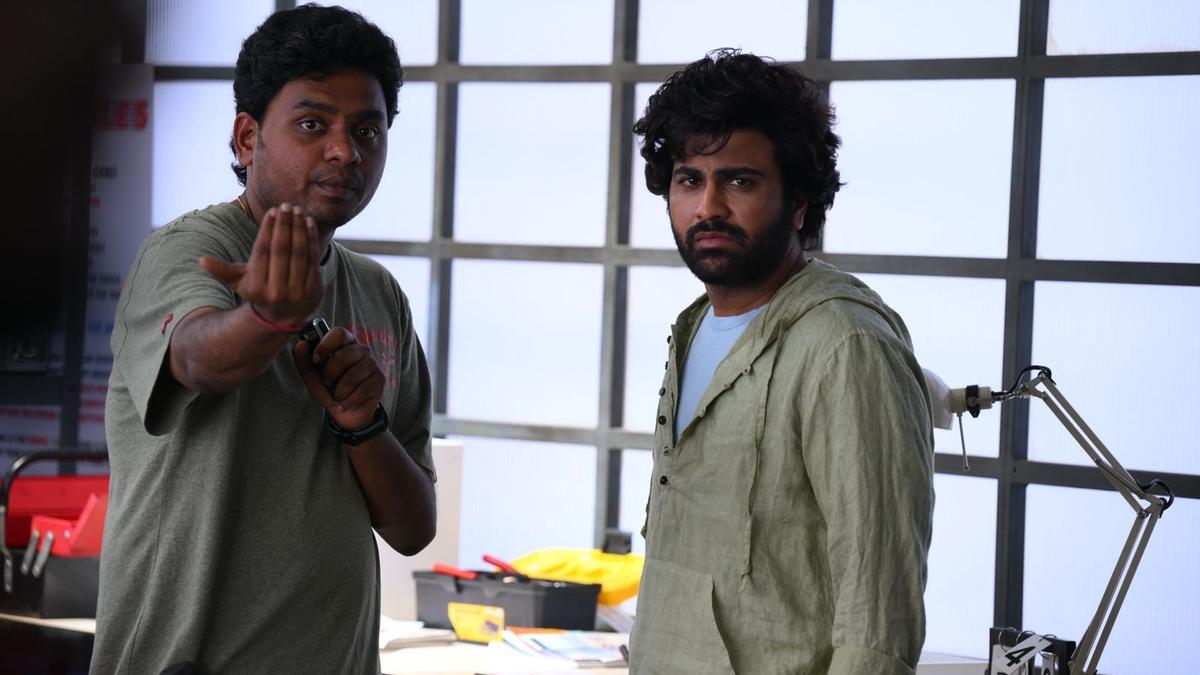
Apurva Kasaravalli
| Photo Credit:
Sudhakara Jain
What is enduring is the presentation of Shurpanakhi on stage, her struggle to change her walk, talk, voice and her entire personality to be accepted by the man of her desire: Rama. Helped by her sakha, the anxious Shurpanakhi transforms into the docile, sensual Chandranakhi, ready to woo the man of her desire.
The dialogues, with a Mangaluru dialect, are poetic and poignant, especially when Shurpanakhi hears from her sakha that Ravana has kidnapped Sita to avenge his sister’s insult. Shurpanakhi condemns her brother’s act and asks: ‘Why women become victims of collateral damage as a result of men’s egos and arrogance?’ and ‘Why should my desire be considered a sin or I be judged by my appearance or the family I come from?’
Once her nose and ears are cut off by Lakshmana, Shurpanakhi screams and says: ‘I may be cornered now and you see me as ugly because I have no nose and ears. But to me, I am still beautiful. I may come from a demonic clan, but am not one who nurtures wicked thoughts in my soul.’ Then she asks the audience if they really know her story — these words pierce through centuries of dismissal. As Vandana emotes powerfully, her tears sparkle like tiny stars in her eyes with the fading lights. Music by Hemanth Kumar, Karthik Hebbar, Keerthan Holla and Thunga is central to the production.
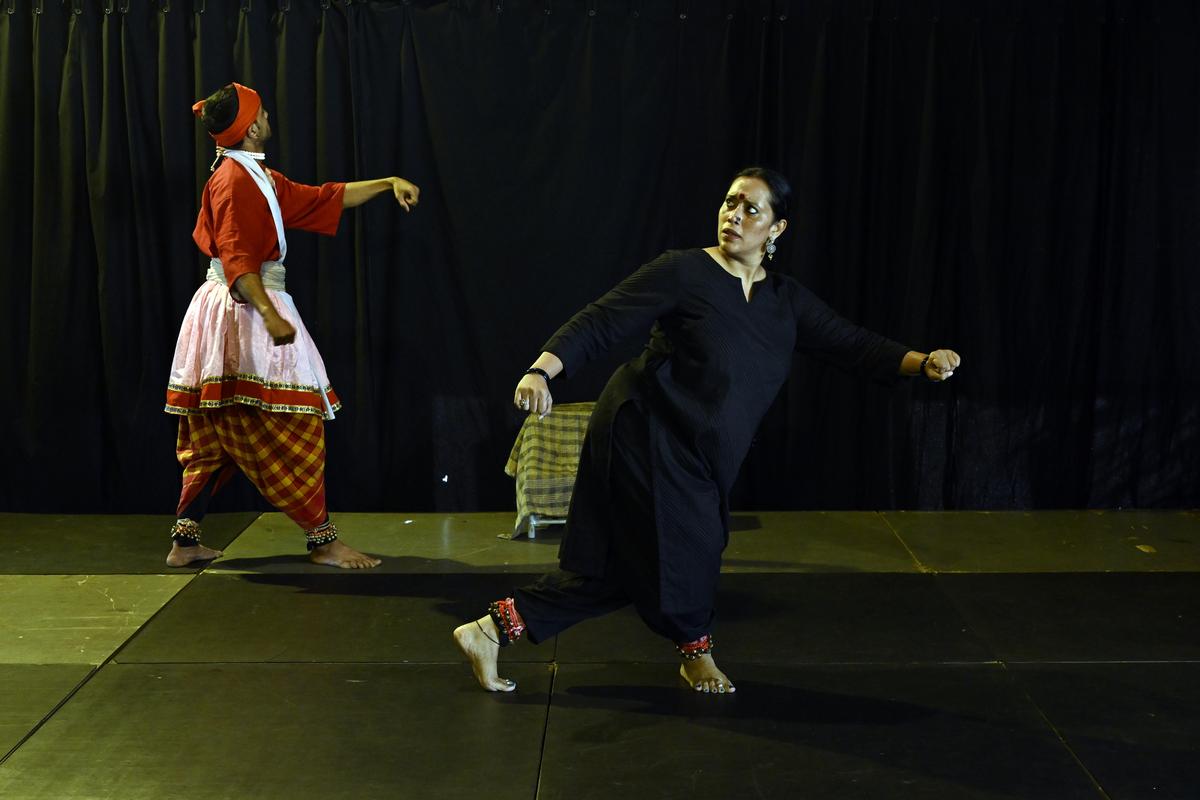
The dancers at the reahearsal of the play
| Photo Credit:
Sudhakara Jain
Apurva says his vision for the script was clear: “Don’t judge a book by its cover. Just because she is Ravana’s sister does not make her cruel. She is a woman with her own strengths and weaknesses.”
Vandana states that choreographing Odissi to Kannada lyrics was exciting and challenging. “I always wanted to work with a Yakshagana artiste and could visualise that the two forms of dance would blend seamlessly with Odissi.”
For Srinidhi Holla, working with Vandana and Apurva for Shurpanakhi has been a transformative experience. “In Yakshagana, Shurpanakhi is always depicted as a demon. I have never seen her depicted differently. When I heard this story, it felt new.”
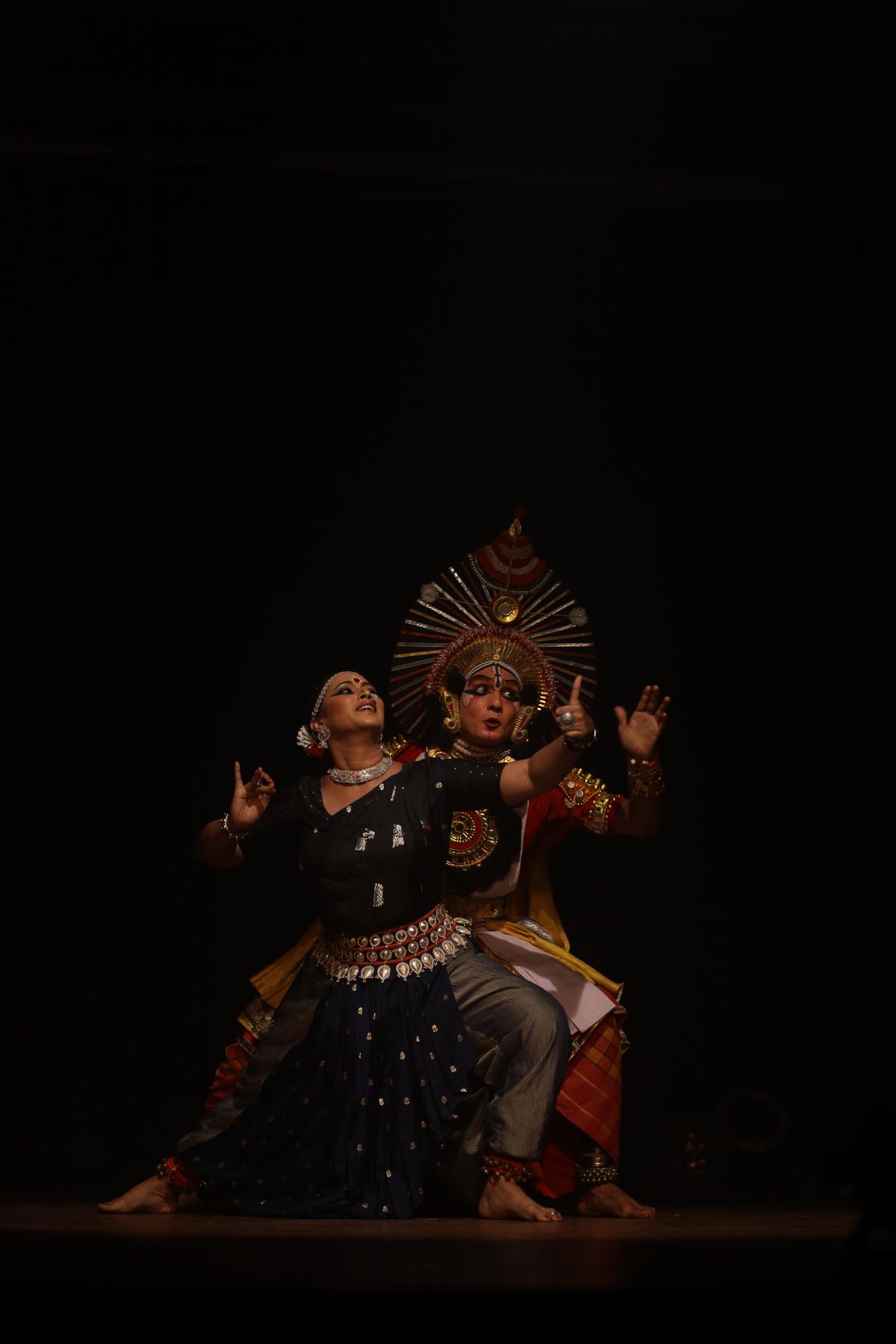
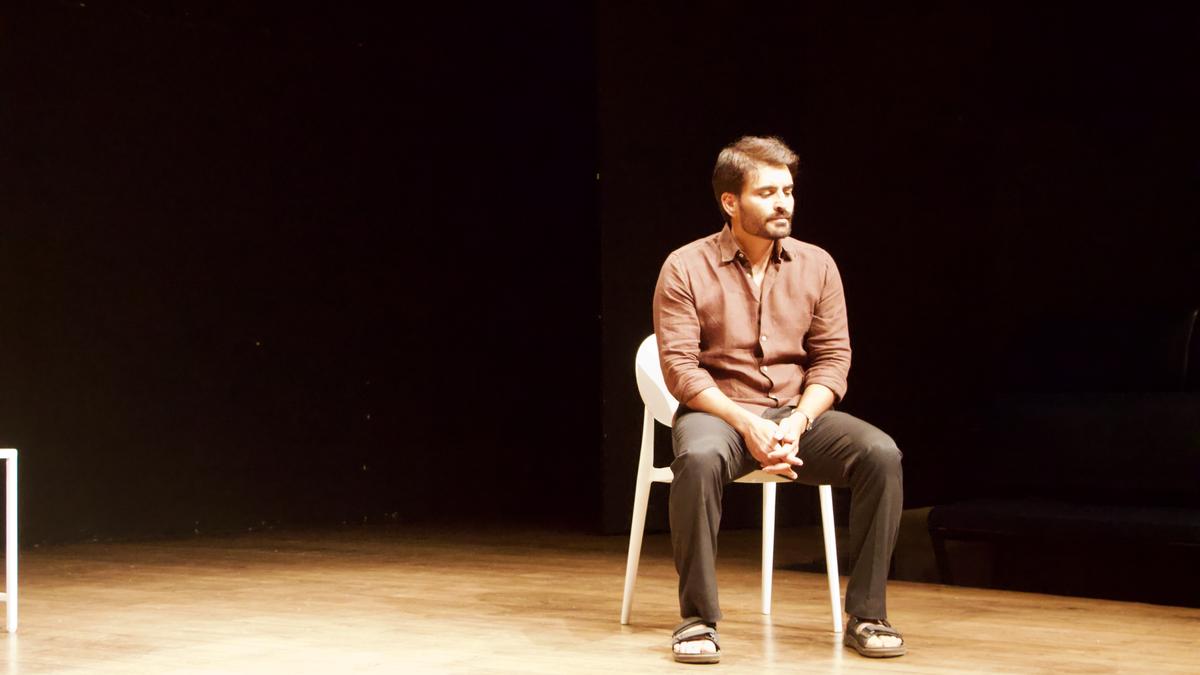
A scene from an earlier show of the play.
| Photo Credit:
Courtesy: Raghavendra Bhat
Apurva shares: “I wrote this script for my wife and it was a conscious choice. I was not trying to rewrite the epic, but to look at what we have inherited and ask, quietly but firmly, where empathy had slipped away. This work is my attempt to see Shurpanakhi simply as a woman with agency and emotion — nothing more, nothing less.”
“At its core, Shurpankhi is a feminist reinterpretation that unsettles rigid binaries of good and evil. With its interplay of Odissi’s sculptural stillness and Yakshagana’s energetic exaggeration, it creates a visual metaphor for the contradictions within Shurpanakhi herself — a woman caught between vulnerability and defiance, tenderness and rage,” says Vandana.
Shurpanakhi will be staged at Ranga Shankara, Bengaluru on February 10. Tickets on BookMyShow.
Published – February 02, 2026 02:46 pm IST