




After Galgotias, a moment of reflection for India’s robotics ambitions
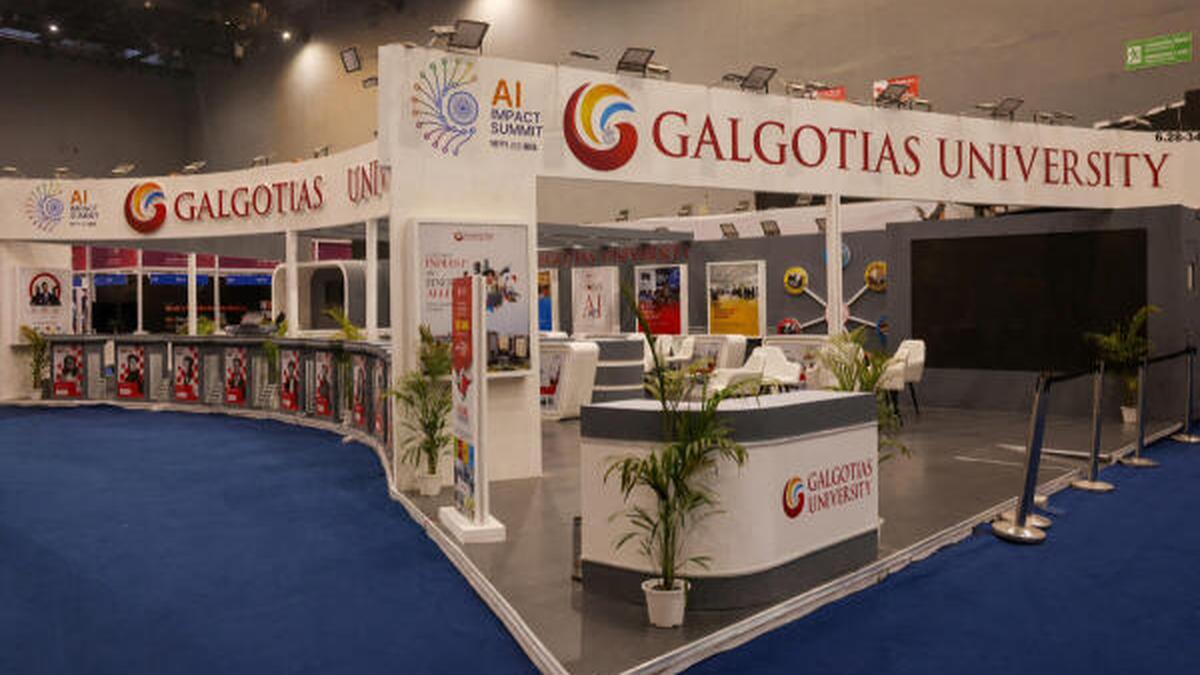
At India’s flagship AI summit in New Delhi — attended by global CEOs and heads of state — a private university was asked to leave the expo after it emerged that a robot dog it showcased as homegrown innovation was, in fact, a commercially available Chinese product worth a few lakh rupees. The internet turned it into a meme. But behind the ridicule lies an uncomfortable truth that deserves more than laughter: India, a nation with genuine ambitions, still struggles to showcase its true strengths in robotics and artificial intelligence.
Those strengths are real. In April 2025, a Mumbai school team became the first Indians ever to win the FIRST Tech Challenge World Championship in Houston, shattering world scoring records. Months later, five government-school teenagers from Bengaluru — children of housekeepers and technicians, trained through Atal Tinkering Labs — built a robot from scratch and represented India at the FIRST Global Challenge in Panama. Indian students can innovate at a very young age, and when given even modest support, they compete with the best in the world. But here’s the pattern that should worry us.
In 2019, Kings United, a dance crew from Nalasopara — a working-class suburb on Mumbai’s fringes — won NBC’s World of Dance with a perfect score of 100, taking home a million dollars. While government institutions like the Sangeet Natak Akademi nurture classical and folk forms, there is no comparable institutional pipeline for the street dance movement that produced Kings United. Their academy in Vasai was self-funded. India celebrated, posted clips, moved on. Robotics is at the same inflection point: spectacular wins that risk never becoming industrial capability.
The world, meanwhile, is moving fast. ABB sold its robotics division to SoftBank last October for $5.375 billion, conceding the future belongs to AI-native systems. The intelligence layer — Vision-Language-Action Models that let robots perceive, reason, and act — is concentrated in western hands: Microsoft, NVIDIA, Google, OpenAI, Anthropic. China counters with 35% of global robotics patents and state-backed data infrastructure at breathtaking scale — Beijing’s humanoid robot training centre spans over 10,000 square metres, and Hubei’s facility generates over a million real-machine data points a year.
India, with 1.6% of global patents and 70–95% import dependency on core components, is squeezed on both flanks: China’s rare earth export controls in 2025 showed how supply concentration can be weaponised overnight, while chip restrictions constrain access to advanced AI processors. NVIDIA and Dassault Systems have already partnered to build “Industry World Models” — physics-grounded AI simulating factories and drug molecules before they’re built. Physical AI is becoming infrastructure. India’s absence is conspicuous.
So, what would it take to convert school-lab brilliance into a defensible national position? The answer begins, perhaps counterintuitively, not with factories or PLI schemes but in classrooms — and not with a vague mandate to teach coding. It requires a carefully scaffolded robotics curriculum, integrated into the Atal Innovation Mission and PM SHRI school programmes, that builds progressively from a child’s first encounter with a sensor to deploying AI inference on edge hardware by the time they finish school. Kerala has already made robotics compulsory for Class 10. That’s the seed. What’s needed is a national framework that makes the progression intentional. AICTE’s model curriculum for robotics and AI already exists on paper. It needs funding, infrastructure, and enforcement.
But here’s the twist that makes this more than an education story: all of this must run on Indian-made robots and simulators. An “Academic Robotics Procurement specification” specifying domestic value-add criteria, supported by Robotics-as-a-Service models to ease capital costs for institutions, would accomplish two things at once. It creates a guaranteed market for Indian robotics manufacturers, de-risking their investment in production. And it generates sovereign training data. Every robot arm that moves in an IIT lab, every mobile platform navigating an ITI corridor, every vision system classifying objects in a polytechnic workshop produces multimodal data — visual, kinematic, tactile — capturing the textures of Indian operating environments. A distributed, standardised installed base across research institutions can create the data pipeline India needs to train its own foundation models for Physical AI. Without it, India’s robots will run on foreign AI, trained on foreign data, encoding foreign assumptions about Indian factories, hospitals, and farms.
The manufacturing ecosystem needs equally deliberate architecture. India needs two to three dedicated Robotics Parks — not generic SEZs, but curated innovation ecosystems modelled on Odense in Denmark and the Pittsburgh Robotics Network — with shared prototyping labs, PCB fabrication facilities, optics cleanrooms, EMC testing chambers, BIS-aligned certification centres, and skill academies. Targeted PLI schemes must go beyond a vague robotics label to incentivise the specific high-dependency components where India’s 70–95% import reliance is most dangerous: LiDAR modules, harmonic gearboxes, servo motors, edge AI processors, motor controllers — with higher multipliers for units within Robotics Parks and MSME-friendly thresholds.
India currently has no indigenous testing facility for robots; machines must be shipped abroad for compliance. Accelerating BIS robotics standards and building domestic certification centres is foundational. And to give all this demand-side pull, a National Robotics Demand Aggregator — modelled on EESL’s transformative work with LEDs and CESL with electric vehicles — should pool procurement from Railways, Defence, PSUs, and state governments. A target of 50% Indian-made procurement in public robotics projects by 2030, backed by a dedicated multi-billion dollar R&D and deployment fund, would signal that India is serious.
By 2050, India will house 346 million senior citizens: Japan’s response to a similar demographic shift included over $740 million in robotics R&D. The global robotics market is headed towards $160–260 billion by 2030. Physical AI is expanding into world models that will reshape how nations design medicines, run factories, and build cities. India has the demographic imperative and the engineering talent. Two school teams from Mumbai proved it in Houston. Five government-school kids proved it in Panama. A dance crew from Nalasopara proved it on the biggest stage in the world. What India needs now is to marshal this talent — give it the right curriculum from age ten, the right tools from Indian manufacturers, the right data from Indian robots, and the right policy architecture to turn sparks into a fire. The stage won’t build itself. But the builders are already here.
(The author is an Energy and Emerging Technologies expert.)
(Sign up for THEdge, The Hindu’s weekly education newsletter.)
Published – February 24, 2026 03:18 pm IST