




A heart-breaking loss with a silver lining that gives hope
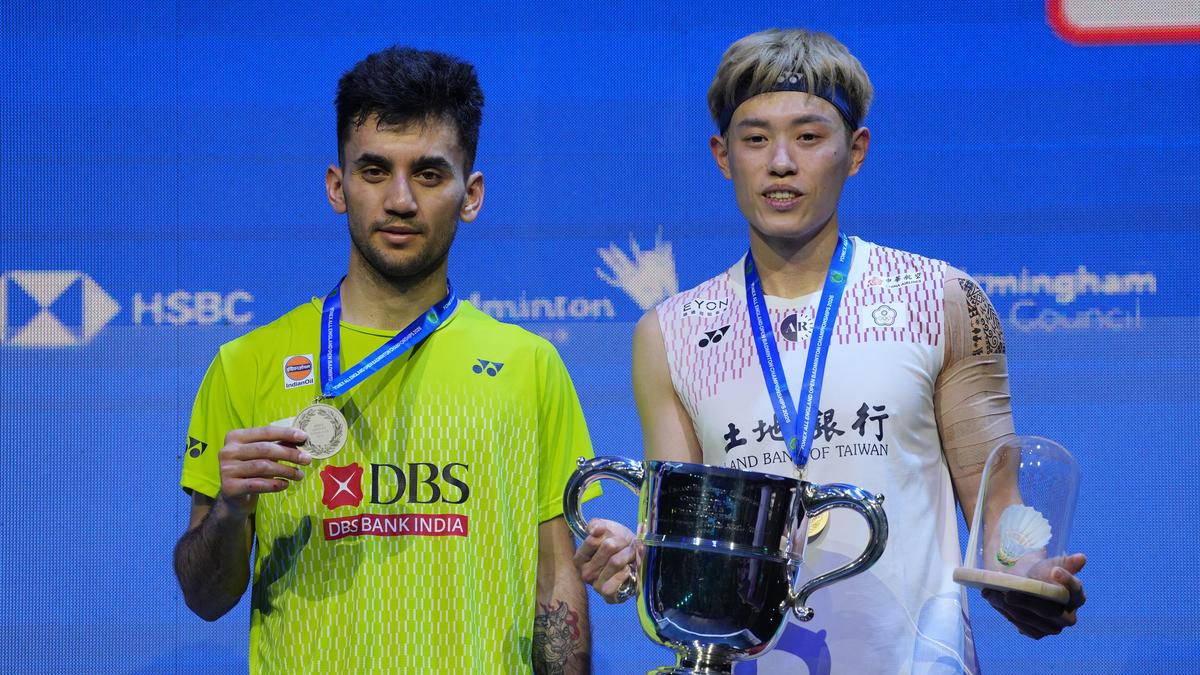
Lakshya Sen’s spirited run at the All England Open ended just short of history on Sunday (March 8, 2026) as the Indian shuttler finished runner-up after losing the men’s singles final to Taiwan’s Lin Chun-Yi in Birmingham.
The defeat meant India’s wait for an All England men’s singles champion continued, with only two Indians — Prakash Padukone in 1980 and P. Gopi Chand in 2001 — having previously lifted the prestigious title.
For Lakshya, it was a second heartbreak at the sport’s oldest tournament. Four years after finishing runner-up in 2022 following a loss to then World No.1 Viktor Axelsen, the 24-year-old once again came agonisingly close to the crown after producing one of the most impressive runs of his career through the draw.
The 24-year-old entered the final riding the momentum of a week that had already featured a stunning upset of World No.1 Shi Yuqi, a gritty comeback against Ng Ka Long Angus, a tactically assured win over Li Shifeng and a marathon semifinal triumph over Canada’s Victor Lai.

Dethroning the king
The week began with a statement victory.
Four years ago at the All England final, Lakshya was stopped by the World No.1 Viktor Axelsen. In 2026, he began his campaign against another World No. 1 and defending champion Shi Yuqi.
Lakshya produced one of the biggest upsets of the opening round. He pulled off a thrilling 23-21, 19-21, 21-17 victory to knock out the top seed in the opening round in a gripping contest that lasted 78 minutes. It was his earliest exit from a tournament since the Thailand Open in 2023.
The World No. 12 relied heavily on explosive forearm-driven smashes and deceptive wristwork, repeatedly unsettling the world champion and forcing him onto the back foot.
What stood out most was how Lakshya turned Yuqi’s own strength against him. Widely regarded as one of the circuit’s most deceptive players, the Chinese shuttler found himself repeatedly wrong-footed as Sen used subtle wrist disguises and late changes of direction to manipulate rallies. The Indian also controlled the front court smartly, using delicate net play to draw lifts before unleashing steep, hard smashes that steadily piled pressure on the top seed.
After the defeat, Yuqi admitted he was not at his best physically, revealing he had entered the tournament with limited preparation.
The second round presented another challenge: Hong Kong’s Ng Ka Long Angus.
Angus had historically troubled Lakshya, entering the contest with a 3-0 head-to-head advantage over the Indian. The Hong Kong shuttler signalled his intent right from the start, engaging Sen in a first rally that stretched beyond 40 shots.
Lakshya made the brighter start, pocketing the opening game 21-19 and carrying that momentum into the second. But as coach Vimal Kumar had said, “Angus is not easy at all,” the veteran leaned on his deceptive overheads and rally-building, drawing Sen into extended exchanges before capitalising on the Indian’s impatience to reel off five consecutive points and swing the game back in his favour.
“He made a solid comeback on the second. And I just didn’t play freely towards the end of the second set. And just gave too many easy shots for him to kill. But I was prepared in the third set, to go all out…” Lakshya told the BWF.
And that response was emphatic. What could have turned into a nervy battle lasted barely longer than necessary. Lakshya tightened his defence, repeatedly pushing Angus deep into the backhand corner and dictating the rallies from the mid-court. He sealed the match 21-10 in the decider, ensuring that the brief wobble in the second game cost him nothing more than a few extra minutes on court.
Tactical precision
The quarterfinal against China’s Li Shifeng required a different kind of solution. Unlike Angus, who relied on grit and long rallies, Shifeng is built to dominate the forecourt and dictate play from the net with explosive attacks. Rather than confronting him in that space, Lakshya chose to stretch the court.
He repeatedly pushed the shuttle deep into Shifeng’s forehand rear corner, an area that disrupted the Chinese player’s preferred front-court positioning and forced him to chase from awkward angles.
Lakshya’s plan in the opening game was clear: keep the shuttle travelling to Shifeng’s deep forehand corner. A mix of pushes, drops, lifts and smashes from that flank helped him take the game 21-13.
Shifeng briefly threatened to claw his way back in the second with powerful smashes and improved control at the net, but Lakshya refused to rush the rallies. By staying patient and keeping the shuttle in play, he gradually forced the Chinese player into errors, several of them wild attempts to force attacking winners from difficult positions. The Indian then pulled away late to close out the game 21-16 and wrap up the match in straight sets.
The semifinal against Canada’s Victor Lai turned into a draining duel that tested Lakshya’s resilience as much as his badminton.
Lai is not known for breathtaking winners, but for something more exhausting, his ability to return almost everything. Rally after rally, the Canadian kept the shuttle alive, forcing Lakshya to work relentlessly for points. The exchanges grew longer and longer, turning the contest into a gruelling endurance battle.
At one stage in the deciding game, the pair produced an extraordinary 86-shot rally, a moment that summed up the physical demands of the match. By the time the contest stretched past the hour mark and eventually reached 97 minutes, both players were visibly running on fumes.
Lakshya’s struggle became evident at the final change of ends in the decider. Dealing with a blister on his foot and cramps creeping into his legs, he lay flat near his bench as his support staff massaged his tightening muscles. The chair umpire even told him that he had to either continue playing or retire under the rules.
But Lakshya pushed on.
“Starting the third set, I could feel cramps in my legs and I didn’t know if I could go all the way. I was just trying to fight every point,” Lakshya said later.
Realising that prolonged rallies would only worsen the cramps, Lakshya altered his approach in the closing stages. Instead of engaging in endless exchanges with Lai’s stubborn defence, he began attacking earlier in rallies, looking to finish points quickly.
Fighting through exhaustion and pain, Lakshya closed out the match 21-16, 18-21, 21-15; even Lai admitted that the Indian was “mentally stronger.” He secured his place in the All England final for the second time in his career.
No respite
Waiting on the other side was Taiwan’s Lin Chun-Yi, a left-hander known for his powerful attacking game and sharp angles.
Lin managed to edge the opening game, while Lakshya, still carrying the fatigue from the marathon semifinal a day earlier, even required treatment for his shoulder and leg during the interval.
The Indian finalist managed to find his rhythm in the second game.
His cross smashes to the Lin’s backhand and steep returns to stretch the Taiwanese diagonally across the court and with down the line returns he surged into a five point lead midway. Lin looked visibly puzzled and walked nervously up and down the court, conceding three or four easy points.
The contest reached fever pitch at 14-14 when the two traded relentless attacking strokes and desperate defensive pickups in the longest rally of the match, a breathtaking exchange of over 40 shots that had both players firing what felt like bullets across the net.
Sen continued to target Lin’s backhand with cross smashes whenever he needed to regain control, but the closing stages turned into a nerve-racking shootout. With the score locked at 20-20 and both players attacking at full speed, Lin gained the advantage and stood one point away from the title before Lakshya’s return drifted wide.
“Being able to play this tournament and winning it is a dream come true,” Lin said post-match. He became the first player from Taiwan to win the All England men’s singles title.
After the match, Lakshya admitted he had not been in ideal physical condition.
“But when I was playing on court, I was not thinking about anything but to give my best. Yesterday I was struggling a bit with cramps, but I had some time to recover. I couldn’t recover 100%. Towards the end of the week, all the players were tired with four or five matches. It could have been better, but this is what I had. I gave everything,” he said.
Reflecting on the final itself, Lakshya added: “The first set… I think he was a better player, but in the second game I could have finished off better. But I’m happy with the way I played throughout the week. I’m feeling emotional right now, thinking about the match. But overall, lots of positive things.”
Despite the loss in the final, Lakshya’s run in Birmingham reaffirmed his status among the world’s elite. Ranked World No. 12 coming into the tournament, the Indian had arrived without the tag of a favourite, but what followed was one of the most impressive campaigns of his career. The defeat of world No.1 Shi Yuqi and a semifinal performance that tested every ounce of his endurance. For now, the wait for an Indian men’s singles champion at the All England tournament continues. But if this tournament proved anything, it is that Lakshya Sen remains one of the players most capable of ending that wait.
And perhaps soon.