


Odissi, art and movement converge in Let a Thousand Flowers Bloom exhibition in Chennai
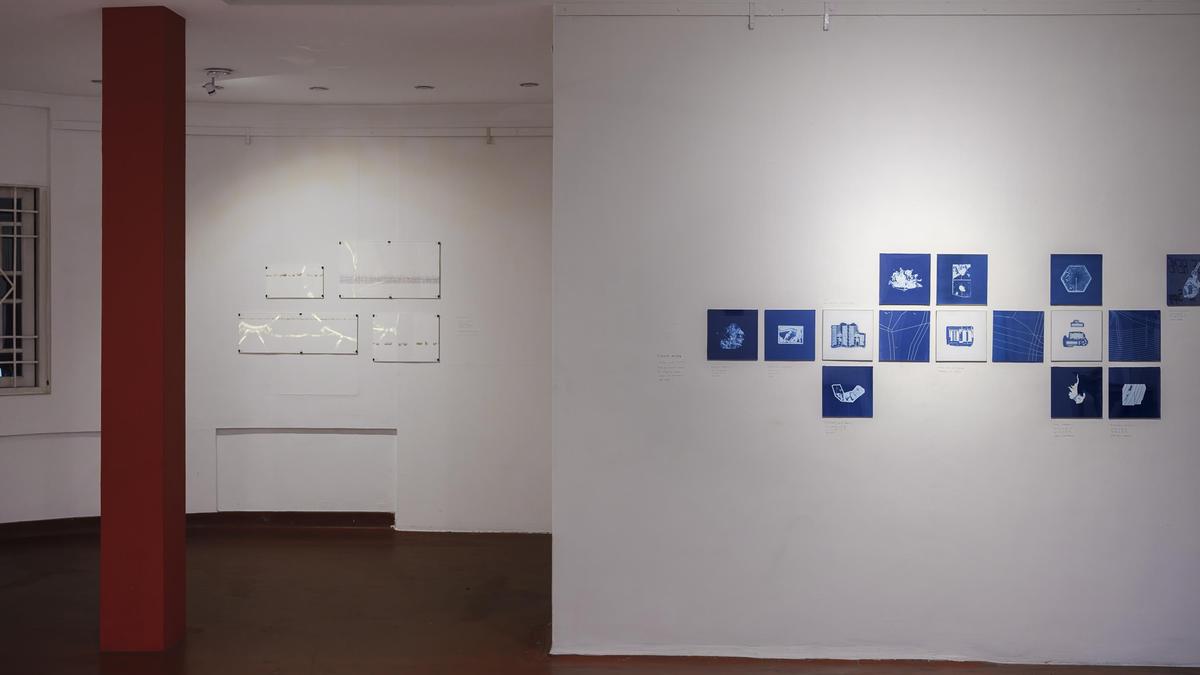
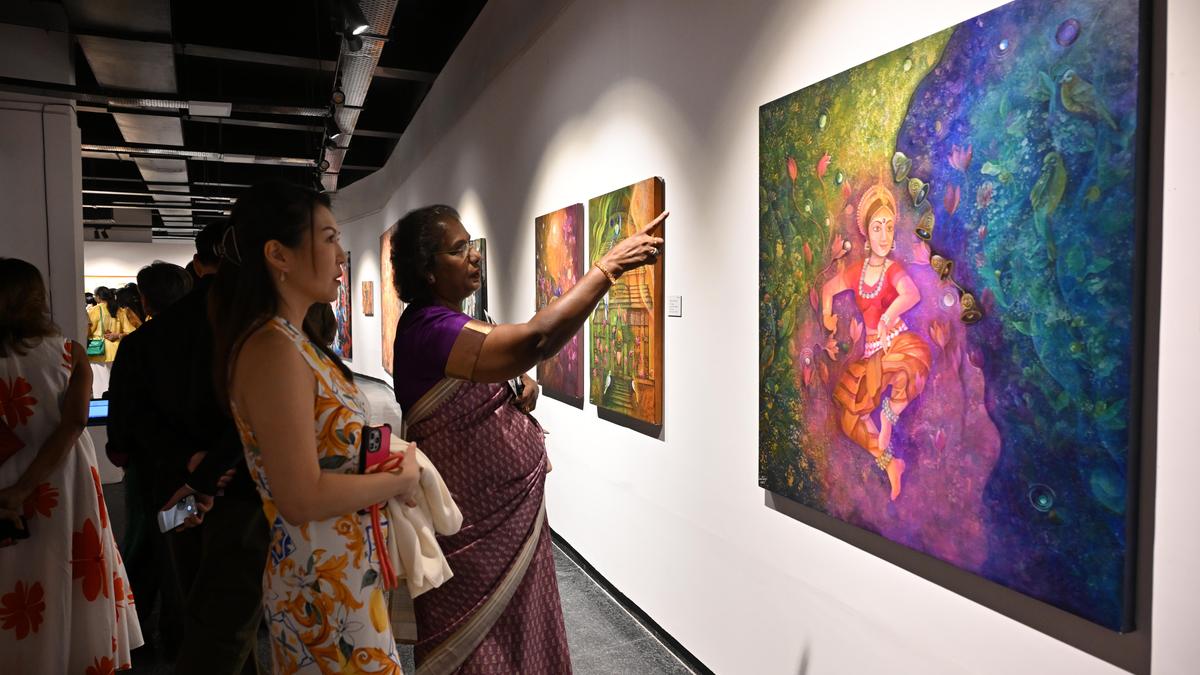
Lalit Kala Akademi will be transformed into a visual tribute to Odisha and its classical dance Odissi, over six days. In Let a Thousand Flowers Bloom, the sensuous curves, silences and rhythms of Odissi step off the stage and onto the canvas, paper and photograph. At the heart of this exhibition is Datuk Ramli Bin Ibrahim — dancer, choreographer and founder of Sutra Foundation (dedicated to promoting and preserving traditional and contemporary performing arts) — whose interpretation of Odissi has inspired artistes for decades. Bringing together drawings, paintings, and photographs by 21 artists from India and Malaysia, many of the works respond directly to Ramli’s body, presence and philosophy, treating him both as a medium and a muse.
The exhibition is also a tribute to the late Dr Dinanath Pathy, artist and scholar who connected dance with visual work, and contributed to Sutra in many ways. Travelling through Chennai, Bhubaneshwar, and Malaysia, the exhibition showcases Odissi as a vibrant art form, one where the essence of its movements lingers well beyond the performance.
From Bhubaneshwar, artist Helen Brahma’s series, Penari Ulung (The Transcendental Dancer), explores her relationship between textile and culture. At the heart of her work is the Sambalpuri textile, draped around Odissi dancers. “The ikat motifs used all over the body of the dancers are intimate to my cultural roots,” says Helen. The portraits embody the divine feminine, but are also inspired by Ramli’s moves that have moved her profoundly. Similarly, another artiste from Chennai AV Ilango , has used acrylic on canvas to bring out the subtle movements and the grace of the dance form. The palette is ripe with the colours of India — mango yellow, marigold, chilli red, royal purple, peacock blue, emerald and parrot green embracing the outfits of the dancers.
Extending the dialogue between movement and image, the exhibition also presented a series of photographic works. For instance, Malaysian photographer Diana Lui’s series of photographic prints presented at the exhibition is a selection of a larger body of work made in the 1990S. The photographs on canvas follow a younger Ramli, and his dancers caught mid-dance form, as their bodies yield to the cadence of music. “I come from a background in dance. For me, everything is linked to movement — the gestures of the body are deeply tied to how we express our inner identity,” says Diana.
Malay artist Shivarajah Natarajan, who also serves as a curator of Malaysian artists, has his canvases unfold as a visual stage where drama, emotion, and rhythm are showcased with evocative clarity. A striking artwork titled The Great Migration embodies the ancient tales of matsya avatar, the fish incarnation of Vishnu. The work reimagines these ancient tales through the rising sea levels all over the world today. Look closer, and the shadow is also telling a story. “People think that shadow has nothing, it’s all black, but in my painting, both shadow and light have their own emotions,” says Shivarajah. The faint silhouette of the Jagannath Temple in Puri emerges in the background, drawing viewers closer to Odisha.
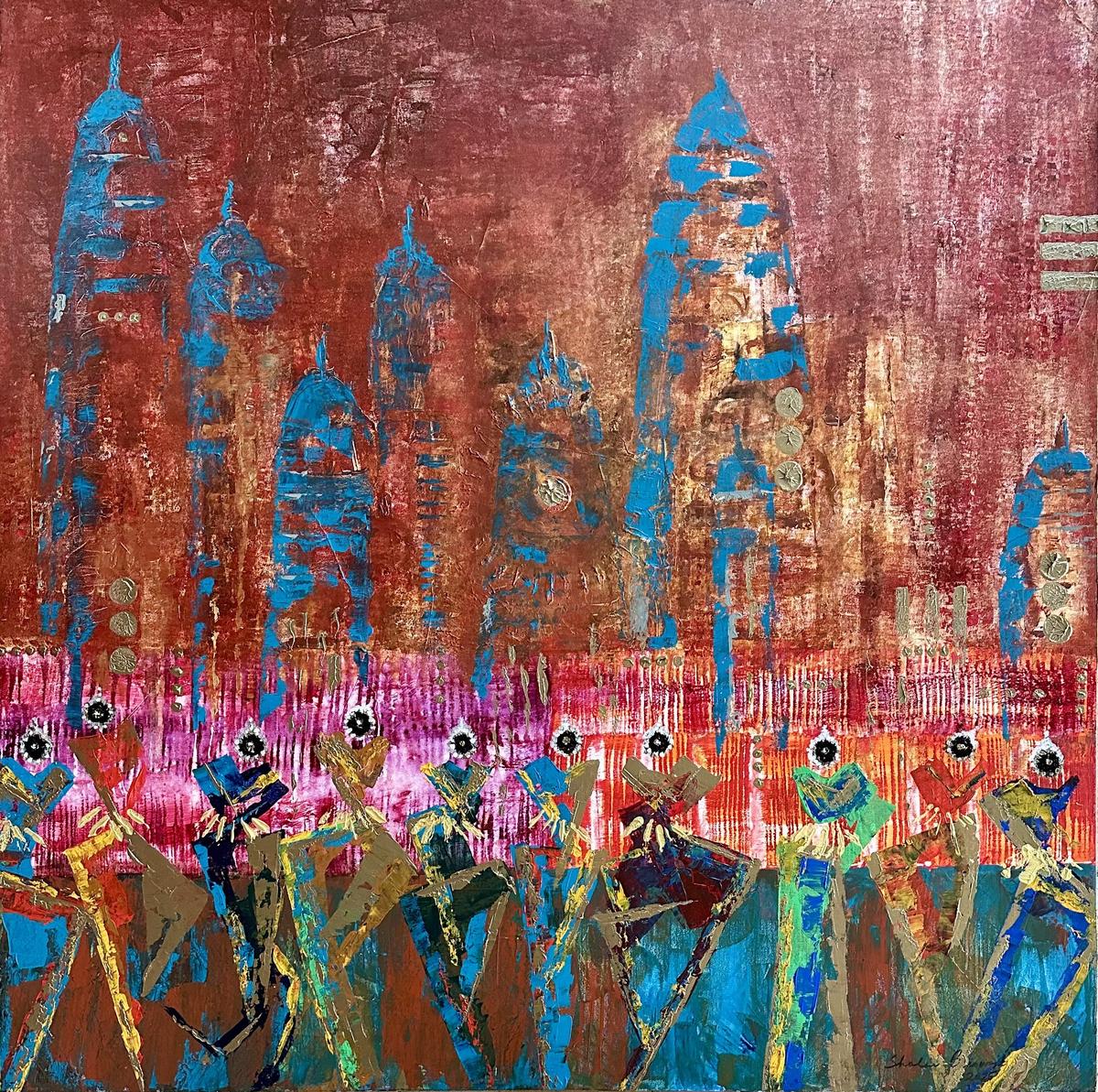
Sacred Moments by Shalini Biswajit
| Photo Credit:
SPECIAL ARRANGEMENT
“The aim is to create contemplative spaces where movement pauses, sound dissolves into silence, and Odissi’s spirit resonates anew,” says artist Shalini Biswajit, Chennai curator and participating artiste. One of her artworks features a dancer caught in a swirling motion, right in the midst of the drama that surrounds every dance piece. “I have tried to capture the essence of Odissi through colour and metaphor, while each artists bring their own distinct response to the form,” she further adds.
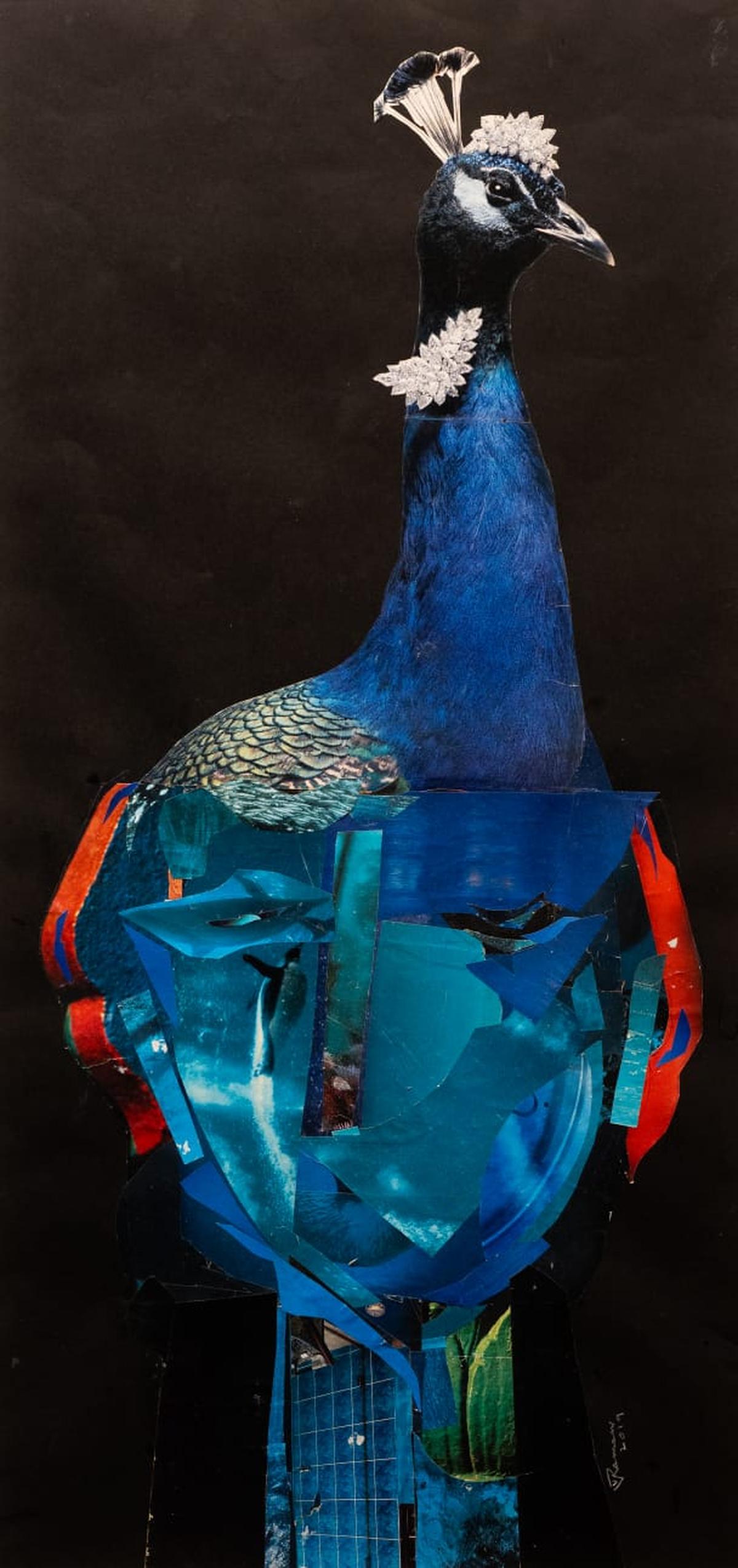
Mayura Mukha, Papier Collé by VV Ramani
| Photo Credit:
SPECIAL ARRANGEMENT
In Artist VV Ramani’s work, collage is the medium that the artist has used to interpret the theme. It is a work that requires repeated observation: tiny, meticulously placed images come together to create patterns, rhythms and a sense of movement. In contrast to the traditional paintings that involve using colours, pencils and watercolours or oil to create an image, Ramani finds the unexpected elements in a collage to be exciting as the final shape of the artwork is not revealed until it is finished.
His artworks touch upon themes like Navarasa — the nine fundamental emotions in Indian classical arts, and Krishna, a figure often depicted in Odissi dance form. “I’ve always had a special love for Krishna, a well-loved figure in folklore and asthapadis. This passion keeps drawing me back to his stories, inspiring me to create a variety of collages,” says Ramani. Devoid of visible brush strokes, the work resonates deeply, echoing motion and meaning through intricate construction.
Let a Thousand Flowers Bloom, becomes not just an exhibition but a meditation on movement — where rhythms transcend into colours, and dance into images. It reminds its viewers time and again how art is in all its form is always universal in Nature.
Let a Thousand Flowers Bloom is on at the Lalit Kala Akademi, Greams Road till January 29, from 11am to 7pm. Entry Free
Published – January 27, 2026 05:03 pm IST