


War lays a political and diplomatic minefield for Modi
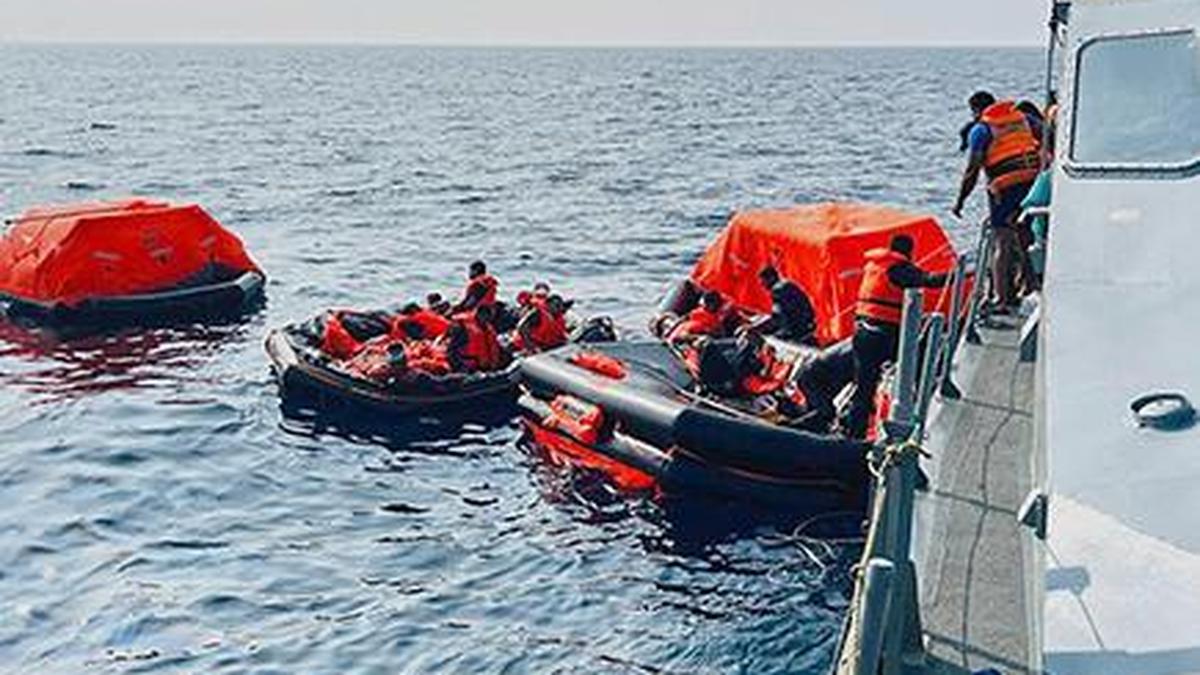
Sri Lankan Navy sailors rescue Iranian sailors after their ship sank outside Sri Lanka’s territorial waters near Galle.
| Photo Credit: Sri Lankan Navy/AP
The U.S. torpedoing the Iranian ship IRIS Dena in the Indian Ocean may force Prime Minister Narendra Modi into taking a clear position on the West Asian war. Not only was the ship within India’s asserted sphere of influence — the Indian Ocean — but it was also returning from joint exercises with the Indian Navy, and was unarmed as a condition of these exercises. The position Mr. Modi takes will be a product of a number of forces. On the one hand, Iranian regime-change or state collapse will weaken New Delhi’s ambitions of becoming a pole in a multipolar world, and exacerbate uncertainty for India’s energy imports. India has now permitted another Iranian ship to have refuge in Kochi and issued public statements that the Navy assisted Sri Lanka in rescuing Dena. However, New Delhi is still subject to U.S. economic pressure and influential segments of India’s elite have an interest in stronger ties with Israel.
India’s sphere
The overarching aim of India’s foreign policy is to become a pole in a multipolar world order. First, this requires undisputed hegemony in its own sphere of influence. The Indian Ocean is a primary part of this sphere, as indicated by New Delhi’s formal maritime doctrines, and expanding network of strategic military and infrastructure partnerships. India has claimed to be a “net security provider”, with the Modi government declaring it the “Guardian of the Indian Ocean”. Considered in conjunction with the “Indira Doctrine” — India’s Munroe Doctrine — significant military action by another Great Power within the Indian Ocean off Sri Lanka’s coast severely undermines India’s stated position. It requires Delhi to either impose costs on the U.S. or state that Washington’s actions were approved by India and demonstrate that they align with its interests.
Opposing U.S.-Israel victory
The latter will be difficult to sell given as a victory for the U.S.-Israel over Iran will have a negative impact on India’s multipolarity ambitions. Regime-change will leave the U.S. the unrivalled hegemon of West Asia, reducing space for rising powers such as India and China to expand their influence. It will weaken India’s leverage in relationships with Israel, the Gulf States and broader West Asia, and any new presumably pro-West government in Tehran. While U.S. sanctions on Iranian crude will cease, India will have weaker bargaining power with a government that credits its existence to the U.S. Iranian capitulation will mean limited negative economic impacts on India but still harm the multipolarity goal. Alternatively, state collapse or even balkanisation will yield the same results for India, with the added increased risk of proliferation of terrorism.
More likely is a drawn-out war, with Tehran surviving potentially with support from China and Russia. This will damage India’s economy in the short term but strengthen Delhi’s long-term strategic position, accelerating the shift toward multipolarity. Outcomes between these poles will have correspondingly moderate impacts.
Regardless of outcome, merely stating support for U.S.-Israeli goals will reduce trust with friend Russia and neighbour China.
Domestic politics
It will result in significant domestic political costs for Mr. Modi. Independence — labelled non-alignment or strategic autonomy — has been the bedrock of Indian foreign policy since Independence and is universally popular. Mr. Modi’s resistance to U.S. pressure over Russia-ties was an assertion of this. Aligning with the U.S.-Israel over Iran could be couched by political opponents as Mr. Modi’s nationalism being less about pride in Indian or Hindu greatness and simply an opposition to Islam — even if this means subservience to the West. Already, Congress voices are portraying Mr. Modi as weak, juxtaposing India’s initial silence with tiny Sri Lanka’s answering of the Dena’s distress signal and rescue operation. External Affairs Minister S. Jaishankar’s statements on providing safe harbour to Iran’s IRIS Lavan constitute a wise move in this respect.
Even proponents of India’s civilisational identity, including Hindutva intellectuals, see Iran not solely as an Islamic country but a civilisational state with multi-millennia old genetic, linguistic, and religious links to India. The Vedic Aryans descended from a common Proto-Indo-Iranian culture in Central Asia. Vedic Sanskrit and Avestan are exceptionally similar.
For U.S.-Israel victory
Then why has the government not taken a position, despite Mr. Modi expressing solidarity with the Gulf States following Iran’s retaliation? Any new economic or security sticks and carrots offered by the U.S. are not meaningfully greater than those offered by pro-Iran China (whose trade with India is only slightly less than with the U.S.) combined with pro-Iran Russia (with leverage over Indian defence systems, and potentially its energy supply).
The deciding factor may lie in politically influential elites — led by industrialist Gautam Adani and defence conglomerates. While elites’ interests in Iran lie in maintaining critical energy and transit links, their interests in Israel involve strategically integrating India into the Western-led order through high-stakes technology and infrastructure, including the India-Middle East-Europe Economic Corridor. While India’s commitments in the Chabahar Port project are being scaled back due to U.S. sanctions, Adani’s $1.2 billion investment in Israel’s Haifa is not. Businessman Baba Kalyani and Adani have significant roots in Israeli defence firms such as Rafael and Elbit.
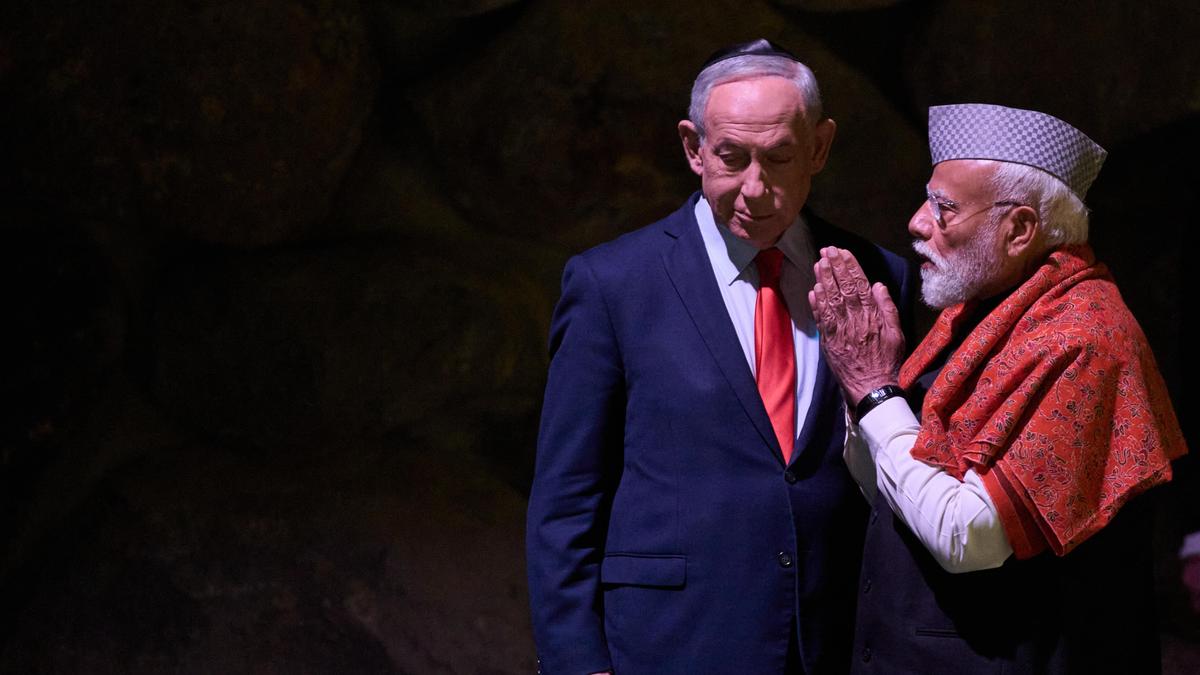
Politically, of course, the framing of the war by U.S. President Donald Trump and Israel Prime Minister Benjamin Netanyahu dovetails smoothly with the BJP’s existing opposition to Islamism.
Indian voters, however, including BJP voters, are becoming increasingly discerning. They may not see the Iran war as simply “standing up to Islamism”. They may identify a contradiction between a political platform of Indian greatness and actions that facilitate continued U.S.-led unipolarity. Astute opposition politicians may use the war as an opportunity to not simply maintain Muslim votes but also drive a wedge between the Prime Minister and his own nationalist base. Perhaps the best way to avoid this is to harness and strengthen India’s image of independence, by acting as mediator.
Kadira Pethiyagoda is a geopolitics expert at the University of Melbourne, former diplomat, and political adviser. Views expressed are personal
Published – March 13, 2026 12:39 am IST