



Dismantling the ‘biological tax’ in Indian legal system
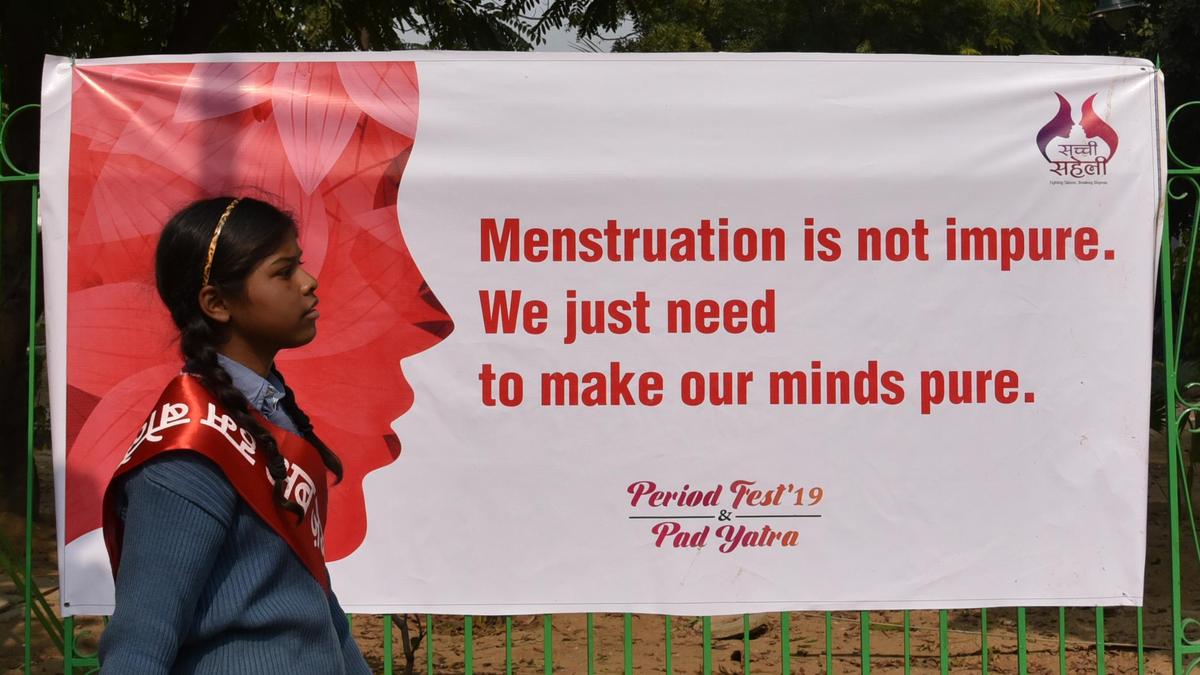
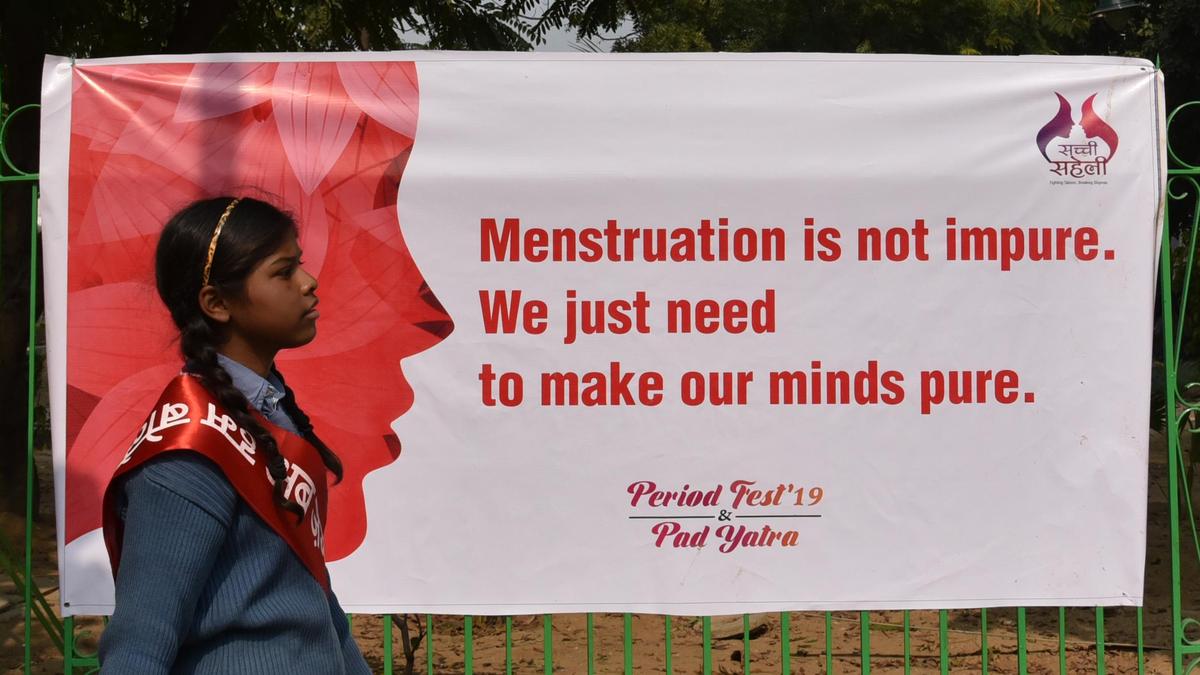
India’s action must move beyond the mere distribution of menstrual products. It requires a systemic overhaul of its labour codes and criminal laws.
| Photo Credit: File photo
On March 8, when the global community gathered under the United Nations (UN) theme “Rights, justice, action: for all women and girls”, India found itself at a crossroads. The Supreme Court, in a landmark ruling in Dr. Jaya Thakur v Government of India (2026), has fundamentally reframed menstruation, once a private health issue, into a matter of substantive constitutional law and a human right to dignity.
At the core of this shift is the dismantling of the “biological tax” — the systemic penalty women pay for a natural process. In the case, the issue was the systemic exclusion of adolescent girls from the education system due to biological realities. By identifying the absence of menstrual hygiene management (MHM) as a constitutional violation of right to dignity under Article 21 of the Constitution and violation of right to education under Article 21A, which cannot be realised due to inaccessibility to MHM, the Supreme Court has thus ruled that institutions must adapt to biological realities rather than forcing women to “opt out” of public life.
The court’s reasoning deconstructs the myth of a “neutral citizen” and provides a foundation for ushering in reforms for socialising the cost of being female. This judgment thus lays the constitutional groundwork for translating the UN’s call for action into concrete legal and institutional reform, especially in the field of labour and criminal law.
As legal scholar Upendra Baxi observes, India’s legal and architectural standards have historically been designed around a “standard body” that does not menstruate, gestate, or lactate. This reflects the enduring myth of the “neutral citizen”. In a deeply gendered world, however, the law’s claim to neutrality often operates as a mechanism of structural exclusion. A school without gender-segregated toilets or a police station without MHM facilities is not a neutral space but a space that assumes its occupants are male. Thus the court’s observation marks a transition from formal equality (treating everyone the same) to substantive equality (acknowledging difference to achieve equal outcomes).
The court’s intervention establishes the doctrine of materially enabling rights. It posits that right to education under Article 21A is hollow if the state does not provide the physical tools required to exercise it. By mandating free oxo-biodegradable pads and MHM corners, the court has shifted the burden from the individual to the state, effectively redefining free education as a condition that is materially supported, not just nominally promised.
Spanish law
By similar account, women’s right to work is equally hollow if the state fails to ensure material enabling conditions, such as paid menstrual leave, necessary to manage her biology without economic penalty. A significant gold standard in this regard is set by Spain’s 2023 Menstrual Leave Law, which effectively socialises the “biological tax” by shifting the cost of menstrual health from the individual woman to the State’s national labour and social security framework. The genius of the Spanish model lies in its funding where the leave is paid for by the State social security system, and not the employer. This prevents the hiring penalty often associated with gender-specific benefits and ensures that biological reality is treated as a matter of public interest. Spain’s consistently high ranking on the Gender Equality Index is a direct result of these substantive frameworks. This offers a vital lesson for India. While court-mandated infrastructure is the first step, the ultimate goal is the legislative “socialisation” of the biological tax.
The most urgent application of the court’s ruling in Dr. Jaya Thakur v Government of India is required in the custodial settings of our legal system. The definition of justice must now include the biological dignity of the accused. If a female accused is denied menstrual products or private sanitation during transit or detention in the arrest, it is no longer just a procedural lapse but an actionable violation of her fundamental rights. This position aligns with UN Rules for the Treatment of Women Prisoners and Non-custodial Measures for Women Offenders, which mandates that detention facilities to provide gender-specific hygiene as a non-negotiable standard of human dignity. These rules are a set of guiding principles specifically designed to ensure the protection and humane treatment of women prisoners, acknowledging their distinct gender-based needs. By integrating these international standards into the interpretation of the Bhartiya Nagarik Suraksha Sanhita (BNSS), in light of the Supreme Court’s ruling, India will ensure that the “biological tax” does not become a secondary, degrading custodial penalty.
Way forward
Even as this judgment by the Supreme Court is progressive, it also exposes the harsh reality that despite decades of developmental rhetoric, India continues to struggle to provide even the most basic standards of dignity and sanitation to half of its population. This reveals a profound paradox. On the global stage, India is often celebrated for its transformative and egalitarian Constitution. Yet, 78 years after Independence, the Supreme Court still finds it necessary to mandate the provision of spare innerwear and functional toilets.
India’s action must move beyond the mere distribution of commodities. It requires a systemic overhaul of its labour codes and criminal laws. India must transition from menstrual hygiene, a clinical and medicalised term, to menstrual justice. Justice is only served when the biological reality of half the population is no longer viewed as an exigency to be managed, but as a standard to be met. Only when the neutral citizen is reimagined to include the menstruating body, the promise of Nari Shakti will move from rhetoric to a lived constitutional reality.
Stuti Wahal is on the teaching faculty at the Faculty of Law, University of Delhi. Views expressed are personal
Published – March 13, 2026 12:51 am IST