




The lesson is national security cannot be outsourced
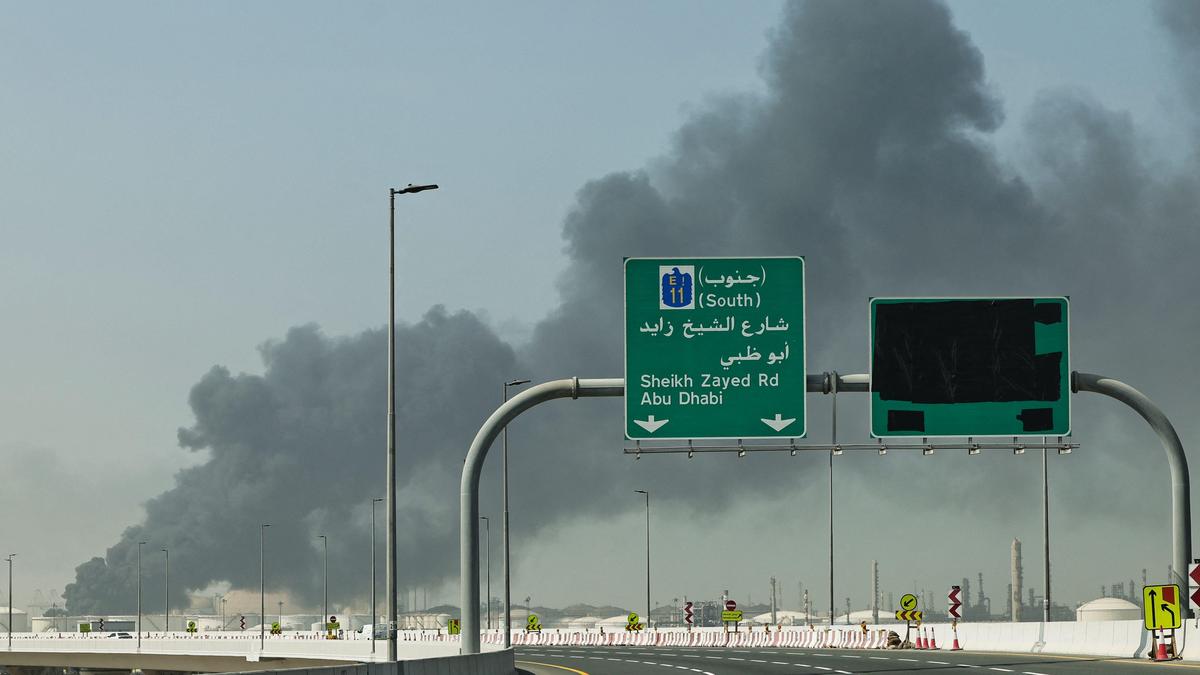
It is the second week of war since strikes by the United States and Israel on Iran began on February 28 citing ‘existential’ and ‘imminent’ threats. A joint offensive by two of the world’s most lethal and technologically advanced militaries was expected to crush Iran quickly — but Iran has struck back hard, hitting targets once thought safe or ‘untouchable’.
Why has Iran targeted them? How does it change the nature of war? These targets are the various American military bases and assets spread over the Gulf region in Saudi Arabia, the United Arab Emirates (UAE), Qatar, Bahrain, Jordan, Iraq, Syria and Oman. These attacks, combined with strikes on critical energy infrastructure, such as oil depots, oil fields, gas fields and perhaps most crucially, the closure of the Strait of Hormuz — have thrown the entire region into panic. Tough questions are being asked, especially on the security guarantees that America has been promising the region for over decades. There is a sense of disbelief and helplessness in the region witnessing the bubble of externally sponsored security blow away in no time. Many are questioning the logic of it all while others are already looking at alternate security options for the future.
The Gulf security arrangement
As the war continues, there are reports that the missile interceptors in the Gulf countries have run out with the U.S. unable to replenish them, prioritising the limited availability of these critical defensive systems for Israel. Why are the Gulf countries so helpless in defending themselves? The answer lies in a security arrangement worked out in the region, through America, almost 45 years ago.
After the Iranian Revolution in 1979-80, the region’s monarchies felt threatened and the U.S. promised to defend Gulf stability against external threats. In his 1980 State of the Union Address, in reaction to the 1979 Iranian revolution, U.S. President Jimmy Carter had assured the region, and warned that any outside attempt to control the Persian Gulf would be regarded as an assault on vital interests of the U.S., and that such an assault would be repelled by any means necessary, including military force.
There were several more initiatives later. At the U.S.-Gulf Cooperation Council (GCC) Summit in Riyadh in May 2017, a proposed regional alliance in the form of an ‘Arab NATO’ or the Middle East Strategic Alliance (MESA) was mooted, including the GCC nations, and Egypt, and Jordan. It failed to take off due to the diplomatic blockade on Qatar in June 2017. And, after the Israeli missile strike on Doha, Qatar, targeting the Hamas leadership in September 2025, the U.S. had assured iron-clad security guarantees to Qatar akin to Article 5 of the North Atlantic Treaty Organization (NATO) Charter.
However, all past U.S. efforts and assurances have come to nothing. The U.S. has failed to protect the Gulf countries, and the ongoing conflict demonstrates that its security guarantees are illusory, ineffective and unreliable. The Gulf states can no longer count on American assurances for their future safety.
What India can learn
There are crucial lessons. For decades, India has been one of the top importers of arms. The turning point came with the Kargil War in 1999, which exposed both critical shortages and vulnerabilities arising from import dependencies. One of key recommendations of the Kargil Review Committee was achieving self-reliance in military equipment.
However, it was only after 2014, that ‘Atma Nirbharta’ or self-reliance actually took shape. Over the past decade, the import percentages have gone down and indigenous productions have taken off with private players being encouraged and even incentivised. In FY 2024-25, Indian exports touched a record ₹23,622 crore (approximately $2.78 billion) while import percentages came down to 25%-30%. Major weapon platforms such as the BrahMos missile, Tejas fighter aircraft, artillery guns, and ammunition are in demand internationally, while several foreign-origin systems are now being manufactured in India.
Looking ahead
The war in Iran has many bitter lessons for the region and the world. Reports suggest that Saudi Arabia, the UAE, and Qatar are not only considering reducing their investment commitments in the U.S. but are also exploring options to remove American military bases from their soil. If this happens, it will be the most transformative change in the regional security architecture since its inception almost 50 years ago. How this will unfold and what the future Gulf security architecture will look like remains to be seen. One thing is clear. A lesson from this war is that national security cannot be bought or outsourced.
Rajeev Agarwal is a West Asia expert, a Senior Research Consultant at Chintan Research Foundation, Delhi, and a retired colonel. His X Handle is @rajeev1421
Published – March 10, 2026 12:08 am IST