


Gender, agriculture and climate change
Each year, March 8 is celebrated as International Women’s Day. This year, its significance has increased manifold as 2026 has been declared as the ‘International Year of the Woman Farmer’, a global initiative led by the Food and Agriculture Organisation. This is to recognise the vital role of women in food systems, raise awareness of their challenges, and promote policies for their empowerment and gender equality. The year aims to tackle issues such as unequal access to resources and decision-making, ultimately accelerating gender equality in agriculture.
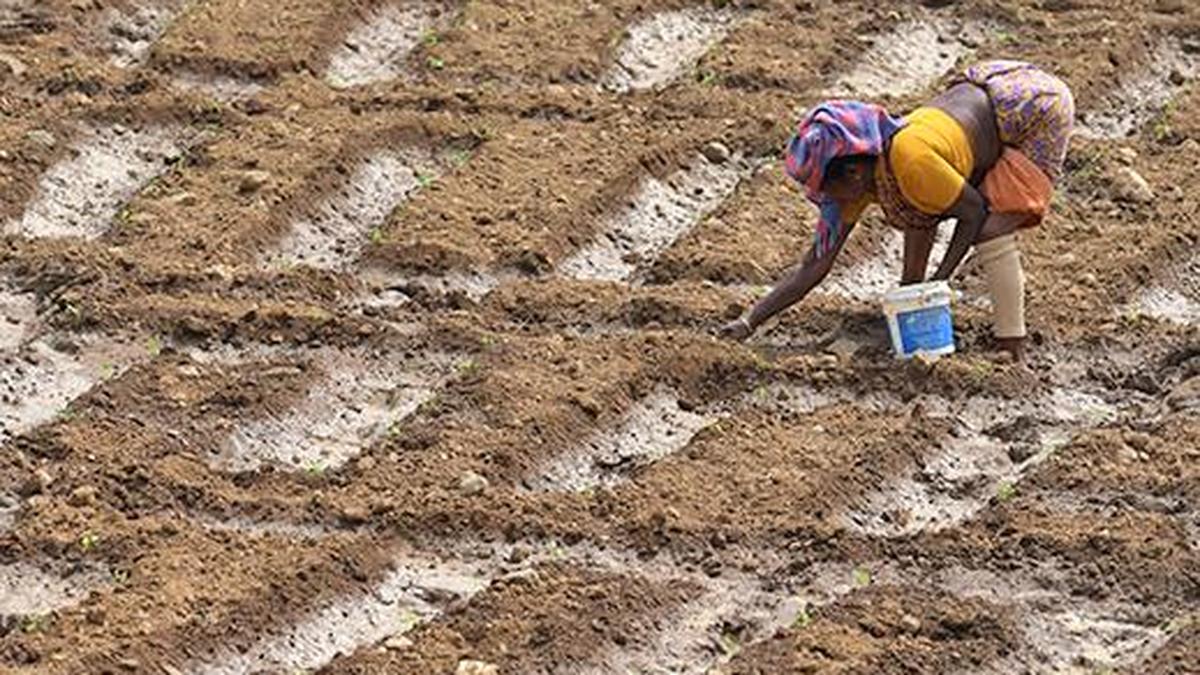
Around 64% of India’s agriculture workforce and about 70% of all farm tasks are being handled by women. In fact, around 80% of the rural women are engaged in agriculture. As per the Indian Council of Agriculture Research (ICAR) report of 2020, their participation is 75% in crop production, 79% in horticulture, 51% in post-harvest work and 95% in animal husbandry and fisheries. Migration of men for work is another factor in the feminisation of agriculture in certain regions. Women members left behind are burdened towards managing agriculture and domestic responsibilities with less family labour, further exacerbating their vulnerability. In fact, empirically, women are found to adapt less to climate change due to gendered limitations around access to information, technology and decision-making processes as well as the increased workloads.
Also Read: Rights, justice, action for India’s women farmers
Further, only 13.9 % of land holdings (agriculture) are in the name of women. This impacts them in multiple ways, including hampering their enrolment under various schemes such as Pradhan Mantri Kisan Samman Nidhi, Kisan Credit Card (KCC), Pradhan Mantri Fasal Bima Yojana (PMFBY), etc. Furthermore, the critical decisions regarding selection of crop, purchase of seed and selling the crop are taken by men while the back-breaking work, such as sowing, weeding, and harvesting of the crop, is performed by women. Thus, decisions regarding income from agriculture and how to spend this income are mainly taken by men. This is a paradox considering that income earned by women is mainly invested in the nutrition of family and education of children.

Reform measures
The Government of India and the States have been sensitive to the above and have taken a number of steps to empower women. These include reduced stamp duty for women on registration of land, registration of houses in the name of women under, 30% women beneficiaries under sub-mission on agriculture mechanisation, and the Namo Drone Didi scheme, etc. Further, Deendayal Antyodaya Yojana – National Rural Livelihoods Mission (DAY-NRLM), a dedicated programme of the Ministry of Rural Development for the rural women, is playing a stellar role in this. Around 10 crore households have been mobilised into 91 lakh self-help groups (SHGs), which have been further federated into 5.35 lakh village organisations (VOs) and 33,558 cluster-level federations (CLFs) under the programme.
The DAY-NRLM has not only enabled institutions of the poor and financial inclusion for the rural women, but it has also taken up a number of initiatives to improve the livelihoods of the SHG members. Accordingly, in the farm livelihoods, the initiatives taken up are Mahila Kisan Sashaktikaran Pariyojana (MKSP), a sub-scheme under the programme, universalisation of farm livelihoods through State Rural Livelihood Mission (SRLM), annual action plans, and value chain development interventions. The results have been highly encouraging with the adoption of sustainable agriculture, sustainable Non-Timber Forest Products (NTFP) collection and harvesting practices, and, most importantly, giving women the identity and status as ‘farmer’.
Also Read: Empowering women in agriculture for food security
Another important contribution of the DAY-NRLM has been the creation of social capital for agriculture, NTFP and livestock, from the best practitioners as extension workers. There are more than two lakh such Community Resource Persons (CRPs) known as Krishi Sakhis, Pashu Sakhis, Matsaya Sakhis and Madhu Sakhis depending on their area of expertise. These are being recognised by other Departments. In fact, the ‘National Mission on Natural Farming’ of the Ministry of Agriculture & Farmers’ Welfare has dovetailed with the DAY-NRLM to utilise the services of these Krishi Sakhis.

Recognising that women farmers often lack the bargaining power, visibility and market access required for meaningful participation in agriculture value chains, significant investments have been made in building and nurturing Farmer Producer Organisations (FPOs), Producer Groups (PGs), and Producer Enterprises (PEs) under the programme. Around 2.08 lakh PGs (informal organisations) covering 42 lakh members have been formed. Further, 1,340 PEs (formal organisations) have been established with 18 lakh members. These PEs also include 800 FPOs under the 10K FPO scheme of the Ministry of Agriculture & Farmers’ Welfare (MoA&FW), being implemented under the programme. In another initiative, 37,031 Custom Hiring Centres (CHCs) have been established to not only reduce the drudgery of women farmers but also to ensure availability of the modern equipment’s to them.
Multidimensional process
The above achievements are laudable, as these are spread out across the country and anchored in the community. However, the impact of climate change is now being increasingly felt by the rural community on a larger scale. Climate-induced weather patterns due to heat waves, delayed rains and strong winds are adversely impacting the agricultural growth. The impact of these is being felt acutely by the rural women farmers. In fact, the poor feel the impact of climate change most, and among them also, women are the first to bear the brunt of such impact.
To address the above emerging challenges, gender responsive climate investments, especially in the agri value chain, are a must. However, women’s empowerment is a multidimensional process through which women gain the ability to make strategic life choices, exercise agency and access resources that enable control over their economic, social and personal futures. The following are a few suggestions to empower women in an era of climate change:
1. The awareness campaign needs to be taken up regularly to sensitise farmers about the impending effects of climate change and mitigation strategies (including insurance)
2. Rural women need to be supported in multiple livelihoods, so that if one livelihood is impacted through climate change, the other livelihoods should help them to tide over the crisis
3. Focus on value addition, and it should cover all the steps in the value chain, including inputs and marketing. Concomitant with it is a focus on high-value crops, e.g., honey, spices, floriculture, medicinal and aromatic plants etc.
4. Hyper-localising value addition within the village to ensure that it happens within the women’s mobility radius
5. Promote crop diversification, conservation practices (water conservation and zero tillage, etc.) and resilient varieties
6. Develop entrepreneurship among rural women with appropriate mentorship and financial support. Specific credit products as per requirement of rural women need to be developed. The digital marketing, e.g., onboarding on ONDC, WhatsApp and Instagram, etc., also needs to be facilitated
7. Convergence with various government programmes, e.g., Gram Dukaan of NABARD, grain storage plan of the Ministry of Cooperation, Agriculture Infrastructure Fund of the MoA&FW
8. Access to advanced financial products, e.g., parametric insurance, impact bonds and commodity hedging etc.
9. Custom hiring centres to include climate-smart technologies, especially for activities with higher women participation to reduce drudgery, e.g., cono weeder, sun dryer etc.
10. Promote protective agriculture, e.g., polyhouses, shade nets, or greenhouses for vegetables, floriculture and nurseries, etc.
11. Training and handholding for regulatory, traceability and quality requirements through certifications, licences and compliance, etc., to get better price support
12. To make available climate-smart guidance accessible via images, voice and text in real time and in local language through various applications like ‘Farmer Chat’
13. A single point of access for various schemes of the government and agriculture advisories. The recently launched ‘Bharat Vistaar’ is a step in this direction
14. Land leasing to be recognised for availing benefit of various government schemes. This will ensure the benefits reach the actual tiller
15. Gender-focused research to observe the impact of various interventions and recommend appropriate steps for action
16. Weather stations to disseminate village-specific information in real time to the farmers in their local language. For this, the services of the CRPs may be enlisted. In fact, these CRPs can provide proper feedback on the action taken by the farmers to the meteorological department for better forecasting strategies
17. Social change takes time and needs to take everybody along, so engage men and youth as allies
The climate challenge impacting women farmers is huge. Accordingly, financial institutions, government departments, NGOs, private sector actors and other stakeholders must collaborate to design gender-responsive policies, project initiatives, financial products, insurance models, and market systems, etc., to mitigate their impact.
The above recommendations are not welfare measures but are necessary for the growth of the country, as women will make significant contributions to the GDP. So, let us resolve on this International Women’s Day to build such an ecosystem that focuses on instituting policy and institutional reforms that recognise women not only as caregivers but as farmers, entrepreneurs, and leaders.