

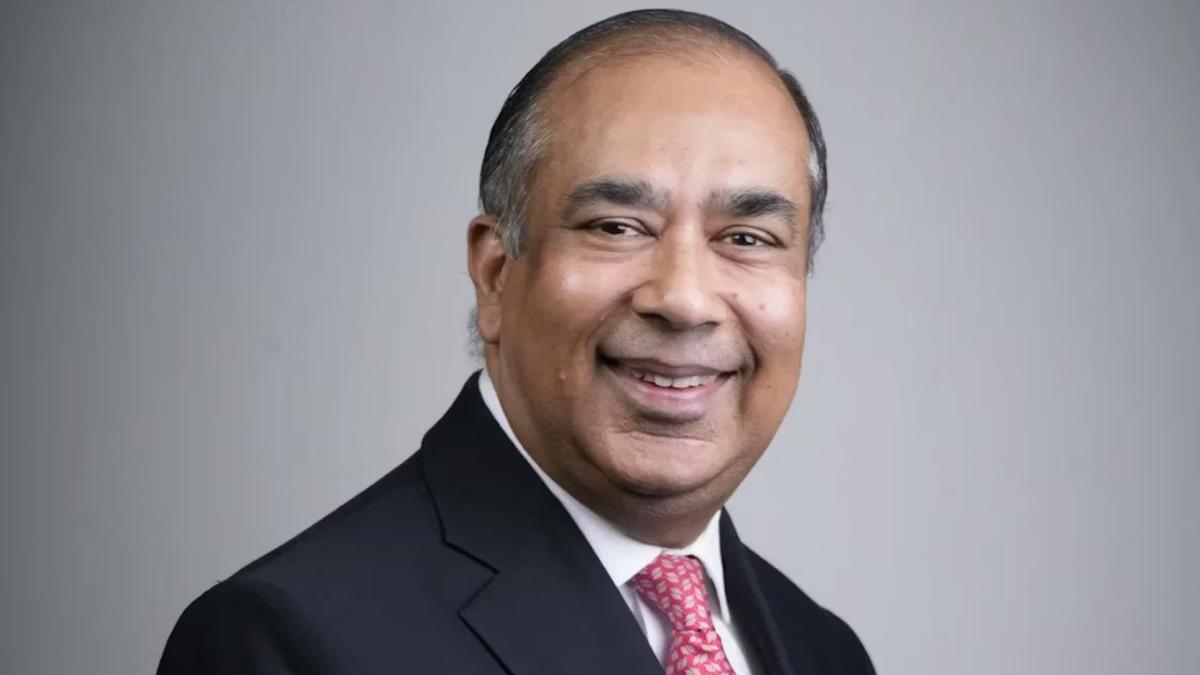
Indian corporates likely to continue capex investment despite West Asia conflict: Siemens MD
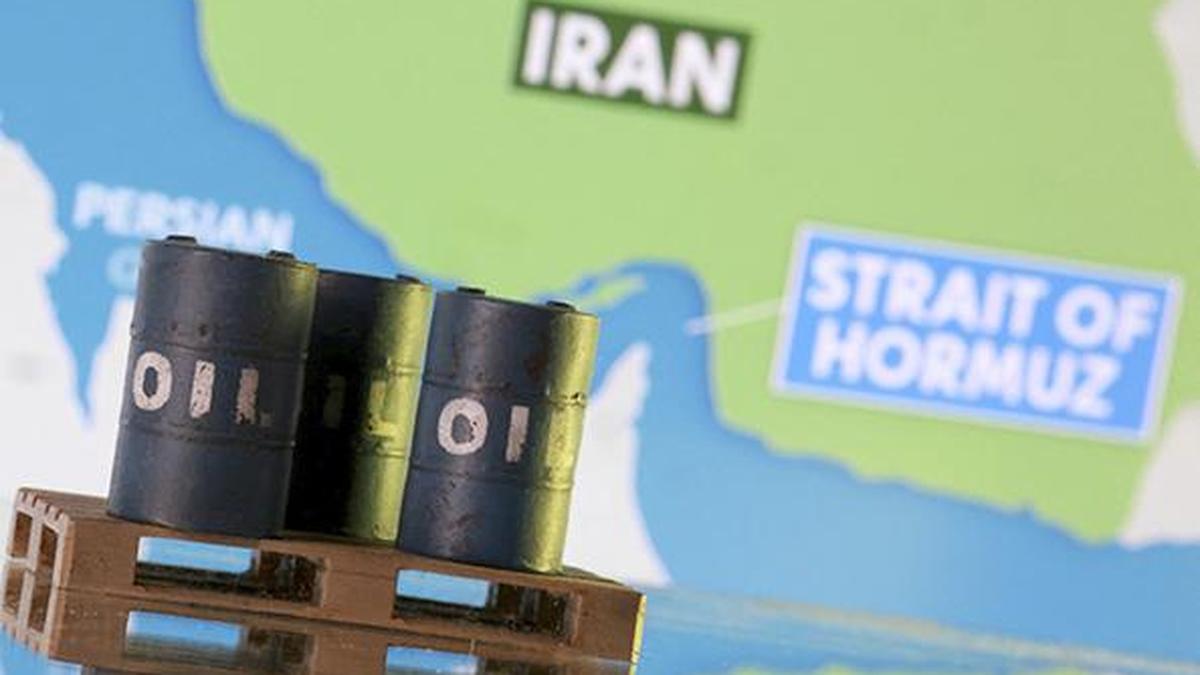
Despite concerns on fuel price-led inflation impacting corporate sector earning this year due to continuing geopolitical trouble in West Asia, Siemens Ltd. Managing Detector and Chief Executive Officer Sunil Mathur expressed confidence that Indian corporates would keep their capex plan intact to cater to the domestic market.
“It’s is too early. We are only in the fifth or sixth day. There are some signs over there, oil prices have gone up. We will have to see whether that stabilizes. I think the domestic market in India for our customers is large enough. So the capex investments will continue here in India because primarily they want to service the Indian market,” Mr. Mathur said in an interview.
“There may be some impact on exports, there may be some impact on supply chain slowing down a little bit but we will have to see. It is still too early,” he pointed out.
To double revenue in five years
Starting that his company’s growth plans were in line, Mr. Mathur said the strategy was to double the volume in India within five years.
Further elaborting on this, Peter Koerte said that as the world becomes more complex, the company was looking for growth across different industries and across different geographies and India was one of them. Mr. Koerte is a member of the Managing Board, Chief Technology Officer and Chief Strategy Officer of Siemens AG, the parent of Siemens Ltd.
“There are a couple [of industries] that are really sticking out. One of which is data centers, semiconductors. These are all the industries that are really growing fast,” Mr. Koerte said.
“You don’t find many countries nowadays that are growing 7% GDP, quite frankly. Our markets tend to grow faster. The infrastructure that is needed has to be even higher than that to build all of this up,” he added.
Emphasising that usually some economies go sideways, some go down while some go up, he said: “In India, everything is going up, up, up and up. Yes, we want to double down.”
“I always want to double. I want to double our volume in India. The only question is, I always have to do this way. More than five years is not acceptable. That is the conversation.. is it three years, four years or five years? Certainly not more,” Mr. Koerte said.
Stating that India has the growth potential, he said: “We don’t see any signs of stopping it. We see that India is so open as an economy. I marvel at your diplomacy and being able to have right relationships with so many different parts of the world. Also, that exemplifies itself in all the tariffs that you have.”
“It is a very free trade arrangement. Now, you have that with the EU, which we are super happy about, which is fantastic. Therefore, I think you [India] are taking all the right steps in order to propel that economic engine going forward,” he pointed out.
AI not ‘crashing’
Amidst growing concern on overheating of technology stocks as well as disproportionate investments going into Artificial Intelligence (AI), Mr. Koerte, a top technology expert, dispelled fears saying that “it’s not crashing”.
“I hope it’s not crashing. I hope that this is finding its own way, but one could argue, of course, that there’s a race, and there’s a race between people that are all very strong, and that, of course, they want to win,” Mr. Koerte said in the interview.
“So maybe it’s not always the rationale, but we don’t know,” he emphasised.
Stating that a lot of use of AI maybe not be as useful, he said the “faster we deploy this, the less the risk of it.”
In anticipation of AI demand outstripping capacity, tech giants like Amazon Web Services (AWS) and Google have committed massive investments of $200 billion and $175 billion, respectively. “These are huge numbers by any shape or form, so there is no question. Potentially the way we look at it is, we want to bring AI into manufacturing settings. The faster time to market, better quality, better productivity, all of it,” he added.
“The fastest way to de-risk this whole thing is to have AI applications that deliver true business impact and value. That is where we need to get to,” Mr. Koerte said.
Though there is conversation on spaces where AI demand could surpass supply, Mr. Koerte said he believes that “demand will sustain itself only if it delivers true tangible business value, because then you are ready to pay.”
“What we know for sure is that every company today is spending more on AI than they used to, in terms of also IT costs. And this might be right, because if we think that AI is the future and employer agents are like your human workers, then I think you will see a shift in the P&L from labour expenses into IT expenses naturally,” he pointed out.
“It’s not one for one, but obviously to some extent. And so therefore, I think an elevated IT line and your P&L is working, but for that you need to see the productivity. And that’s still out there,” he concluded.
Published – March 08, 2026 04:30 am IST