




Merchant ships continue to be stranded upstream of Strait of Hormuz

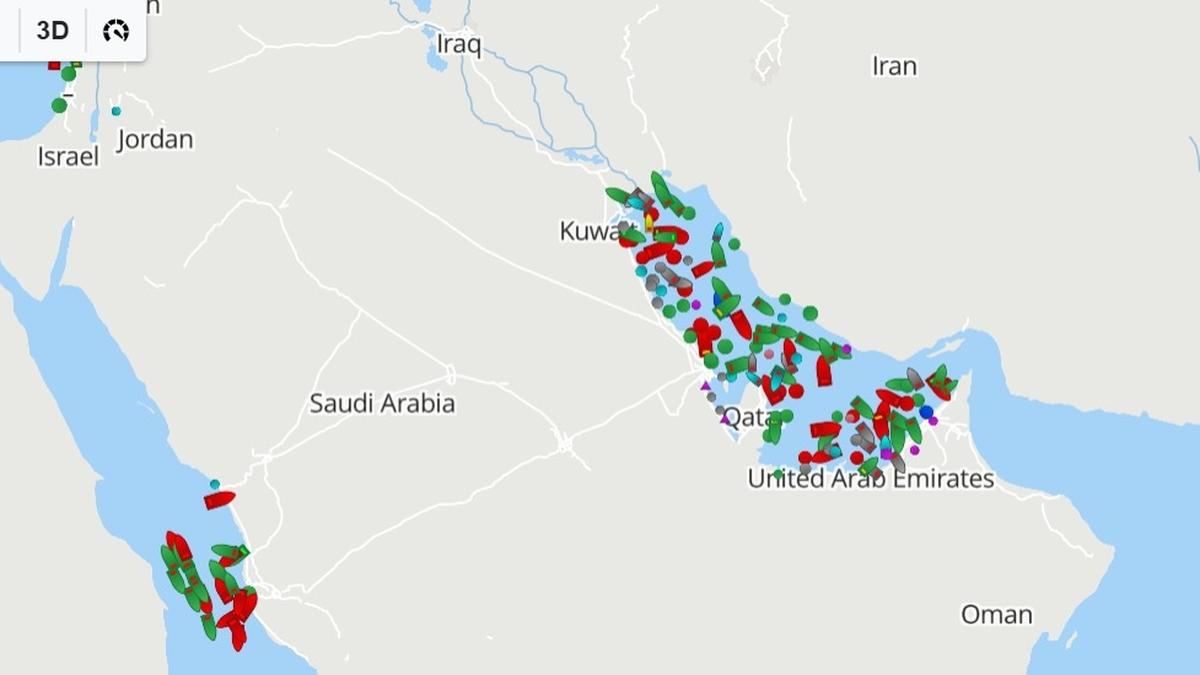
More than 600 ships are estimated to be trapped, out of whom some 250 are oil tankers and gas carriers.
| Photo Credit: Special Arrangement
With the conflict in West Asia escalating, merchant ships continue to be stranded upstream of Strait of Hormuz, even as the world awaits the rollout of the U.S. government’s promise of deploying its Navy to escort the ships and funding war risk insurance for the vessels.
On Thursday, Sonangal Namibe, a crude oil carrier whose owners and managers are based in Houston, Texas, as per Equasis database, became the ninth ship attacked in the region since the conflict started. Skylight, a ship sanctioned by the U.S. for Iranian links and manned mostly by Indian crew, was also among the ships attacked. Insurance companies are seeking to renegotiate their coverage of ships serving the Persian Gulf.
War risk insurance policies that can cover ship transit through the Strait of Hormuz come with premiums of 1% to 3% of the vessel cost itself, says David Osler, Law and Insurance Editor of Lloyds List Intelligence. This means vessels transiting the Strait of Hormuz will now need to pay weekly insurance premiums of nearly the same amount they would pay for an entire year, he says.
Insurance premiums have registered increases across the world since the recent conflict started. Ships on the Persian Gulf route may have to pay 10 times or 15 times more for insurance coverage, which is a basic requirement for any merchant ship to embark on a voyage. Experts talk of affiliative risk – vessels may have owners formally based in neutral countries and the ships may fly flags of other nations but if they have links with not just Iran but also the U.S. and Israel, then they may have to pay much higher premiums.
Governments such as the U.K. have historically footed the bill for such war risk insurance policies. In December of last year, Denmark passed a law providing war risk insurance for its ships to safeguard energy supplies.
One fifth of the world’s oil and gas supplies pass through the strait.
More than 600 ships are estimated to be trapped, out of whom some 250 are oil tankers and gas carriers. At least 10% of the oil and gas ships are estimated to be Indian flagged vessels bound for India. The government-owned Shipping Corporation of India is among the leading ship owners whose vessels have been stranded in the Persian Gulf west of the strait.
Though oil and gas facilities have been hit and some such as Qatar’s facilities have been shut down, many Persian Gulf ports continue to be operational.
Lloyds List Intelligence reports that there has been a 95% decrease in the number of ships transiting the Strait of Hormuz. On Friday, the few that transited included Iranian container ships that have been sanctioned by the U.S.
No India related ship has transited the strait. SCI has ships with some nine lakh tonnes of cargo carrying capacity in the area while Sanmar has some 3 lakh tonnes.
Published – March 06, 2026 09:56 pm IST