



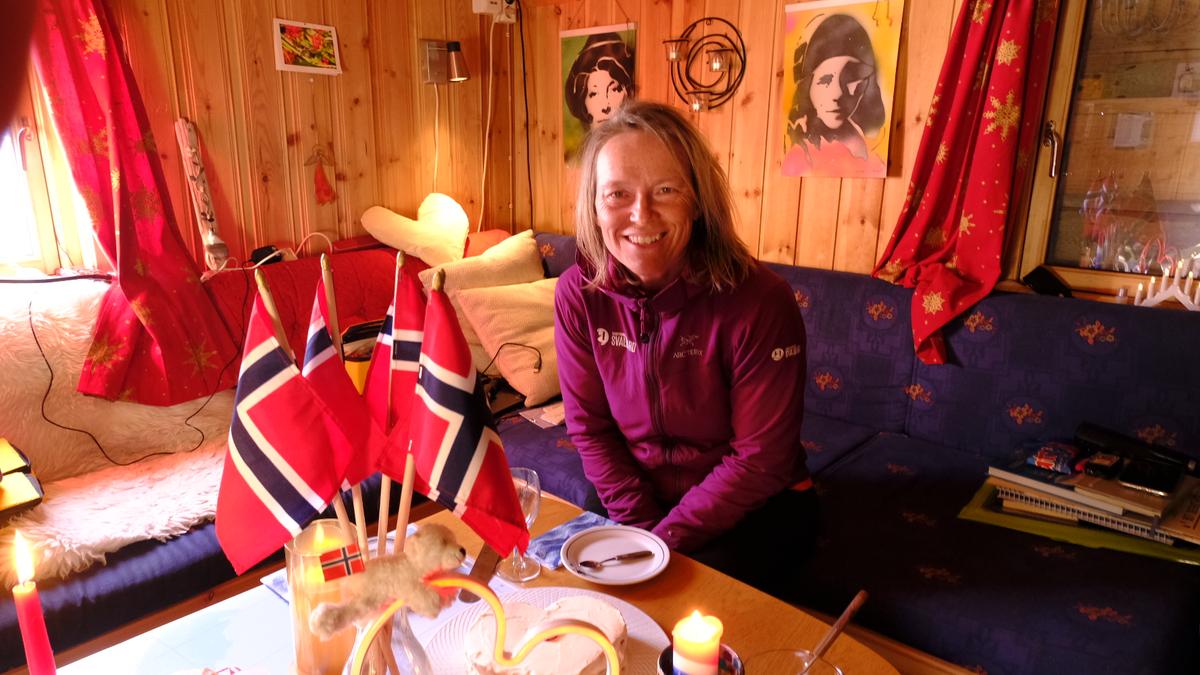
Meet the woman who’s on a climate mission to the North Pole
It isn’t every day someone casually mentions they are heading back to a cabin near the North Pole. Yet, that is exactly what 57-year-old Hilde Fålun Strøm, a citizen scientist based in Longyearbyen, the world’s northernmost town, told me when we met last year in the frozen archipelago of Svalbard.
Norwegian by nationality, Strøm grew up outside Oslo in a family that spent long days outdoors. Her passion for the Arctic began in childhood and deepened after she moved to Svalbard in 1995, where she lives with her husband Steinar, who works for Statsbygg and oversees properties owned by the Longyearbyen government. The two have lovely grandchildren.
An explorer, polar ambassador and climate advocate, Strøm runs Svalbard Expeditions and is the co-founder, with Sunniva Sorby, of Hearts in the Ice, a pioneering citizen-science initiative. She advocates for Arctic protection through global platforms such as COP26 and contributes to projects like Arctic Call, an Inuit-led summit integrating traditional knowledge with modern climate monitoring. This year, it is slated for September 11-15.
When I visited the region, it was early spring, and Svalbard was buried under snow. The sun didn’t set at all, yet no trees grew. The starkness felt almost extraterrestrial, and yet inviting. No wonder it held Strøm so firmly.
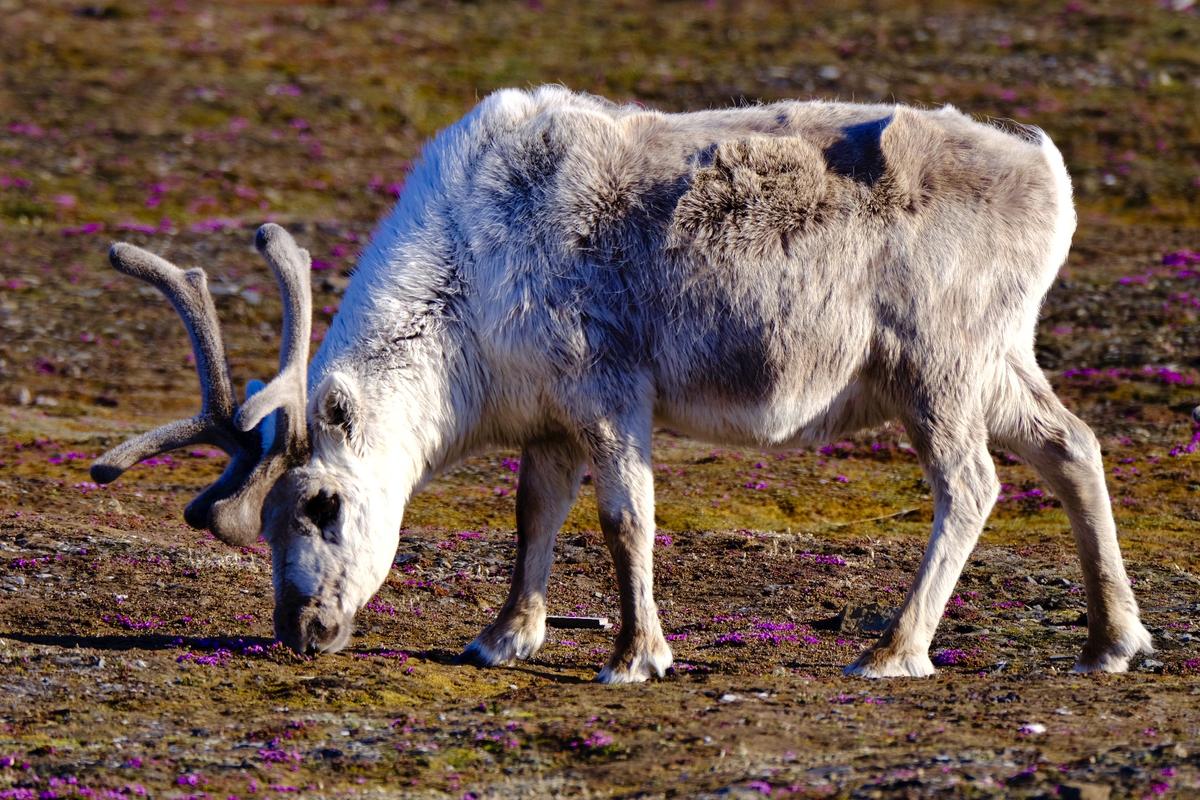
Reindeers of Longyearbyen.
| Photo Credit:
Courtesy Hilde Fålun Strøm
“When I return from the cabin,” she told me, “it is never with stories of solitude or survival. It is always science, encounters with polar bears, and a kind of happiness I cannot quite describe.” Bamsebu, the cabin, is a 20 sq.m structure built in 1930 for summer beluga hunting. There is no insulation, electricity or plumbing. “No heating either, unless you count the wood stove,” she said. “I have been collecting driftwood for years.”
Absolute isolation
Longyearbyen is a land of glaciers and fjords, midnight sun and unending polar night. For part of the year, daylight never ends; for months afterwards it never begins. The trapper cabin Strøm referenced intensifies all of this: glacier winds, the silence of the tundra, and the absence of human life except for polar bears and reindeer.
“It is 145 km as the crow flies,” Strøm explained. “But the route cuts across glaciers, mountain ridges and two fjords that must be frozen solid to cross. It is not a casual commute.” She travelled by snowmobile, towing a sledge loaded with 400 kg of food, fuel, equipment, and sometimes her husky. The journey could turn dangerous quickly.
There was the time when a storm she likened to a hurricane ripped the windshield off her snowmobile. “It flew off and landed between two ice blocks by the open sea,” she said. “I just leapt off and grabbed it before it blew into the water.” When she reached the cabin, she often had to dig through drifts to reach the door.
These short trips were nothing compared with the 19 months she once spent at Bamsebu with Sorby as part of a citizen science expedition. It had long been Strøm’s dream to live as close to the North Pole as possible, but not alone. “And it was not going to be my husband,” she laughed. She met Sorby, a Canadian, at a trade fair in Alaska in 2019. Soon after, the two were packing supplies for a winter of isolation in the frozen Arctic.
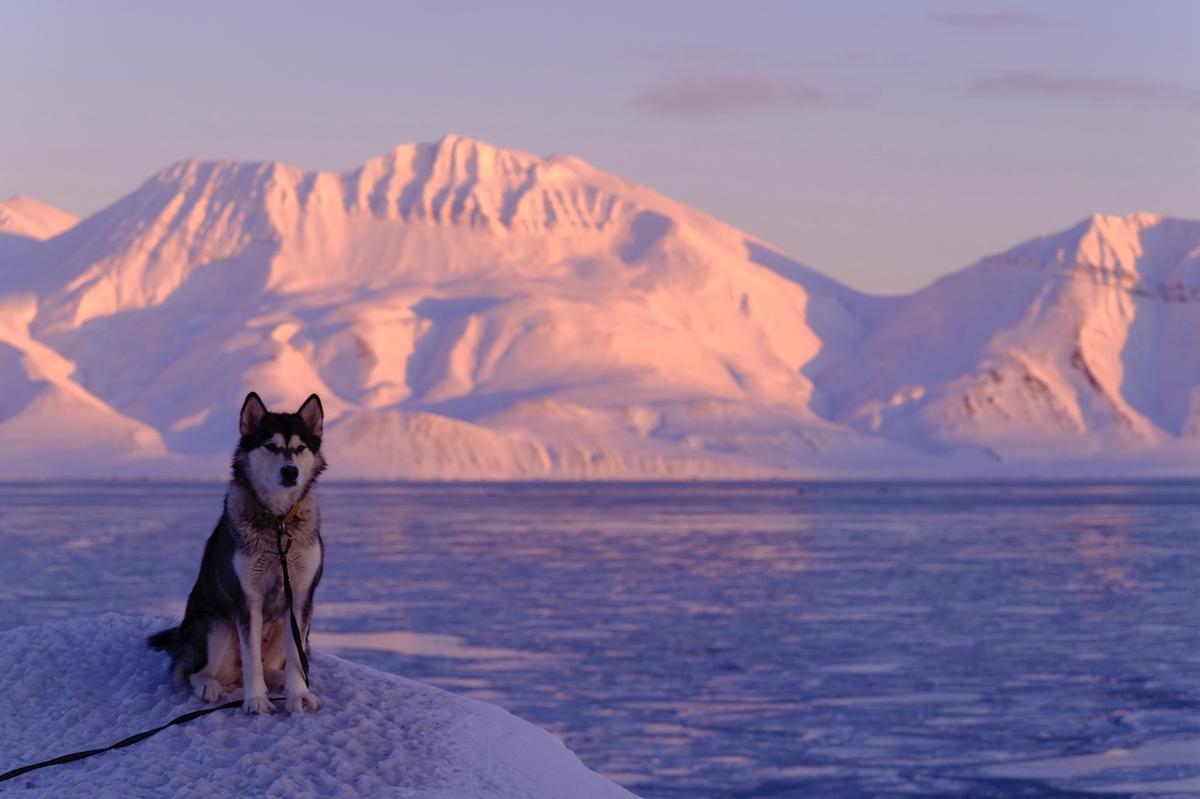
Hilde Fålun Strøm’s husky Ettra by the shore of Van Keulen Fjord (Van Keulenfjorden) in the remote Arctic region of Svalbard.
| Photo Credit:
Courtesy Hilde Fålun Strøm
Their plan was to stay nine months. COVID-19 stretched the expedition to nearly two years. “We got a satellite message with a single word: epidemic,” Strøm said. “We did not have radio or TV. By the time we understood the enormity of it, no ships were coming. We were not exactly stranded, but we could not leave either.”
Even if they could have, they did not want to. “We had too much equipment, and there were polar bears in the area. Abandoning food stores would have been irresponsible. And scientists could not access the field. We were the only ones reporting on long-term studies of polar bears and the tundra.” Despite limited satellite bandwidth, their research reached far. “We spoke to 104,000 children,” Strøm said.
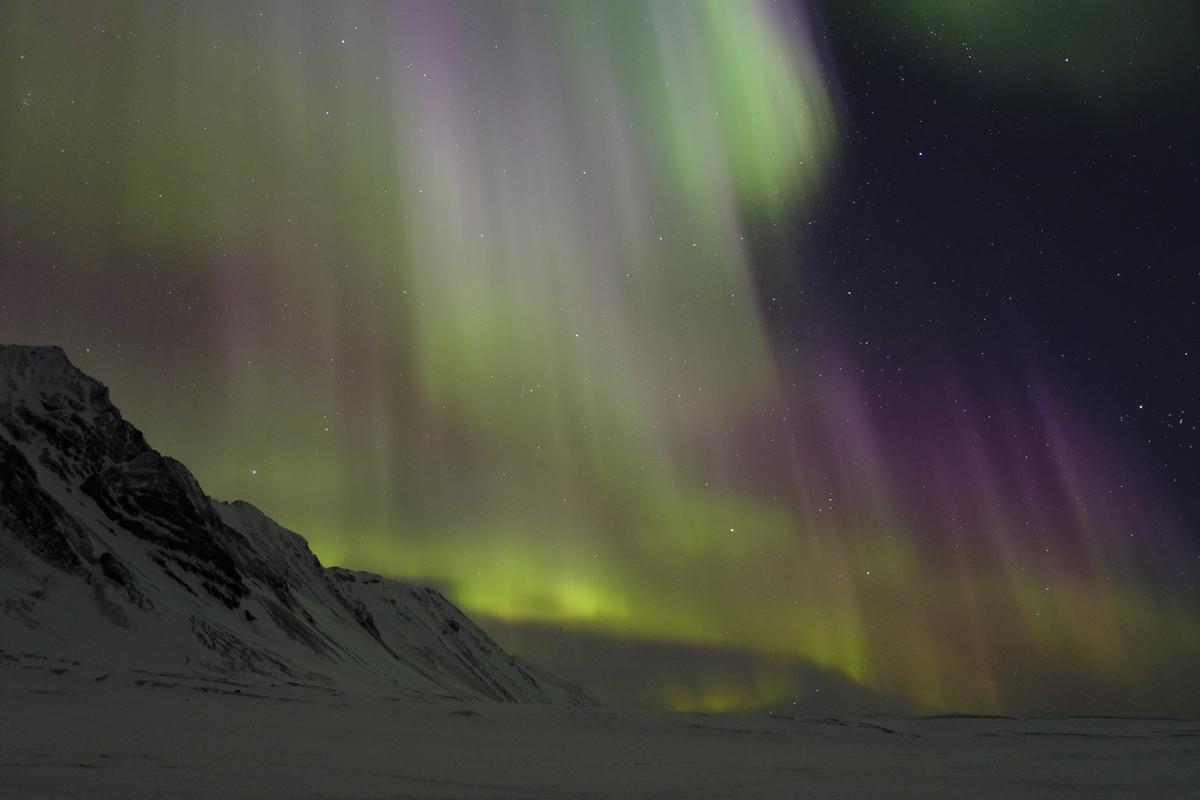
Northern lights.
| Photo Credit:
Courtesy Hilde Fålun Strøm
Wild encounters
Polar bears, she explained, struggle to survive without sea ice from which to hunt seals. They are among the species most vulnerable to climate change. “The Arctic is twice as vulnerable as the rest of the world to climate change. We wanted students to understand how melting glaciers here could reshape the entire planet.”
Strøm still marvels that she saw 104 different polar bears. One night, a bear slammed into the cabin wall and climbed onto the roof. “I grabbed my revolver, flare gun and rubber bullets and stepped outside. He was 30 m away. We locked eyes. Then he walked off.”
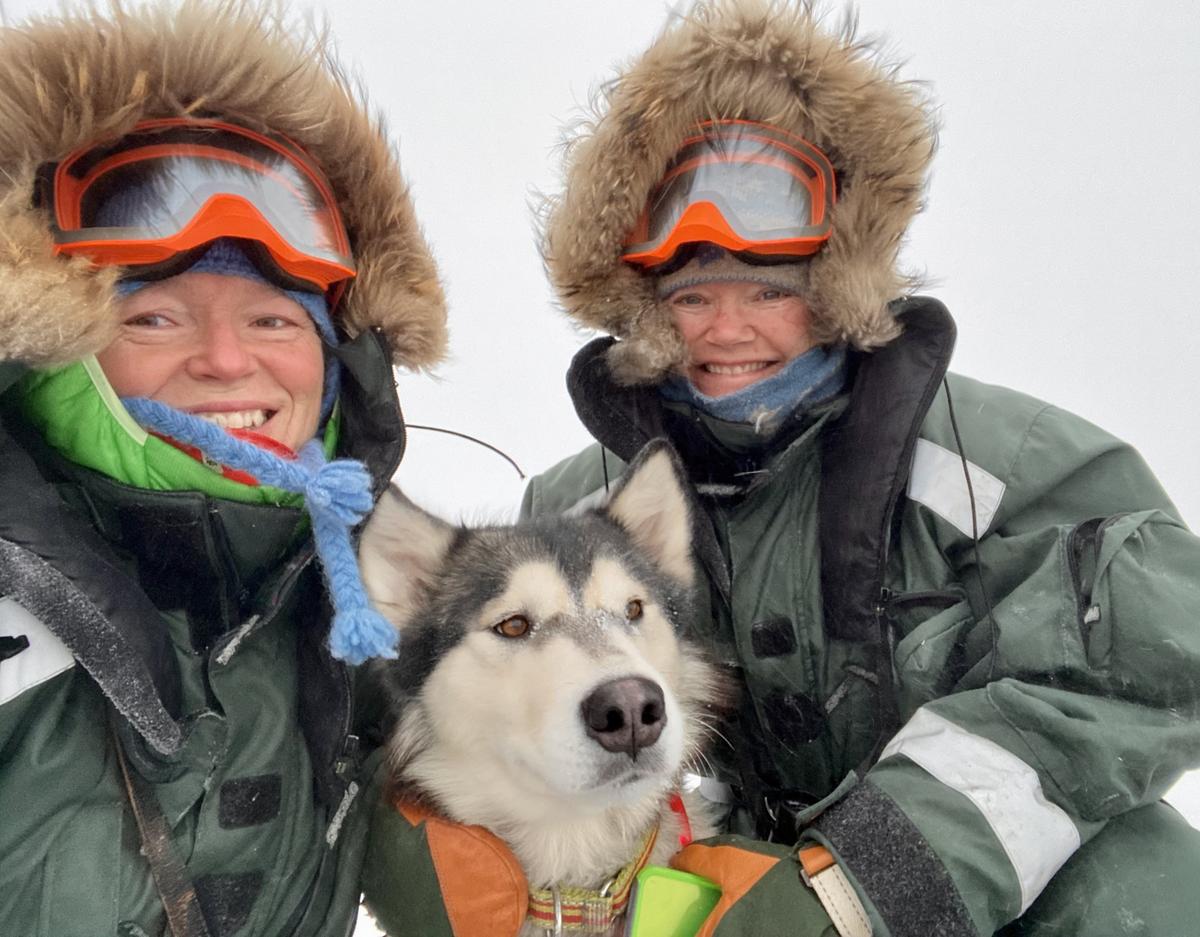
Sunniva Sorby and Strøm with her husky.
| Photo Credit:
Courtesy Hilde Fålun Strøm
Her days began at 7 am. She lit the stove, chopped ice blocks to melt and boiled water. Later in the year, the women melted snow or used a nearby stream. Meals were simple: oatmeal or granola for breakfast, reindeer or Arctic char for dinner. “We even had a tiny solar- and wind-powered freezer.”
Strøm walked her dog Ettra daily, even in storms and months of darkness, with lights on the dog’s collar and heat-sensing binoculars to spot danger. The women exercised each day, washed their hair every two weeks using melted snow, washed clothes “in the same bucket”, and dried everything “by the stove”.
Still a woman
One day, the new priest of Svalbard arrived by helicopter, carrying “fruits, vegetables and my husband”, Strøm recalled. Even in extremity, the women preserved small rituals. “I wore a dress on Christmas and New Year’s Eve,” she said. “Curled my hair. Put on makeup. It reminded me of who I was, strong, yes, but still a woman.”
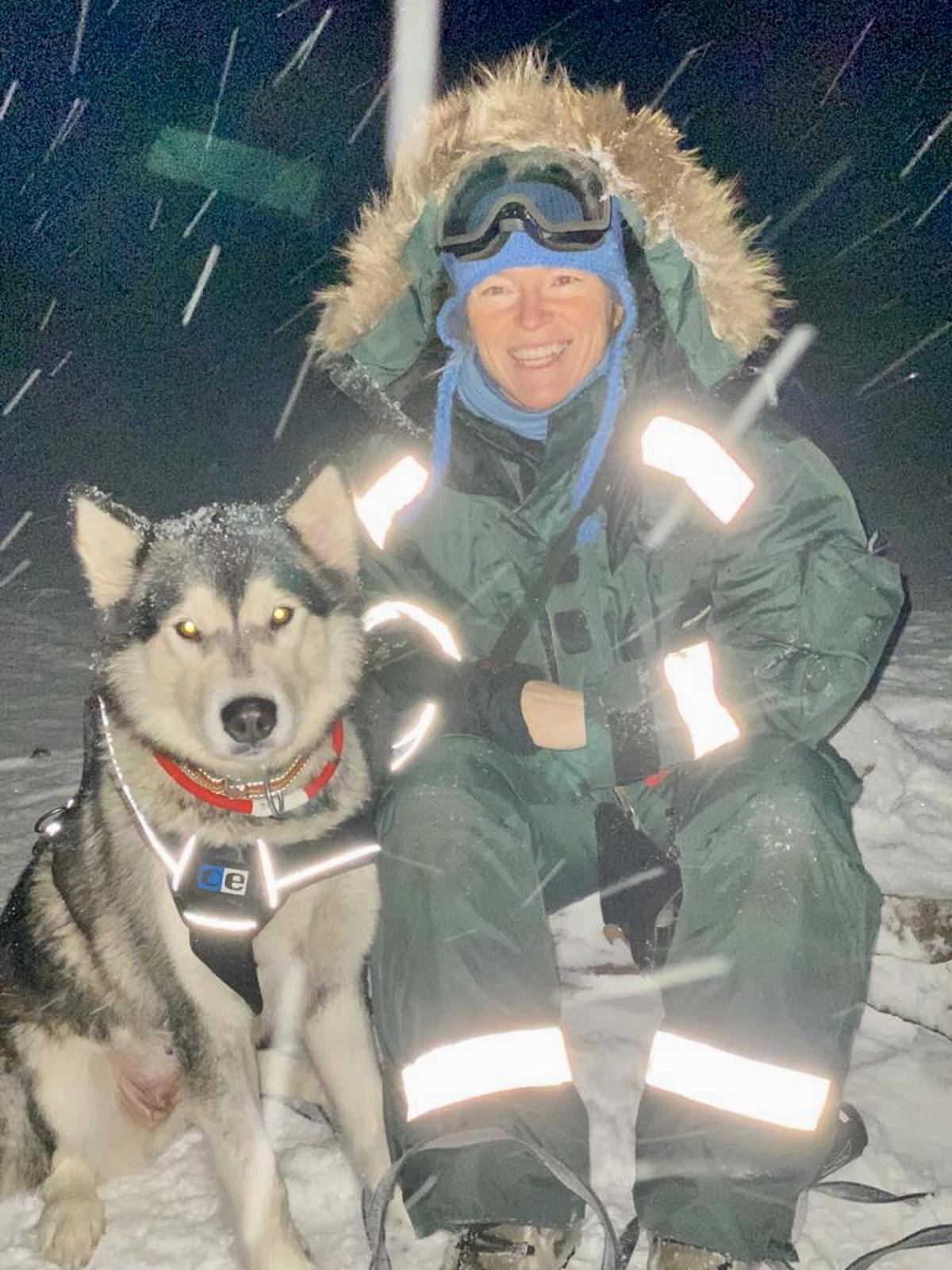
Strøm with her husky.
| Photo Credit:
Courtesy Hilde Fålun Strøm
For those brief two hours, she and her husband “stood outside, holding hands in the snow, singing about how lucky we were to be alive. It was one of the most powerful moments of overwintering”. Overwintering taught Strøm how little one needs in life to be happy. How everything is interconnected, that we are not only part of nature, we are nature. How important storytelling is. And how much fun it is to be part of the solution, not the problem.
What about a toilet, I asked. “For the first six months, we went to the shoreline, 40 m away. Not fun in a blizzard for a woman.” But “this was not a retreat. It was resistance, against disconnection from the planet, against apathy in the face of climate change”, she said.
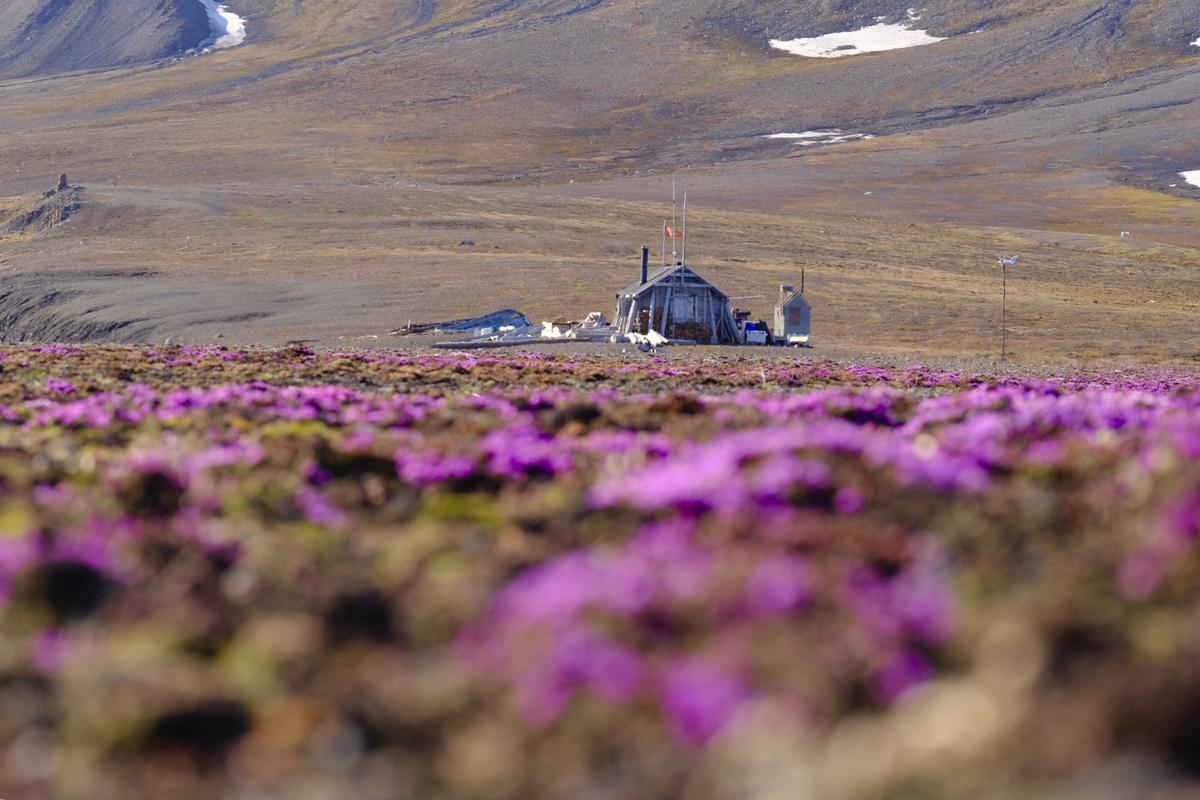
Longyearbyen in springtime.
| Photo Credit:
Courtesy Hilde Fålun Strøm
Strøm’s work today reflects that conviction. Beyond the data and the ice, Strøm’s legacy lies in her mission to cultivate more heartbeats in leadership, a shift away from cold, clinical approaches to climate change and toward empathy, collaboration and human connection. By bringing together women leaders, including indigenous voices, she hopes to combine traditional knowledge with modern science to protect the environments they call home.
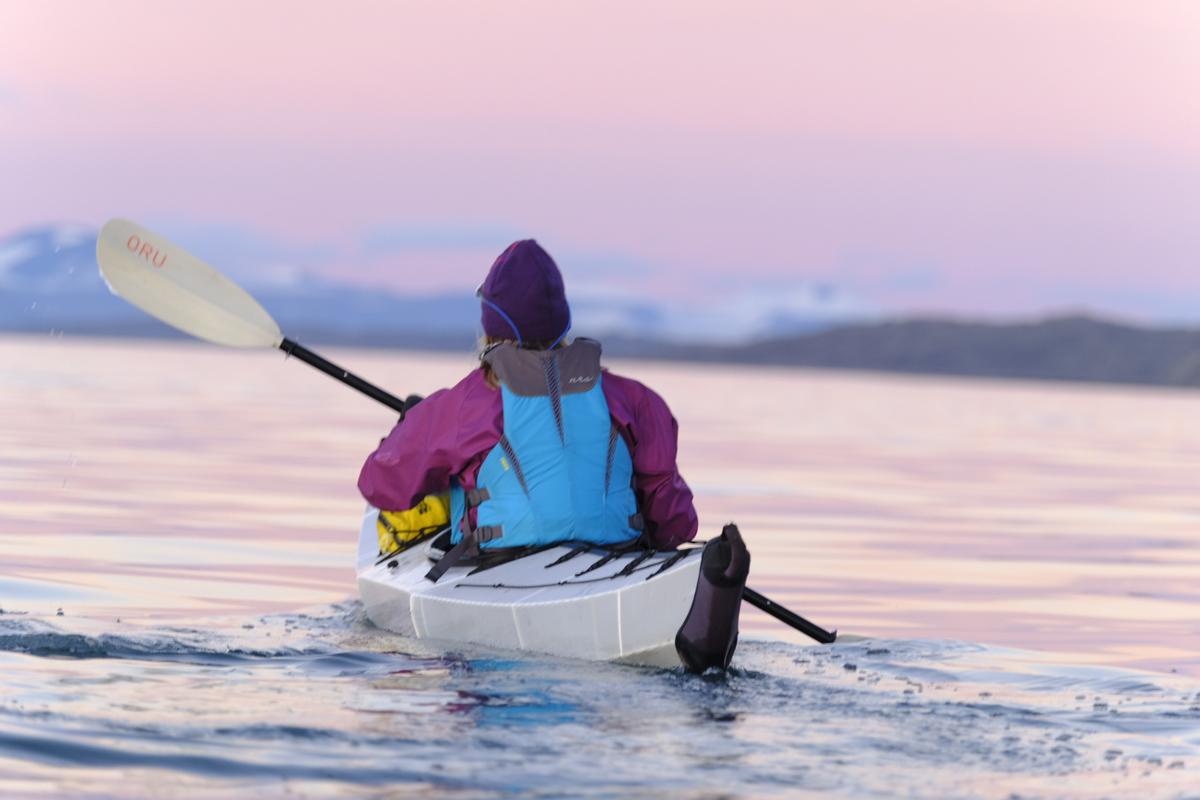
Hilde Fålun Strøm boating in Van Keulen Fjord (Van Keulenfjorden) in Svalbard.
| Photo Credit:
Courtesy Hilde Fålun Strøm
She believes female leadership is essential to addressing the climate crisis. “Women are caretakers. We are resilient. If we educate girls around the world, we do not just save the planet, we create a more peaceful, sustainable world,” she concluded.
The writer is a Mumbai based author and cultural commentator.