




Restoration of temple pond in Kurinjipadi a start to citizen-driven revival of Chola-era waterbodies
In the heart of Cuddalore district, Kurinjipadi is witnessing a quiet, yet determined revival — not only in terms of its waterbodies, but of collective memory, local identity, and traditional civilisational knowledge.
What started as a grassroots clean-up initiative has evolved into a structured movement to revive the ancient Chola-era tank system that once sustained this fertile landscape.
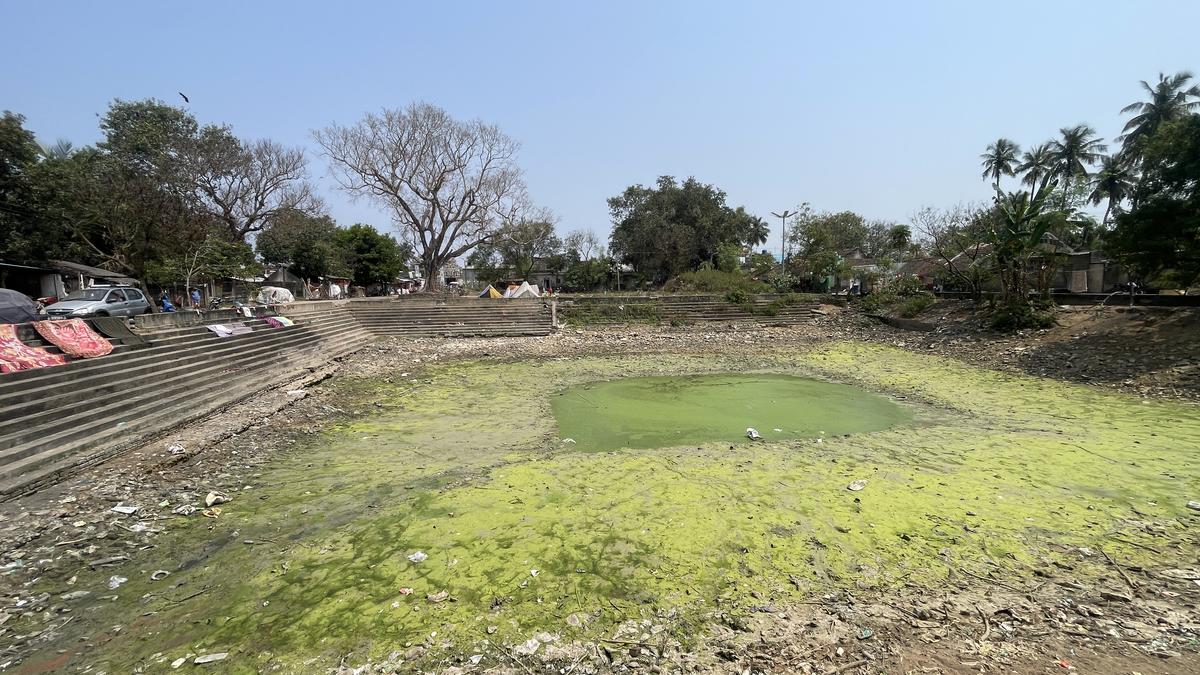
The century-old Singapuri Sri Subraya Swamy Temple pond in Kurinjipadi in Cuddalore district is in revival mode. Choked for decades by household wastewater and plastic waste, the pond is slowly returning to normalcy through efforts of a citizens’ action group.
The revival draws inspiration from the poetry of Varakavi Subramania Swamigal, deeply rooted in Tamil spiritual consciousness, which speaks of the inseparable bond between land, water and community life.
The restoration of the pond started on February 21, 2026 with a group of local villagers, volunteers, civil society organisations and KurinjiCAN (Citizens’ Action Network), a citizen-led initiative. The pond’s dire straits came to light during a 22-km water walk held during the Singapuri Water Festival in January 2026.
The water walk traversed villages linked by waterbodies, engaging residents on water security, rural resilience, and heritage-based development. It exposed encroachments, siltation, broken channels, weakened bunds, waste dumping and the urgent need for village-level stewardship.
“The drive began with removal of plastic waste and debris, clearing of invasive growth, identifying inflow and outflow pathways and strengthening of bund edges of the temple pond. The wastewater from the pond has been baled out and desilting will be carried out in a few days. The breached southern bank of the pond will be restored and stabilised in consultation with water resource experts,” said Natesan Subramaniam, climate activist and convenor of KurinjiCAN.
“The revival strategy is to ensure that the pond regains its role in groundwater recharge and local water balance. Spanning 1.2 acres, the pond is being revived with contributions from volunteers and local civil society organisations. The local authority is apprised about the project and the expenditure is being regularly monitored and shared in a WhatsApp group,” Mr. Natesan Subramaniam explained.
The open area around the pond will be revitalised as a community park-cum-convention space. The residents have already committed to taking ownership of long-term maintenance and stewardship.
According to Mr. Natesan Subramaniam, “The Cholas were not only temple builders and maritime rulers; they were master hydrologists. Across Tamil Nadu, they engineered intricate systems of interconnected tanks, temple ponds, supply channels, and surplus weirs — ensuring groundwater recharge, flood moderation, and agricultural prosperity. Temple ponds were not ornamental; they were functional hydrological structures integrated into agricultural cycles.”
He further stated, “Kurinjipadi, historically known as part of the Singapuri region, formed an integral node in this water network. Oral histories, inscriptions, and traditional land patterns indicate the existence of a cascading tank system designed to harvest monsoon runoff and distribute it across agrarian settlements. Over time, rapid urbanisation, neglect, encroachments, and changing land use patterns disrupted this hydrological chain. Temple ponds silted up, supply channels were blocked, and surplus courses disappeared under concrete. All that remains now is a fragmented memory of a once self-sustaining ecosystem.”
According to K.S.B Karthickeyan, a resident, “The revival of the Singapuri temple pond only marks the beginning. The broader roadmap includes mapping and documentation by preparing a technical and community map of interlinked waterbodies, identifying priority restoration clusters, formation of micro water stewardship group. The movement has also planned restoration of feeder channels, planting of native tree species around water margins and documentation of local biodiversity.”
“Rather than viewing tanks as isolated structures, we recognise them as nodes in a living system. Reviving one without reconnecting it to its feeder and discharge pathways would only offer temporary results,” Mr. Karthickeyan said.
The movement has planned to map historic waterbodies and their interconnections, identify blocked feeder channels and surplus weirs, restore cascading flow patterns between tanks, integrate traditional water wisdom with modern hydrogeological science and establish community-based maintenance models.
Published – March 03, 2026 08:28 pm IST